Beko Mochi (Aomori Patterned Steamed Rice-Flour Cakes)
Quick answer
- Total time
- 80 min
- Level
- Hard
- Servings
- 30 servings
- Ingredients
- 7
About this dish
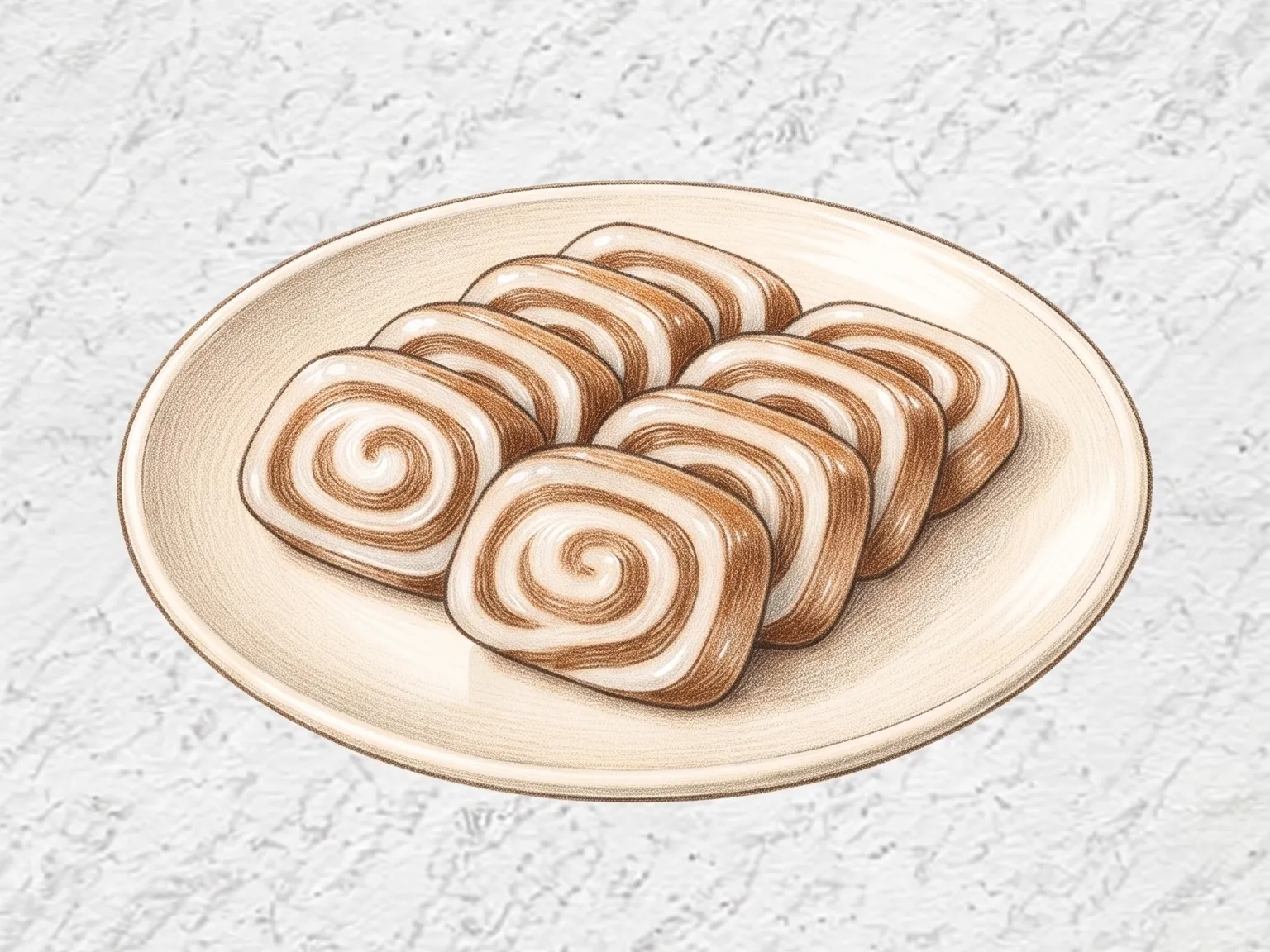
In the Shimokita region, these rice cakes for Tango no Sekku (Boys' Day) once carried simple patterns such as a bundle of grass or a spiral, and today makers work in flowers and animals.
Read more
The spiral comes from rolling coffee-tinted brown dough up inside white dough. The design is fixed while the dough is still raw, and any gap left between the layers shows in every slice after steaming. One account says the name beko (cow) comes from gathering the dough into a shape like a cow's back; another points to dough made with dark and white sugar, whose colors together look like a spotted cow.
Ingredients
As an Amazon Associate, we may earn from qualifying purchases.
Instructions
Stops the screen from turning off while you cook.
- 1
In a large bowl, mix 750 g glutinous rice flour, 750 g non-glutinous rice flour, 500 g sugar and 1/2 tablespoon salt.
Pour 300 ml boiling water around the bowl while stirring with a spatula so every part of the flour is moistened.
- 2
When it is cool enough to handle, add lukewarm water a little at a time, starting with 200 ml, gathering the flour together as you knead. Stop adding water once the dough is as soft as an earlobe; you may not need all 300 ml.
- 3
Pull off a little more than one third of the dough.
Dissolve 1 tablespoon instant coffee in 1 teaspoon lukewarm water, add it to that portion and knead until the color is an even brown with no streaks. Add a little more coffee if the shade is too pale.
- 4
Roll the white dough between two sheets of plastic wrap into a rectangle about 30 cm (12 inches) wide and 1 cm (⅜ inch) thick.
Roll the brown dough to the same width but slightly thinner and lay it on the white, leaving about 2 cm (¾ inch) of white showing along the far edge.
- 5
Starting from the near edge, roll it up tightly, pressing as you go so no gaps form between the layers.
Seal the seam with the white border, set it seam-side down and shape it like kamaboko, flat on the bottom and rounded on top, stretching it to about 30 cm (12 inches) long.
- 6
Once the steamer is full of steam, line it with a damp cloth.
Slice the log 1 cm (⅜ inch) thick, arrange the slices so they do not touch and steam over strong steam for 10 to 15 minutes, until the white part looks glossy and feels soft with no floury texture when pressed. Steam in batches if they do not all fit.
- 7
Freshly steamed slices are soft and sweet and can be eaten as they are.
Once they cool and firm up, toast them in a toaster oven for a nutty crust, or warm them in the microwave or steam them again.
References checked
These references were consulted when this page was prepared or corrected. A source check does not mean the recipe was independently kitchen-tested.
- べこもち 青森県 | うちの郷土料理
農林水産省(レシピ参照元: 青森県「食の文化伝承ガイドブック」) · Checked: 2026-11-18
Use-up ingredient planner
Turn these ingredients into two more meals
The overlap excludes basic seasonings. Open the next recipe and your selected dishes will stay with you.
Korean Red Bean Porridge (Velvety Adzuki Porridge with Rice Dumplings)
glutinous rice flour, non-glutinous rice flour
Mugwort Crumble Rice Cake
glutinous rice flour, non-glutinous rice flour
Kujira-mochi (Steamed Walnut Rice-Flour Cake)
glutinous rice flour, non-glutinous rice flour