Choose a soybean leaves recipe
Start with recipes grouped by cooking time and how they fit the meal.
Within 30 minutes
As a side dish
As a meal
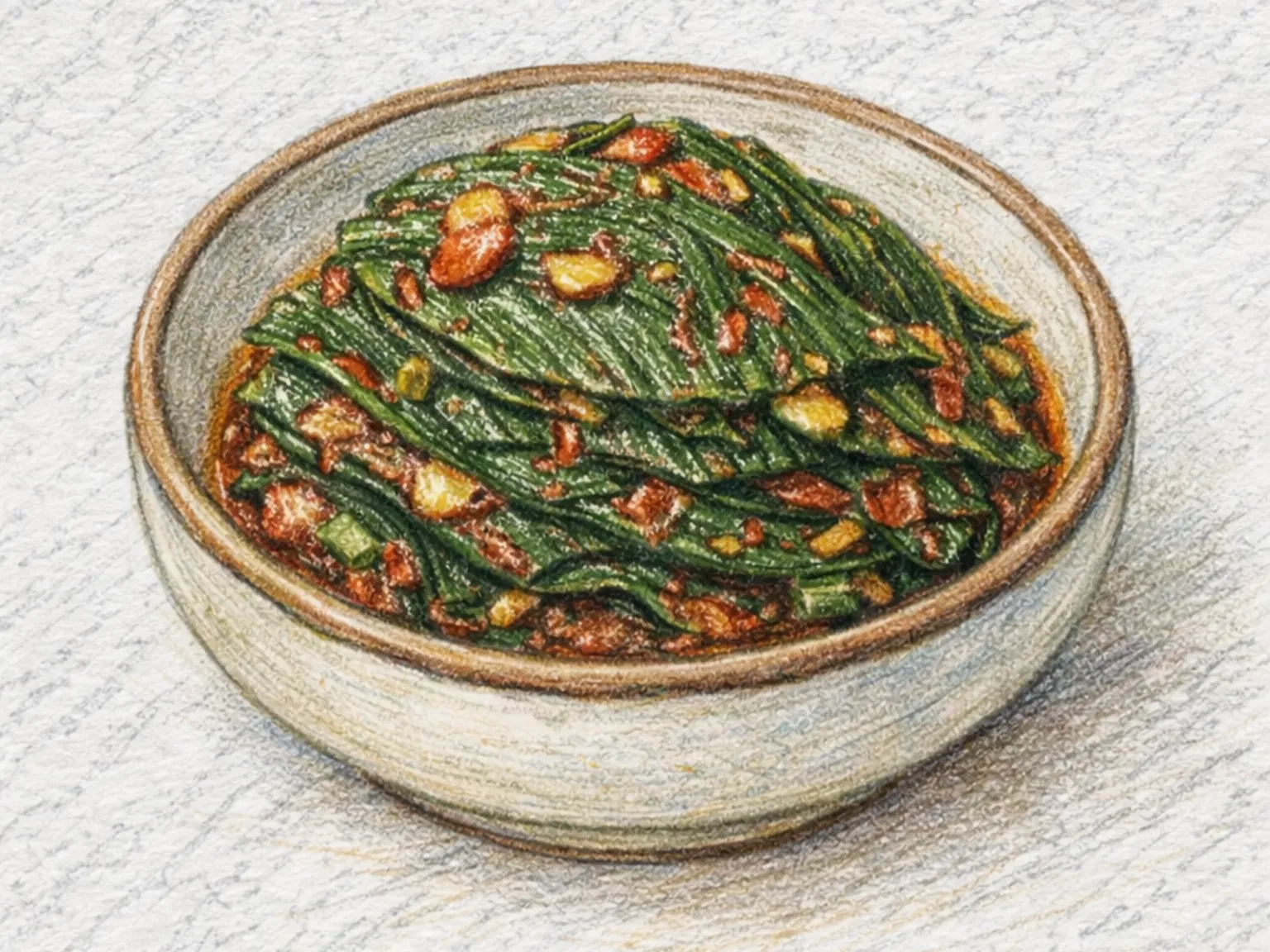
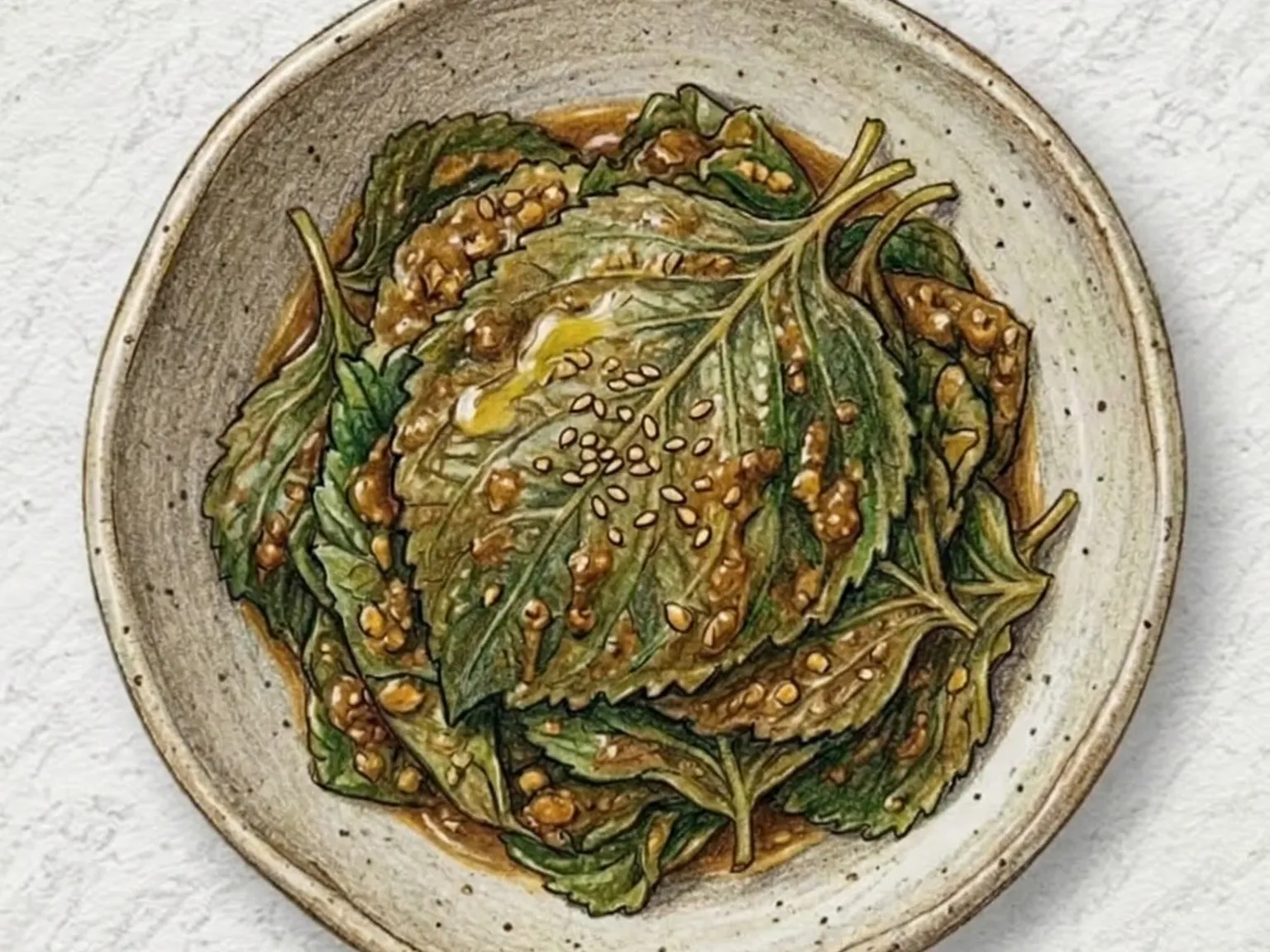
Korean Soybean Leaf Doenjang Muchim
Kongip-doenjang-muchim dresses boiled soybean leaves in doenjang and perilla oil - a rustic Korean banchan more commonly found on countryside tables in Jeolla and Gyeongsang provinces than in urban kitchens. Soybean leaves are larger and thicker than perilla leaves, with a chewy, almost fabric-like texture after cooking. Fresh leaves are a seasonal ingredient available only in summer, typically sourced at rural markets or directly from farms rather than supermarkets. Boiling for five to six minutes softens the tough fibers while preserving the earthy, beany aroma unique to the leaf. Since doenjang is the primary seasoning and can easily over-salt the dish, diluting it with a tablespoon of water brings the intensity to the right level. Perilla oil is chosen over sesame oil because its grassy, nutty profile harmonizes with the leaf's herbaceous character. Gentle hand-mixing is essential - aggressive tossing tears the softened leaves.
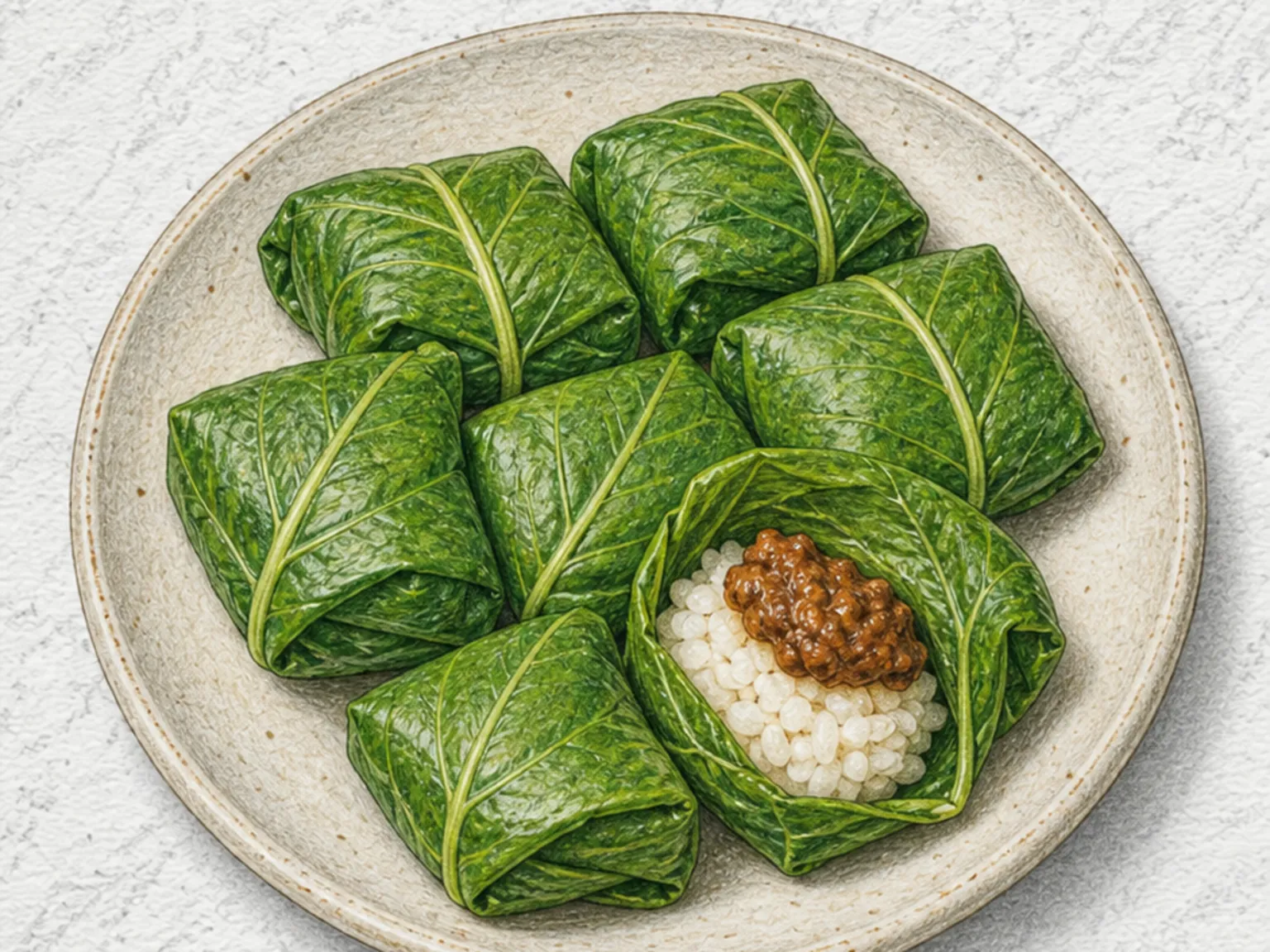
Soybean Leaf Ssambap
Soybean leaf ssambap wraps rice in blanched leaves and fills each bundle with thick doenjang cooked with onion, shiitake, and garlic.
Steamed Seasoned Soybean Leaves
A quick side dish made by layering savory seasoning paste between fresh soybean leaves and steaming them briefly to soften their texture.
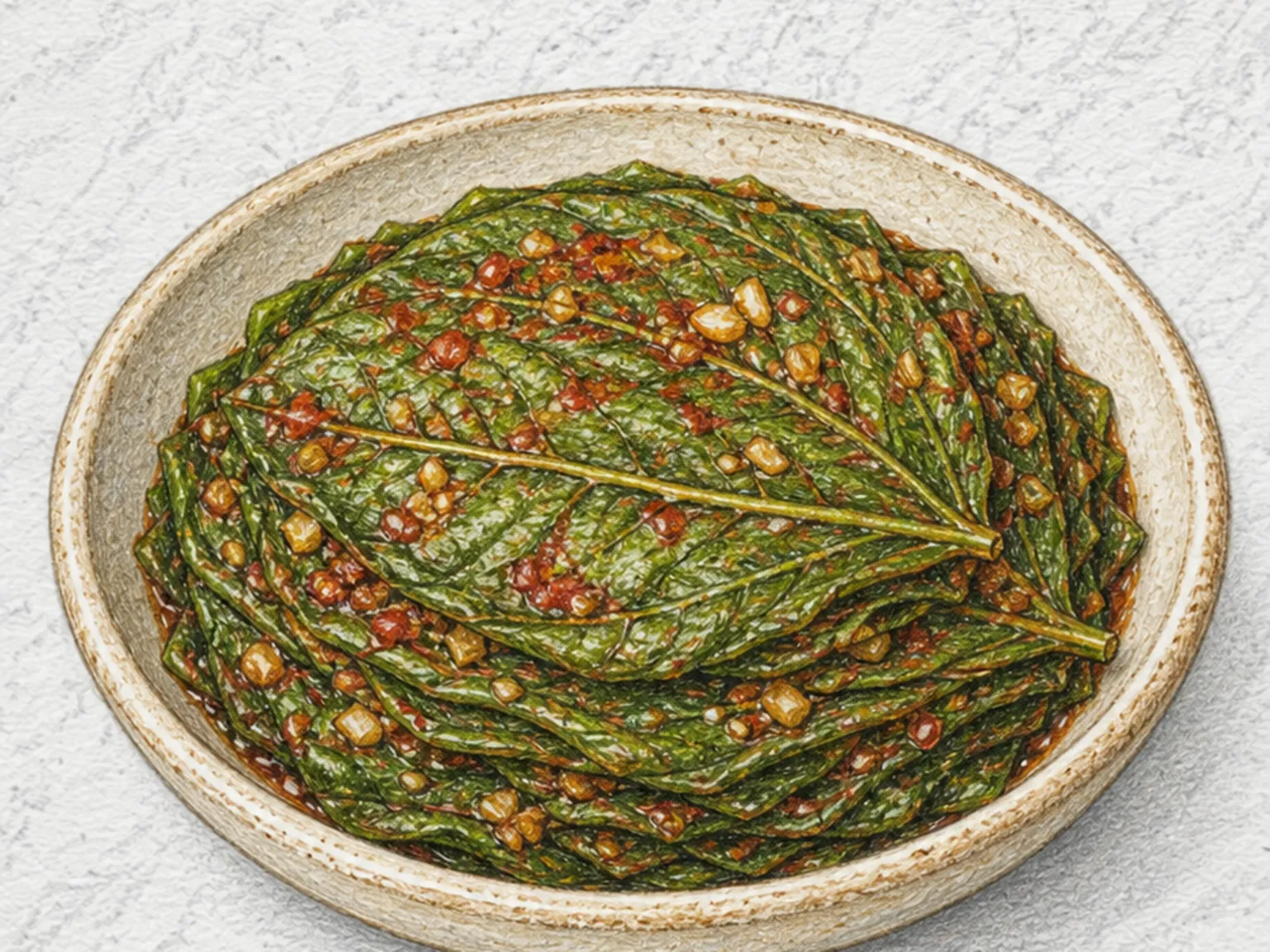
Korean Soybean Leaf Kimchi
Kongip kimchi is a Korean preserved kimchi made by coating individual soybean leaves, one by one, with a seasoning of gochugaru, dark soy sauce, anchovy fish sauce, and plum syrup, then stacking them in layers to ferment. The soybean leaf's earthy, vegetal fragrance is its defining quality in the fresh state, but it transforms into something considerably deeper and more savory once it meets the concentrated umami of soy and fermented fish sauce and begins to mature over several days. Onion and ginger are worked into the seasoning to suppress any raw edge and reinforce the overall aroma. Plum syrup tames the inherent sharpness of the salt and fish sauce with a gentle fruit acidity that rounds the flavor, ensuring that each leaf pulled from the jar tastes balanced rather than overwhelming. The traditional way to eat it is draped over a bowl of warm rice and folded around a mouthful, the salty-spicy leaf acting as both wrap and condiment. When the kimchi is particularly salty after a long fermentation, a brief toss in sesame oil softens the intensity and adds a warm, nutty note. Made in late autumn while the leaves are still young and tender before the first frost, this kimchi keeps for weeks in the refrigerator and deepens in flavor throughout the season.
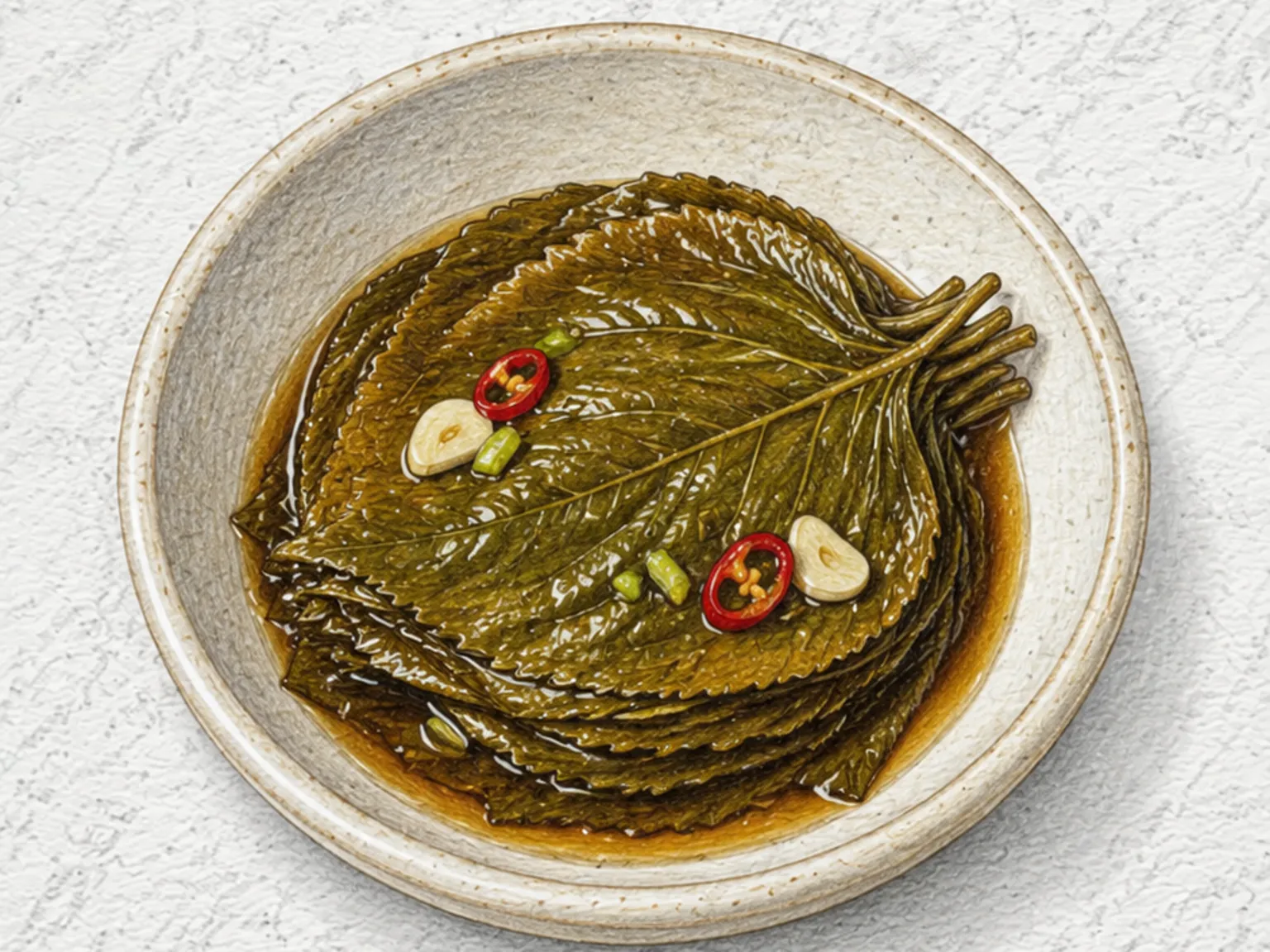
Korean Soy-Marinated Soybean Leaves
Kongnip-jangajji is soybean leaves preserved in a seasoned soy brine - one of the two major leaf jangajji traditions alongside perilla leaf (kkaennip) jangajji. Soybean leaves are larger and thicker than perilla leaves, taking longer to absorb the pickling liquid but offering a more substantial chew, with each leaf large enough to wrap around a spoonful of rice. The brine - soy sauce, water, vinegar, and sugar boiled together - must cool completely before pouring over the leaves; hot liquid softens them into a limp state, destroying the desired texture. Garlic cloves, cheongyang chili, and onion slices added to the jar infuse the brine with aromatic complexity during the curing process, producing a more layered flavor than plain soy. A minimum of two days of refrigerated aging is needed for the seasoning to reach the leaf interior, and flipping the layers once daily ensures even penetration. The most common way to eat it is draped over hot steamed rice, ssam-style.
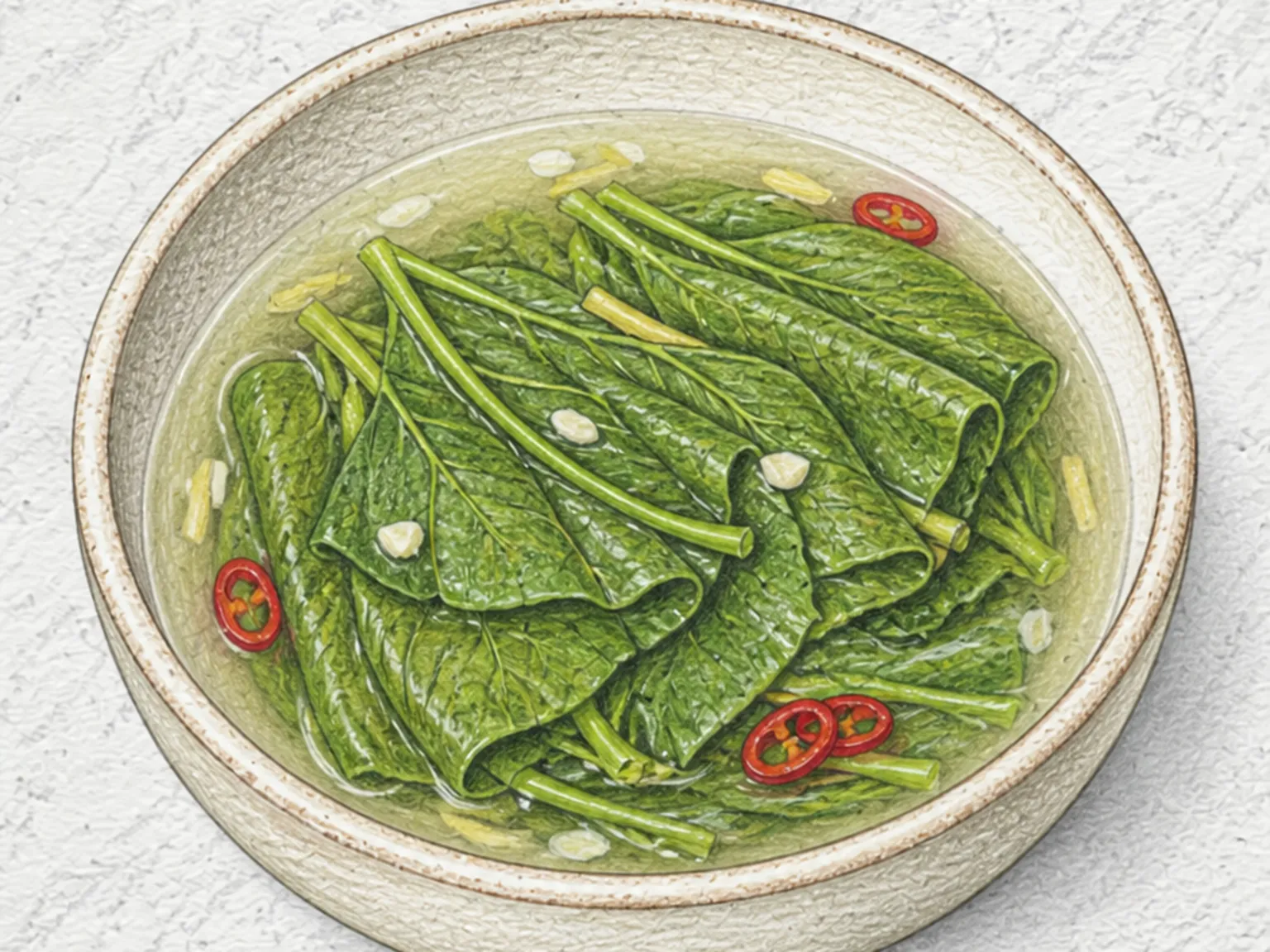
Soybean Leaf Water Kimchi
A refreshing summer water kimchi made by fermenting green soybean leaves in a clear, cool broth seasoned with garlic, ginger, and red chili peppers.
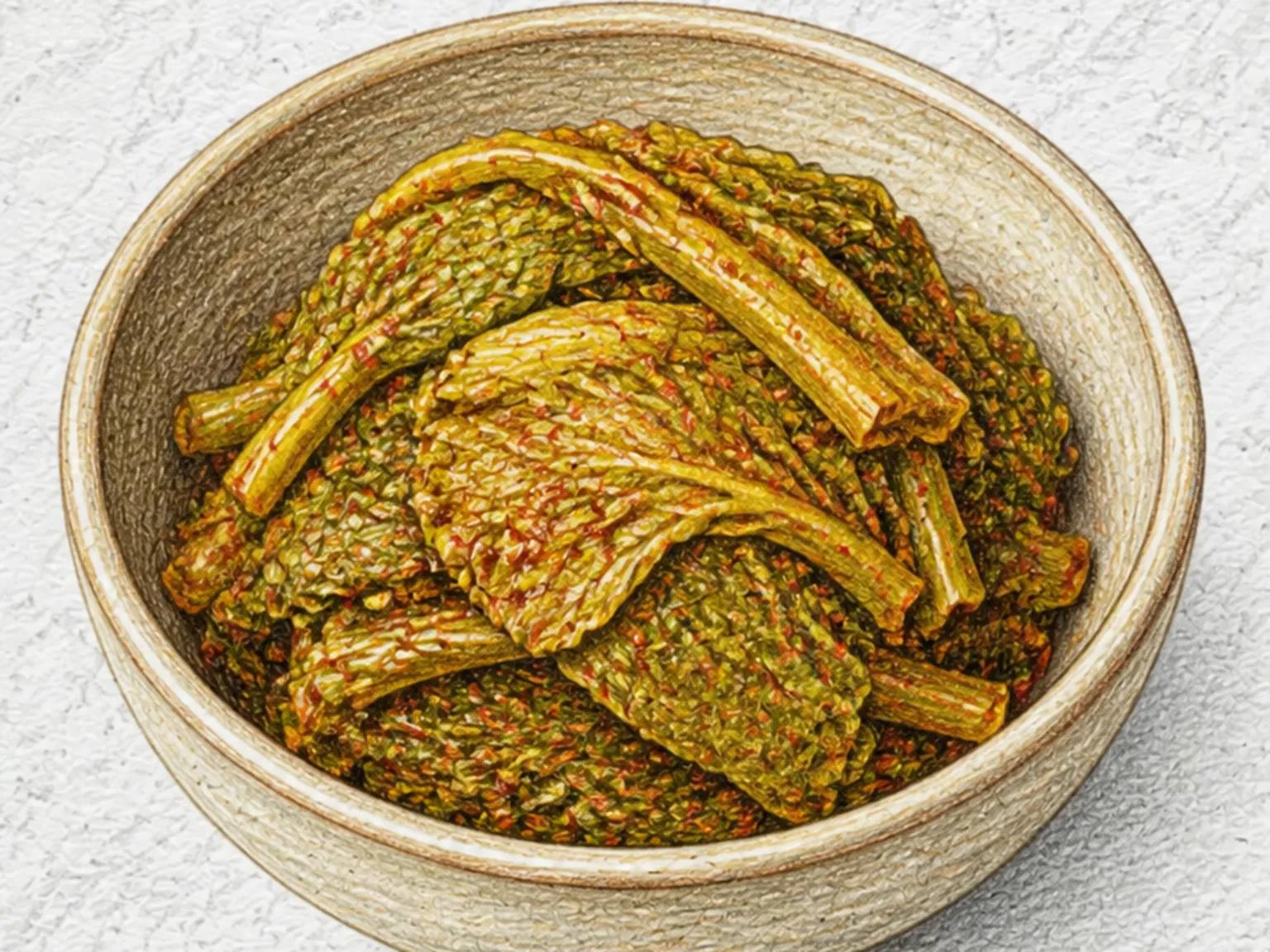
Fermented Soybean Leaf Muchim
A traditional stored side dish made by washing salt-fermented yellow soybean leaves to reduce saltiness and tossing them in a savory sauce made with anchovy fish sauce and chili powder.