Charim

2686 Korean & World Recipes

2686+ Korean recipes, clean and organized. Ingredients to instructions, all at a glance.

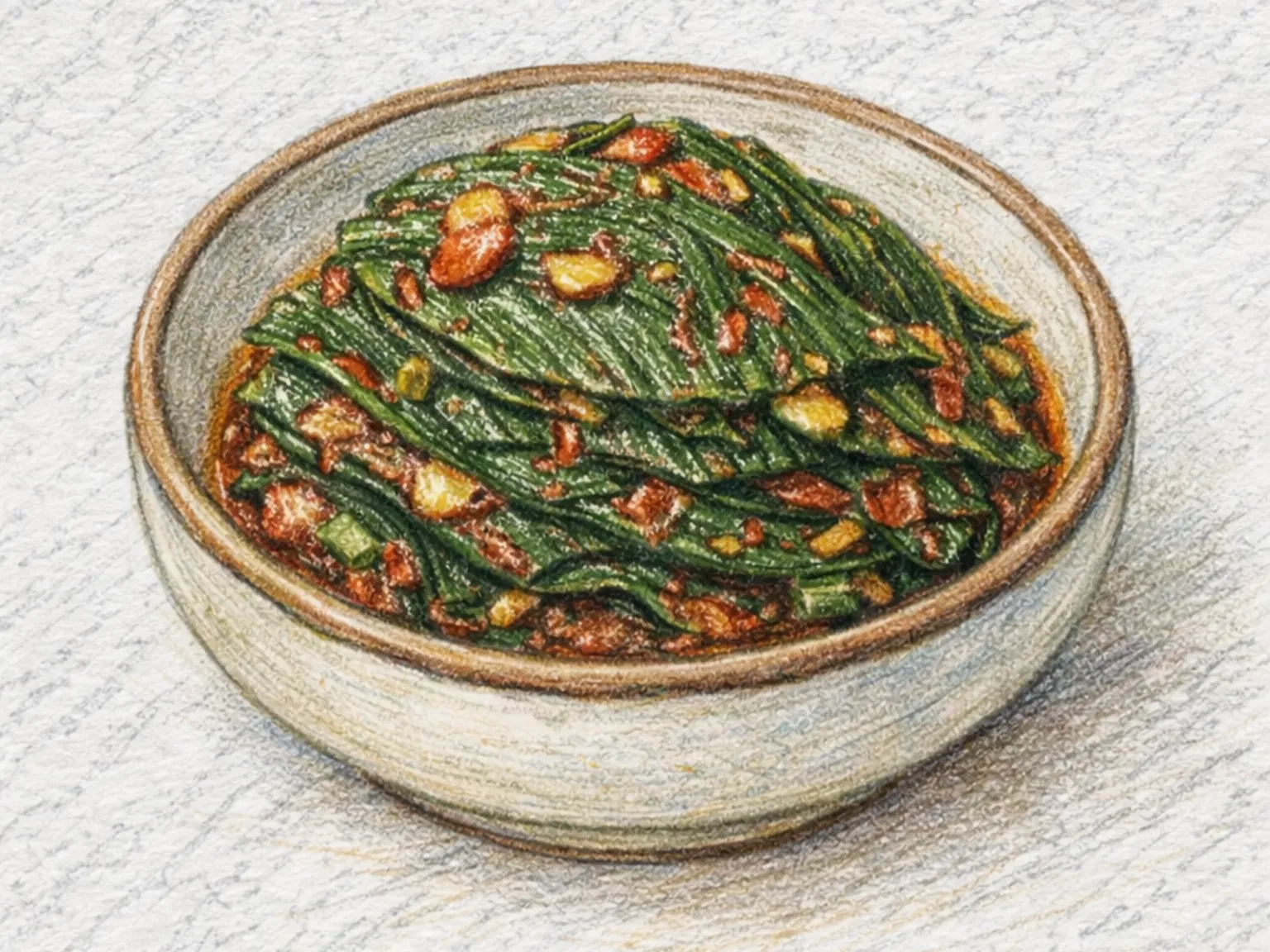
Korean Soybean Leaf Kimchi
Kimchi Medium

Korean Soybean Leaf Kimchi

Kongip kimchi is a Korean preserved kimchi made by layering individual soybean leaves with a seasoning of gochugaru, dark soy sauce, anchovy fish sauce, and plum syrup between each leaf. The soybean leaf's earthy, vegetal fragrance transforms into something deeper when it meets the concentrated umami of soy and fish sauce, while onion and ginger suppress any raw edge and reinforce the aroma. Plum syrup tames the sharp saltiness with a gentle fruit acidity, keeping each leaf well-balanced when pulled from the jar. Draped over rice as a wrap or tossed lightly with sesame oil to soften the salt, this kimchi is a traditional pantry staple built for long storage.

Prep 35min Cook 5min 4 servings

Adjust Servings

2servings
servings

Instructions

  1. 1

    Wash soybean leaves thoroughly and drain well.

  2. 2

    Finely chop onion and mix with soy sauce, fish sauce, chili flakes, garlic, ginger, and plum syrup.

  3. 3

    Spread a thin layer of seasoning on the bottom of a container.

  4. 4

    Brush seasoning on each leaf and stack in layers.

  5. 5

    Pour the remaining seasoning over the top.

  6. 6

    Refrigerate for 2 days before serving.

🛒Shop Ingredients on Amazon

As an Amazon Associate, we may earn from qualifying purchases.

Tips

Fold large leaves in half for easier serving.
If salty, toss with a little sesame oil before serving.

Nutrition (per serving)

Calories
88
kcal
Protein
5
g
Carbs
12
g
Fat
2
g

More Recipes

Korean Braised Perilla Leaves
Side dishesEasy

Korean Braised Perilla Leaves

Kkaennip jorim layers fresh perilla leaves with a soy-based sauce and simmers them gently - a banchan built for make-ahead storage. Kkaennip (perilla) is a distinctly Korean herb with an aromatic intensity comparable to basil or mint, yet it is rarely found outside Korean cuisine. The technique stacks five to six leaves at a time, spooning sauce between each layer so every leaf seasons evenly. Simmering on medium-low heat for eight to ten minutes wilts the leaves into soft, pliable sheets that wrap neatly around a mound of rice. The sauce combines soy sauce, gochugaru, sugar, garlic, and sesame oil - the last adding a nutty richness that complements the herb's own perfume. Refrigerated in an airtight container, kkaennip jorim lasts up to two weeks, making it one of the most economical banchan to batch-prepare.

🏠 Everyday🍱 Lunchbox
Prep 10minCook 10min4 servings
Korean Pepper Leaf Soy Pickle
KimchiEasy

Korean Pepper Leaf Soy Pickle

Gochuip jangajji is a Korean soy pickle of pepper leaves, a summer byproduct of chili cultivation that is washed and submerged in a boiled brine of soy sauce, vinegar, and sugar. Unlike the chili fruit itself, pepper leaves carry almost no heat, offering instead a grassy, mildly bitter aroma that blends with the savory-sour brine. Garlic and cheongyang chili contribute a sharp fragrance to the pickling liquid, and the thin leaves absorb the seasoning fully within a single day. Laid over a spoonful of rice and eaten as a wrap, these pickled leaves double as both banchan and ssam in one bite.

🍱 Lunchbox
Prep 15minCook 12min4 servings
Korean Pepper Leaf Kimchi
KimchiMedium

Korean Pepper Leaf Kimchi

Gochuip kimchi is a Korean pepper leaf kimchi where the leaves are briefly blanched to reduce volume and remove bitterness, then tossed with gochugaru, anchovy fish sauce, garlic, and glutinous rice paste for about a day of room-temperature fermentation. Blanching softens the leaves and allows the seasoning to cling evenly to their surfaces. The rice paste acts as both a binding agent and a fermentation accelerator, promoting lactic acid activity even in the short curing window. Beneath the spicy coating, the pepper leaves contribute a subtle green, herbaceous note that distinguishes this from standard napa kimchi, making it a distinctive summer preparation.

🍱 Lunchbox
Prep 25minCook 8min4 servings
Korean Soy-Marinated Soybean Leaves
Side dishesMedium

Korean Soy-Marinated Soybean Leaves

Kongnip-jangajji is soybean leaves preserved in a seasoned soy brine - one of the two major leaf jangajji traditions alongside perilla leaf (kkaennip) jangajji. Soybean leaves are larger and thicker than perilla leaves, taking longer to absorb the pickling liquid but offering a more substantial chew, with each leaf large enough to wrap around a spoonful of rice. The brine - soy sauce, water, vinegar, and sugar boiled together - must cool completely before pouring over the leaves; hot liquid softens them into a limp state, destroying the desired texture. Garlic cloves, cheongyang chili, and onion slices added to the jar infuse the brine with aromatic complexity during the curing process, producing a more layered flavor than plain soy. A minimum of two days of refrigerated aging is needed for the seasoning to reach the leaf interior, and flipping the layers once daily ensures even penetration. The most common way to eat it is draped over hot steamed rice, ssam-style.

🏠 Everyday🍱 Lunchbox
Prep 15minCook 10min4 servings
Korean Perilla Leaf Kimchi
KimchiEasy

Korean Perilla Leaf Kimchi

Kkaennip kimchi is an instant-style Korean perilla leaf kimchi assembled by spreading a thin layer of soy sauce, gochugaru, minced garlic, and sesame oil seasoning between each leaf in a stacked arrangement. The perilla's bold herbal scent softens when paired with the toasted richness of sesame oil, while the chili flakes provide a steady, gentle heat. Soy sauce builds the salty-savory framework, and chopped scallion adds a fresh note that ties the flavors together. No fermentation is needed - this kimchi is ready to eat immediately, served on top of rice or used as an aromatic wrap in place of lettuce with grilled meat.

🍱 Lunchbox
Prep 25minCook 5min4 servings
Korean Soy Pickled Perilla Leaves
KimchiEasy

Korean Soy Pickled Perilla Leaves

Kkaennip jangajji is a Korean soy-pickled perilla leaf side dish prepared by submerging thoroughly dried leaves in a brine of boiled soy sauce, vinegar, and sugar with sliced garlic and cheongyang chili. The perilla's distinctive herbal fragrance deepens when met with the soy's salty umami, and the vinegar sharpens the finish into something clean and bright. Cheongyang chili contributes a lingering warmth at the back of each bite, and garlic adds a pungent undercurrent. Wrapped around a bite of rice, the leaf delivers its full aromatic, savory character in one mouthful - and it keeps refrigerated for over a month, making it one of the most practical banchan to have on hand.

🍱 Lunchbox
Prep 20minCook 10min4 servings
More Kimchi →