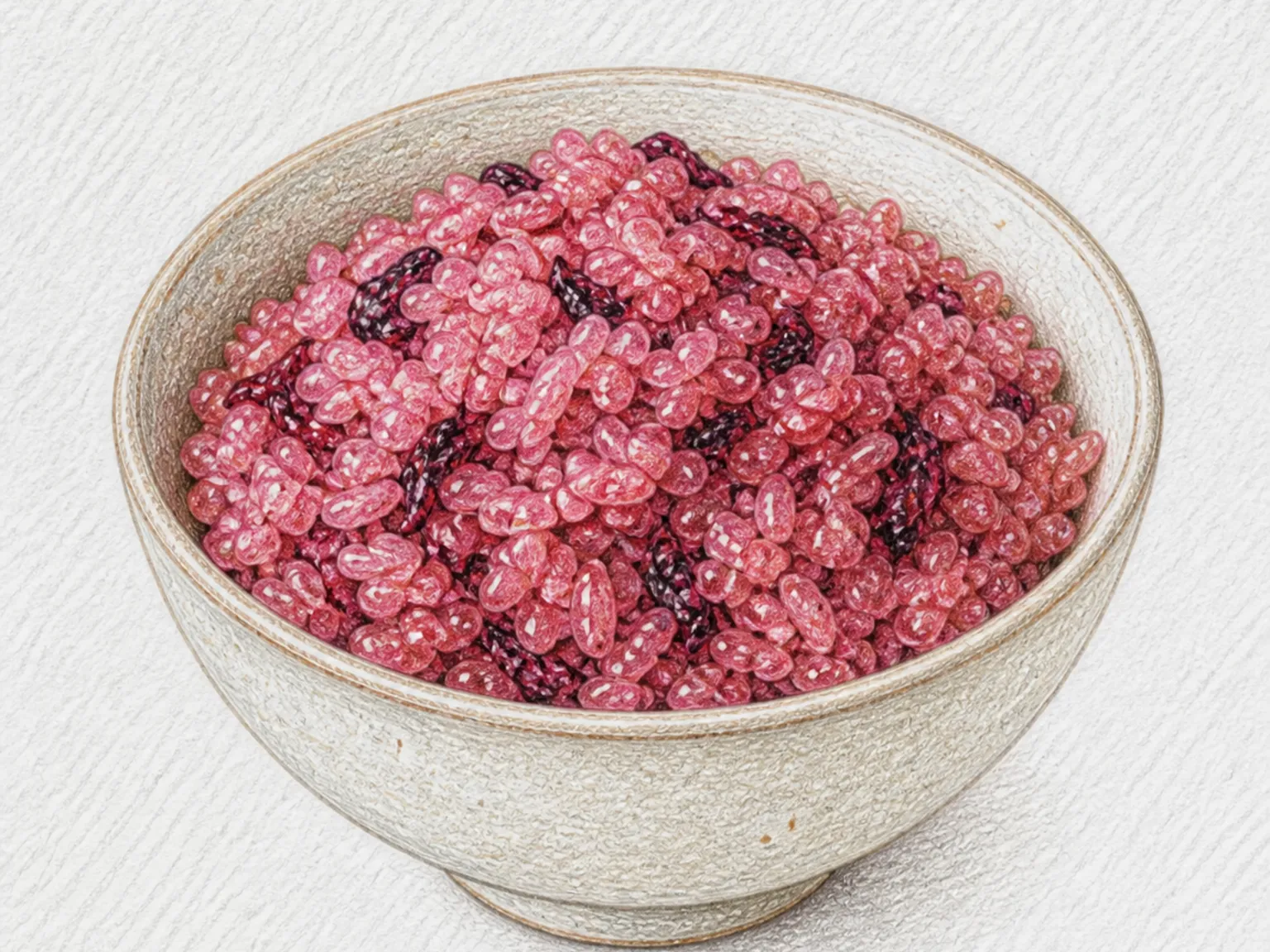
Aka-zuke Red Shiso Rice
Quick answer
- Active time
- 120 min
- Waiting
- See the steps
- Level
- Hard
- Servings
- 25 servings
- Ingredients
- 6
About this dish
Red shiso rubbed twice with salt releases a deep red juice that dyes cooked glutinous rice, and warm sweetened rice vinegar gives it a sweet-sour edge.
Read more
This version replaces traditional room-temperature fermentation with refrigerated curing, so it will not taste identical, and it relies on measured pH and temperature instead. The shiso color makes test strips hard to read, which is why a calibrated penetrating food pH meter is required; without one, a finished product from an established producer is the safer route. Only a batch whose highest pH reading, taken at several points, is 4.2 or below moves on to curing. Mold, swelling, bubbles, slime, or an off smell after curing mean the batch is discarded untasted.
Ingredients
Instructions
- 1
Sanitize the container, weight, and spatula with boiling water and dry completely.
Confirm the refrigerator is at 4°C or colder and calibrate a food pH meter with its standard buffers.
- 2
Rinse 750g glutinous rice until the water runs clear, combine with 900ml cooking water, and rest 30 minutes.
Cook fully in a rice cooker and confirm the center reaches at least 85°C.
- 3
Wash and dry 150g red shiso leaves.
Rub firmly with 25g salt until the leaves look whitish, rinse once in cold water, and squeeze. Rub again with the remaining 5g salt and reserve both leaves and released red liquid.
- 4
Warm 180ml of the 225ml rice vinegar with 150g sugar only to 80°C, dissolving the sugar.
Immediately fold it through the hot rice with a cutting motion, then mix in shiso leaves and red liquid. Reserve 45ml vinegar for pH adjustment.
- 5
Within 10 minutes of mixing, measure pH at three different points.
If the highest reading exceeds 4.2, mix in reserved vinegar in 15ml additions and retest. If pH is still above 4.2 after all 45ml, do not taste or cure the rice; discard it.
- 6
Divide rice that passes the pH check between two sanitized shallow containers no deeper than 5cm.
Cool from 60°C to 21°C within 2 hours and then to 4°C or colder within 4 more hours. Add a light weight and refrigerate; do not leave it at room temperature for two days as in the traditional method.
- 7
After 48 hours at 4°C or colder, serve only if pH remains 4.2 or below, refrigeration was uninterrupted, and there is no mold, swelling, bubbling, slime, yeasty odor, or putrid odor. If any criterion fails, discard without tasting. Consume an accepted batch within 3 days from cooking or freeze immediately.
References checked
These references were consulted when this page was prepared or corrected. A source check does not mean the recipe was independently kitchen-tested.
- 일본 농림수산성 うちの郷土料理
能代市役所 · Checked: 2026-08-11
Use-up ingredient planner
Turn these ingredients into two more meals
The overlap excludes basic seasonings. Open the next recipe and your selected dishes will stay with you.
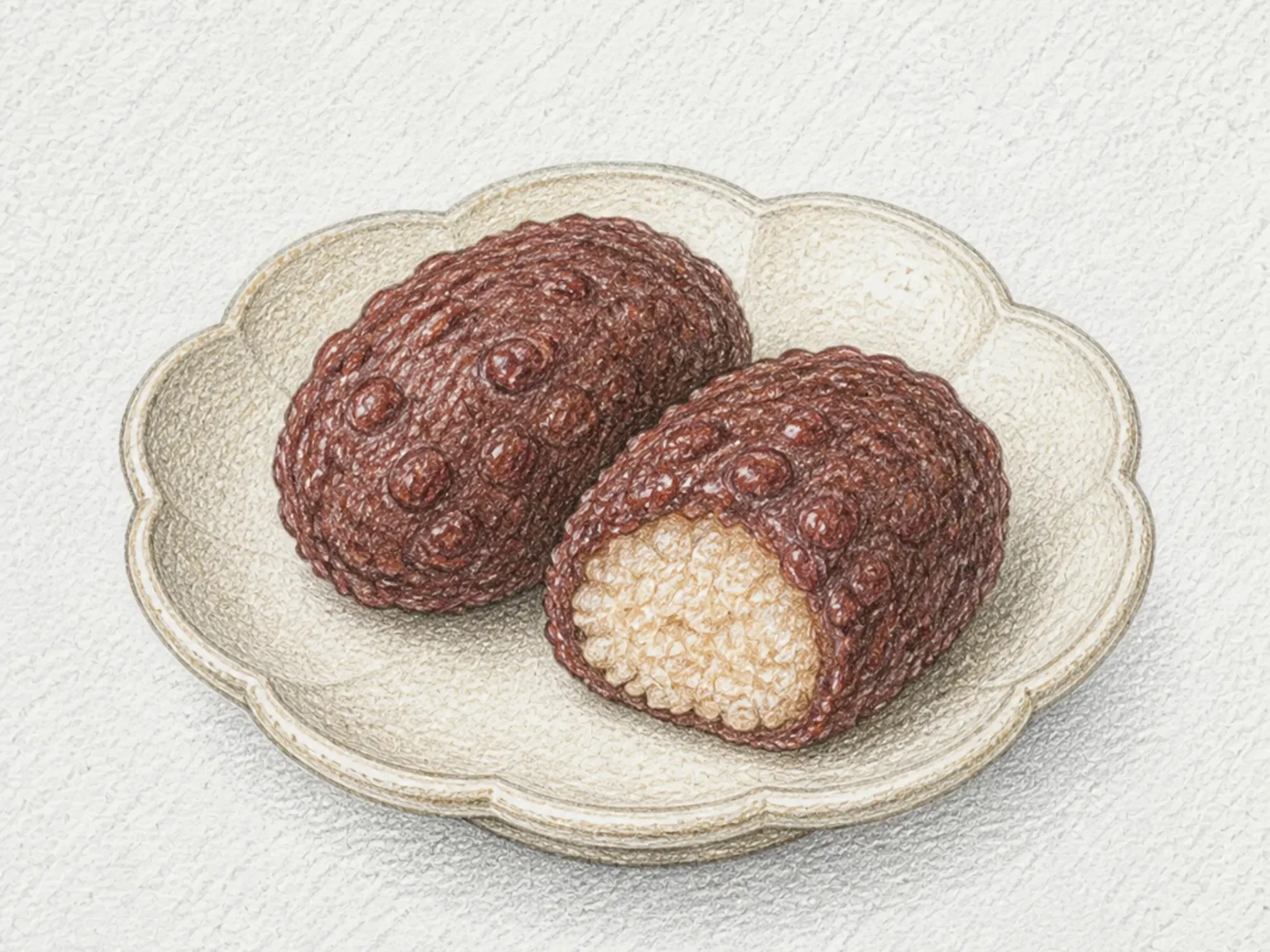
Botamochi (Rice Cakes Coated with Red Bean Paste)
glutinous rice, cooking water
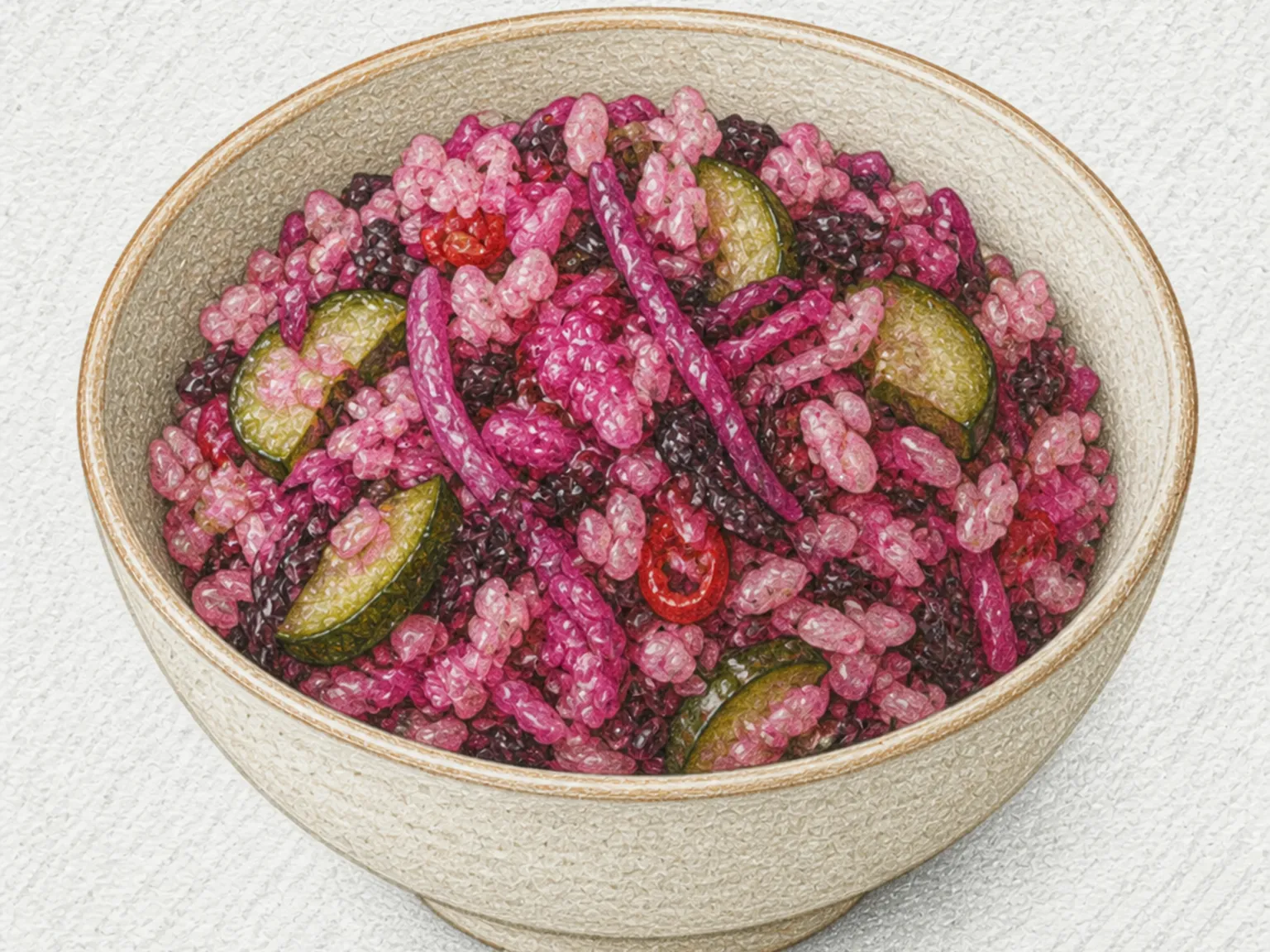
Sushiko (Lactic-Fermented Glutinous Rice and Vegetables)
glutinous rice, red shiso leaves
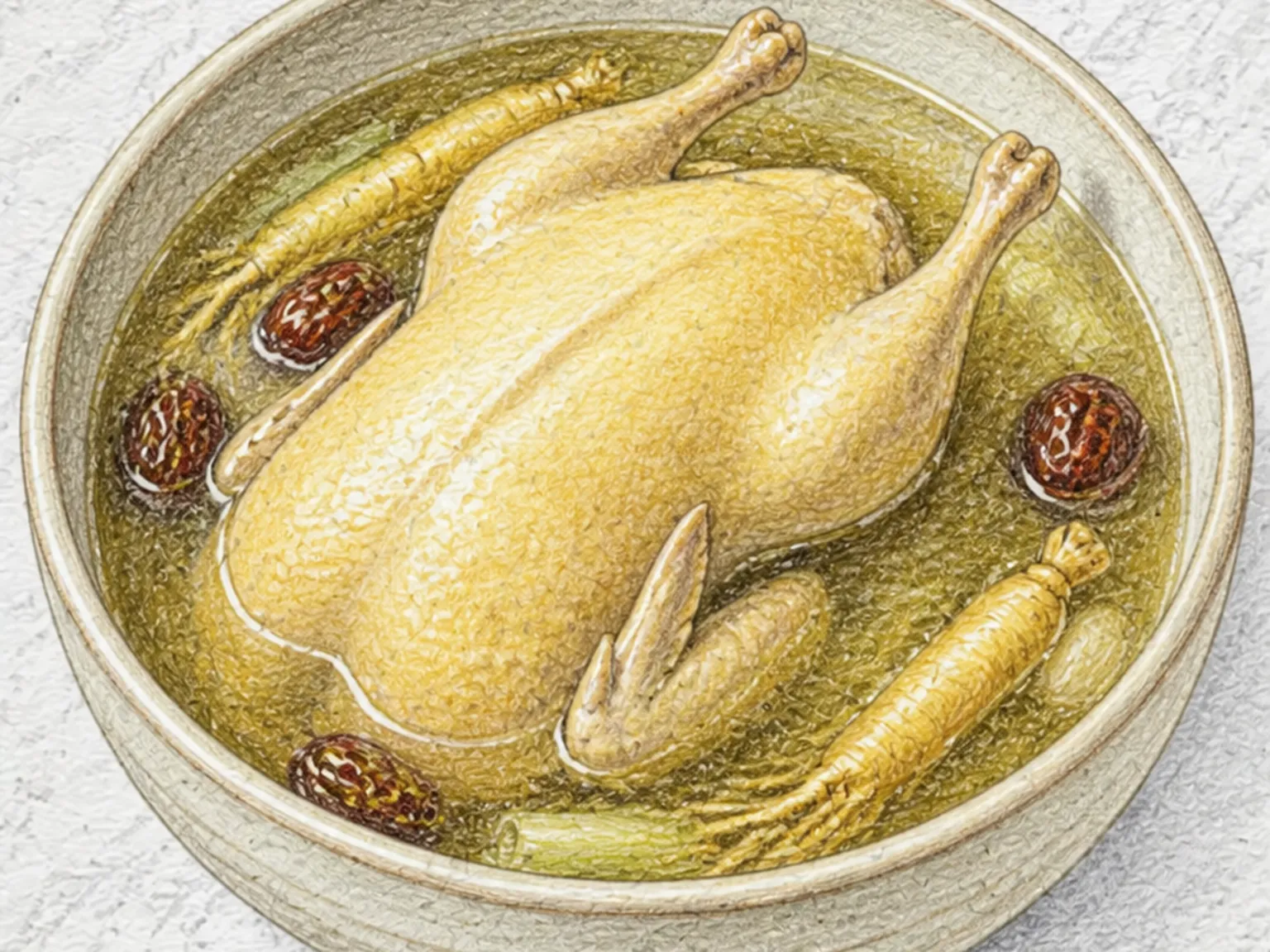
Korean Whole Duck Baeksuk
glutinous rice