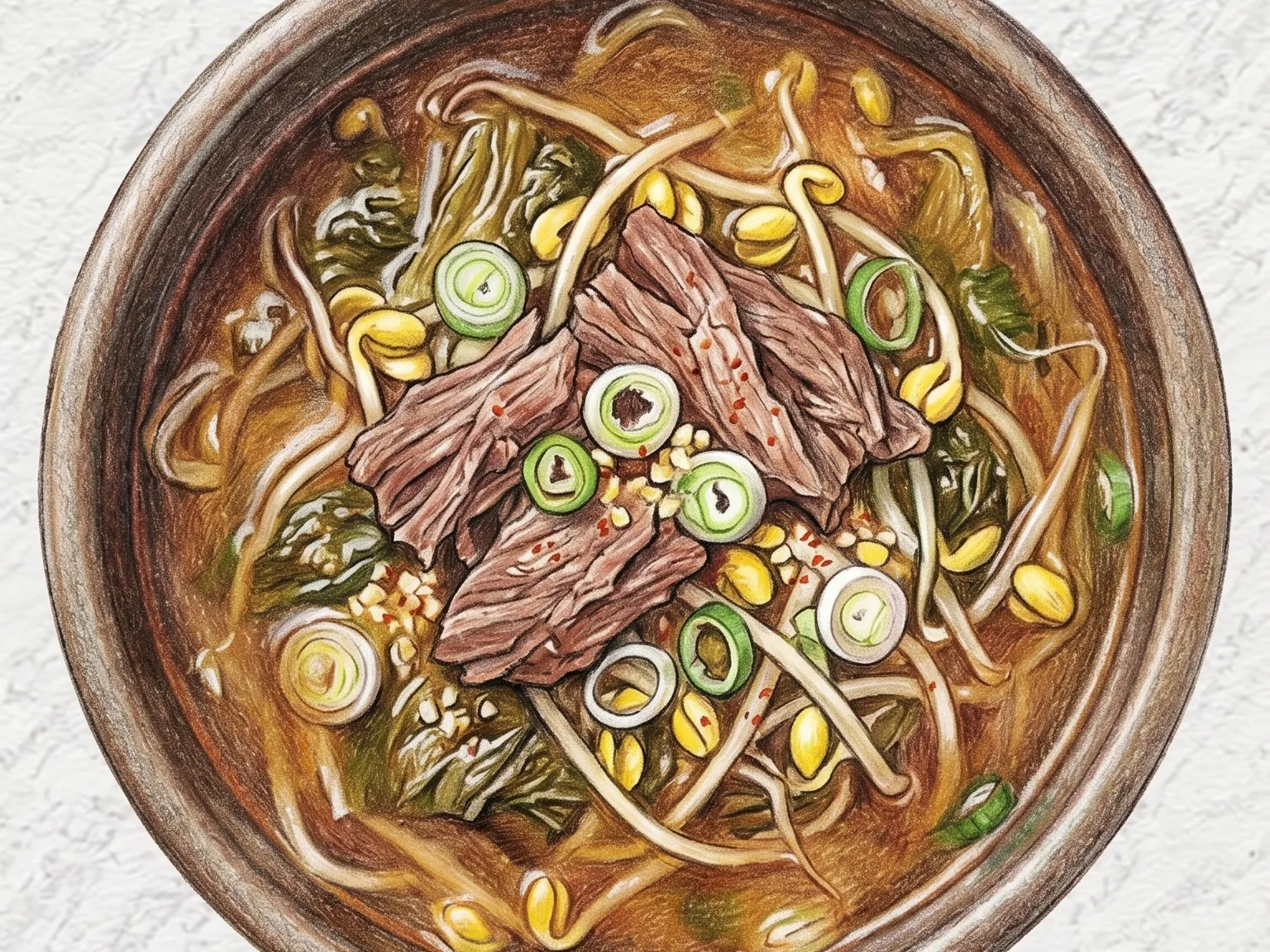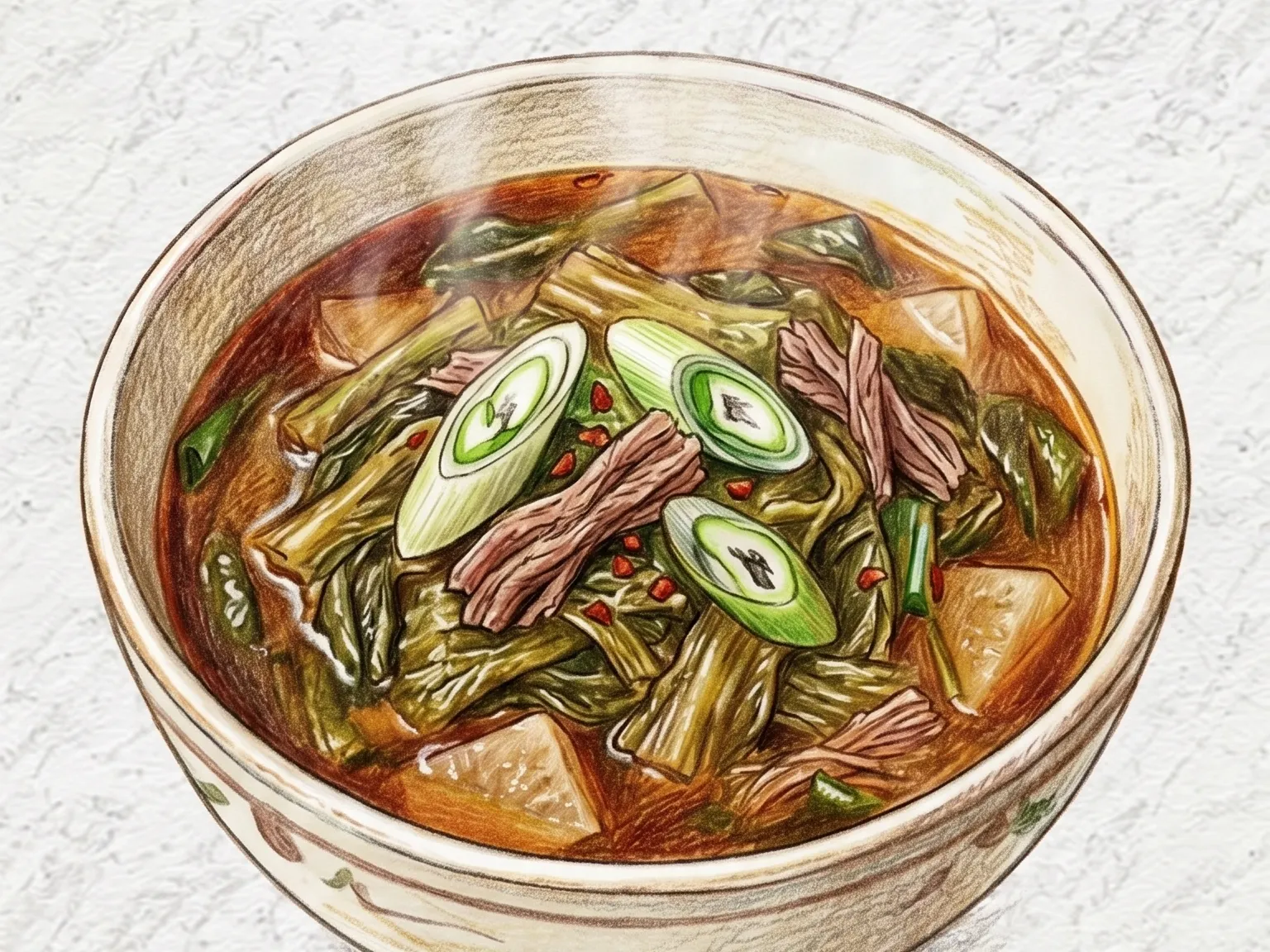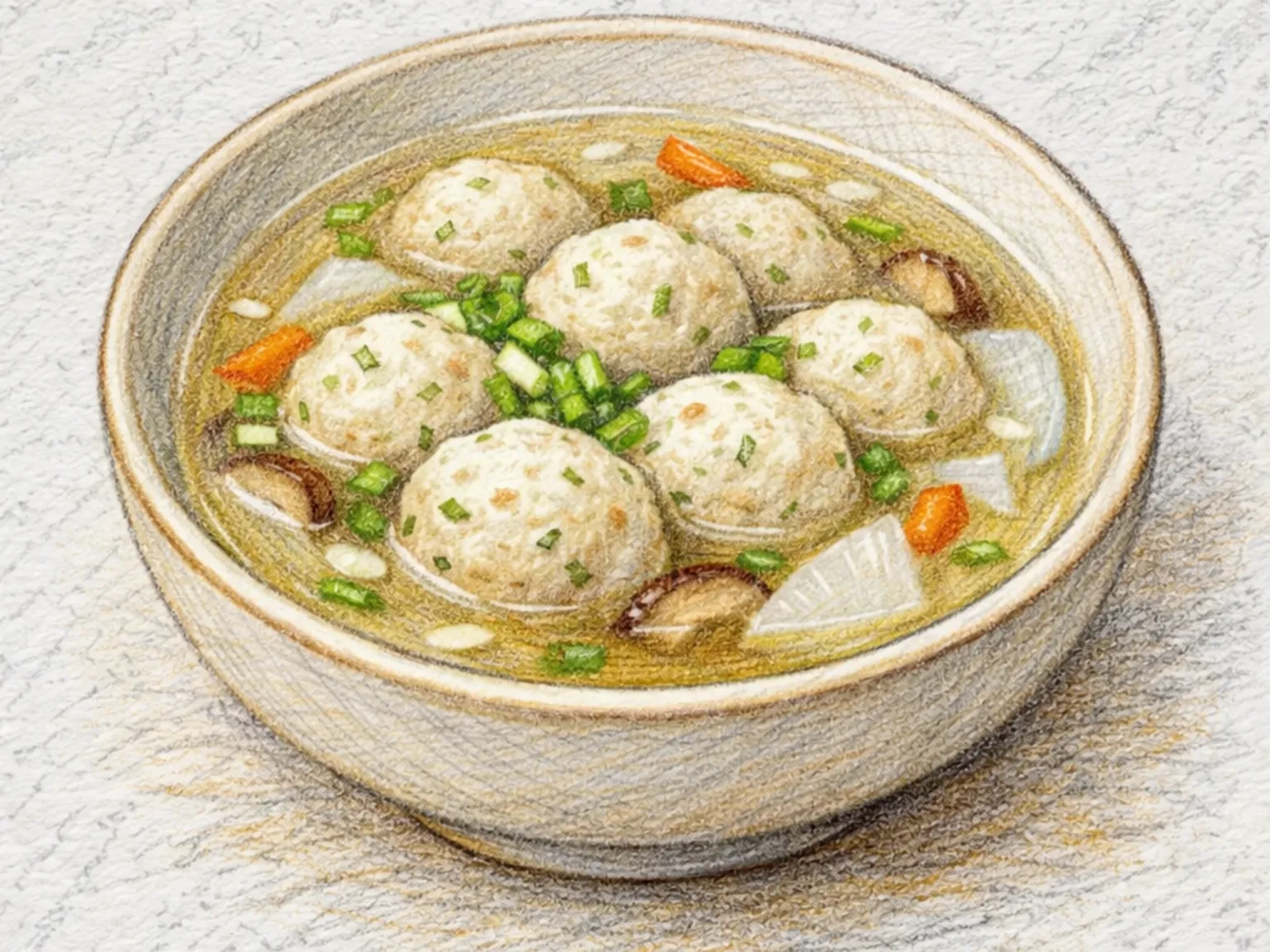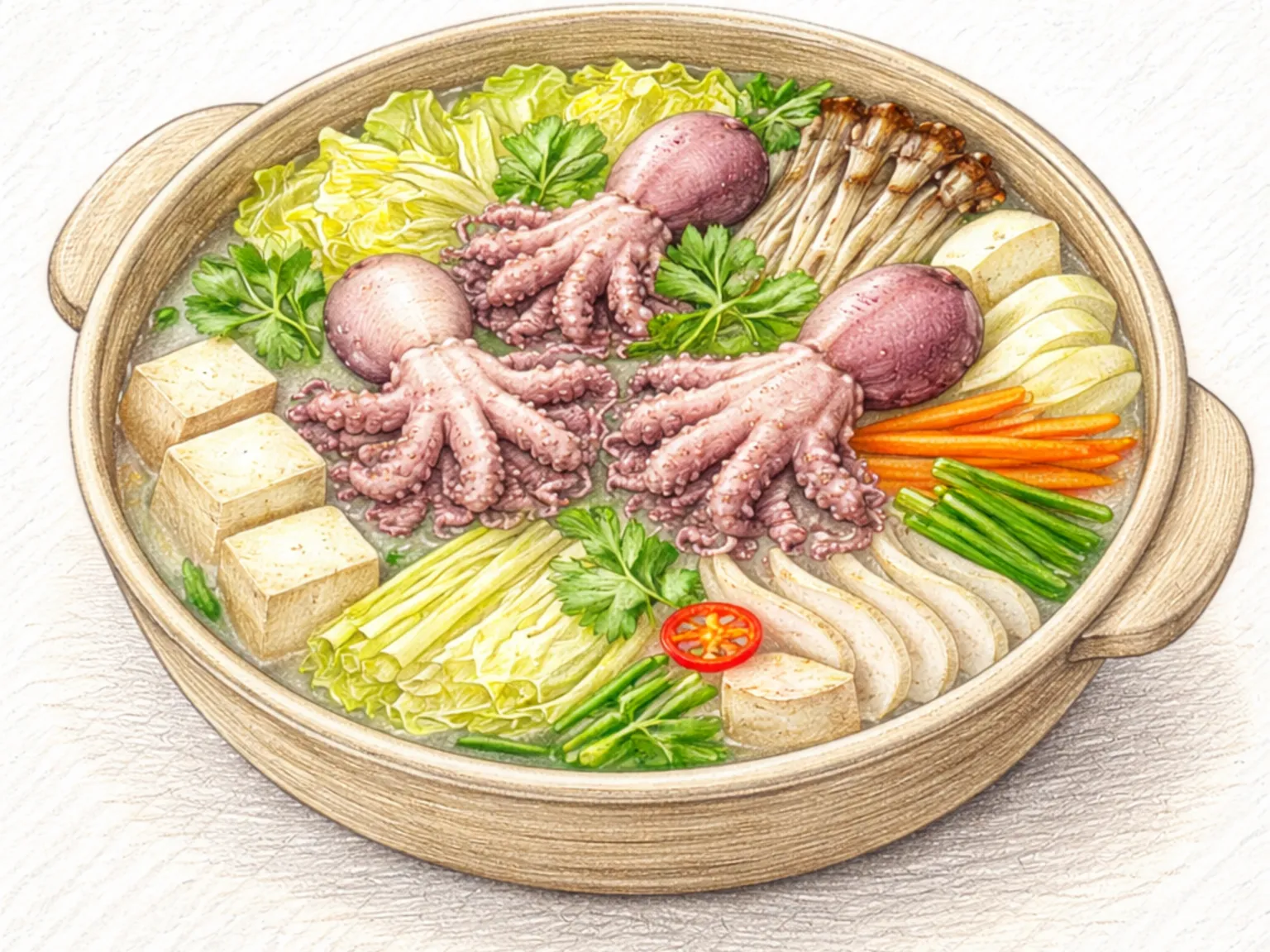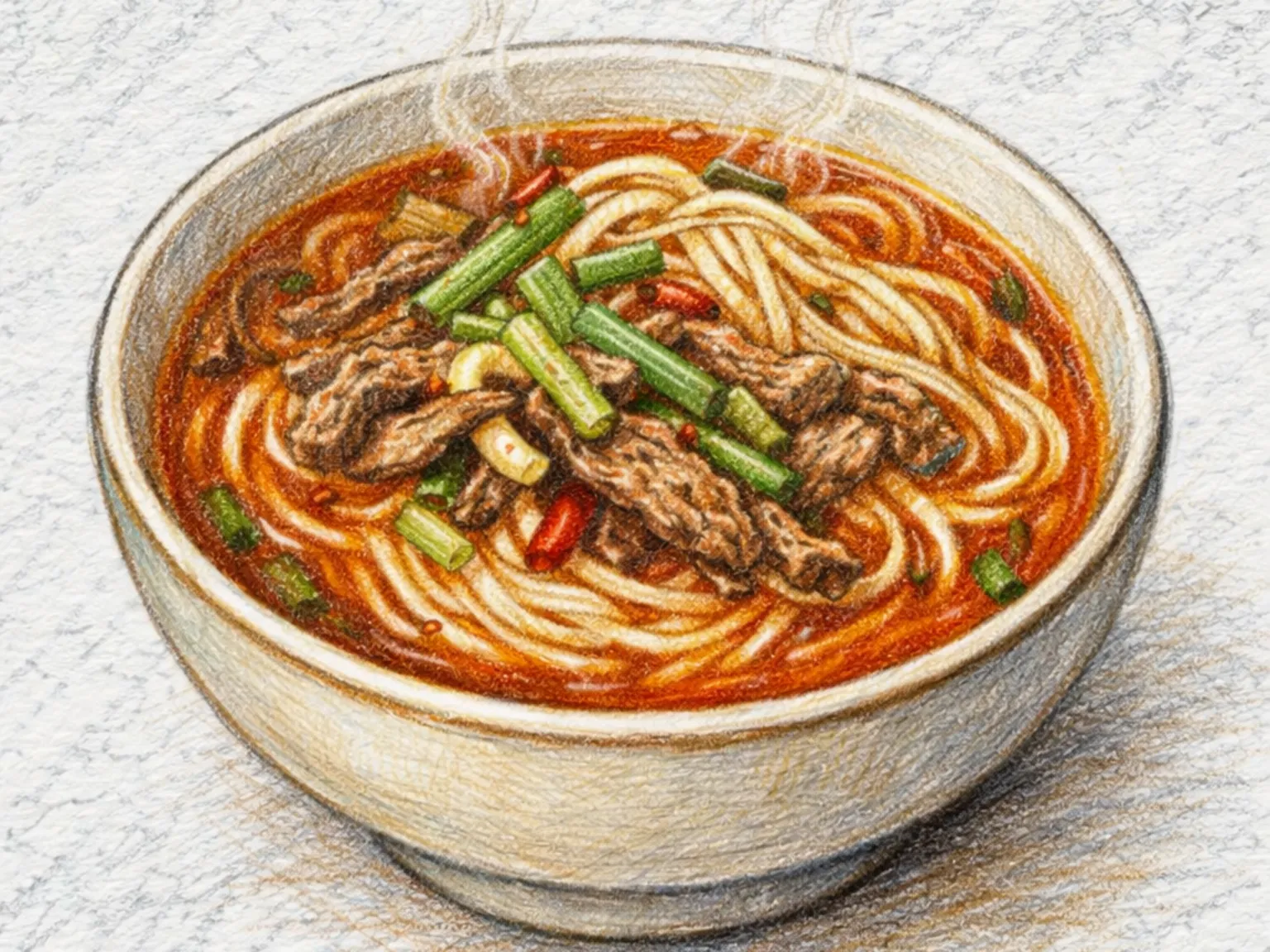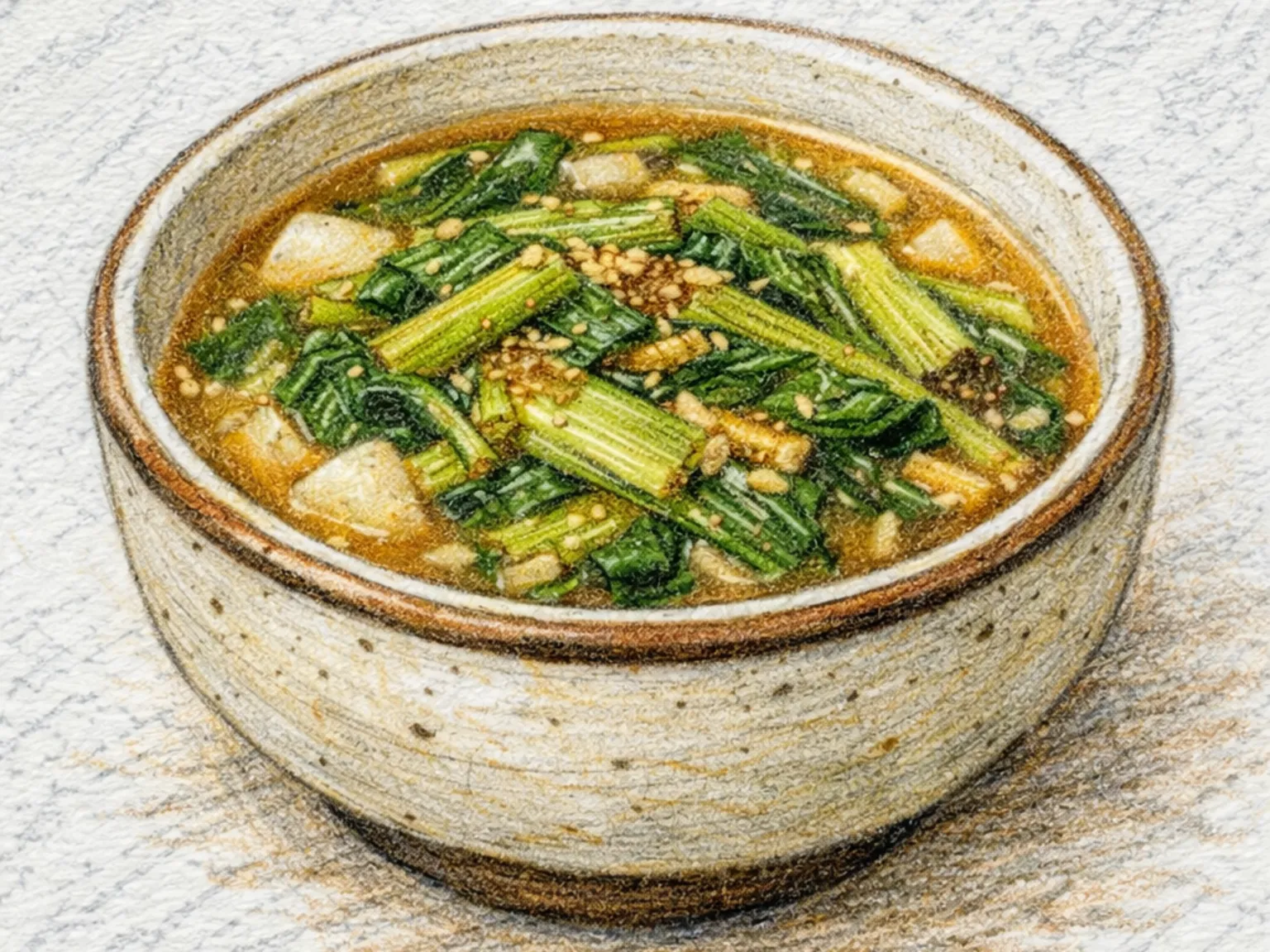
Jesa Tangguk (Ancestral Clear Beef Soup)
Jesa-tangguk is a traditional Korean clear soup prepared for ancestral rites and formal family gatherings. Beef brisket is first soaked in cold water for at least an hour to draw out the blood, then simmered over medium heat for an extended time to produce a clear, deeply flavored stock that forms the foundation of the entire bowl. Skimming the surface regularly during cooking keeps the broth transparent and clean-tasting. Radish cooks until nearly translucent, releasing a gentle natural sweetness into the stock, while blocks of tofu and sliced shiitake mushrooms add contrasting textures. Seasoning is limited to soup soy sauce and garlic, preserving the purity of the broth and allowing each ingredient's flavor to come through undisguised. Fat is skimmed away before serving, producing the spotless, refined finish expected of ritual food. The aesthetic matters as much as the flavor: ingredients are cut into tidy, uniform shapes and arranged with deliberate care, reflecting the reverence that is central to the jesa ritual. Beyond ceremonial occasions, jesa-tangguk is a comforting home-style soup enjoyed at holidays and family meals for its clean, balanced warmth.

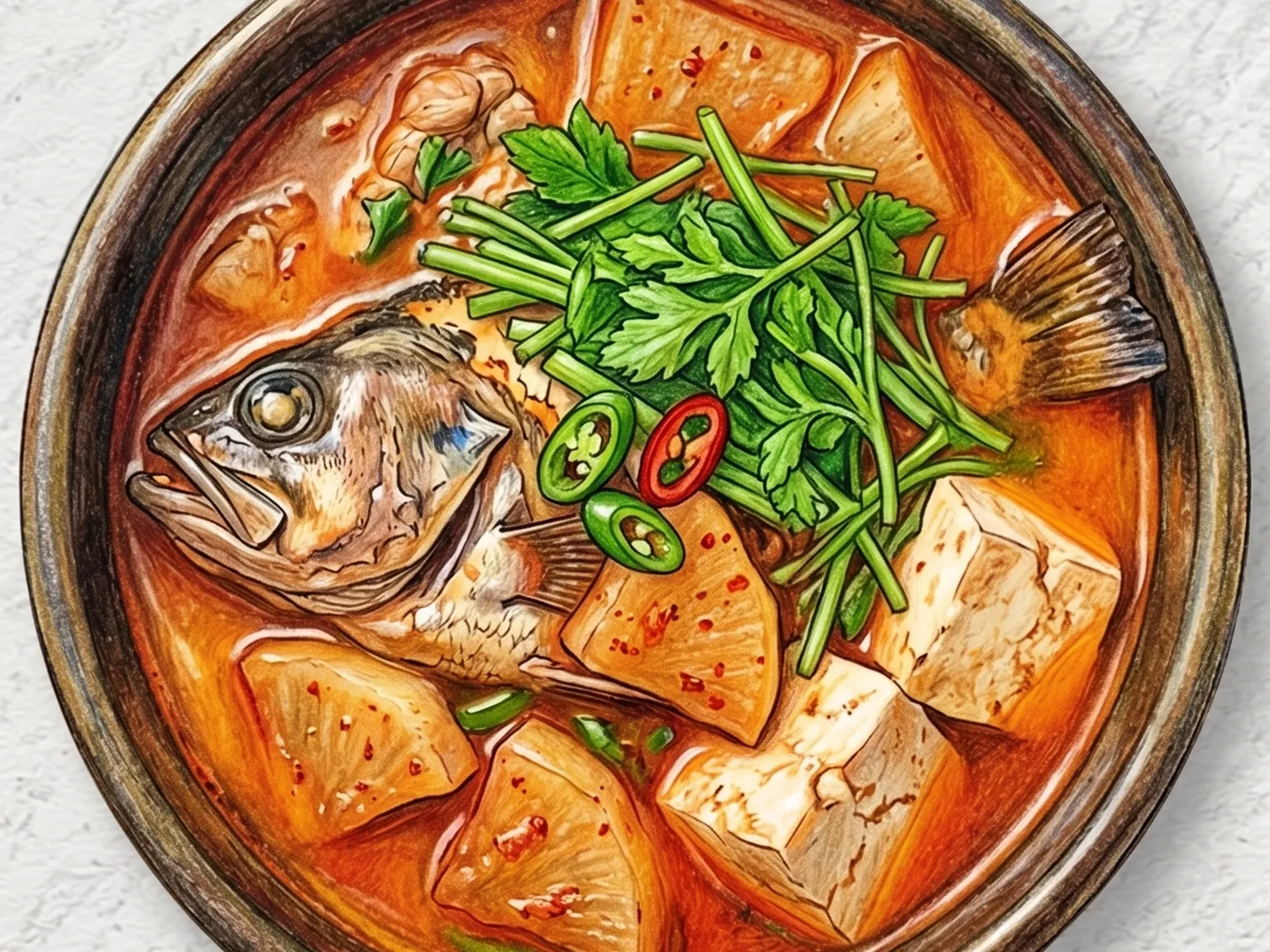
Korean Spicy Freshwater Fish Noodle Soup
Eotang guksu is a regional noodle soup from the Chungcheong inland provinces, built on a broth made by simmering freshwater fish for an extended time until the bones and flesh give up their concentrated, savory extract. Freshwater fish releases fishy oils as it cooks, so straining the broth two or three times through a fine sieve to remove bone fragments and surface oils is what separates a clean, drinkable broth from a murky one. Doenjang is stirred in to neutralize residual fishiness while contributing a fermented, savory roundness. Gochugaru adds heat and color to the otherwise clear, oil-free liquid, giving direction to what might otherwise be a flat broth. A beaten egg poured in at the end forms soft, wispy ribbons that float across the surface. Somyeon noodles are added last. This dish evolved in landlocked Chungcheong communities that turned to river fish in place of coastal seafood, and its character reflects that resourcefulness.