Korean Zucchini Pickles (Soy Vinegar Brine Jangajji)
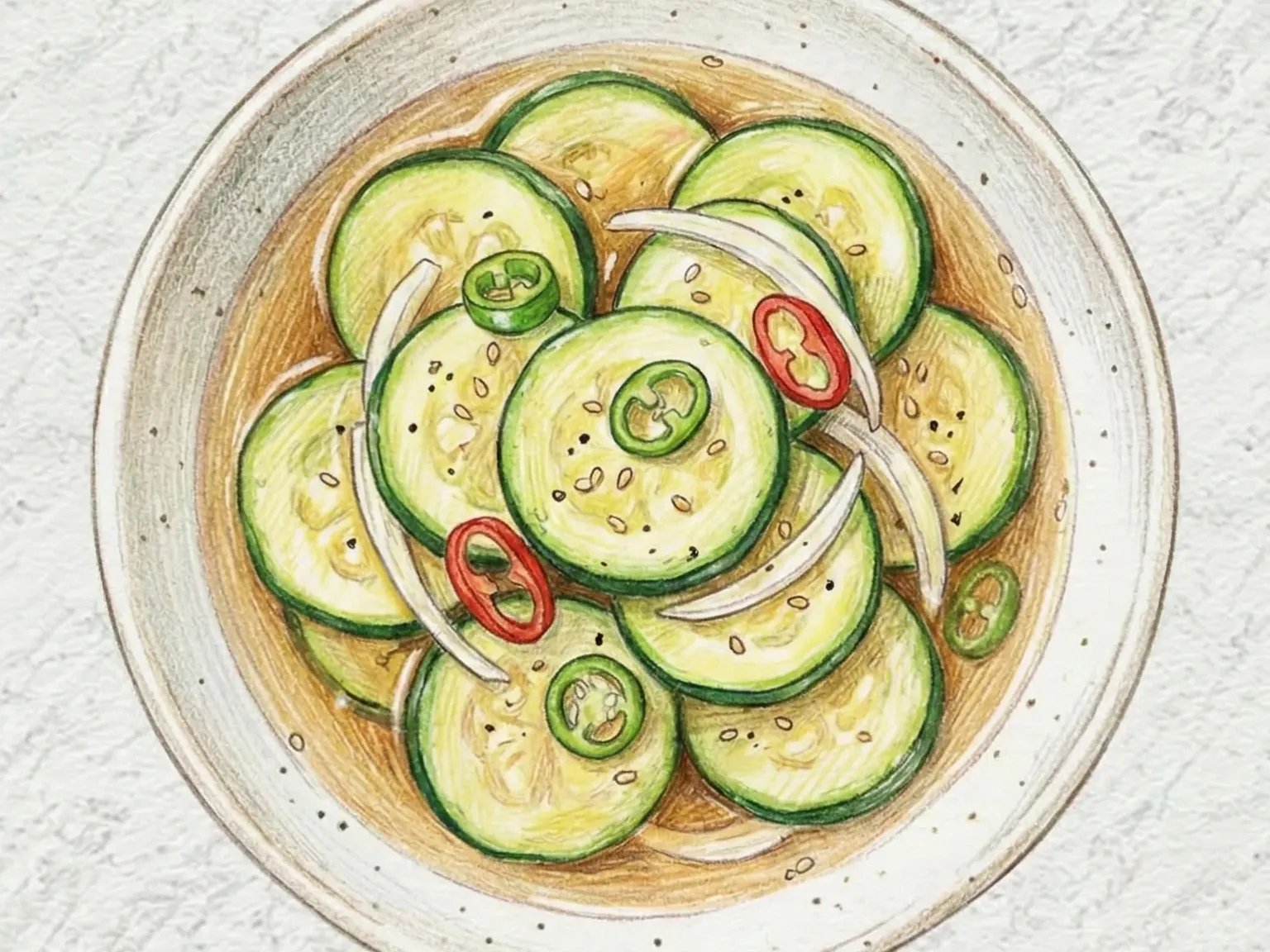
Jangajji - Korean soy-pickled preserves - date back to a time before refrigeration, when vegetables were preserved in soy brine to last through lean months. This version uses young zucchini, sliced into thick half-moons and layered with onion, cheongyang chili, and whole garlic cloves in a sterilized jar. A boiling-hot brine of soy sauce, vinegar, sugar, and water is poured directly over the vegetables, partially cooking the outer edges while the centers stay crisp. The pickle is ready in 24 hours but deepens in flavor over three days as the sweet-sour-salty brine penetrates fully. Unlike fresh banchan that must be eaten the same day, jangajji keeps for two weeks in the refrigerator, making it a reliable side dish to pull out whenever the meal needs a bright, tangy counterpoint.
Adjust Servings
Instructions
- 1
Slice zucchini into 0.8 cm half-moons and onion into thick strips.
- 2
Layer zucchini, onion, chili, and garlic in a sterilized glass jar.
- 3
Boil soy sauce, vinegar, sugar, and water until sugar dissolves fully.
- 4
Pour the boiling brine directly into the jar, seal, and let cool.
- 5
Refrigerate after cooling and serve from 24 hours later.
- 6
For deeper flavor, wait 3 days; consume within 2 weeks.
As an Amazon Associate, we may earn from qualifying purchases.
Tips
Nutrition (per serving)
More Recipes

Korean Cauliflower Jangajji (Pickled Cauliflower)
Crunchy, tangy, and addictively snackable - Korean pickled cauliflower in a sweet-sour soy brine that stays crisp for days. Florets are broken into bite-sized pieces and soaked in a boiled-and-cooled brine of soy sauce, vinegar, and sugar. The dense structure absorbs the pickling liquid gradually while keeping its firm crunch intact. A perfect palate cleanser alongside fried chicken, BBQ, or any rich dish on the Korean table.

Korean Soy-Pickled Eggplant
Gaji jangajji is a Korean pickled eggplant made by blanching eggplant for just over a minute to soften only the surface, then submerging it in a boiled brine of soy sauce, vinegar, and sugar. The blanched eggplant absorbs the pickling liquid rapidly like a sponge while keeping a yielding, silky texture inside. Vinegar gives direction to the eggplant's otherwise neutral flavor, and garlic and cheongyang chili layered into the brine build a quiet complexity beyond simple preservation. Ready to eat after one day, this jangajji holds its texture for over ten days refrigerated, making it a practical banchan to prepare in advance.

Korean Soy Pickled Asparagus
This pickle applies the Korean jangajji tradition - soy-brine preservation - to asparagus, a vegetable that Koreans adopted relatively recently but now use freely across banchan. The asparagus is blanched for just 20 seconds to set its color and soften the fibrous outer layer, then immediately shocked in ice water to lock in a vivid green and a firm, snapping texture. Packed upright in a sterilized jar, the spears are covered with a boiling brine of soy sauce, rice vinegar, sugar, and water that partially cooks the surface while the core stays crisp. Within 24 hours the brine penetrates enough for the pickle to be edible, but the flavor peaks at three days when the sweet-sour-salty balance has fully developed. Unlike most jangajji that use root vegetables or dense greens, asparagus brings a distinctive grassy, almost herbal note to the preserved format. Keeps refrigerated for two weeks.

Korean Garlic Scape Soy Pickles
Maneul jong jangajji is a Korean garlic scape pickle made by cutting scapes into 5 cm lengths, packing them in a sterilized jar with cheongyang chili, and pouring over a brine of boiled soy sauce, vinegar, sugar, and kelp. The scapes' sharp garlic bite melds with the soy's salty savory character to build a flavor that deepens with every chew, and the kelp infuses the brine with a subtle seaweed umami. Vinegar cuts through the salt to keep the taste clean, and the chili adds a lingering warmth at the finish. Reboiling and repouring the brine after two days extends the shelf life, allowing this banchan to last over a month in the refrigerator.

Korean Steamed Zucchini with Salted Shrimp
This gentle braise belongs to a family of Korean jjim dishes where vegetables are steam-cooked in minimal liquid seasoned with fermented ingredients. Salted shrimp - saeujeot - is the sole seasoning base, minced and dissolved into water with garlic to create a light broth. Half-moon slices of zucchini cook covered on medium-low heat, absorbing the shrimp's briny umami as they turn translucent. The technique produces something between steaming and braising: the zucchini stays moist and intact, never waterlogged. A finish of perilla oil and sesame seeds off-heat adds a nutty fragrance. This banchan traces to Korean countryside kitchens where salted shrimp was the primary seasoning before soy sauce became widely available. It pairs naturally with steamed rice and a stronger-flavored main dish.

Korean Pickled Garlic Scapes
Maneuljjong-jangajji pickles garlic scapes in a boiled soy-vinegar-sugar brine, sharing the same preservation principle as garlic clove jangajji but using the stalks instead of the bulbs. The scapes are cut to 4 cm lengths, packed tightly in a jar, and doused with the brine while still hot - the heat partially cooks the outer surface, giving each piece a clean snap when bitten, unlike the cold-pour method used for whole garlic jangajji. Whole black peppercorns added to the jar release their spicy aroma into the liquid during aging, adding depth beyond the basic salt-acid profile. Though edible after one day, day three is the sweet spot where the seasoning has penetrated enough while the scapes still retain crunch. Reboiling and repouring the brine once extends the preservation window significantly. These pickled scapes serve as a sharp, vinegary counterpoint to rich meat dishes on the Korean table.