Korean White Kimchi (Non-Spicy Napa Pear Fermented)
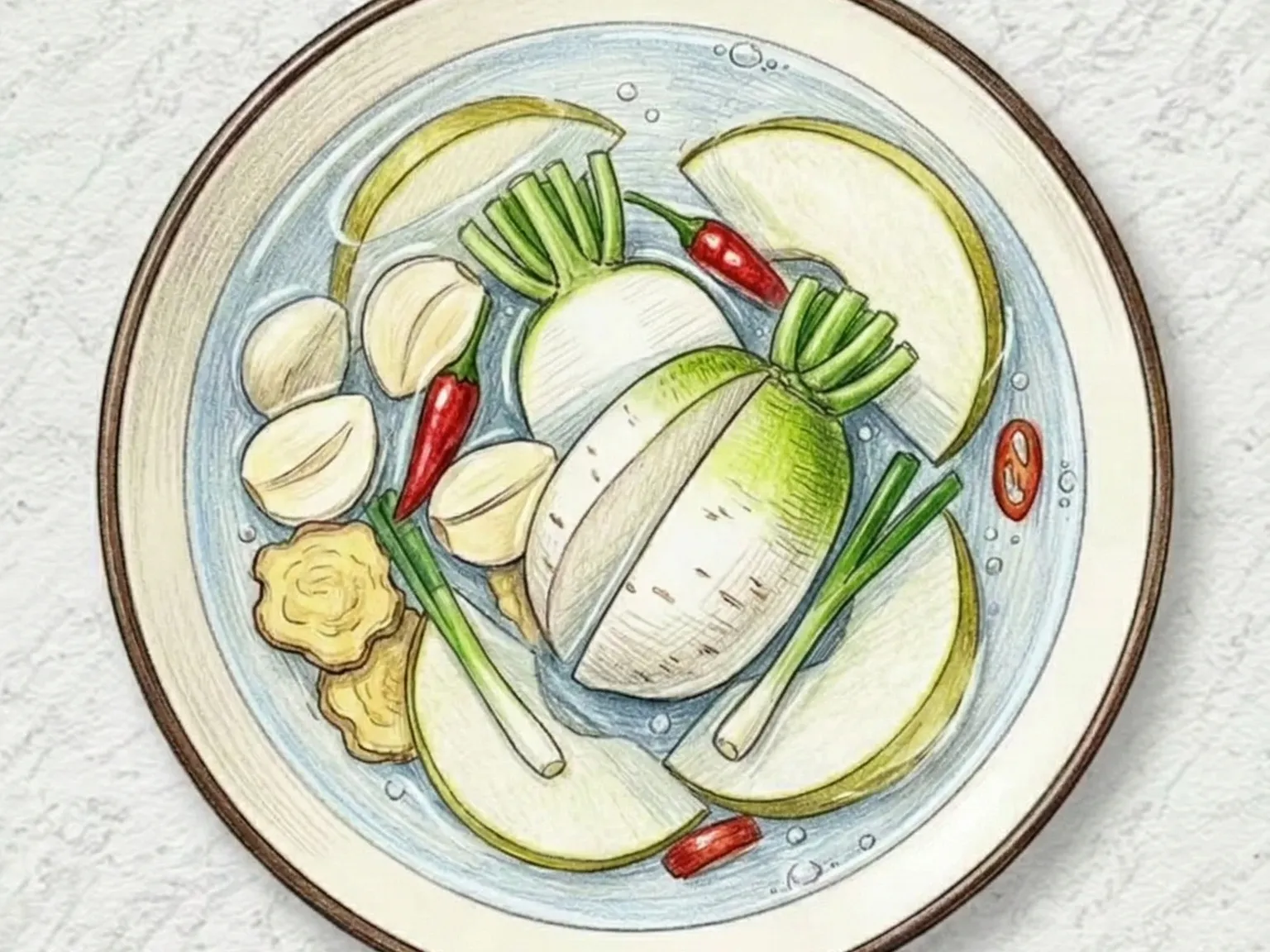
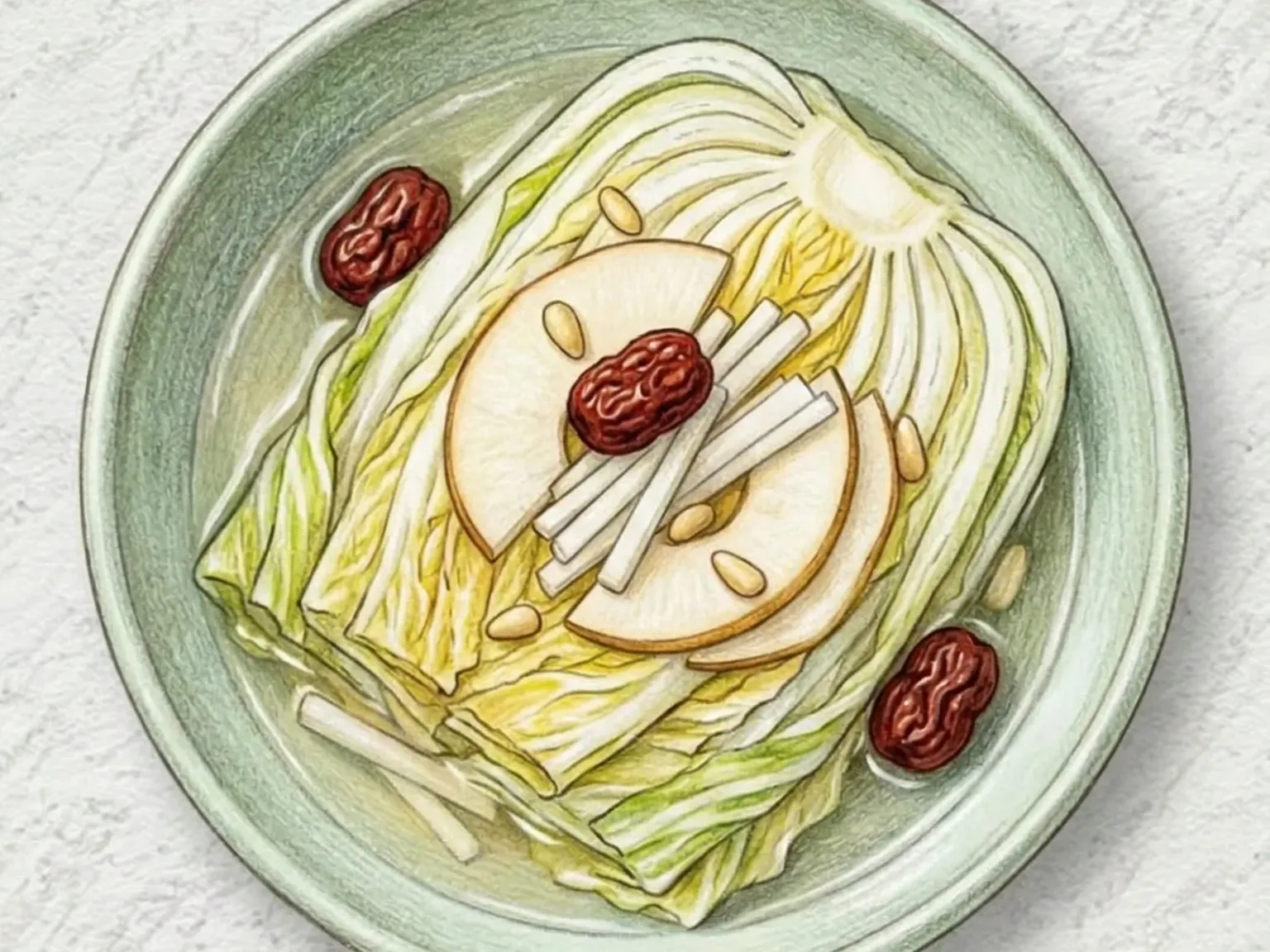
Baek kimchi is a Korean white kimchi made without gochugaru, producing a completely non-spicy, clear-broth fermented vegetable. Napa cabbage is salted and wilted, rinsed, then layered with julienned radish, sliced garlic, and ginger tucked between the leaves. Pureed pear serves as a natural sugar source that feeds the fermentation, while dried jujubes add a subtle background sweetness to the brine. Salted water is poured over the assembled cabbage, the container is sealed, and after one day at room temperature the kimchi moves to the refrigerator for a slow ferment. Without chili heat, the flavor profile centers on the clean lactic acidity that develops over time, balanced by the fruit sweetness and the warm bite of garlic and ginger. The fermentation is slower than standard kimchi, reaching its optimal taste at two to three weeks. It is eaten with its brine, either on its own or as a palate cleanser alongside rich meat dishes.
Adjust Servings
Instructions
- 1
Split napa cabbage, salt between layers, and brine for 3-4 hours. Rinse well and drain.
- 2
Julienne radish and pear, then finely mince garlic and ginger.
- 3
Mix radish, pear, garlic, ginger, and scallions to make the filling.
- 4
Stuff the filling between cabbage leaves and pack into a container.
- 5
Pour in lightly salted water, ferment at room temperature for half a day, then refrigerate 2-3 days.
As an Amazon Associate, we may earn from qualifying purchases.
Tips
Nutrition (per serving)
More Recipes

Korean Napa Cabbage Kimchi
Baechu kimchi is Korea's defining fermented food, made by salting napa cabbage and layering it with a paste of gochugaru, anchovy fish sauce, garlic, ginger, and glutinous rice paste. The cabbage is salted with coarse sea salt for six to eight hours until the stems become flexible but retain their crunch; under-salting leads to mushy kimchi, while over-salting masks the seasoning flavors. The glutinous rice paste serves a dual purpose: it acts as a glue that helps the seasoning adhere to each leaf, and it provides sugars that feed lactobacillus during fermentation. Julienned radish mixed into the filling adds textural contrast, and scallions contribute another layer of savory depth. After one day at room temperature to kick-start fermentation, the kimchi moves to the refrigerator where acidity develops slowly. At two to three weeks, the heat from gochugaru, the umami from fish sauce, and the tang from lactic acid reach their optimal balance.

Korean Kohlrabi Kimchi (Cubed Gochugaru Fermented Crisp)
Kolrabi kimchi is made by cutting kohlrabi into 2 cm cubes, brining them in coarse salt, and mixing with gochugaru, fish sauce, minced garlic, and plum syrup before fermentation. Kohlrabi contains less moisture and has a denser structure than Korean radish, so its crisp texture holds up well even after days of fermentation, and its natural sweetness creates a clear contrast against the spicy seasoning. Fish sauce provides a fermented savory base while plum syrup adds both acidity and sweetness to keep the flavors in balance. Eaten fresh, it tastes clean and salad-like; after three to four days, the umami deepens noticeably.

Korean Green Onion Kimchi
Daepa kimchi is made by cutting large green onions into six- to seven-centimeter lengths and gently coating them in a paste of gochugaru, anchovy fish sauce, soy sauce, plum extract, and glutinous rice paste. The rice paste acts as a binder that keeps the seasoning clinging to the onion surfaces throughout fermentation instead of sliding off. Handling the stalks carefully so they stay intact is important for presentation, and splitting thicker white portions lengthwise gives the paste more surface area to penetrate. Eight hours of room-temperature fermentation followed by two days of refrigeration brings the kimchi to its peak, where the sharp allium bite of the green onion meets the deep fermented umami of the fish sauce.

Korean Scallion Kimchi (Whole Stalk Anchovy Shrimp Paste)
Jjokpa kimchi is a traditional Korean scallion kimchi made by lightly brining whole scallions in coarse salt, then coating them from root to tip with a seasoning paste of anchovy fish sauce, salted shrimp, gochugaru, and sweet rice paste. The dual seafood condiments build a layered umami that the rice paste locks onto the scallion surface, preventing the flavor from diluting as moisture releases during fermentation. The white bulb sections stay crisp and absorb the chili heat, while the green tops wilt into a soft, pungent layer with a sharp allium bite. After six hours at room temperature followed by a day in the refrigerator, the seasoning stabilizes into a balanced, punchy side dish that works alongside steamed rice or grilled pork belly.

Korean White Kimchi Tofu Stew
Baek kimchi dubu jjigae is a mild Korean stew where the gentle tang of white kimchi replaces the bold heat of regular kimchi. Anchovy-kelp stock provides the umami foundation, and chopped white kimchi is added so its fermented acidity dissolves into the broth, creating a refreshingly different direction from typical doenjang or kimchi stews. Thick tofu slabs go in after the broth reaches a boil to prevent them from crumbling, and enoki mushrooms are added in the final two minutes to keep their delicate texture. Guk-ganjang adjusts the salt level cautiously since the white kimchi already carries its own brine salinity. A sliced cheongyang chili introduces a controlled spicy note into the otherwise gentle broth. Unlike the intense red broth of standard kimchi jjigae, this version stays clear, lightly tart, and nearly fat-free, making it noticeably light on the stomach.

Korean Fresh Cabbage Kimchi
Geotjeori is kimchi's unfermented cousin - raw napa cabbage dressed in gochugaru seasoning and eaten immediately. The leaves are tossed with red pepper flakes, anchovy fish sauce, garlic, and sugar, drawing out just enough moisture to form a light, spicy brine. Unlike aged kimchi, geotjeori tastes bright and vegetal with the clean crunch of fresh cabbage intact. Koreans pair it with grilled pork belly or doenjang-jjigae.