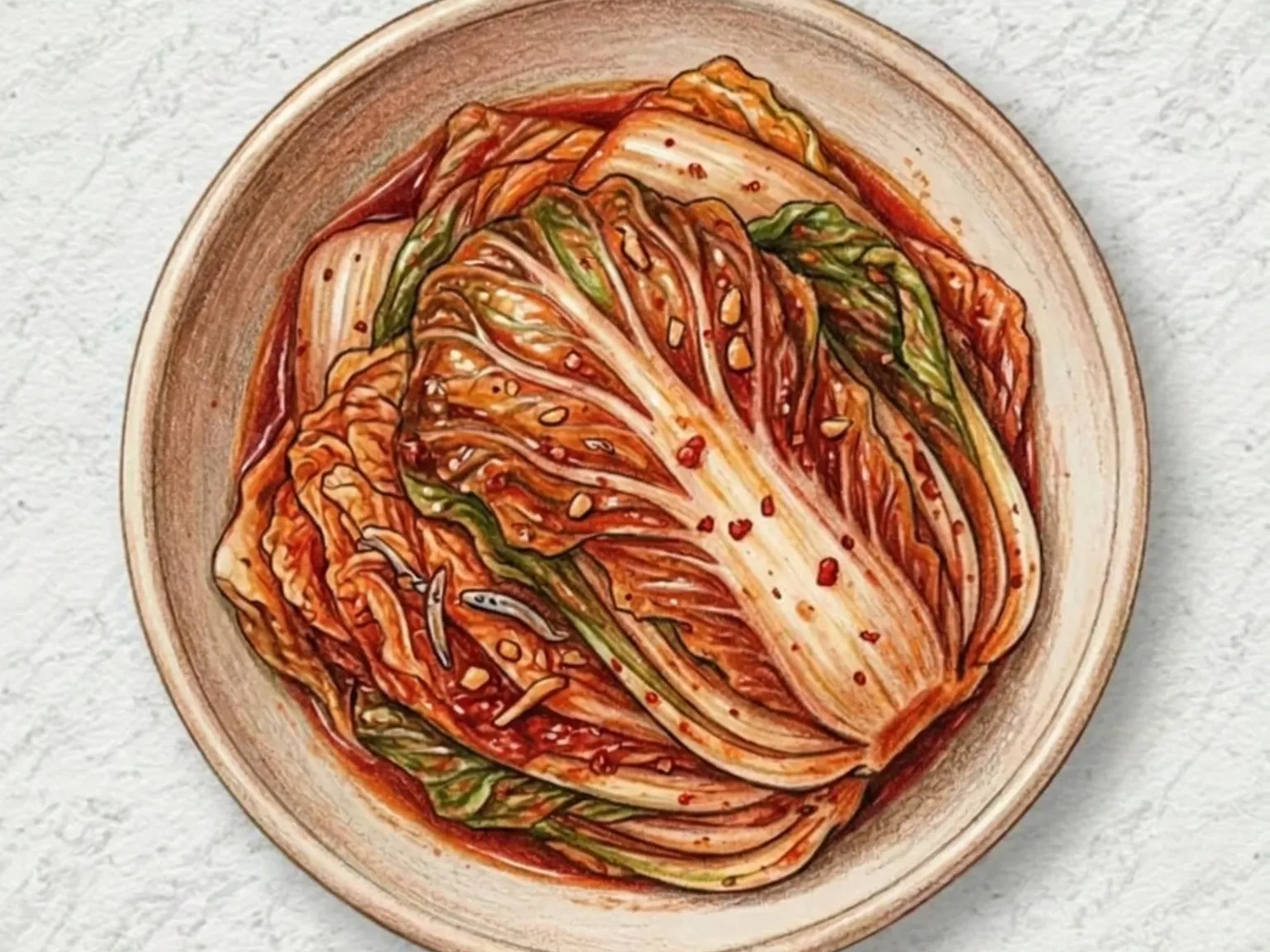
Korean Napa Cabbage Kimchi
Baechu kimchi is Korea's defining fermented food, made by salting napa cabbage and layering it with a paste of gochugaru, anchovy fish sauce, garlic, ginger, and glutinous rice paste. The cabbage is salted with coarse sea salt for six to eight hours until the stems become flexible but retain their crunch; under-salting leads to mushy kimchi, while over-salting masks the seasoning flavors. The glutinous rice paste serves a dual purpose: it acts as a glue that helps the seasoning adhere to each leaf, and it provides sugars that feed lactobacillus during fermentation. Julienned radish mixed into the filling adds textural contrast, and scallions contribute another layer of savory depth. After one day at room temperature to kick-start fermentation, the kimchi moves to the refrigerator where acidity develops slowly. At two to three weeks, the heat from gochugaru, the umami from fish sauce, and the tang from lactic acid reach their optimal balance.
Adjust Servings
Instructions
- 1
Quarter the cabbage, brine for 6 hours, rinse, and drain thoroughly.
- 2
Mix chili flakes with sweet rice paste first and rest 10 minutes for color and body.
- 3
Add fish sauce, garlic, and ginger to make a balanced kimchi paste.
- 4
Fold radish and scallions into the paste to finish the filling.
- 5
Spread filling between each leaf layer and wrap with outer leaves.
- 6
Ferment at room temperature for 12-24 hours, then refrigerate and eat after 2-3 days.
As an Amazon Associate, we may earn from qualifying purchases.
Tips
Nutrition (per serving)
More Recipes

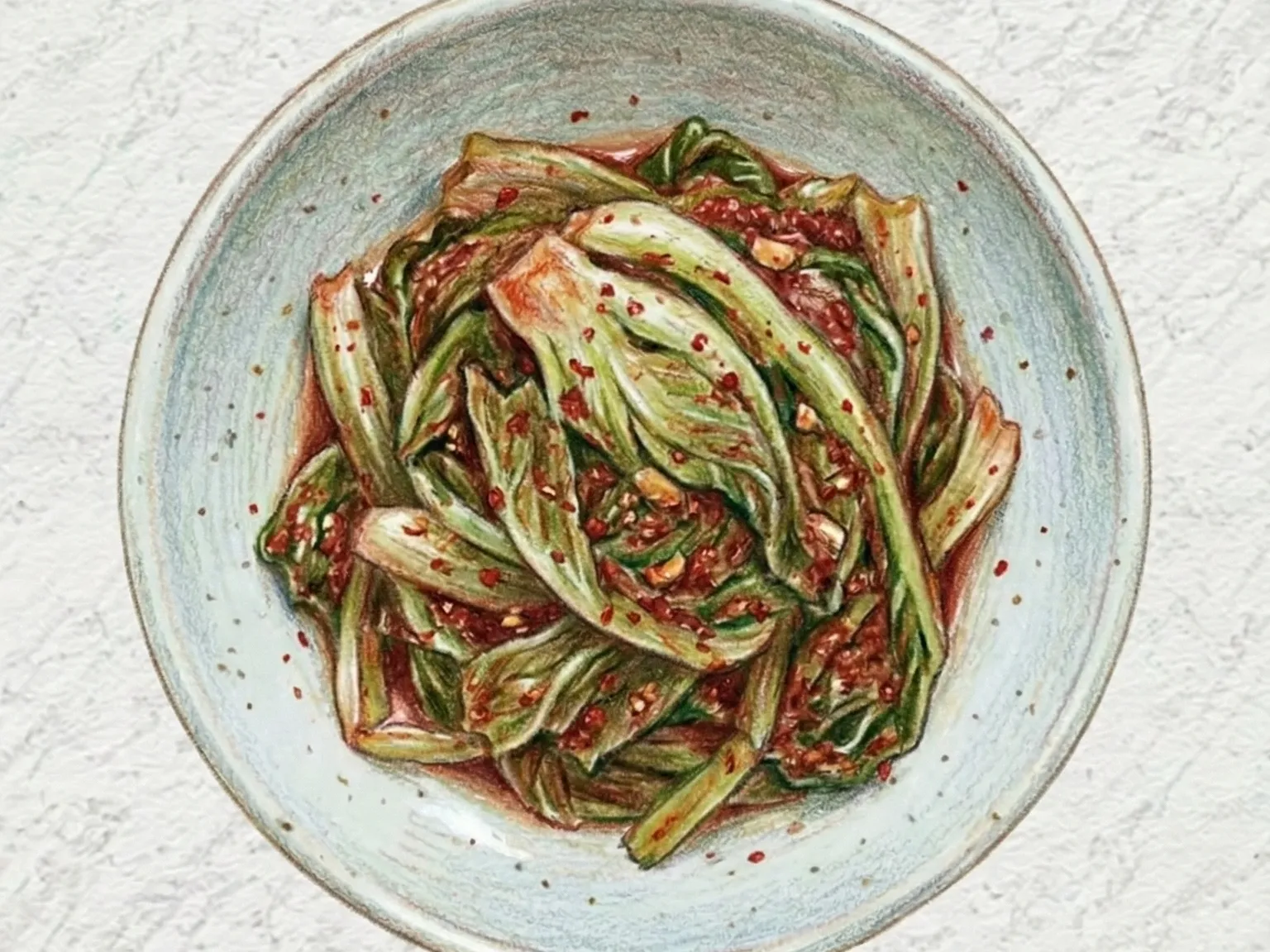
Korean Seasoned Napa Cabbage Namul
Boiled napa cabbage dressed with doenjang and perilla, passed down through generations of Korean home cooks. The cabbage boils two minutes - leaves collapse while white stems stay slightly firm - then is rinsed, squeezed, and cut. Perilla oil gives a distinctly herbal quality, and perilla powder thickens the dressing into a paste clinging to each piece. This quiet, understated banchan pairs well with clear soups and plain rice.

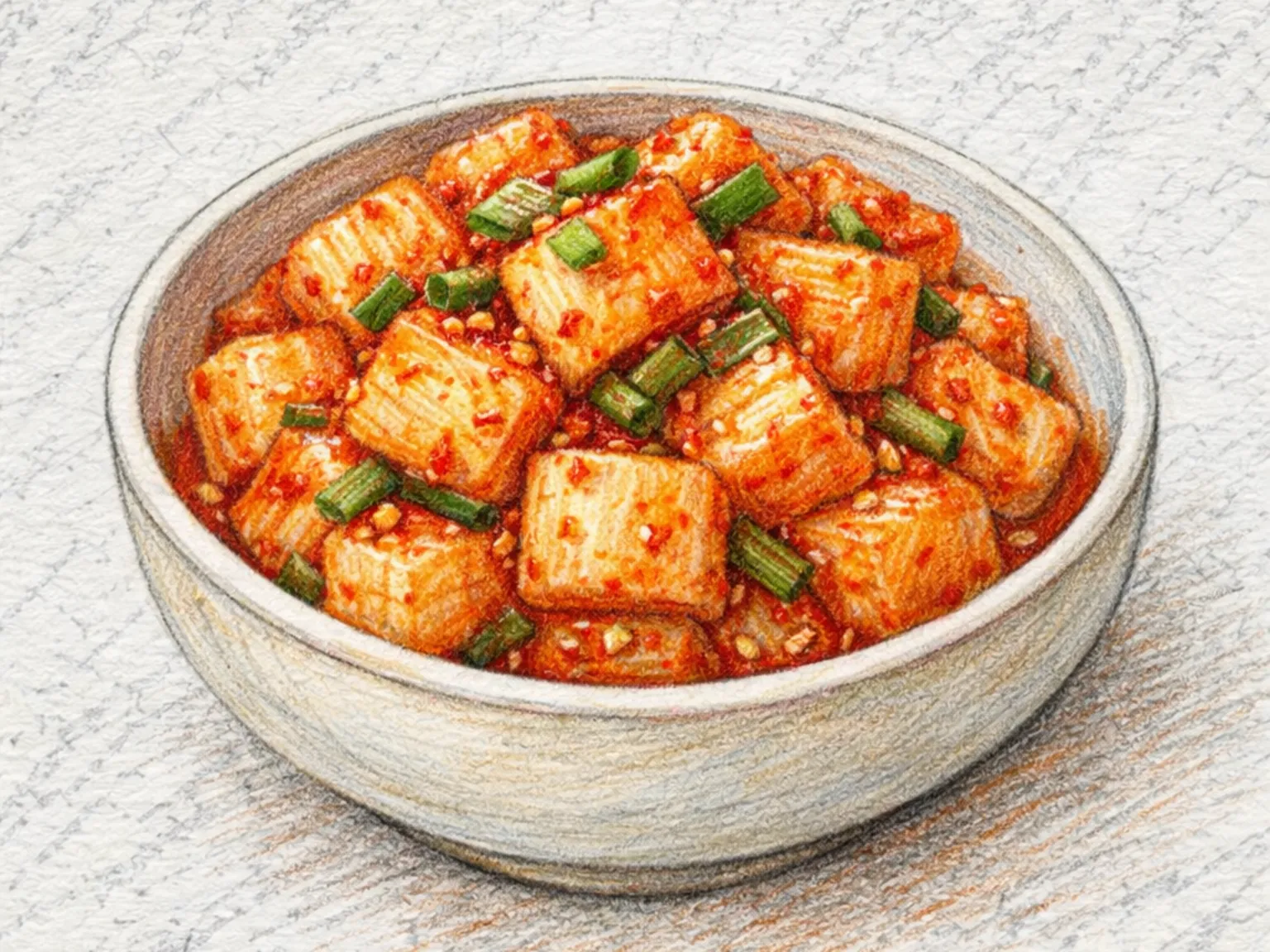
Korean Cubed Radish Kimchi
Kkakdugi is a staple Korean kimchi made from radish cut into 2 cm cubes, brined in coarse salt, then seasoned with gochugaru, salted shrimp, garlic, and ginger before fermentation. Salting draws out moisture from the cubes, creating a contrast between the damp interior and the snappy outer surface. Salted shrimp layers its briny seafood depth beneath the chili heat, and as fermentation progresses, the radish's natural sugars emerge to balance the spice with a clean sweetness. The accumulated brine at the bottom of the jar develops a refreshing tang that makes kkakdugi the essential companion to rich, milky soups like seolleongtang and gomtang.

Korean Napa Cabbage Pancake
Baechu jeon is a Korean pancake made by coating napa cabbage leaves in a thin flour batter and pan-frying until golden. Outer leaves of medium size work best; if the stem end is too thick, it is flattened with the back of a knife so the batter adheres evenly and the leaf does not buckle during cooking. The batter is mixed thin, roughly equal parts buchim flour and water, so it forms a light coating rather than a heavy shell that would mask the cabbage flavor. Generous oil in the pan and steady medium heat produce a crisp exterior while the cabbage inside softens and releases its gentle sweetness. Each side must brown fully before flipping to prevent the pancake from breaking apart. A dipping sauce of soy sauce with vinegar and sliced cheongyang chili adds acidity and heat that offset the mild character of the pancake.

Korean Lotus Root Kimchi (Crunchy Spiced Root Kimchi)
Yeongeun kimchi is a lotus root kimchi made by blanching sliced root in vinegar water to lock in crunch, then seasoning with chili flakes, minced garlic, anchovy fish sauce, and pear juice. The pear juice adds natural sweetness and moisture, helping the paste coat each slice evenly without drying out. The root's dense, crisp bite survives fermentation intact, releasing alternating waves of heat and umami with each chew. Scallion pieces mixed in lighten the intensity of the seasoning with their fresh, grassy note. One day of refrigeration brings the texture to its crunchiest point.

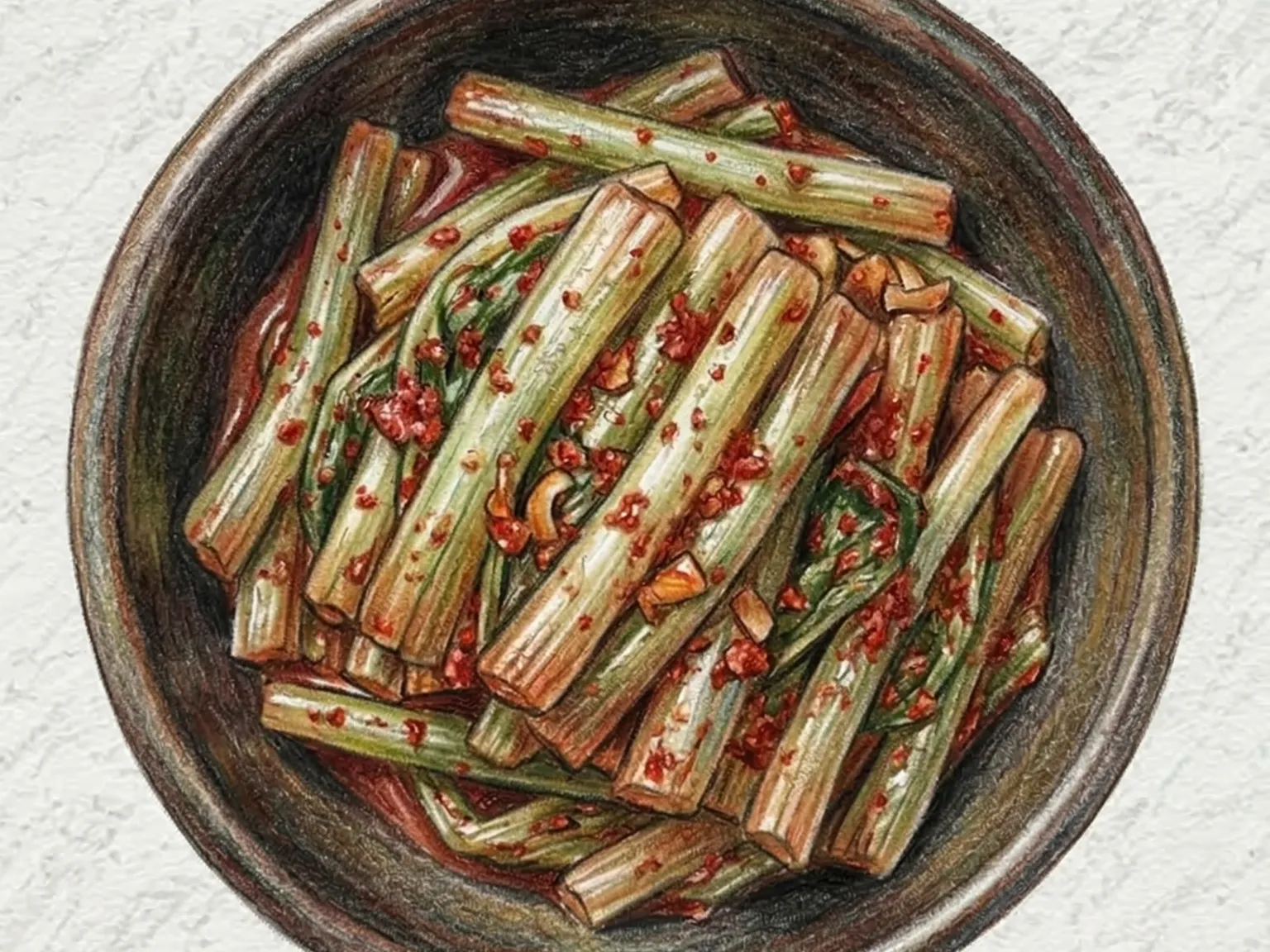
Korean Fresh Eggplant Kimchi
Gaji kimchi is a fresh, no-fermentation eggplant kimchi made by steaming eggplant until soft, tearing it along the grain, and tossing it with gochugaru, fish sauce, garlic, and sesame oil. Tearing rather than cutting exposes the fibrous interior so the seasoning reaches deep into every strand. Scallions add a fresh, sharp lift, and sesame seeds provide a nutty finish. Since no fermentation is required, this kimchi can be eaten immediately after preparation, making it especially useful in summer when a quick banchan is needed. Mixed into a bowl of cold leftover rice, the seasoning soaks into the grains for a satisfying one-bowl meal.

Korean Scallion Kimchi (Whole Stalk Anchovy Shrimp Paste)
Jjokpa kimchi is a traditional Korean scallion kimchi made by lightly brining whole scallions in coarse salt, then coating them from root to tip with a seasoning paste of anchovy fish sauce, salted shrimp, gochugaru, and sweet rice paste. The dual seafood condiments build a layered umami that the rice paste locks onto the scallion surface, preventing the flavor from diluting as moisture releases during fermentation. The white bulb sections stay crisp and absorb the chili heat, while the green tops wilt into a soft, pungent layer with a sharp allium bite. After six hours at room temperature followed by a day in the refrigerator, the seasoning stabilizes into a balanced, punchy side dish that works alongside steamed rice or grilled pork belly.