Antipasto Salad
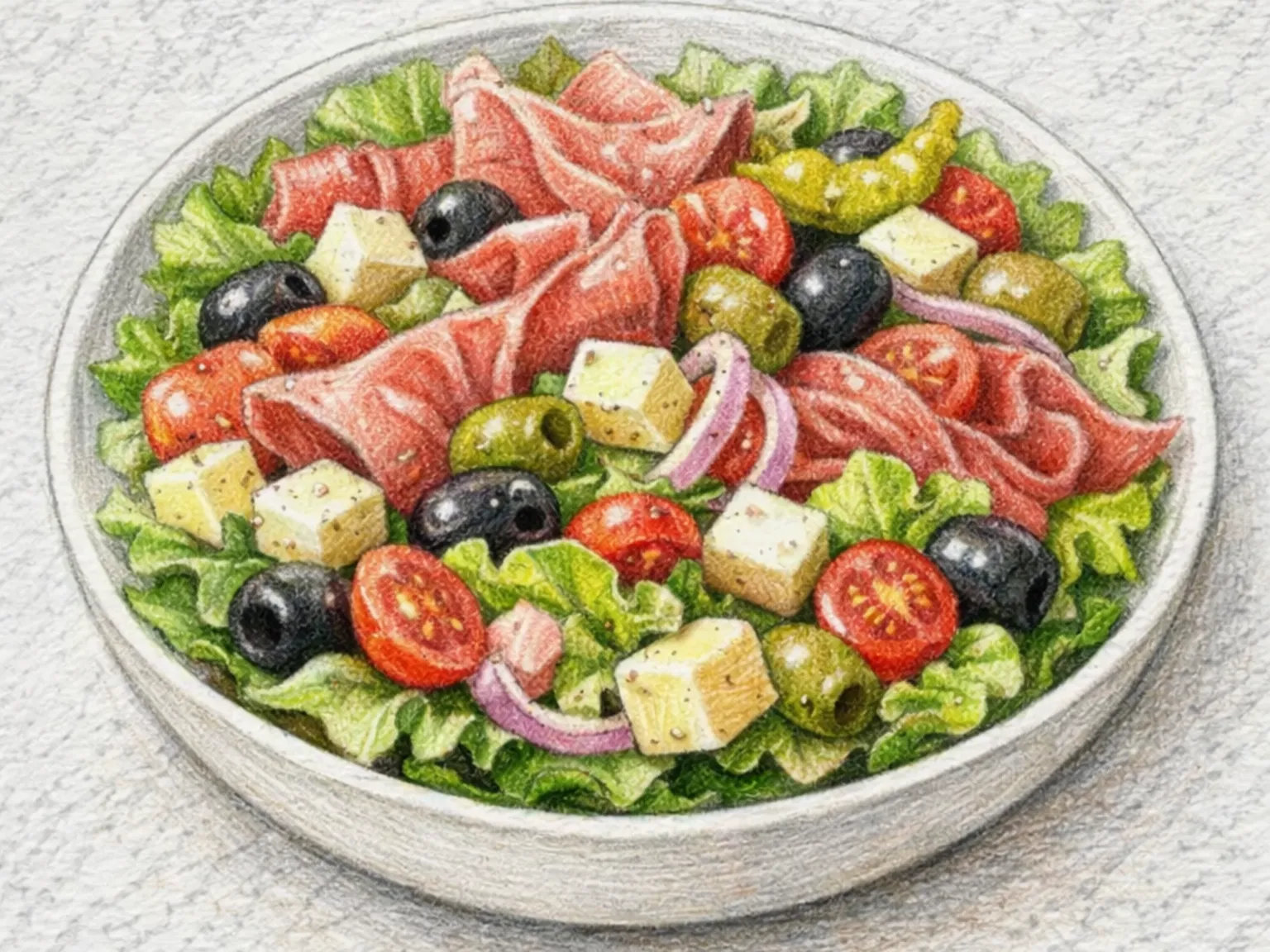
Antipasto - literally 'before the meal' in Italian - is a course of cured meats, cheeses, olives, and preserved vegetables served at the start of an Italian dinner, and this salad reformats that tradition into a single composed bowl. Crisp romaine or iceberg lettuce forms the base, topped with sliced salami, capicola, provolone, marinated artichoke hearts, roasted red peppers, and briny Kalamata olives. A red wine vinegar dressing with dried oregano and garlic ties the components together with a sharp, herbal acidity. The salad works because every ingredient brings a different intensity - salty cured meat, tangy cheese, sweet peppers, and bitter greens - so no two bites taste the same. Italian-American delis in New York and New Jersey popularized this format in the mid-20th century, and it has since become a fixture of catered lunches and family gatherings.
Adjust Servings
Instructions
- 1
Chop romaine, bell pepper, and cucumber into bite-size pieces.
- 2
Slice salami and drain mozzarella and olives.
- 3
Whisk vinegar and olive oil for dressing.
- 4
Combine all ingredients in a large bowl and toss with dressing.
- 5
Taste, adjust seasoning if needed, and serve immediately.
As an Amazon Associate, we may earn from qualifying purchases.
Tips
Nutrition (per serving)
More Recipes

Panzanella Salad (Italian Ciabatta Bread Salad)
Stale ciabatta is torn into rough chunks, drizzled with olive oil, and toasted until crisp outside and slightly chewy inside. Ripe tomatoes are cut large so their juice soaks into the bread, creating the sweet-tart flavor central to the dish. Cucumber and red onion add crunch and sharpness, while torn basil leaves release their fragrance across the plate. A red wine vinegar and olive oil vinaigrette binds everything, and the salad peaks once the bread has absorbed just enough dressing to soften without going soggy - a practical Tuscan tradition born from using day-old bread.

Caprese Salad
Caprese salad arranges ripe tomato, fresh mozzarella, and basil leaves in alternating slices, relying on just three main ingredients dressed with extra virgin olive oil and salt. Because the recipe involves no cooking, the tomato's ripeness and the mozzarella's milky freshness determine the entire flavor profile. A thin drizzle of balsamic glaze adds concentrated grape-vinegar sweetness that contrasts with the cheese's fat, while basil's volatile aromatics release directly on the plate. Dressing the salad right before serving minimizes the moisture that tomatoes release when salted in advance.

Frittata
Frittata whisks eight eggs with milk and salt, then builds layers of flavor on the stovetop before finishing in the oven. Onion is sautéed in olive oil in an oven-safe pan, followed by spinach and halved cherry tomatoes cooked just enough to soften. The egg mixture is poured over the vegetables and left undisturbed until the edges begin to set. Grated cheddar cheese goes on top before the pan moves to a 190-degree oven for ten minutes, where the frittata puffs and cooks through evenly. It is done when the center springs back gently to the touch. Over-whisking the eggs introduces too many air bubbles and can make the texture coarse rather than tender. Leftovers taste great cold in sandwiches the next day.

Mushroom Risotto
Mushroom risotto cooks unwashed arborio rice in olive oil and butter to activate the surface starch, then adds warm chicken stock one ladle at a time over 18 to 20 minutes of continuous stirring. Not rinsing the rice is essential - the starch released during cooking is what creates the signature creamy consistency without any cream. The mushrooms are sauteed on high heat until their moisture evaporates and they develop a deep brown color, which concentrates the earthy aroma. White wine is added to the toasted rice and stirred until absorbed, leaving behind a subtle acidity once the alcohol cooks off. Finishing off the heat with cold butter and grated Parmesan - a step called mantecatura - gives the risotto its glossy, velvety texture.

Spaghetti alla Puttanesca
Spaghetti alla puttanesca melts anchovy fillets into olive oil with sliced garlic over low heat, creating a deeply savory base before any tomato is added. Hand-crushed whole tomatoes, halved black olives, capers, and red pepper flakes go in next and simmer for eight minutes, during which the sauce reduces and the briny, salty, and spicy elements fuse into a bold, cohesive flavor. The anchovies dissolve completely, leaving no trace of fish but contributing an intense umami backbone. Because capers and anchovies are already heavily salted, seasoning is adjusted only at the very end by taste. The spaghetti is pulled one minute short of al dente and finished in the sauce pan with a splash of pasta water, which allows the starch to bind the sauce tightly to each strand.

Citrus Fennel Salad (Orange & Shaved Fennel with Arugula)
Fennel is shaved thin to highlight its anise-scented crunch, then paired with segmented orange for juicy acidity. Arugula contributes a peppery bite that offsets the citrus sweetness, and sliced almonds add a toasted crunch. The dressing stays minimal - olive oil and white wine vinegar - letting the raw ingredients speak clearly. This Italian-style salad works particularly well before rich meat or fish courses, as the citrus and fennel combination stimulates the palate.