Apple Fennel Walnut Salad
Quick answer
This salad pairs three ingredients whose textures and flavors run in different directions - crisp apple, anise-scented fennel, and bitter walnuts - and unifies them with...
What makes this special
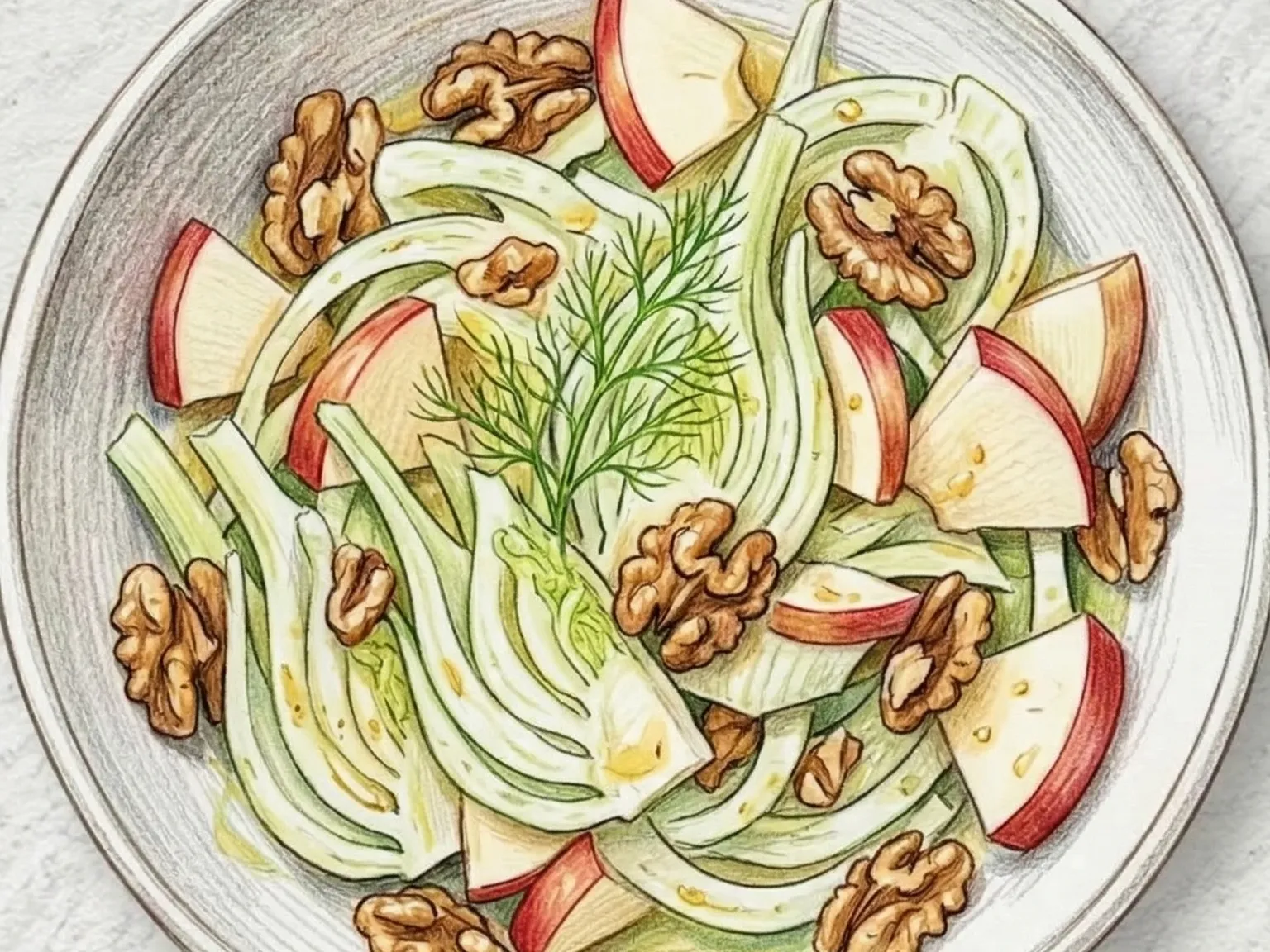
- Apple and walnut meet shaved fennel to balance anise fragrance with a crisp, earthy celery-like crunch.
- Fennel brings anise fragrance with celery-like crunch, not sweetness
- Toasted walnuts add bitter nuttiness to anchor the light ingredients
Key ingredients
Core cooking flow
- 1 Wash and dry the apple, remove the core, and slice it very thinly, about 1 to 2 mm.
- 2 Trim the fennel bulb, remove only the tough central core, and slice it 1 to 2 mm thick.
- 3 Break the walnuts into coarse pieces and toast them in a dry pan over low heat for 2 to 3 minutes.
This salad pairs three ingredients whose textures and flavors run in different directions - crisp apple, anise-scented fennel, and bitter walnuts - and unifies them with a honey-lemon dressing. Thinly sliced fennel bulb contributes a licorice-like fragrance that is more aromatic than sweet, while its celery-crisp texture holds a firm contrast against the apple's softer flesh. Toasted walnuts add a crunchy, tannic bitterness that anchors the lighter elements and keeps the salad from reading as merely sweet. The dressing is deliberately minimal - fresh lemon juice, honey, a small amount of olive oil, and a pinch of salt - so the ingredients carry the flavor rather than the sauce. Assembling just before serving prevents the apple from browning. Salads of this type appear on autumn and winter tables in France and Italy when local apples and fennel come into season together, and can be served as a standalone starter or alongside roasted poultry, where the anise note in the fennel cuts through the meat's richness. Fennel has a long association with digestive support in Mediterranean cooking, which is partly why it has traditionally been served alongside fatty meats, and this salad draws on the same pairing logic.
Instructions
Read the steps as a cooking flow: prep, heat, seasoning, doneness control, and finish.
- 1Prep
Wash and dry the apple, remove the core, and slice it very thinly, about 1 to 2 mm.
Prepare it near the end so it can go straight into the dressing before the cut surfaces brown.
- 2Season
Trim the fennel bulb, remove only the tough central core, and slice it 1 to 2 mm thick.
Soak the slices in cold water for 5 minutes, then drain and shake off excess water so the salad stays crisp.
- 3Finish
Break the walnuts into coarse pieces and toast them in a dry pan over low heat for 2 to 3 minutes.
When they smell nutty and look slightly darker, spread them on a plate to cool and stay crunchy.
- 4Season
In a small bowl, combine 1.5 tablespoons lemon juice, 1 teaspoon honey, 1 tablespoon olive oil, and 1/4 teaspoon salt.
Whisk until the honey dissolves and the dressing looks smooth rather than separated.
- 5Prep
Put 60 g arugula, the drained fennel, and the apple slices in a large bowl, then drizzle the dressing over them.
Toss lightly with your fingertips so the leaves are coated without being crushed or wilted.
- 6Finish
Transfer the salad to a serving plate with some height instead of pressing it flat, then scatter the cooled walnuts on top.
Serve immediately so the apple stays pale and the walnuts keep their crunch.
After the steps
Pick a recipe that fits this dish.
Continue with shared ingredients, meal pairings, or a similar method.
Recipes That Go Well With This
More Salads →Based on shared ingredients and meal pairing
Kale Apple Walnut Salad
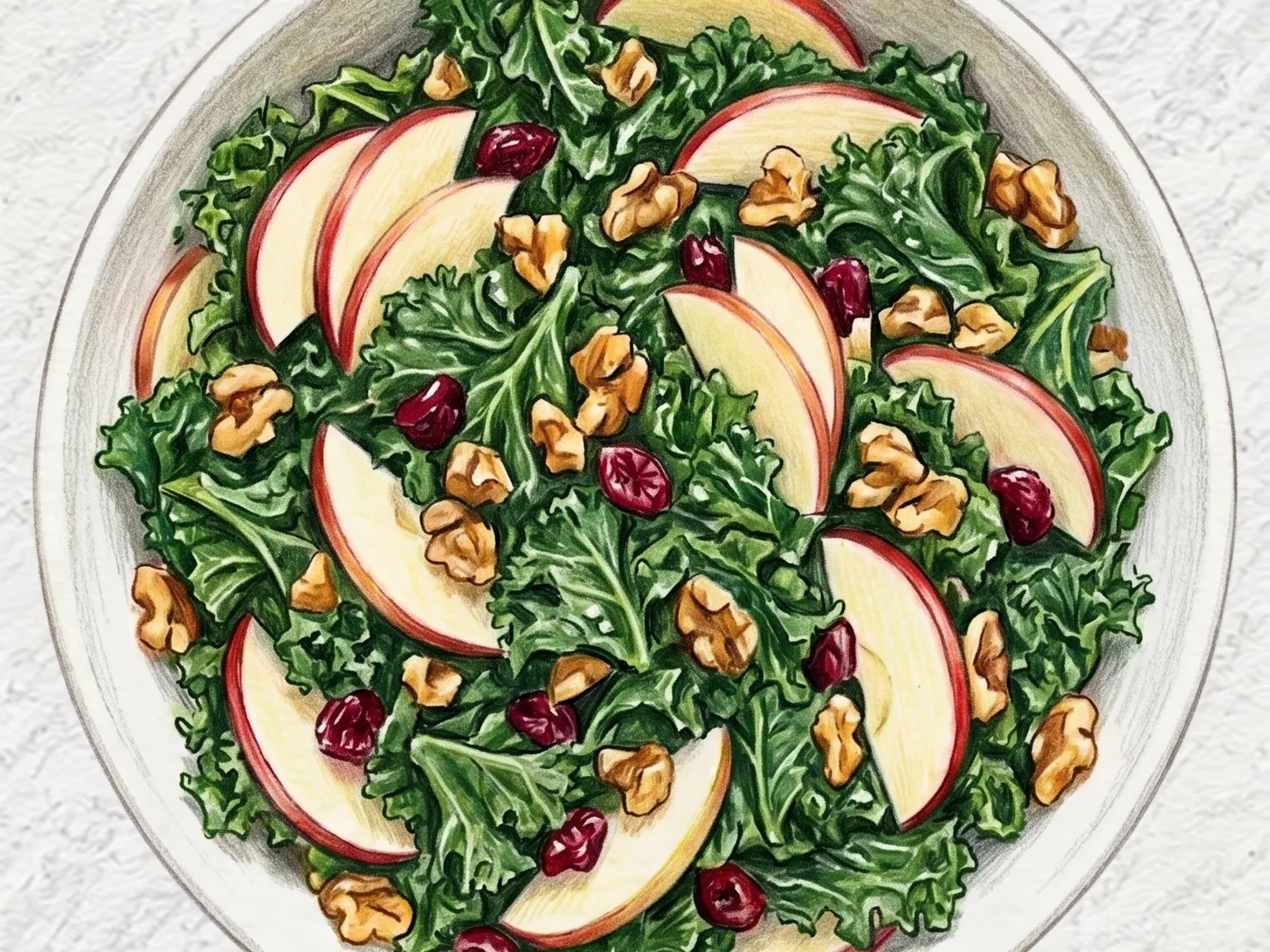
Kale apple walnut salad strips kale leaves from their stems, tears them small, and massages them with part of a lemon-honey dressing to soften the tough fibers before adding thinly sliced apple, roughly chopped walnuts, and dried cranberries with the remaining dressing. Raw kale has a coarse, chewy texture that can feel rough on the palate, but massaging it with the acidic dressing breaks down the cell walls, reducing volume and turning the leaves tender. The lemon juice pulls double duty - it tempers the kale's bitterness and prevents the apple slices from browning. Olive oil and honey round out the acid with a smooth richness and gentle sweetness. Toasting the walnuts in a dry pan for just one minute brings their oils to the surface, roughly doubling the nutty aroma, while pockets of dried cranberries add tart-sweet bursts throughout.
Beet and Goat Cheese Salad
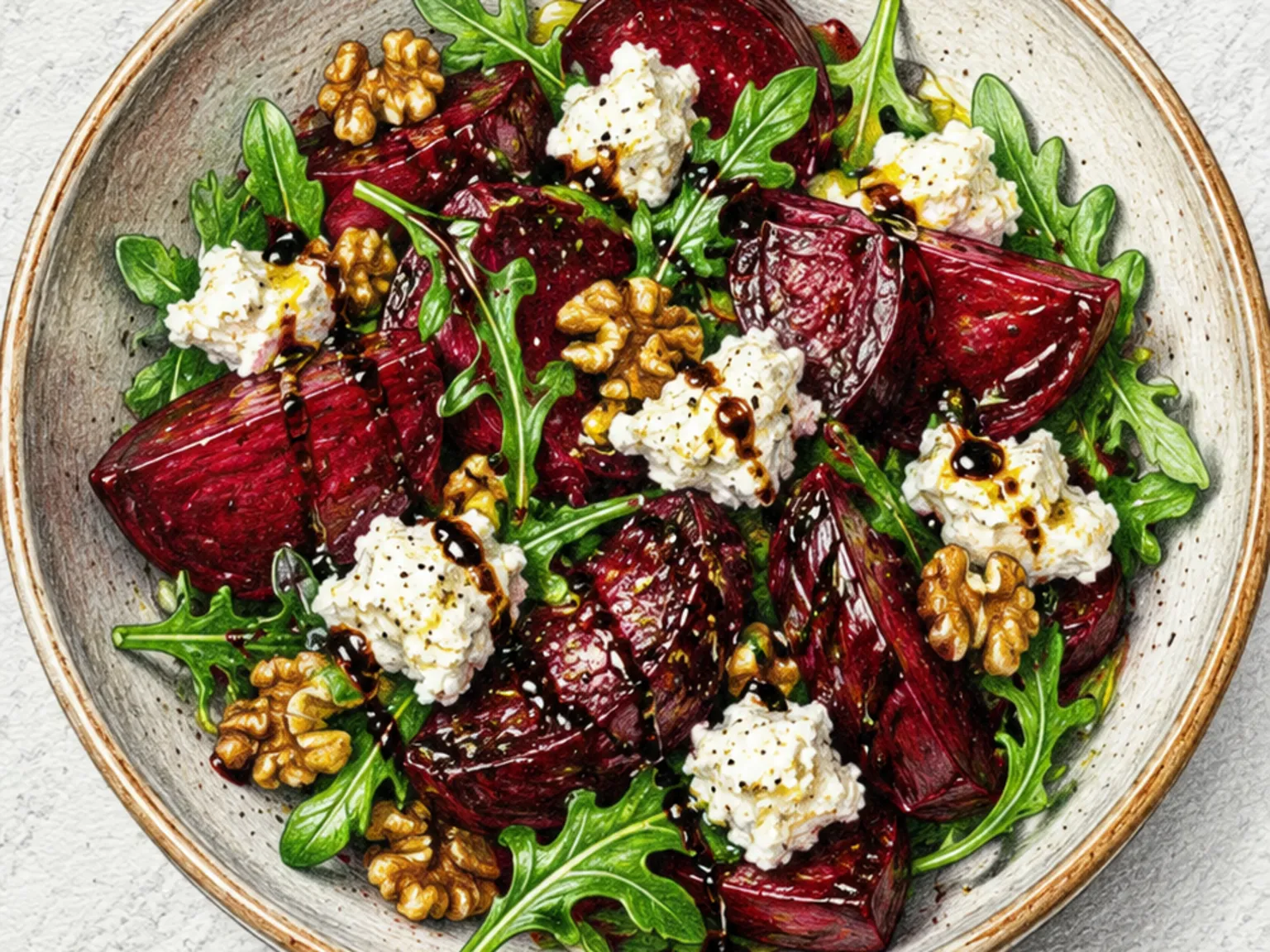
Beet and goat cheese salad begins with whole beets wrapped in foil and roasted at 200°C for forty-five to sixty minutes, long enough for their raw, earthy undertone to convert almost entirely into a concentrated, caramel-adjacent sweetness. Peeling the skins while the beets are still warm requires only the pressure of a paper towel - they slip off cleanly - and slicing them before they cool preserves the vivid crimson-purple cross-section that makes the dish visually striking. Crumbled goat cheese placed on the warm slices softens slightly, and its tangy acidity cuts through the dense sweetness of the roasted root rather than competing with it. Walnuts toasted briefly in a dry pan lose much of their raw bitterness, developing a nuttiness that bridges the mineral quality of the beet and the dairy sharpness of the cheese. Balsamic reduction does more than dress the plate: its concentrated sweet-tart intensity ties the separate components into a coherent whole. Arugula underneath the beet slices provides a peppery bitterness that sharpens the contrast against the sweetness, giving the salad a complexity well beyond what its short ingredient list suggests. A simple dressing of extra-virgin olive oil and lemon juice over the greens keeps the balance light and clear.
Jambon-Beurre (Classic Butter and Ham Baguette)
The jambon-beurre is a staple French sandwich designed for daily consumption, consisting of a baguette, butter, and ham. Because the recipe uses only three primary ingredients, the specific characteristics of each component are fundamental to the assembly. A traditional version utilizes a baguette characterized by a crust that breaks easily and a crumb that provides a chewy texture. The butter chosen is typically a cultured unsalted variety. It is necessary to bring the butter to room temperature to ensure it is soft enough to spread across the bread without damaging the soft interior. The ham used is jambon blanc, which is prepared in thin slices to build the layers of the sandwich. A light application of Dijon mustard on one side of the bread provides a sharp and peppery flavor profile. This ingredient serves to balance the heavy fat content of the butter against the natural saltiness found in the ham. Sliced cornichons are included inside the bread to add a level of tart acidity. These pickles help to reduce the overall weight of the sandwich ingredients and maintain a consistent balance of flavors in every bite.
Citrus Fennel Salad (Orange & Shaved Fennel with Arugula)
Fennel is shaved thin to highlight its anise-scented crunch, then paired with segmented orange for juicy acidity. Arugula contributes a peppery bite that offsets the citrus sweetness, and sliced almonds add a toasted crunch. The dressing stays minimal - olive oil and white wine vinegar - so the raw ingredients come through clearly without interference. Dressing should be added just before serving to prevent the fennel from wilting. The salad works well before rich meat or fish courses, since the citrus and fennel combination opens the palate rather than dulling it.
Serve with this
Kimchi Tofu Alfredo Farfalle (Creamy Kimchi Bow-Tie Pasta)
Kimchi tofu Alfredo farfalle is a fusion pasta that counters the richness of a cream-and-Parmesan Alfredo sauce with the lactic acidity of well-fermented kimchi. Garlic bloomed in butter forms the aromatic base, then cream, milk, and Parmigiano are combined into the classic Alfredo sauce, after which chopped kimchi is folded in to introduce fermented tang and a layer of umami that a standard Alfredo lacks. Firm tofu cut into cubes and pan-fried until each side is golden provides a mild, neutral protein element with direct textural contrast against the smooth sauce. Farfalle's pinched center holds pockets of sauce against each piece of pasta, delivering a consistent hit of creaminess in every bite, and freshly ground black pepper draws a sharp line through the richness at the finish. The entire dish moves from pan to plate in about 15 minutes.
Miso Soup
Miso soup, or miso shiru, is a staple of Japanese home cooking, traditionally served alongside daily meals. The soup features a base of dashi stock made from bonito flakes and kelp, which provides a savory umami foundation. Standard additions include cubed silken tofu and rehydrated wakame seaweed, finished with thinly sliced green onions. The preparation requires heating the dashi stock gently without letting it boil rapidly, then warming the tofu. To preserve the delicate aroma of the miso paste, it is dissolved in a ladle with a bit of hot broth before being stirred into the pot, and the heat is turned off immediately. Home cooks can choose between mild, slightly sweet white miso or a more savory, salty red miso to adjust the flavor. It is a light and comforting soup designed to complement other dishes.
Korean Grilled Pork Belly
Samgyeopsal-gui is Korean grilled pork belly, the country's most iconic barbecue dish, where 400 grams of pork belly is cut into ten-centimeter lengths and grilled on a preheated pan or griddle over high heat without added oil-the alternating layers of fat and lean render enough grease to cook the meat in. Flipping only once, after four to five minutes per side, is critical because frequent turning lets juices escape before the fat has properly rendered and crisped. Once golden and cooked through, the meat is cut into bite-sized pieces with scissors, and thinly sliced garlic is toasted on the same surface until lightly browned. Each piece is eaten wrapped in lettuce with ssamjang, grilled garlic, and green onion, and an optional side of green onion oil dip-sesame oil mixed with salt and chopped scallion-adds nutty depth and a sharp allium kick on top of the pork fat's richness.
Similar recipes
Couscous Herb Salad
Couscous is hydrated in hot water for five minutes until each grain separates and fluffs up, then mixed with a generous quantity of flat-leaf parsley, diced cucumber, and halved cherry tomatoes. The dressing is intentionally sparse - lemon juice, olive oil, salt, and pepper - letting the grain absorb the citrus brightness without competing flavors getting in the way. Because herbs make up a significant portion of the volume, this reads more like a tabbouleh than a heavy grain salad, with a clean freshness that makes it easy to eat in large portions. Couscous holds its texture at room temperature better than most grains, meaning the salad does not go soggy in a packed lunch container or on a picnic spread. Adding fresh mint, a handful of chopped cilantro, or a pinch of lemon zest shifts the flavor toward something sharper and more aromatic, while crumbled feta adds a salty, creamy contrast that transforms it into a more substantial dish.
Waldorf Salad
The Waldorf Salad is a classic dish combining apples, celery, walnuts, and grapes coated in a mayonnaise-based dressing. To prepare it, fresh apple cubes are immediately tossed with lemon juice to prevent browning and maintain their color. The dressing is made by whisking mayonnaise with a small amount of sugar until smooth. Celery stalks are thinly sliced, and grapes are halved and seeded to provide a refreshing texture. The walnuts are toasted in a dry pan over low heat for two minutes to enhance their earthy flavor, which balances the sweetness of the mayonnaise. All the ingredients are gently folded together to prevent the fruit from releasing excess juices, which would make the salad watery. Chilling the salad in the refrigerator for thirty minutes allows the flavors to integrate while keeping the ingredients crisp.
Salade Niçoise
Salade Nicoise is a classic salad from Nice in southern France that arranges tuna, soft-boiled eggs, olives, anchovies, tomatoes, and blanched green beans in separate sections on a plate, finished with a vinaigrette of olive oil, lemon juice, and Dijon mustard. The traditional presentation keeps each ingredient in its own zone rather than tossing everything together. Soft-boiling the eggs for six minutes yields a runny yolk that acts as a natural dressing when broken. The salty depth of anchovies and the oily richness of olives add complexity over the mild tuna, while the mustard vinaigrette brightens and ties the whole plate together with its acidity.