Acai Bowl
Quick answer
The acai bowl traces its origins to the river communities of Brazil's Amazon basin, where the dark purple berry of the acai palm has been a dietary staple for indigenous...
What makes this special
- Acai bowl relies on blending only frozen fruit to keep the base thick enough for heavy toppings.
- Blending only frozen fruit keeps the base thick enough for toppings
- Earthy, chocolate-like depth underneath the berry aroma
Key ingredients
Core cooking flow
- 1 Slice one banana into 2 cm rounds and keep it aside for topping.
- 2 Keep the 200 g frozen acai puree firm rather than melted.
- 3 Add the acai, banana, 80 g blueberries, and 120 g Greek yogurt to the blender.
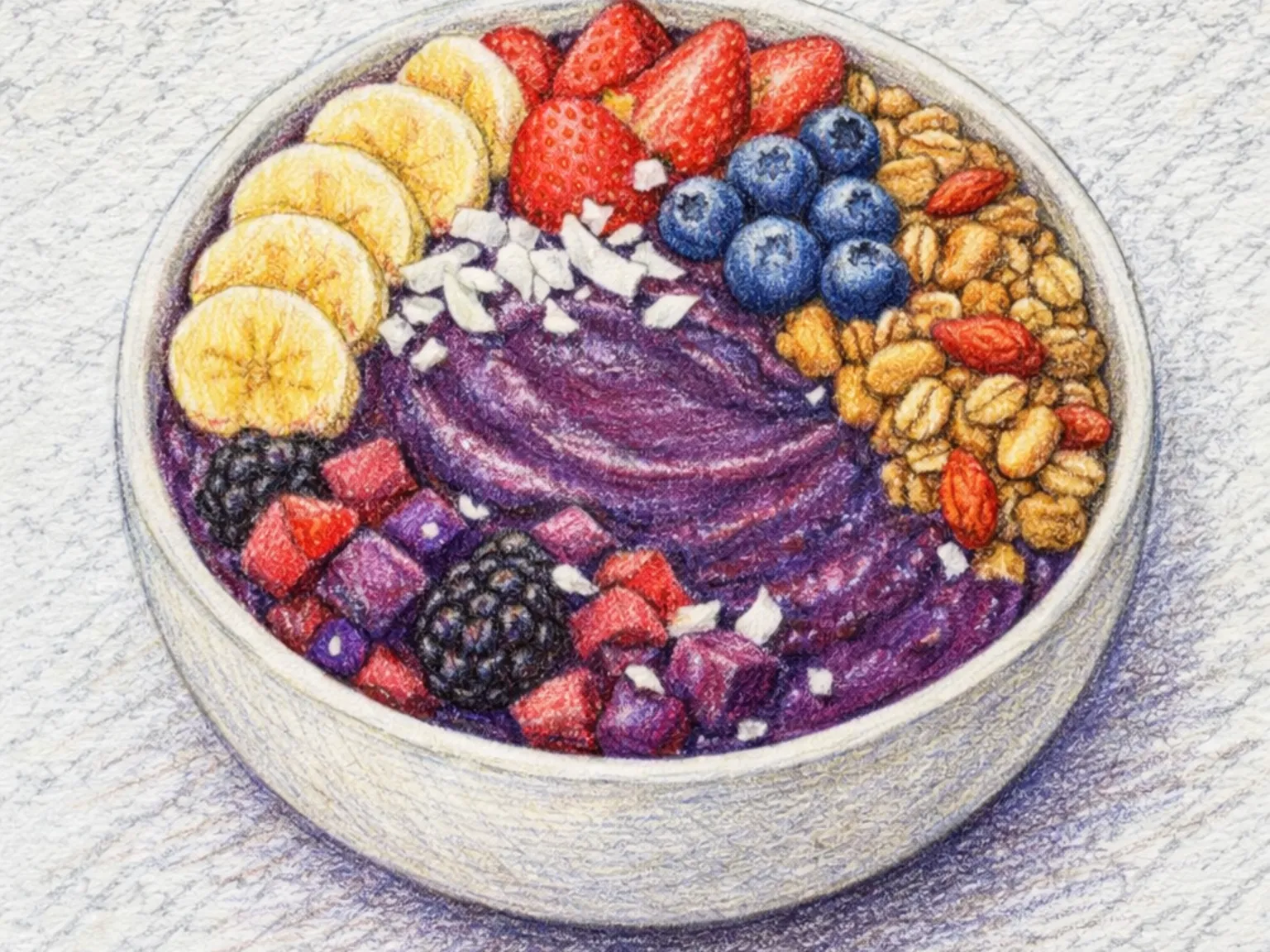
The acai bowl traces its origins to the river communities of Brazil's Amazon basin, where the dark purple berry of the acai palm has been a dietary staple for indigenous peoples for centuries - providing fat and calories in a region where animal protein could be scarce. When frozen acai pulp is blended with banana and blueberries, it becomes a thick, sorbet-like base with a deep berry flavor carrying earthy, almost chocolatey undertones that distinguish acai from sweeter tropical fruits. The bowl format - topped with granola, sliced fruit, and honey - was popularized by surfers in Rio de Janeiro during the 1980s and has since spread worldwide as a breakfast and post-workout meal. The key technical requirement is keeping the blender liquid-free: adding milk or juice thins the base until toppings sink and the textural contrast disappears. Eaten quickly before the granola loses its crunch, the bowl delivers a concentrated rush of antioxidants and natural sugars in a form that feels substantial despite being largely fruit. The deep purple color comes from the same anthocyanin pigments found in blueberries and red cabbage.
Instructions
Read the steps as a cooking flow: prep, heat, seasoning, doneness control, and finish.
- 1Prep
Slice one banana into 2 cm rounds and keep it aside for topping.
Hull the strawberries and cut them into bite-size pieces so they can be placed quickly before the cold base starts softening.
- 2Prep
Keep the 200 g frozen acai puree firm rather than melted.
Cut the remaining banana into chunks for the blender, which helps the blades catch without adding milk, juice, or extra liquid.
- 3Prep
Add the acai, banana, 80 g blueberries, and 120 g Greek yogurt to the blender.
Start on low speed, stop often, and press the mixture down with a spatula so the motor is not forced.
- 4Step
Stop blending when the color is evenly deep purple and the base clings thickly to a spoon.
Do not keep blending once it loosens, because a thin base makes the toppings sink.
- 5Step
Transfer the cold base to bowls immediately and level it gently with the back of a spoon.
Avoid pressing hard, since compacting it removes air and makes the texture heavy.
- 6Finish
Arrange the banana and strawberries on top, then scatter 80 g granola evenly and drizzle 1 tablespoon honey in a thin stream.
Serve immediately while the granola is still crisp against the cold base.
After the steps
Pick a recipe that fits this dish.
Continue with shared ingredients, meal pairings, or a similar method.
Recipes That Go Well With This
More Salads →Based on shared ingredients and meal pairing
Granola Yogurt Bowl
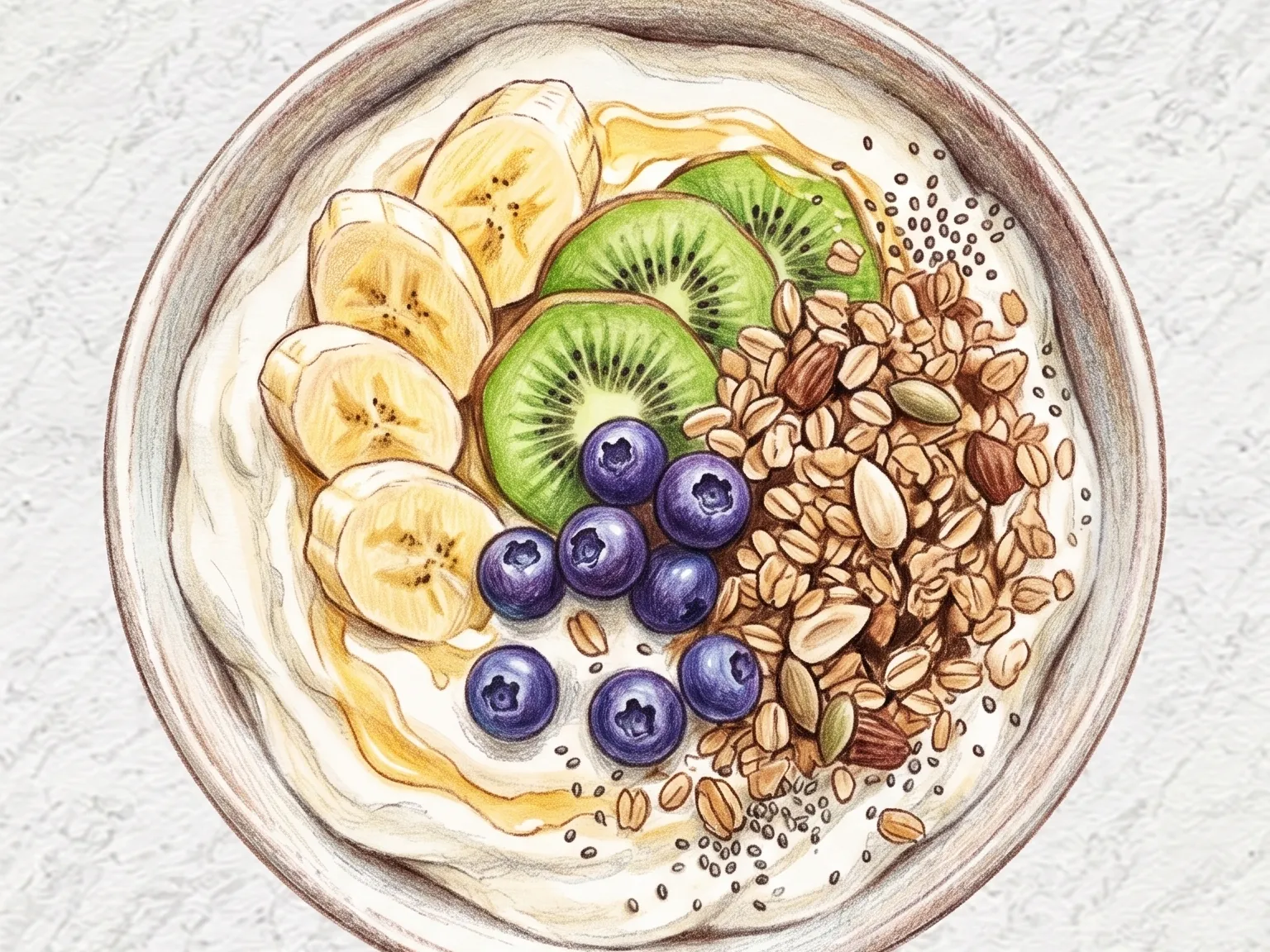
Granola yogurt bowl is a composed breakfast or snack that starts with a thick base of Greek yogurt and builds upward with sliced banana, kiwi, and blueberries, finished with granola, chia seeds, and a drizzle of honey. Greek yogurt differs from regular yogurt in that most of its liquid whey has been strained away, leaving a denser, higher-protein base that holds its shape in the bowl rather than pooling around the fruit. The tang of the yogurt meets the juicy sweetness of the fruit and creates a balanced flavor that needs no additional sauce or dressing. Granola begins absorbing moisture the moment it contacts the yogurt, so adding it immediately before eating is the only way to keep its crunch intact through the meal. Chia seeds undergo a visible transformation within about five minutes of sitting in moisture, their outer layer swelling into a gel that adds a springy, slightly resistant bite unlike anything else in the bowl. Using unsweetened yogurt puts control of sweetness entirely in the hands of the person eating it, since the honey can be measured to taste, and rotating the fruit with whatever is in season gives a different combination each time without changing the structure of the dish.
Fruit Yogurt Salad
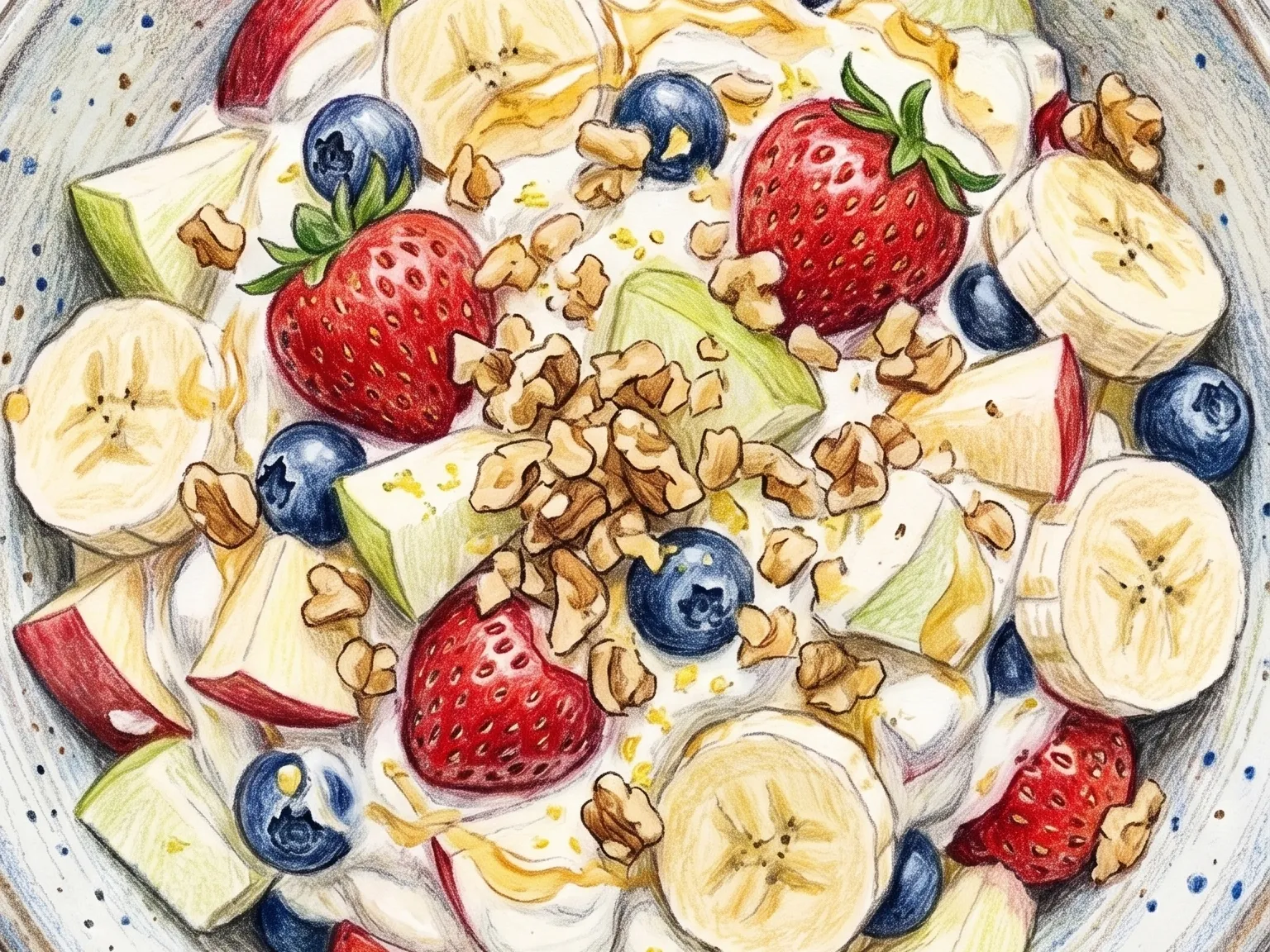
Apple, banana, strawberry, and blueberry are cut into bite-sized pieces and folded into plain yogurt for a fruit salad where the dressing serves as background rather than centerpiece. The yogurt provides gentle acidity that anchors the sweetness of the fruit without overwhelming it. Honey softens the sharper edge of the yogurt, and a squeeze of lemon juice does double duty: it slows the browning of cut apple and banana while leaving a clean citrus note on the finish. Roughly chopped walnuts scattered over the top introduce a crunchy, slightly bitter contrast to the soft fruit and smooth yogurt, breaking the monotony of texture. Swapping in seasonal fruit makes the recipe adaptable year-round without adjusting the base formula - peaches and melon in summer, persimmon and pear in autumn all work within the same yogurt, honey, and lemon framework. Light enough for a morning meal and refreshing enough after a heavy dinner, it sits comfortably in either role.
Caesar Salad
Caesar salad is built on romaine lettuce torn into rough, generous pieces and tossed in a dressing made from mayonnaise, lemon juice, garlic, and anchovy. The anchovy does not taste fishy in the finished dressing; it dissolves into the fat of the mayonnaise and functions as a deep umami foundation that keeps the salad interesting beyond its creamy surface. Lemon juice cuts through the richness of the mayo base, so the dressing coats the lettuce heavily without feeling cloying. Croutons are cubed bread toasted in olive oil until the outside turns crisp and golden but the inside stays slightly soft and chewy, giving them enough structure to absorb dressing without going immediately soggy. Wide, thin shavings of Parmesan add a dry, salty intensity that contrasts with the watery crunch of the romaine. With a short ingredient list, the quality of the dressing balance and the texture of the croutons determine the final outcome.
Fruit Cottage Cheese Bowl
This high-protein bowl requires no cooking and comes together in under five minutes. A generous scoop of cottage cheese forms the base, and fresh strawberries, blueberries, and banana are arranged on top in whatever combination looks appealing. The cheese's mild, lactic saltiness pairs naturally with the fruit's sweetness without needing any added dressing or seasoning. Sliced almonds contribute crunch and a layer of healthy fats, while chia seeds provide omega-3s and a subtly gel-like texture once they have had a moment to absorb the moisture around them. A light drizzle of honey brings all the components together with a unifying sweetness. The simplicity of the bowl makes it a practical choice for a quick breakfast or a post-workout meal when protein matters but time is short.
Serve with this
Kongguksu-Style Cold Linguine
Kongguksu-style cold linguine reinterprets Korea's chilled soy noodle soup using Italian linguine in place of traditional wheat noodles. Unsweetened soy milk is blended with toasted sesame seeds and peanut butter into a thick, nutty cold broth poured directly over the pasta at serving. The linguine is cooked al dente and immediately shocked in ice water to firm up the texture and chill it completely before the broth goes on. Julienned cucumber and halved cherry tomatoes scatter on top for fresh crunch and color. Salt and sugar are adjusted at the end to balance the broth's natural bean flavor against the richness from the peanut butter. The full preparation takes about ten minutes, with stovetop time limited strictly to boiling the pasta, which makes it one of the more practical cold dishes to assemble in summer heat. Adding more peanut butter thickens the broth further, while extra sesame seeds push the nuttiness higher.
Cantonese Steamed Fish
Cantonese steamed fish - ching jing yu - is the clearest expression of the Cantonese philosophy of letting premium ingredients speak for themselves with minimal interference. The technique requires the freshest possible whole fish - sea bass, grouper, or pomfret are the standard choices - because steaming conceals nothing. Any fish that is even slightly past its peak will betray itself the moment it comes off the heat. The fish is scored on both sides to allow even heat penetration, placed on a plate with thin ginger slices tucked underneath and inside the cavity to neutralize any fishiness, then steamed over vigorously boiling water for exactly eight to ten minutes depending on thickness. Even one minute of overcooking transforms the silky, translucent flesh into something dry and dull - timing is the entire technique. The moment the fish leaves the steamer, all accumulated liquid on the plate must be poured off immediately, because that liquid carries concentrated fishiness that would spoil the clean finish. A generous pile of julienned scallion and fresh ginger is arranged on top, then a ladle of oil heated until just beginning to smoke is poured directly over the aromatics. The sizzling releases their fragrance in a single burst that infuses the fish. Seasoned soy sauce and a few drops of sesame oil complete the dish. In Cantonese banquet culture, the steamed fish course is typically the most expensive item on the table, with guests selecting a live fish directly from the restaurant tank.
Korean Grilled Beltfish (Galchi-gui)
Galchi-gui is grilled beltfish, salted and pan-fried until the skin crisps and the flesh cooks through. Beltfish has a high fat content relative to most white fish, and as the flesh heats, its own oil migrates toward the skin, crisping the exterior without the need for added cooking oil. That same fat keeps the flesh moist well after the fish leaves the heat. Each steak should be cut to around three centimeters thick. Thinner pieces lose their moisture quickly under high heat, while thicker cuts will burn on the outside before the center reaches temperature. The pan needs to be fully preheated before the fish goes in: a cold or lukewarm surface causes the skin to stick and steam rather than sear. When the pan is hot enough, the skin releases cleanly and turns golden through the Maillard reaction. Coarse salt is the only seasoning in the traditional Jeju preparation, and nothing else is added. A squeeze of lemon at the table cuts the richness of the oily fish with clean acidity, lifting the aftertaste. Beltfish caught in the waters around Jeju in spring are considered the finest, with firmer flesh and a richer flavor than fish from other seasons.
Similar recipes
Spinach Strawberry Salad
Spinach strawberry salad lays thinly sliced strawberries and toasted walnuts over a bed of baby spinach with rings of red onion, then finishes with a whisked dressing of balsamic vinegar, olive oil, and honey. The strawberries' bright acidity and natural sugar merge with the balsamic's concentrated grape tang in a way that makes the two components inseparable in the mouth, while honey bridges them with a round sweetness that keeps the dressing from tipping sharp. Toasting walnuts in a dry pan for two minutes draws their oils to the surface, intensifying the nutty aroma and adding a satisfying crisp snap that contrasts with the soft spinach and juicy fruit. Red onion's peppery heat cuts through the sweetness and prevents the salad from feeling like a dessert. Drying the spinach thoroughly before assembly is not optional: water left on the leaves dilutes the dressing and pools at the bottom of the bowl, washing out the flavors that took care to build. Crumbled feta or thinly sliced almonds can be added for additional richness without disrupting the existing balance.
Korean Banana Misutgaru Smoothie
Banana misutgaru smoothie combines Korea's traditional roasted multigrain powder with banana for a filling, grain-forward drink. Misutgaru is made from roasted barley, glutinous rice, soybeans, and other grains ground into a fine powder; dissolved in liquid, it produces a toasty, earthy flavor that sets it apart from any standard smoothie base. Banana adds natural sweetness and body, while a spoonful of peanut butter deepens the nutty undertone. Honey fine-tunes the sweetness, and blending with ice makes the whole thing cold and thick. The grain fiber from the misutgaru and the potassium from the banana make this a substantial breakfast replacement in a single glass. Increasing the misutgaru proportion thickens the consistency toward something closer to porridge, and swapping in soy milk for regular milk intensifies the grain character.
Korean Mugwort Banana Smoothie
This smoothie combines blanched mugwort with frozen banana, plain yogurt, and milk, blended into a thick, creamy drink. The mugwort is briefly blanched for 20 seconds to tame its raw bitterness, while pre-freezing the banana adds body without relying on excess ice. A touch of vanilla extract bridges the grassy herbaceous notes of the mugwort with the banana's tropical sweetness, and honey rounds out the overall flavor. The result is a vivid green drink with a simultaneously earthy, fruity, and tangy profile, finished in under 10 minutes from start to pour.