Korean Bacon Kimchi Fried Rice
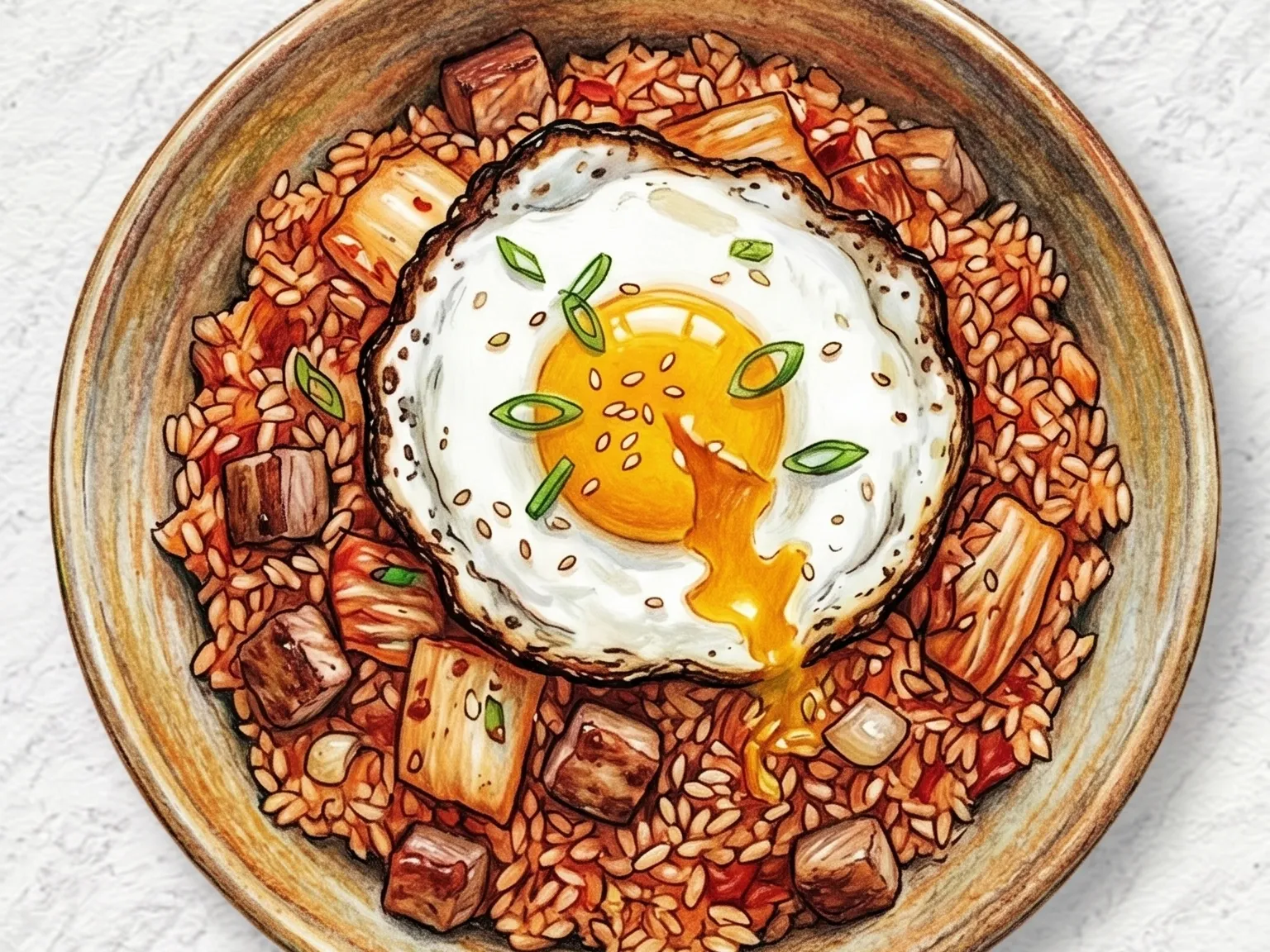
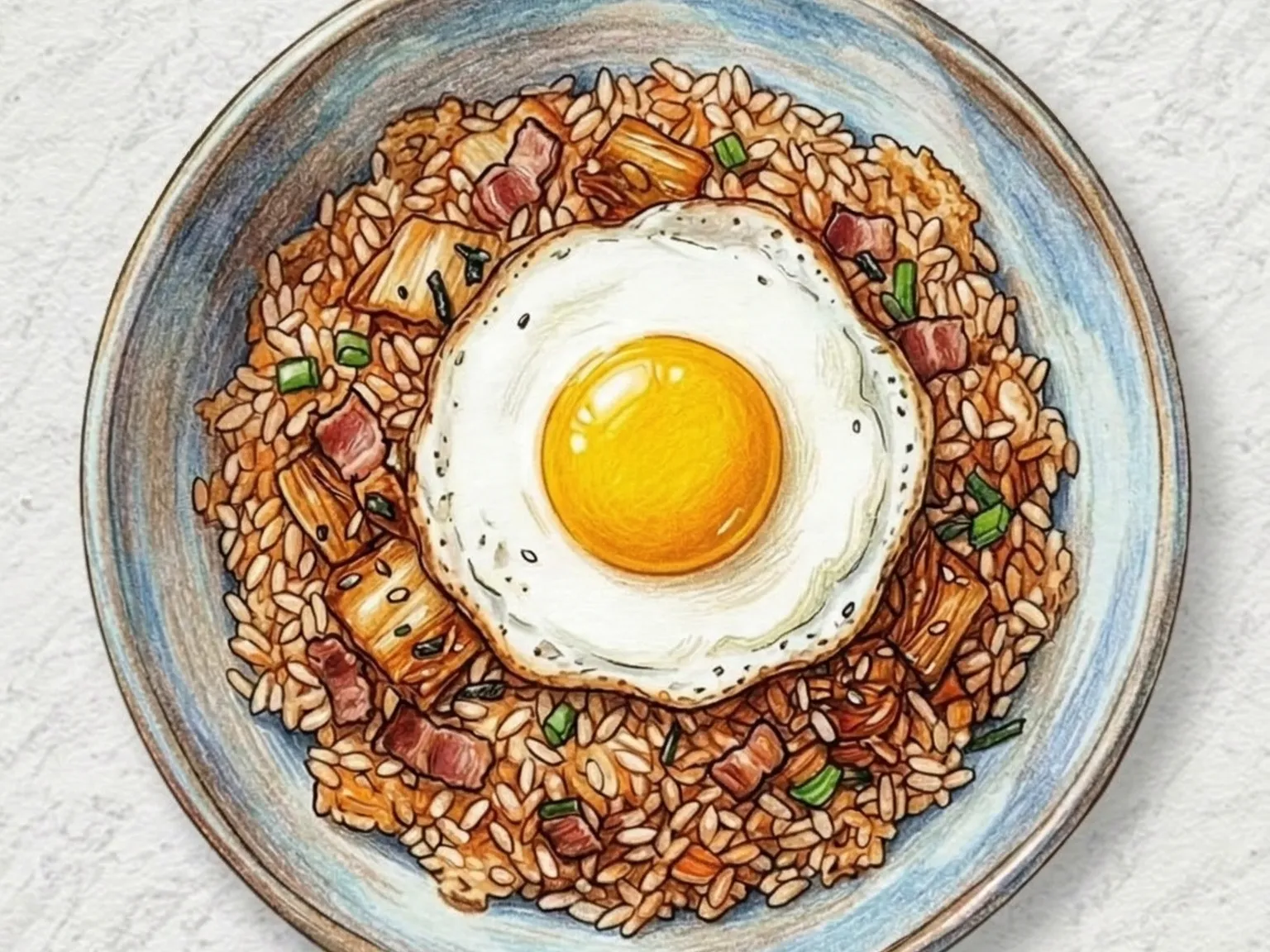
Bacon kimchi fried rice takes the most common Korean leftover combination - cold rice and aging kimchi - and adds rendered bacon fat as a Western-inflected upgrade to the traditional sesame oil base. The bacon goes into a cold pan, cooking slowly so the fat renders out completely before the meat crisps, creating a pool of smoky drippings that replace cooking oil entirely. Well-fermented kimchi, squeezed of excess juice and chopped coarsely, hits the hot fat and sizzles until its edges caramelize and the sharp lactic tang mellows into a deeper, roasted sourness. Day-old rice is pressed flat against the pan to develop a crust - the nurungji-like layer that fried rice fanatics chase. Soy sauce and a pinch of sugar season without overwhelming the interplay between the bacon's smokiness and the kimchi's fermented bite. A fried egg on top, its yolk still runny, becomes the sauce when broken and mixed through. This dish became a staple of Korean home cooking in the 2000s as bacon became a standard Korean grocery item.
Adjust Servings
Instructions
- 1
Squeeze excess kimchi juice lightly, chop finely, and dice onion and green onion.
- 2
Cook bacon over medium heat until browned and fat is rendered.
- 3
Add onion and green onion for 1 minute, then stir-fry kimchi for 2 more minutes.
- 4
Mix in gochujang and soy sauce, then add rice and break up clumps evenly.
- 5
Lower heat and finish with sesame oil for gloss and aroma.
- 6
Top each serving with a fried egg and serve.
As an Amazon Associate, we may earn from qualifying purchases.
Tips
Nutrition (per serving)
More Recipes

Korean Tuna Fried Rice (Quick Canned Tuna Stir-Fried Rice)
Chamchi bokkeumbap is a staple Korean home-style fried rice made by stir-frying canned tuna - oil and all - with diced onion, carrot, and green onion, then tossing in rice and seasoning with soy sauce and sesame oil. The tuna oil coats each grain, delivering a savory richness that needs little else to taste complete. It is the kind of dish that comes together from whatever is already in the pantry and fridge, requiring no special shopping trip. When you need a quick, filling meal with minimal effort, this is often the first recipe that comes to mind in Korean households.

Korean Curry Fried Rice (Golden Spiced Chicken Fried Rice)
Curry bokkeumbap is a Korean fried rice where curry powder infuses each grain with a warm, aromatic spice and a vivid golden hue. Chicken breast, onion, carrot, and bell pepper are stir-fried together before the rice goes in, ensuring a balanced mix of protein and vegetables in every serving. The curry fragrance unfolds gradually with each bite, less intense than a curry sauce but more present than plain fried rice, hitting a satisfying middle ground. The bell pepper adds a slight sweetness and a pop of color against the golden rice, while the chicken keeps each bite substantial. Topping it with a fried egg adds creaminess when the yolk breaks and mixes in, making an already complete dish even more indulgent.

Korean Spam Fried Rice (Crispy Spam Cubes with Egg and Rice)
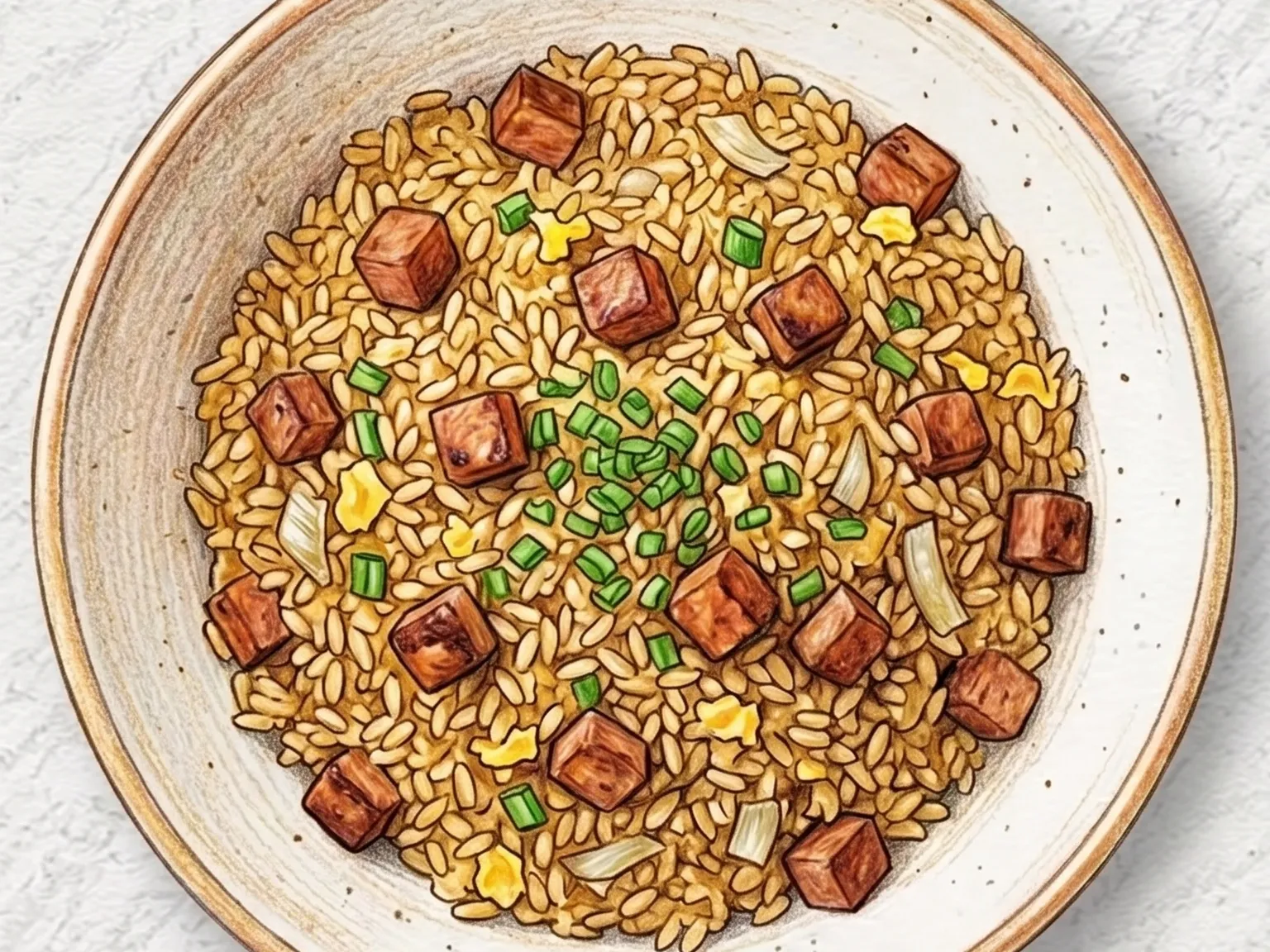
Spam bokkeumbap is a Korean fried rice built around crispy cubes of pan-seared Spam, whose salty, caramelized edges give the dish an addictive quality. The Spam is diced small and dry-fried without added oil - its own rendered fat crisps the outside while keeping the inside moist and savory. Onion and scallion go in next for aromatic depth, followed by cold leftover rice that is tossed over high heat until every grain picks up the salty pork flavor left in the pan. Beaten egg is scrambled into the rice, coating the grains in a thin, soft layer. A splash of soy sauce and a drizzle of sesame oil finish the dish with umami and nuttiness. The whole thing comes together in under ten minutes, making it one of the fastest comfort meals in the Korean home-cooking repertoire.

Korean Egg Fried Rice (Quick Wok-Tossed Grain Bowl)
Two beaten eggs and one bowl of rice are all it takes to make this ten-minute fried rice. The eggs are poured into a smoking-hot oiled pan, and rice is added the moment the eggs are half-set, then tossed rapidly so every grain gets an individual egg coating - producing a texture that is fluffy and slightly glossy rather than clumpy. Cold leftover rice works best because its lower moisture content lets the grains separate cleanly during stir-frying. A finishing drizzle of sesame oil and a scattering of chopped green onion add a toasty fragrance that rounds out this minimal but satisfying solo meal.

Kimchi Dwaejigogi-guk (Kimchi Pork Tofu Soup)
Kimchi-dwaejigogi-guk begins by stir-frying pork shoulder in perilla oil until the fat renders, then well-fermented kimchi and chili flakes join the pot for three more minutes of cooking. This initial step melds the tangy acidity of the kimchi with the pork drippings, creating a base that carries the entire soup. Water and sliced onion simmer for fifteen minutes, and blocks of firm tofu go in near the end, absorbing the ruddy, peppery broth. The result has more liquid than a typical jjigae, making it well suited for spooning over a bowl of rice.

Korean Bunsik Kimchi Bokkeumbap (Kimchi Fried Rice)
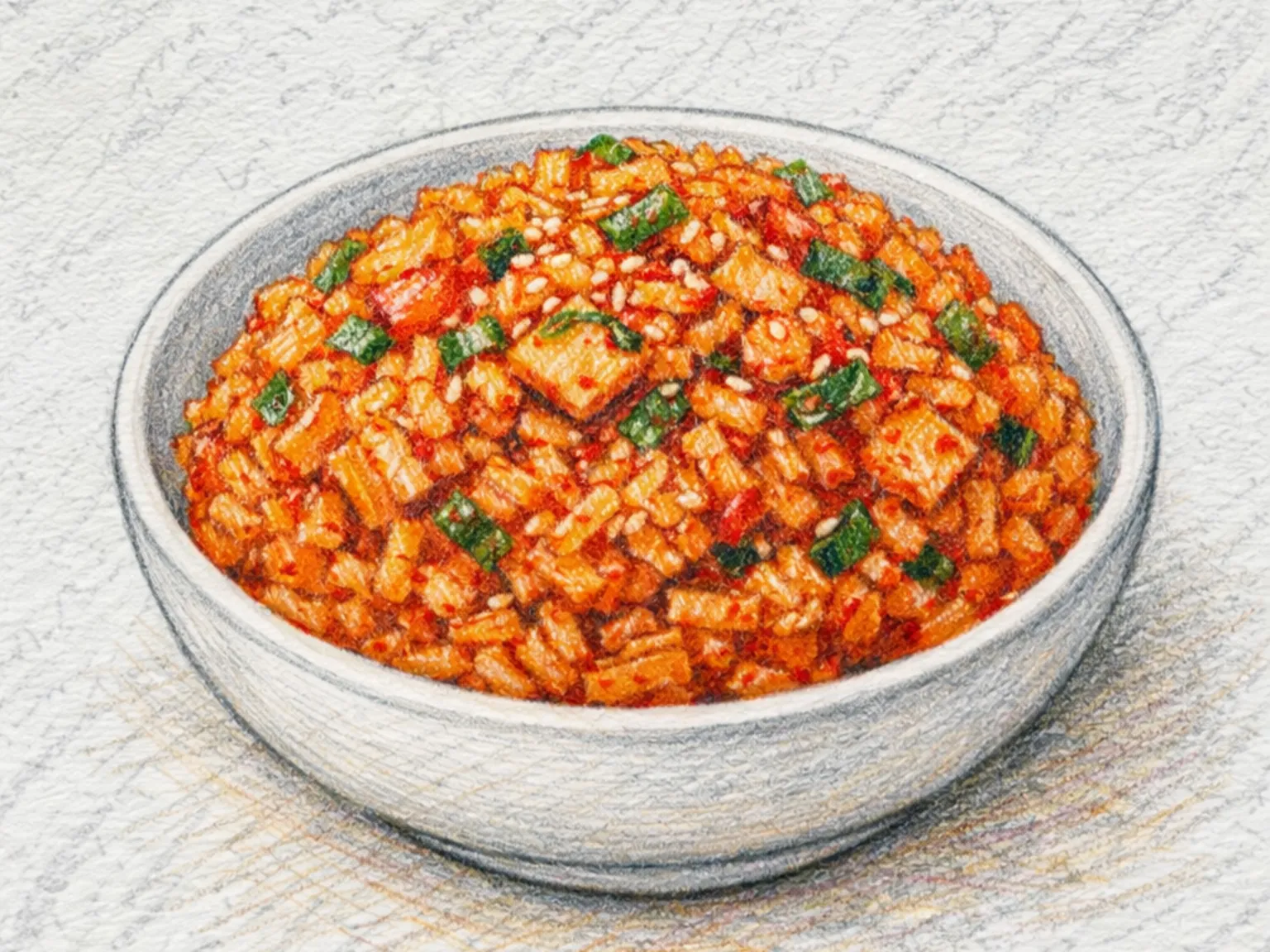
Bunsik-style kimchi fried rice starts by making scallion oil from green onions, then stir-frying well-fermented kimchi to drive off moisture before seasoning with gochujang and soy sauce and tossing in day-old rice. The scallion oil lays a nutty base across the rice, and the aged kimchi's sharp acidity layers with the gochujang's heat to build depth. Cold leftover rice fries without turning mushy, keeping individual grains distinct, and the dish is topped with seaweed flakes and a runny fried egg. A small amount of sugar can be added if the kimchi's sourness is overpowering.