Korean Napa Cabbage Doenjang Porridge
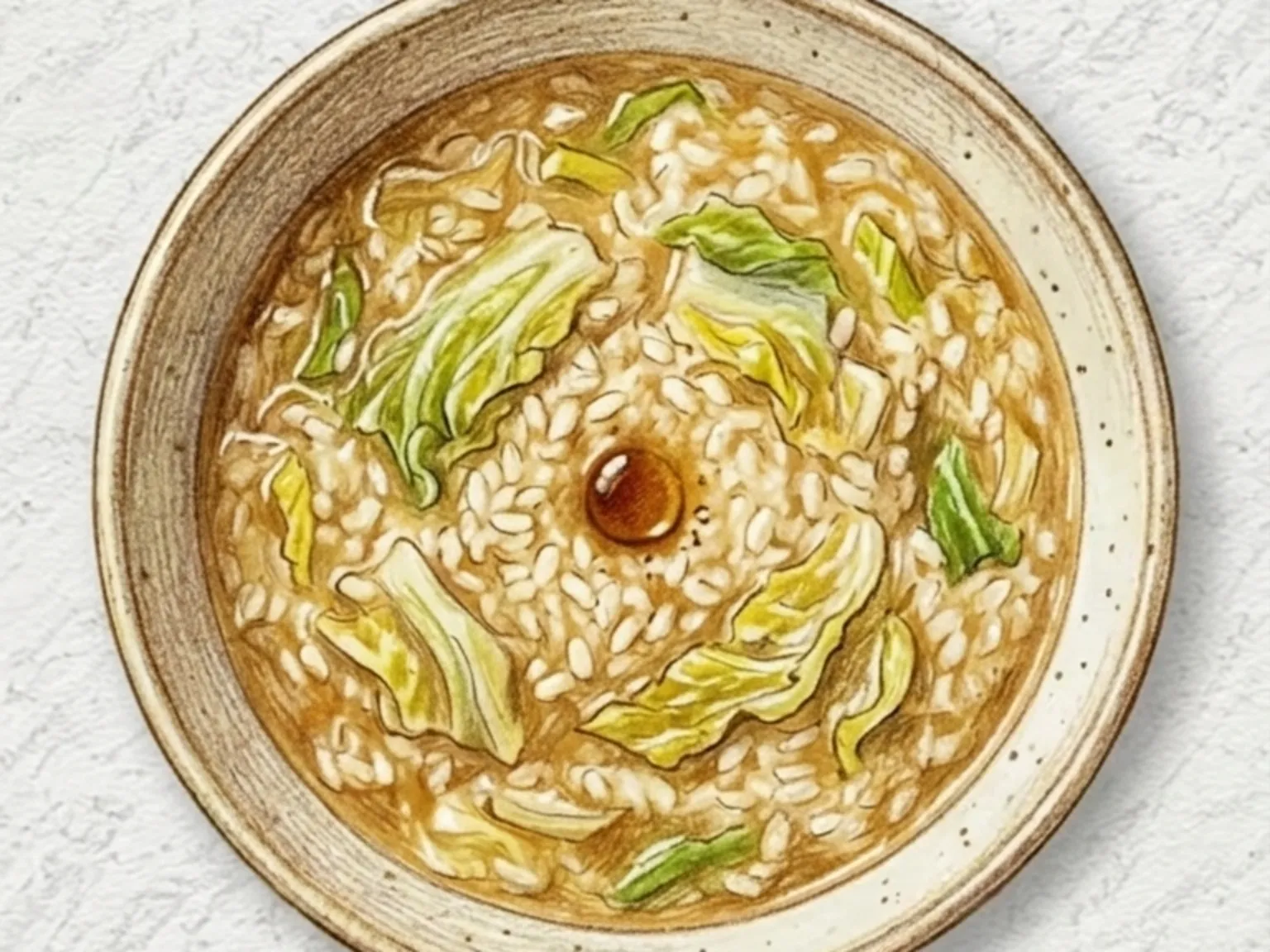
Baechu doenjang juk is a Korean porridge where soaked rice is first toasted in sesame oil to build a nutty base, then simmered slowly in anchovy stock with dissolved doenjang, napa cabbage, and onion. Toasting the rice grains in oil before adding liquid gives the finished porridge a roasted depth that plain boiled rice cannot achieve. The doenjang is strained through a sieve into the stock so the porridge remains smooth without grainy bits. Finely chopped onion melts into the broth as it cooks, contributing a quiet sweetness, while the napa cabbage softens until it nearly dissolves into the texture of the porridge. Stirring frequently over medium-low heat for at least twenty minutes ensures the rice breaks down evenly. A drop of sesame oil and a seasoning adjustment with guk-ganjang finishes the dish. The result is a bowl that feels gentle on the stomach while carrying the full fermented complexity of doenjang.
Adjust Servings
Instructions
- 1
Finely chop cabbage and onion; rinse and soak rice for 20 minutes.
- 2
Heat sesame oil and sauté onion and garlic for 1 minute.
- 3
Add cabbage and soaked rice, then stir-fry 2 more minutes.
- 4
Pour in anchovy stock, bring to a simmer, and dissolve doenjang.
- 5
Cook on low for 20 minutes, stirring often; season with soy sauce and pepper.
- 6
Turn off heat when thickened, rest 3 minutes, then serve.
As an Amazon Associate, we may earn from qualifying purchases.
Tips
Nutrition (per serving)
More Recipes

Korean Radish Greens Shrimp Porridge
This porridge combines blanched radish greens and minced shrimp in a perilla-oil base for a nutty, ocean-tinged bowl. The radish greens are blanched first to soften their tough fibers, then chopped fine so they meld seamlessly into the porridge. Lightly crushing the shrimp with the flat of a knife releases more umami throughout the pot. Perilla oil provides a distinctive nutty aroma as the foundation, and soup soy sauce seasons the porridge gently without overpowering the clean flavors.

Korean Napa Cabbage Tofu Porridge
A gentle, warming Korean porridge of napa cabbage and soft tofu - light enough for a recovering stomach yet satisfying for any morning. The rice is first sauteed in sesame oil, forming a thin oily coat on each grain that releases a nutty fragrance as the porridge cooks. Vegetable stock and finely chopped cabbage are added, and the pot simmers at medium heat until the rice grains break down completely, during which the cabbage releases its moisture and sweetens the broth naturally. The tofu is crumbled by hand and stirred in during the last five minutes, dispersing evenly to create a smooth protein layer within the porridge. Minced garlic goes in early so its raw edge cooks out fully. Seasoning is kept to a minimum with just guk-ganjang and salt, letting the ingredients speak for themselves. Without heavy oils or strong spices, the porridge draws its flavor entirely from the cabbage sweetness and the quiet richness of tofu.

Korean Potato Cheese Porridge
Finely diced potato and onion are sauteed in butter to draw out their sweetness, then simmered with soaked rice, water, and milk until the potato starch thickens the base naturally. Cheddar cheese is melted in at the end, contributing salt and richness so little additional seasoning is needed. Partially mashing the potato while cooking produces an even creamier consistency, and adjusting salt last accounts for the varying saltiness of different cheeses. The mild, velvety result is gentle enough for young children and comforting as a light morning meal.

Korean Pollock Roe Egg Porridge
Rice is simmered in anchovy stock until the grains soften, then finished with pollock roe and beaten egg for a silky, umami-rich porridge. The roe dissolves into the broth and spreads its briny saltiness throughout, while the egg forms soft curds that thicken the texture. Because the roe is already quite salty, soup soy sauce is added sparingly at the end for fine-tuning. Streaming the egg in at a gentle simmer rather than a rolling boil produces delicate, smooth curds instead of tough clumps.

Korean Napa Cabbage Perilla Soup
Baechu deulkkae-guk is a Korean soup that layers three forms of comfort - soft-cooked napa cabbage, fermented doenjang, and ground perilla seeds - into a bowl that is nutty, earthy, and gently warming. The cabbage is simmered in anchovy-kelp stock until the white stems turn translucent and the leaves nearly dissolve into the broth, releasing a mild natural sweetness. Doenjang dissolved into the stock provides the fermented backbone, while ground perilla seeds - stirred in during the final minutes - thicken the broth into a pale, creamy suspension with a distinctive nutty aroma that sesame cannot replicate. The perilla must be added late and off high heat to prevent grittiness and preserve its volatile fragrance. This soup belongs to the Korean tradition of deulkkae-guk - perilla-based soups - that includes versions with dried radish greens, mushrooms, and other winter vegetables. It is a cold-weather staple, often the first dish Korean mothers make when autumn temperatures drop, and pairs naturally with a bowl of steamed white rice.

Korean Napa Cabbage Doenjang Soup
Baechu doenjang guk is a foundational Korean soup where napa cabbage simmers in anchovy-kelp stock seasoned with doenjang. Straining the doenjang through a sieve as it dissolves into the broth keeps the liquid clear while extracting its full fermented flavor. The cabbage stems go in first and cook for five minutes to release their sweetness before the leaves and cubed tofu are added. A small spoonful of gochujang introduces a mild heat and a reddish tint that adds visual and flavor complexity. Sliced cheongyang chili and scallion enter in the last two minutes, contributing sharpness without becoming soft. Since doenjang saltiness varies between brands, starting with a conservative amount and adjusting by taste prevents over-seasoning. As the cabbage softens completely, its natural sweetness seeps into the broth and balances the deep, earthy character of the fermented paste.