Korean Napa Cabbage Tofu Porridge
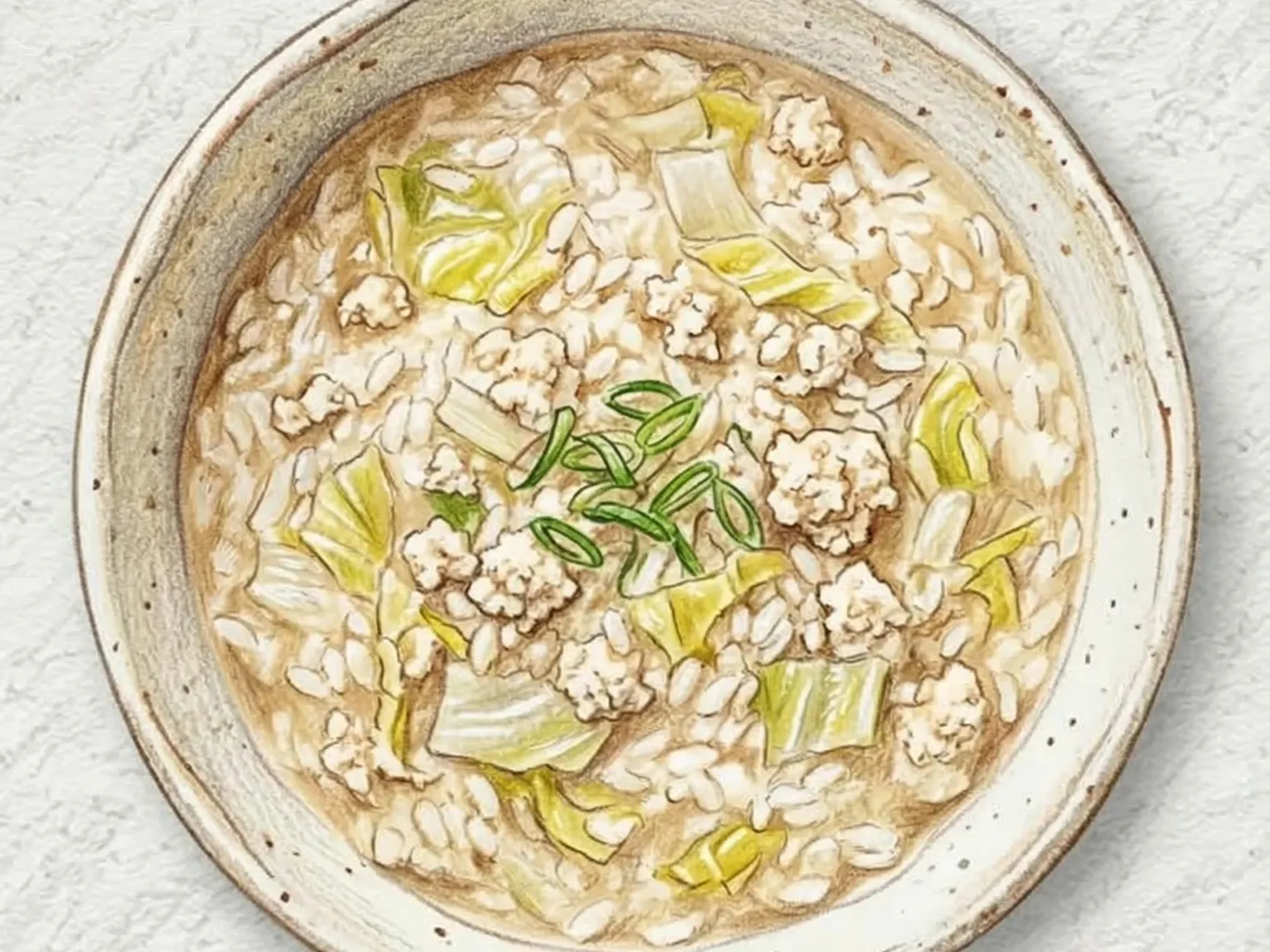
A gentle, warming Korean porridge of napa cabbage and soft tofu - light enough for a recovering stomach yet satisfying for any morning. The rice is first sauteed in sesame oil, forming a thin oily coat on each grain that releases a nutty fragrance as the porridge cooks. Vegetable stock and finely chopped cabbage are added, and the pot simmers at medium heat until the rice grains break down completely, during which the cabbage releases its moisture and sweetens the broth naturally. The tofu is crumbled by hand and stirred in during the last five minutes, dispersing evenly to create a smooth protein layer within the porridge. Minced garlic goes in early so its raw edge cooks out fully. Seasoning is kept to a minimum with just guk-ganjang and salt, letting the ingredients speak for themselves. Without heavy oils or strong spices, the porridge draws its flavor entirely from the cabbage sweetness and the quiet richness of tofu.
Adjust Servings
Instructions
- 1
Soak rice for 30 minutes, then finely chop napa cabbage, separating stems and leaves.
- 2
Heat sesame oil in a pot and stir-fry soaked rice for 2 minutes until slightly translucent.
- 3
Add 3 cups stock, cabbage stems, and garlic, then simmer over medium heat for 10 minutes.
- 4
Add remaining stock and cabbage leaves, then cook 8 more minutes, stirring to prevent sticking.
- 5
Mash in tofu, season with soup soy sauce and salt, and simmer for 3 minutes.
- 6
Turn off heat when the texture is right and rest for 2 minutes before serving.
As an Amazon Associate, we may earn from qualifying purchases.
Tips
Nutrition (per serving)
More Recipes

Korean Seaweed Rice Porridge
Miyeok-juk is a classic Korean porridge made by sauteing rehydrated seaweed in sesame oil, then simmering it with rice until velvety smooth. Stir-frying the seaweed first tames any brininess and lets the nutty sesame flavor infuse the entire pot. Seasoned lightly with soup soy sauce, the porridge lets the natural depth of the seaweed come through. Its gentle flavor and soft texture have made it a staple for breakfast, recovery meals, and postpartum nourishment across Korea.

Korean Napa Cabbage Doenjang Porridge
Baechu doenjang juk is a Korean porridge where soaked rice is first toasted in sesame oil to build a nutty base, then simmered slowly in anchovy stock with dissolved doenjang, napa cabbage, and onion. Toasting the rice grains in oil before adding liquid gives the finished porridge a roasted depth that plain boiled rice cannot achieve. The doenjang is strained through a sieve into the stock so the porridge remains smooth without grainy bits. Finely chopped onion melts into the broth as it cooks, contributing a quiet sweetness, while the napa cabbage softens until it nearly dissolves into the texture of the porridge. Stirring frequently over medium-low heat for at least twenty minutes ensures the rice breaks down evenly. A drop of sesame oil and a seasoning adjustment with guk-ganjang finishes the dish. The result is a bowl that feels gentle on the stomach while carrying the full fermented complexity of doenjang.

Korean Egg Porridge (Silky Sesame-Scented Rice Porridge)
Soaked rice is first stir-fried in sesame oil to release its starch aroma, then simmered in water on low heat for 20 minutes with frequent stirring until the grains dissolve into a smooth base. Beaten eggs are drizzled in at the very end and gently folded for just one minute, creating soft ribbons of egg throughout the porridge without overcooking. Soup soy sauce and salt provide restrained seasoning that lets the sesame fragrance carry the flavor, while chopped green onion on top adds a mild sharpness. The result is a clean, mild bowl that sits easy on the stomach.

Korean Soy Pulp Porridge (High-Protein Okara Anchovy Stock Porridge)
Soy pulp (okara) and soaked rice simmer together in anchovy stock, creating a thick, protein-rich porridge with a hearty body. Onion and garlic are first sautéed in sesame oil to build an aromatic base, then the rice goes in for a brief toast before the stock is added. Once the rice is half-cooked, soy pulp and diced zucchini join the pot, and constant stirring over low heat is essential - okara scorches quickly if left unattended. Seasoned with just salt and black pepper, this juk has a nutty, beany depth from the soy pulp paired with the clean umami of anchovy stock, making it filling yet light on the palate.

Korean Steamed Napa Cabbage Rolls
Baechu jjim consists of blanched napa cabbage leaves wrapped around a filling of minced pork and mashed tofu, then steamed until cooked through. The filling combines pork and tofu at roughly a 2:1 ratio, seasoned with soy sauce, sesame oil, and minced garlic, then kneaded until the mixture holds together so it does not fall apart during steaming. The cabbage leaves are blanched for thirty seconds to make the stems pliable, squeezed dry, and rolled from the stem end toward the leaf tip with the filling inside. Arranged without overlapping in a steamer, they cook over high steam for twelve to fifteen minutes, during which the meat juices soak into the surrounding cabbage. The tofu in the filling retains moisture and prevents the pork from drying out. The natural sweetness of the cabbage wraps gently around the savory filling, and a soy-based dipping sauce adds the salt needed to round out the dish as a rice accompaniment.

Korean Napa Cabbage Pancake
Baechu jeon is a Korean pancake made by coating napa cabbage leaves in a thin flour batter and pan-frying until golden. Outer leaves of medium size work best; if the stem end is too thick, it is flattened with the back of a knife so the batter adheres evenly and the leaf does not buckle during cooking. The batter is mixed thin, roughly equal parts buchim flour and water, so it forms a light coating rather than a heavy shell that would mask the cabbage flavor. Generous oil in the pan and steady medium heat produce a crisp exterior while the cabbage inside softens and releases its gentle sweetness. Each side must brown fully before flipping to prevent the pancake from breaking apart. A dipping sauce of soy sauce with vinegar and sliced cheongyang chili adds acidity and heat that offset the mild character of the pancake.