Chestnut Sweet Jelly (Korean Agar-Set Chestnut White Bean Confection)
Desserts Medium

Chestnut Sweet Jelly (Korean Agar-Set Chestnut White Bean Confection)

Quick answer

Bam yanggaeng is built from three components: chestnut puree, white bean paste, and agar powder.

What makes this special

  • Agar provides a firm, clean-cut texture to Bam Yanggaeng, a traditional chestnut and white bean jelly.
  • Agar sets firm and clean-cut, unlike gelatin's soft wobble
  • Chestnut's starchy texture creates fine grain on the cross-section
Total time
35 min
Level
Medium
Servings
2 servings
Ingredients
7
Calories
312 kcal
Protein
6 g

Key ingredients

boiled chestnutswhite bean pasteagar powderwatersugar

Core cooking flow

  1. 1 Press 180g cooked chestnuts through a sieve to form a smooth puree, then mix...
  2. 2 Pour 200ml water into a pot, sprinkle in 4g agar powder, and whisk constantl...
  3. 3 Add 35g sugar and 1g salt and bring to a simmer over low heat, stirring cont...

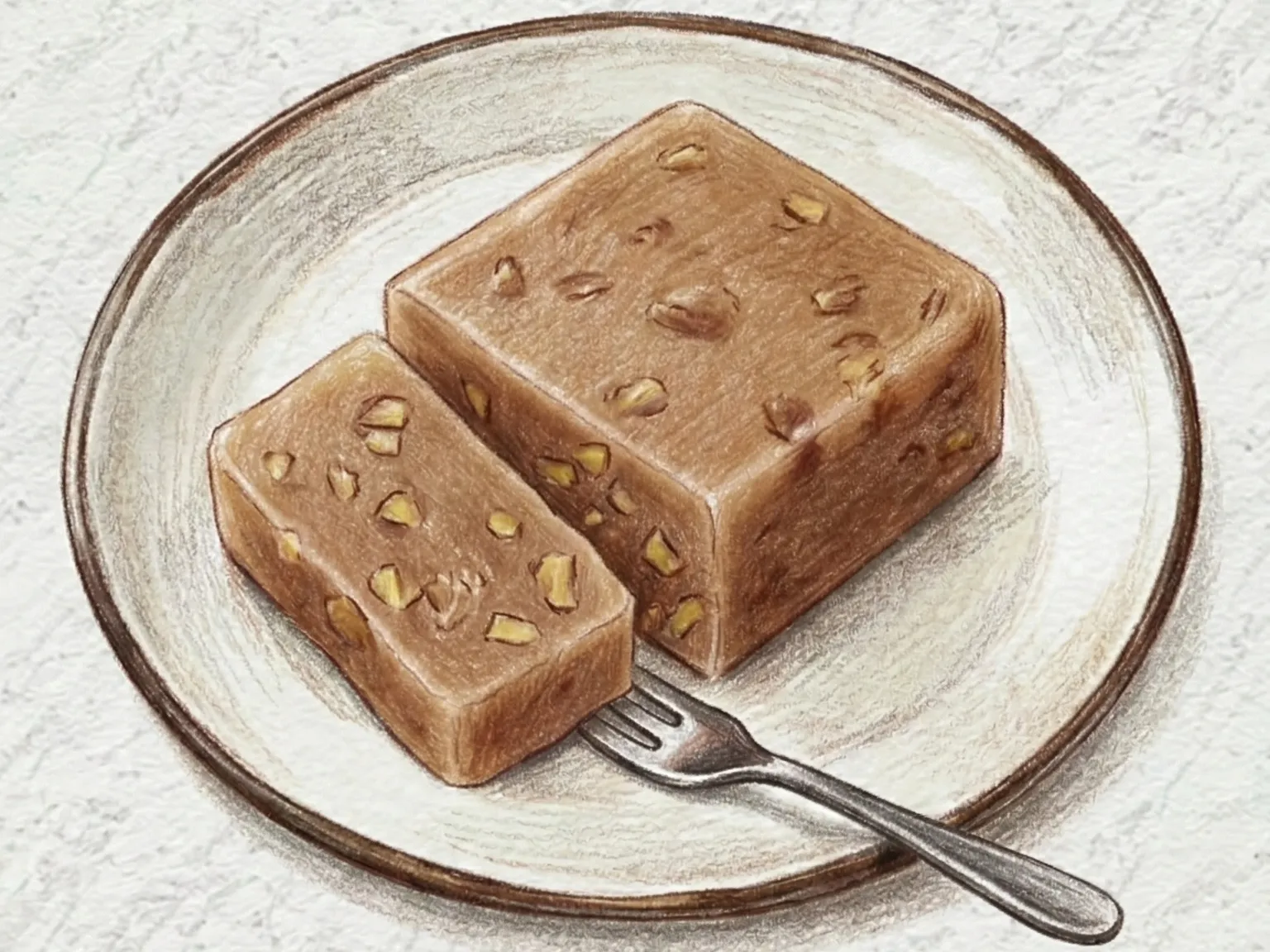
Bam yanggaeng is built from three components: chestnut puree, white bean paste, and agar powder. Boiled chestnuts are mashed fine and combined with the bean paste, then dissolved agar, sugar, and honey are stirred into the mixture before it is brought to a brief boil. Poured into a mold and left to cool at room temperature, the agar sets the block into firm, clean-slicing slabs - a texture that comes from agar's sharp recrystallization as it cools, which produces a harder and more abrupt snap than gelatin-based confections. The starchy density of chestnuts gives the cross-section a smooth, fine-grained quality that plain bean paste lacks. A small amount of salt is critical: it draws the sweetness into focus rather than muting it. Skimming air bubbles before pouring ensures a flat, even surface. Prepared as a holiday gift in Korean households for generations, the finished block keeps in the refrigerator for about a week without losing texture.

Prep 20min Cook 15min 2 servings
Recipes by ingredient → honey

Instructions

Read the steps as a cooking flow: prep, heat, seasoning, doneness control, and finish.

6 steps
  1. 1
    Heat

    Press 180g cooked chestnuts through a sieve to form a smooth puree, then mix with 220g white bean paste until completely lump-free and uniform in texture.

  2. 2
    Step

    Pour 200ml water into a pot, sprinkle in 4g agar powder, and whisk constantly for 2 minutes until the agar is fully dissolved with no visible granules remaining.

  3. 3
    Control

    Add 35g sugar and 1g salt and bring to a simmer over low heat, stirring continuously until the liquid turns completely clear and the agar is fully activated.

  4. 4
    Control

    Add the chestnut-bean paste mixture all at once and stir without stopping for 4 to 5 minutes over low heat until fully incorporated into the agar base and the mixture thickens slightly.

  5. 5
    Prep

    Turn off heat, stir in 12g honey, then quickly pour into the mold, level the surface, and pop any air bubbles with a toothpick before the mixture begins to set.

  6. 6
    Finish

    Cool completely at room temperature until the agar begins to set naturally, then refrigerate for at least 1 hour until firm, and cut into bite-sized pieces to serve.

After the steps

Pick a recipe that fits this dish.

Continue with shared ingredients, meal pairings, or a similar method.

Recipes That Go Well With This

More Desserts →

Based on shared ingredients and meal pairing

Sweet Chestnut Confection
Shared ingredient: honey Desserts

Sweet Chestnut Confection

Yulran is a traditional Korean chestnut confection that is prepared by boiling 300 grams of chestnuts in water for a duration of 20 minutes. Once the boiling process is complete, the chestnut flesh is removed from the shells and pressed through a fine sieve. This manual pressing continues until the texture becomes perfectly smooth. The purpose of using a sieve is to eliminate any grainy bits, which results in a chestnut paste with an even and velvety consistency. This puree is then kneaded together with a combination of honey and ground cinnamon. After the ingredients are thoroughly mixed, the paste is shaped into small, bite-sized rounds. The honey used in this recipe serves as both a source of moisture and a necessary adhesive. Its sticky property provides the strength required for the confection to hold its molded shape effectively without crumbling into pieces. Ground cinnamon is included to provide a warm spice note. This flavor is chosen because it complements the starchy and earthy sweetness of the chestnut rather than competing with the natural profile of the nut. Following the shaping process, each piece is rolled in ground pine nuts. This step coats the exterior in a mild nuttiness and introduces a subtle textural contrast against the smooth paste contained within. For a final visual touch, thin slices of jujube are placed on top as a garnish to provide a stroke of red color. The finished rounds are then placed in the refrigerator to chill for 15 minutes. This cooling period firms the surface of the paste just enough so that the confections can be picked up cleanly with the fingers without sticking to the skin. Historically, Yulran was a common fixture on the ceremonial and banquet tables of the Joseon court. It was valued for its clean and understated sweetness, which allows the natural flavor of the chestnut to remain the central focus.

Sweet Rice Honey Muffins
Shared ingredient: honey Desserts

Sweet Rice Honey Muffins

Yakbap muffins bake soaked glutinous rice that has been marinated for 20 minutes in a seasoning of soy sauce, dark brown sugar, honey, and sesame oil, then portioned into muffin cups with sliced jujubes and diced chestnuts before going into a 180-degree oven. The soy sauce provides a savory depth that folds into the brown sugar and honey to produce the dark, caramel-like sweetness that distinguishes traditional yakbap, while sesame oil amplifies the grain aroma throughout. Jujubes are sliced thin so their juices seep between the rice grains during baking, and the chestnut cubes provide a starchy, crumbly resistance against the sticky glutinous rice. Pine nuts placed on top release their oils as they roast, filling the oven with a nutty fragrance that deepens as the muffins brown. A 10-minute rest after removing them from the oven allows the residual heat to distribute evenly, so the glutinous rice firms into a clean shape that separates easily from the mold. The recipe reinterprets traditional yakshik as individual servings suited to a modern table.

Yaksik (Korean Royal Sweet Glutinous Rice with Jujube)
Serve together Baking

Yaksik (Korean Royal Sweet Glutinous Rice with Jujube)

Yaksik is a traditional Korean sweet rice dish with roots in royal court cuisine. Glutinous rice is mixed with soy sauce, honey, and sesame oil, then steamed with jujubes and chestnuts until each grain absorbs a deep caramel-brown color and a sweet-salty seasoning. The soy sauce provides savory depth while the honey glazes the rice with a gentle sheen and lingering sweetness. Jujubes burst with natural fruity sweetness when bitten, and chestnuts contribute a crumbly, starchy contrast to the chewy rice. A pinch of cinnamon adds warm spice that ties the elements together. Yaksik holds its texture well at room temperature, making it equally suited for packed lunches or make-ahead desserts.

Korean Black Raspberry Jelly
Similar recipe Desserts

Korean Black Raspberry Jelly

Bokbunja jelly cups are a chilled Korean dessert made by setting bokbunja, the Korean black raspberry, with gelatin sheets and a measured addition of lemon juice for acidity balance. The process requires dissolving the bloomed gelatin sheets into sugar syrup that has been removed from the heat; adding gelatin to boiling liquid breaks down its protein chains and compromises its setting ability. A single pass through a fine strainer removes air bubbles and sediment, producing a perfectly smooth surface that lets the deep purple of the bokbunja come through cleanly and without distortion. Topping each cup with fresh blueberries and a mint leaf reinforces the berry flavor while providing a sharp visual contrast against the dark jelly beneath. Bokbunja is well known in Korea as a traditional medicinal ingredient and as the base of the country's signature fruit wine; these jelly cups translate its tartness and intense pigmentation into a simple refrigerator dessert that can be prepared ahead and served straight from the cold. The result is a bright, clean finish that sits light on the palate.

Serve with this

Korean Rosé Cup Tteokbokki
Street food Medium

Korean Rosé Cup Tteokbokki

A base of equal parts water and milk is whisked together with gochujang, red chili flakes, sugar, and minced garlic, then brought to a simmer before rice cakes and fish cake are added. The sauce cooks over medium-low heat long enough for the rice cakes to absorb the seasoned liquid and turn glossy. Milk fat wraps around the capsaicin in the chili paste, softening the raw heat while keeping the fermented depth of gochujang intact. Mozzarella cheese is stirred in at the very end, off the heat or with the flame nearly out, so it melts smoothly into the sauce rather than turning stringy and tough. Keeping a consistently moderate flame is the single most important technique here, because high heat causes the milk to break and the sauce to turn grainy. Serving it in a cup format means the portion cooks and cools evenly, and the open top allows excess moisture to evaporate so the final consistency is thick and coating.

🧒 Kid-Friendly 🏠 Everyday
Prep 12min Cook 15min 2 servings
Korean Sweet Corn Latte (Butter Sauteed Corn Milk Drink)
Drinks Easy

Korean Sweet Corn Latte (Butter Sauteed Corn Milk Drink)

Sweet corn latte begins by sauteing cooked corn kernels in butter until fragrant, then simmering them in milk to draw out the corn's natural sugars before blending everything smooth. The butter amplifies the starchy, roasted aroma during the initial saute, coating each kernel so that the fat-soluble flavor compounds dissolve fully into the milk during the five-minute simmer. Blending the mixture until completely smooth and then straining it through a fine sieve removes any remaining hull pieces, producing a texture as silky as a custard sauce. This straining step makes a noticeable difference in the final quality. Condensed milk adds a rounded sweetness, and a small amount of white pepper introduces a faint spiced warmth that gives the drink depth beneath the sweetness. It works equally well served hot in a ceramic mug or chilled and poured over ice; the corn aroma remains vivid in both versions.

🍺 Bar Snacks 🧒 Kid-Friendly
Prep 8min Cook 10min 2 servings
Chocolate Lava Cake
Western Medium

Chocolate Lava Cake

Chocolate lava cake bakes a batter of melted dark chocolate, butter, whole eggs, egg yolks, sugar, and a small measure of flour in buttered ramekins at 220 degrees Celsius for ten to twelve minutes, producing a set crust and molten center from a single brief baking window. The high oven temperature firms the outside and top of the batter into cake while the core stays liquid, so breaking the surface with a spoon releases a slow pour of concentrated warm chocolate. High-cacao dark chocolate provides a complex, bittersweet depth that pairs with the richness of butter fat, and vanilla extract softens and rounds the overall aroma. Timing controls everything in this recipe: overbaking by even two minutes sets the center solid and destroys the signature flow. The edges of each ramekin should feel just firm when pressed lightly through a towel at the ten-minute mark. Ramekins can be filled ahead and refrigerated, but the baking time then needs an extra one to two minutes to account for the colder starting temperature. Serving with a scoop of vanilla ice cream or a spoonful of cold heavy cream creates a striking contrast between the hot, dense chocolate interior and the chilled, lighter dairy.

🎉 Special Occasion 🧒 Kid-Friendly
Prep 15min Cook 12min 2 servings

Similar recipes

Sweet Red Bean Porridge (Korean Adzuki Rice Dessert Soup)
Desserts Medium

Sweet Red Bean Porridge (Korean Adzuki Rice Dessert Soup)

Danpat-juk is a Korean sweet red bean porridge prepared by cooking dried red beans until fully tender, then straining two-thirds through a fine sieve for a smooth paste while keeping the remaining third whole to provide textural contrast throughout the bowl. The water from the initial boil is discarded to eliminate the raw astringency that fresh red beans carry before the flavor fully develops. Sugar, salt, and a small measure of cinnamon season the finished porridge, with the cinnamon adding a warm spiced note without overpowering the bean itself. Small glutinous rice dumplings called saealsim, hand-shaped from glutinous rice flour mixed with boiling water, are dropped into the simmering liquid and float to the surface once cooked through, introducing a chewy counterpoint to the smooth broth. Because the porridge thickens noticeably as it cools, pulling it from the heat while still slightly thinner than the intended final consistency ensures the bowl reaches the table at the right texture.

🧒 Kid-Friendly 🎉 Special Occasion
Prep 15min Cook 50min 2 servings
Korean Sweet Glutinous Rice
Rice Medium

Korean Sweet Glutinous Rice

Glutinous rice is soaked, steamed, and dressed with a mixture of soy sauce, sesame oil, and honey, then studded with jujubes, chestnuts, and pine nuts before a second steaming. The double-steaming process gives the rice a dense, chewy stickiness while the soy sauce penetrates each grain and tints it a deep amber. Jujubes lend a natural caramel-like sweetness, chestnuts add a crumbly, starchy contrast, and pine nuts contribute a subtle oiliness that enriches the overall taste. Traditionally prepared for the first full moon festival, yakbap is equally enjoyable as an everyday snack or packed lunch.

🎉 Special Occasion
Prep 30min Cook 45min 4 servings

Tips

Dissolve agar in cold water first to prevent clumping.
Line the mold with plastic wrap for easier unmolding.

Nutrition (per serving)

Calories
312
kcal
Protein
6
g
Carbs
63
g
Fat
4
g