Saenggang Jeonggwa (Candied Ginger)
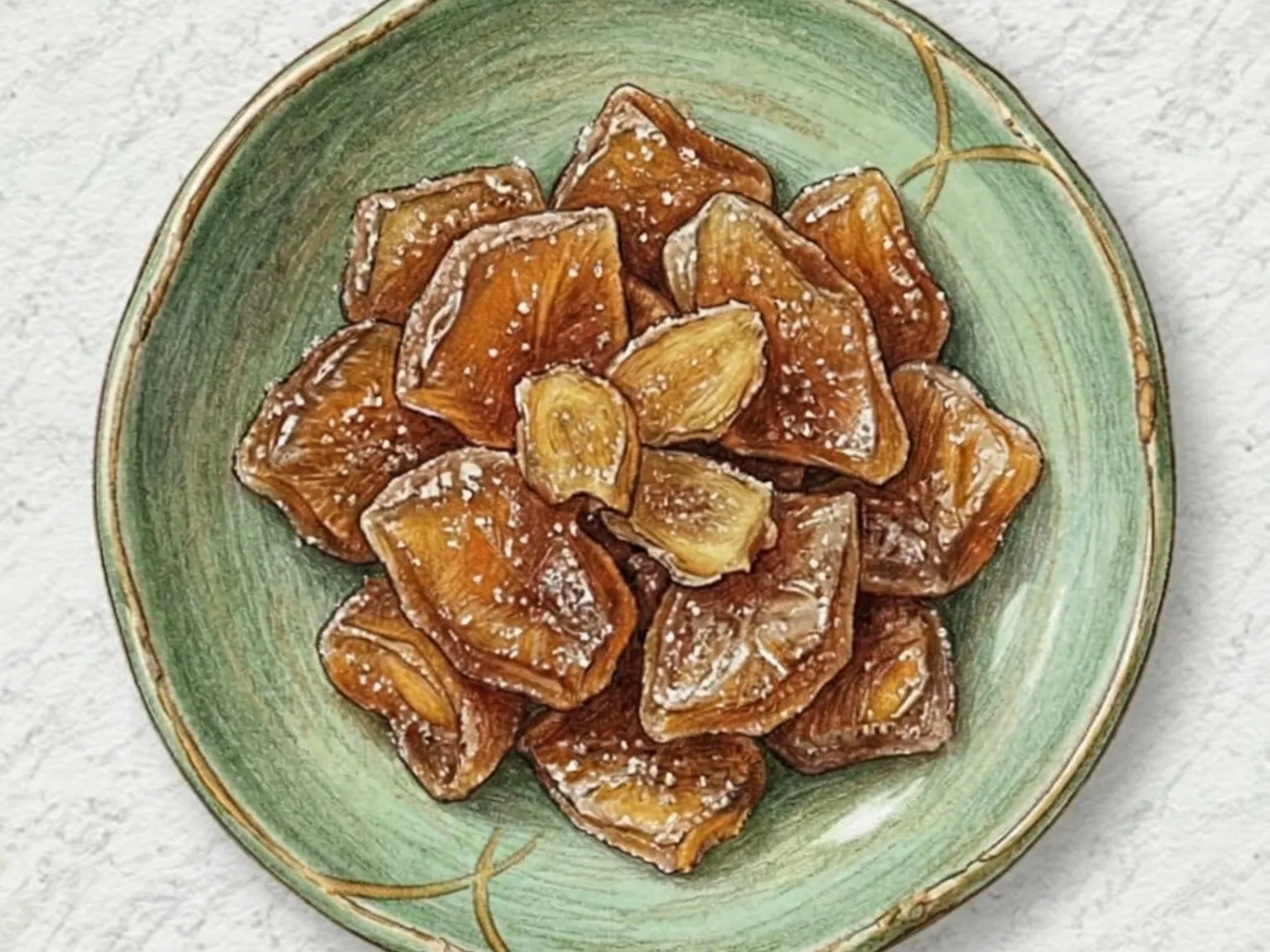
Saenggang jeonggwa is a traditional Korean candied ginger made by slicing fresh ginger thinly, blanching it twice to tame the raw heat, then simmering the slices in a sugar and grain syrup glaze. A 10-minute cold-water soak removes the sharpest bite first, and two rounds of boiling soften the pungency further while preserving the clean aromatic core. The slices are simmered on low heat until the syrup reduces to a glossy coat, at which point lemon juice is stirred in to balance the sweetness with a light acidity, and the finished pieces are dried on a rack before being rolled in granulated sugar. The sugar crust crackles on first bite, giving way to the chewy, syrup-concentrated ginger underneath with its slow-building warmth.
Adjust Servings
Instructions
- 1
Slice ginger thinly and soak in cold water for 10 minutes to mellow sharpness.
- 2
Boil ginger in water for 10 minutes, drain, and repeat once more.
- 3
Add 250 ml fresh water, sugar, salt, and grain syrup, then simmer gently.
- 4
When syrup thickens and coats ginger, stir in lemon juice.
- 5
Spread on a rack to dry slightly, then coat evenly with sugar.
As an Amazon Associate, we may earn from qualifying purchases.
Tips
Nutrition (per serving)
More Recipes

Candied Tangerine Peel (Korean Citrus Honey Confection)
Gyul jeonggwa is a traditional Korean candied confection made by slicing tangerine peels into 0.8 cm strips, blanching them twice in salted water to draw out bitterness, then simmering in a syrup of sugar, honey, and cinnamon for thirty-five to forty minutes on low heat. Leaving a moderate amount of white pith intact preserves the essential citrus oils that give the finished candy its bright, aromatic character. As the peels cook, they turn translucent and absorb the syrup, developing a dense, chewy texture similar to a fruit jelly. A splash of lemon juice at the end prevents the syrup from crystallizing and rounds out the sweetness with a clean acidic note, and drying the pieces on a rack for an hour after cooking yields a non-sticky surface.

Honey Ginger Ribbon Cookies
Maejakgwa are traditional Korean ribbon cookies made from a firm dough of wheat flour, sesame oil, and ginger juice, rolled to 2 mm thickness, slit in the center, and twisted into a knot shape before frying. Slow-frying at 160 degrees Celsius turns them light golden and crisp all the way through, and a warm coating of honey blended with rice syrup adds a glossy, sweet shell. The ginger lends a subtle warm bite that sits behind the nuttiness of sesame oil, while a final dusting of pine nut powder contributes a soft, buttery fragrance. Each piece shatters lightly when bitten, yet the syrup-soaked edges carry a slight chewiness that gives the cookie a layered texture.

Honey Ginger Pastry (Korean Deep-Fried Layered Wheat Honey Cookie)
Yakgwa is a traditional Korean honey pastry made from a dough of wheat flour rubbed with sesame oil, then mixed with rice wine, ginger juice, and rice syrup, folded and rolled twice to create flaky layers before frying. A two-stage frying method, first at 140 degrees Celsius to cook through slowly, then briefly at 170 degrees for color, builds a crisp exterior over a layered, laminated interior. Soaking the fried pastries in a warm syrup of honey, water, and ground cinnamon for at least two hours allows the sweetness to penetrate between the layers, saturating the pastry with moist, fragrant honey flavor throughout. Ginger juice surfaces gently in the aftertaste to temper the richness, and the sesame oil woven into the dough adds a nutty backbone that ties the complex flavors together.

Barley Puff Brittle (Korean Puffed Barley Walnut Sesame Candy)
Bori-gangjeong is a Korean barley puff brittle made by tossing puffed barley with roughly chopped walnuts and toasted sesame seeds in a syrup of rice malt, sugar, and honey heated to precisely 118 degrees Celsius. Temperature control is the deciding factor: too cool and the brittle stays soft and sticky, too hot and it hardens into something tooth-breakingly rigid. Sesame oil stirred into the syrup at the end adds a subtle nutty fragrance that ties together the toasty barley and the honey sweetness. Scoring the slab while still warm and cutting once fully set yields clean, bite-sized pieces with a satisfying snap.

Korean Rice Puff Confection
Gangjeong is a traditional Korean confection made by coating puffed glutinous rice in warm rice syrup, then pressing the mixture into molds and allowing it to set. The process begins with soaking and steaming glutinous rice, drying it thoroughly, and deep-frying the grains until they puff into white, airy clusters. Working quickly, the hot syrup is folded through the puffs so that it bonds every piece together without making them soggy. Once cooled, the confection firms into a block that shatters satisfyingly when bitten. The rice syrup provides a gentle, caramel-like sweetness that never overwhelms. Black sesame seeds, pine nuts, or peanuts mixed in before setting add nutty richness and visual contrast. In Korean tradition, brightly colored versions appear on holiday tables, dyed with natural food colorings. Stored in an airtight container, gangjeong keeps its crunch for several days.

Korean Rice Puff Gangjeong
Ssal-gangjeong is a traditional Korean confection made by binding puffed rice, roasted peanuts, sunflower seeds, and black sesame in a syrup of rice malt and sugar, then pressing the mixture into a mold to set. Controlling syrup temperature is essential: heating too high makes the bars rock-hard once cooled, so stopping when the syrup forms soft threads keeps the final texture crisp yet breakable. The airy crunch of puffed rice contrasts with the firm bite of whole nuts, while black sesame adds a lingering toasty undertone. Scoring the slab before it fully cools produces clean cuts, and storing in an airtight container preserves the crispness for several days.