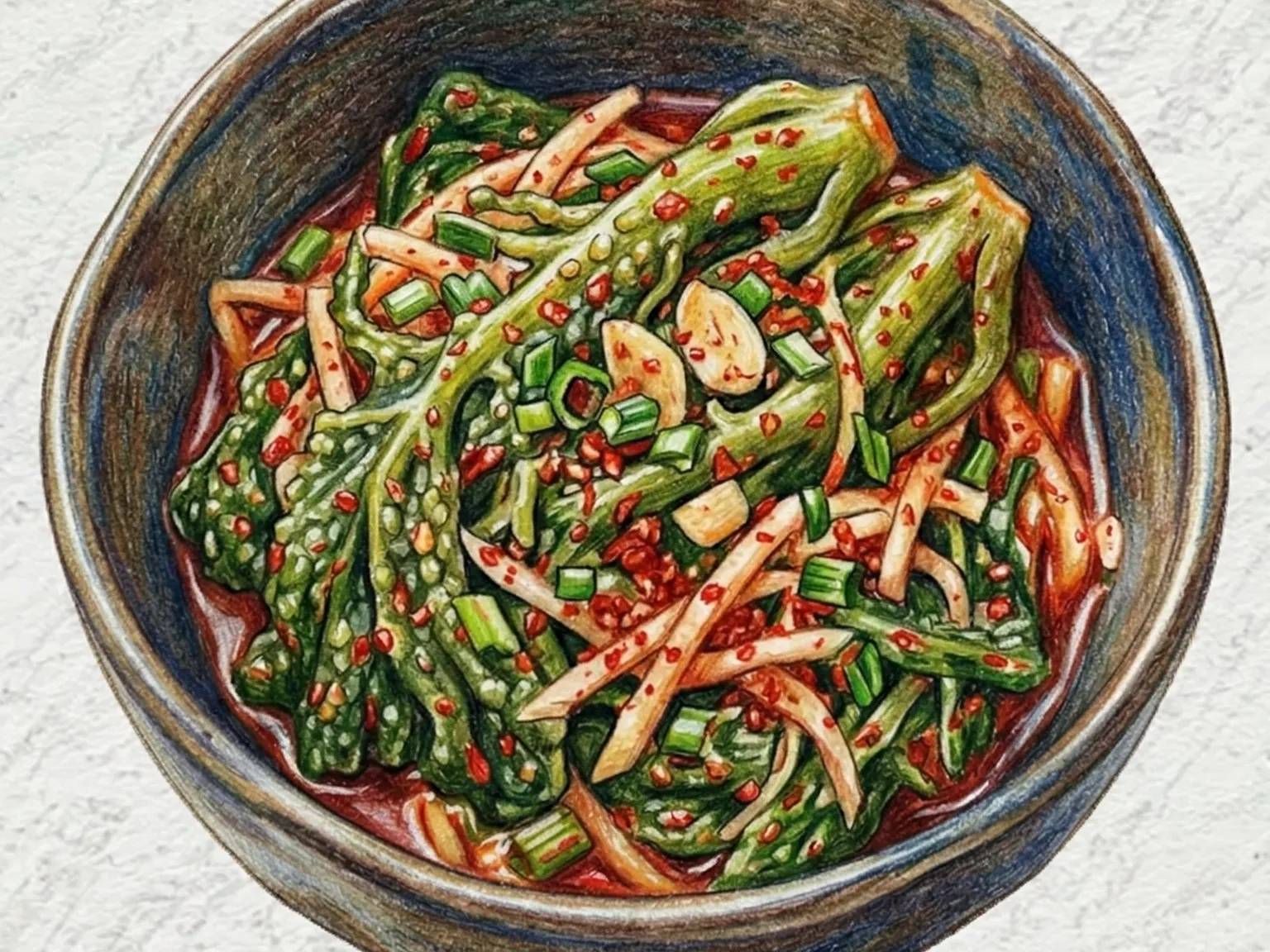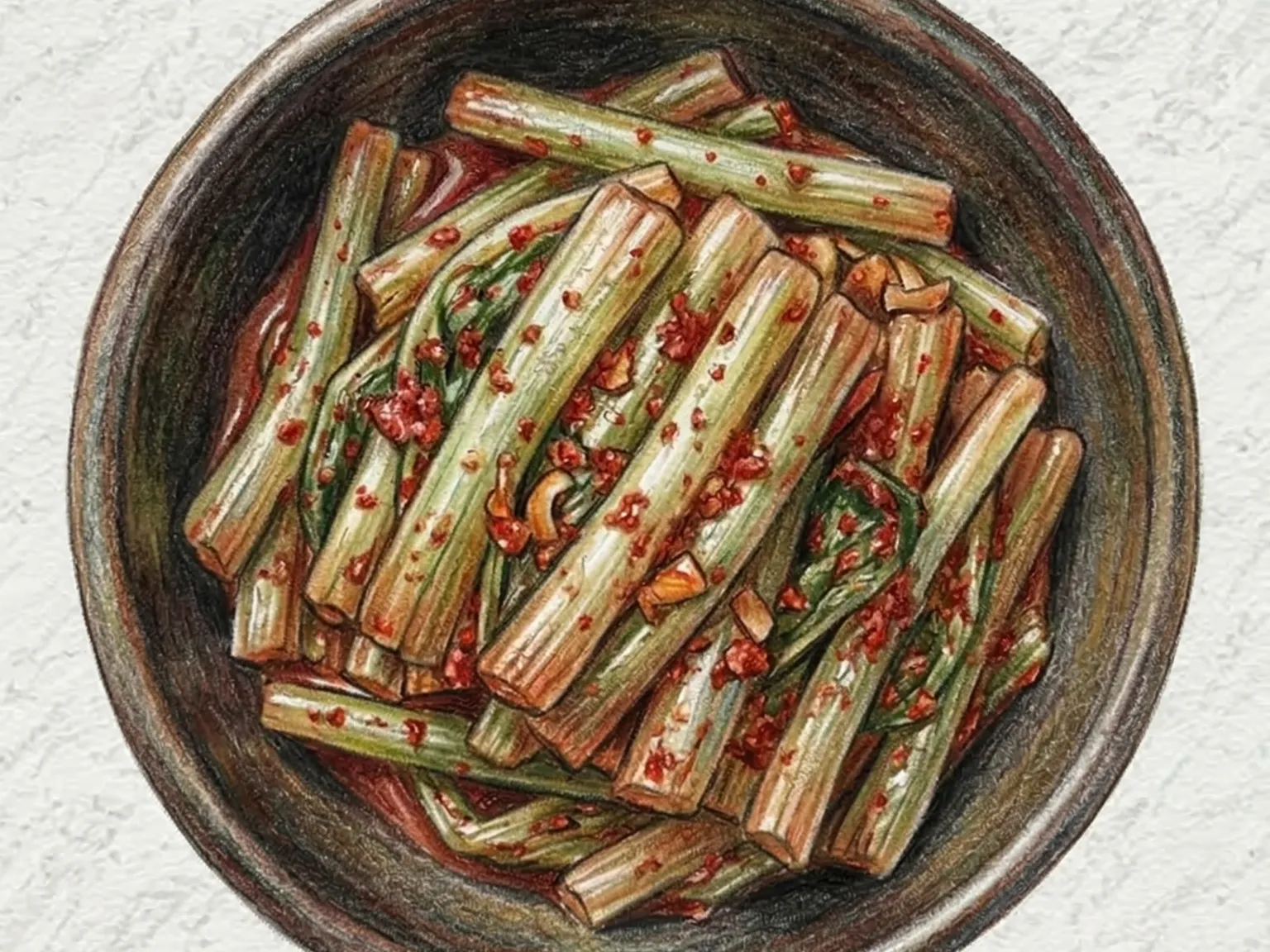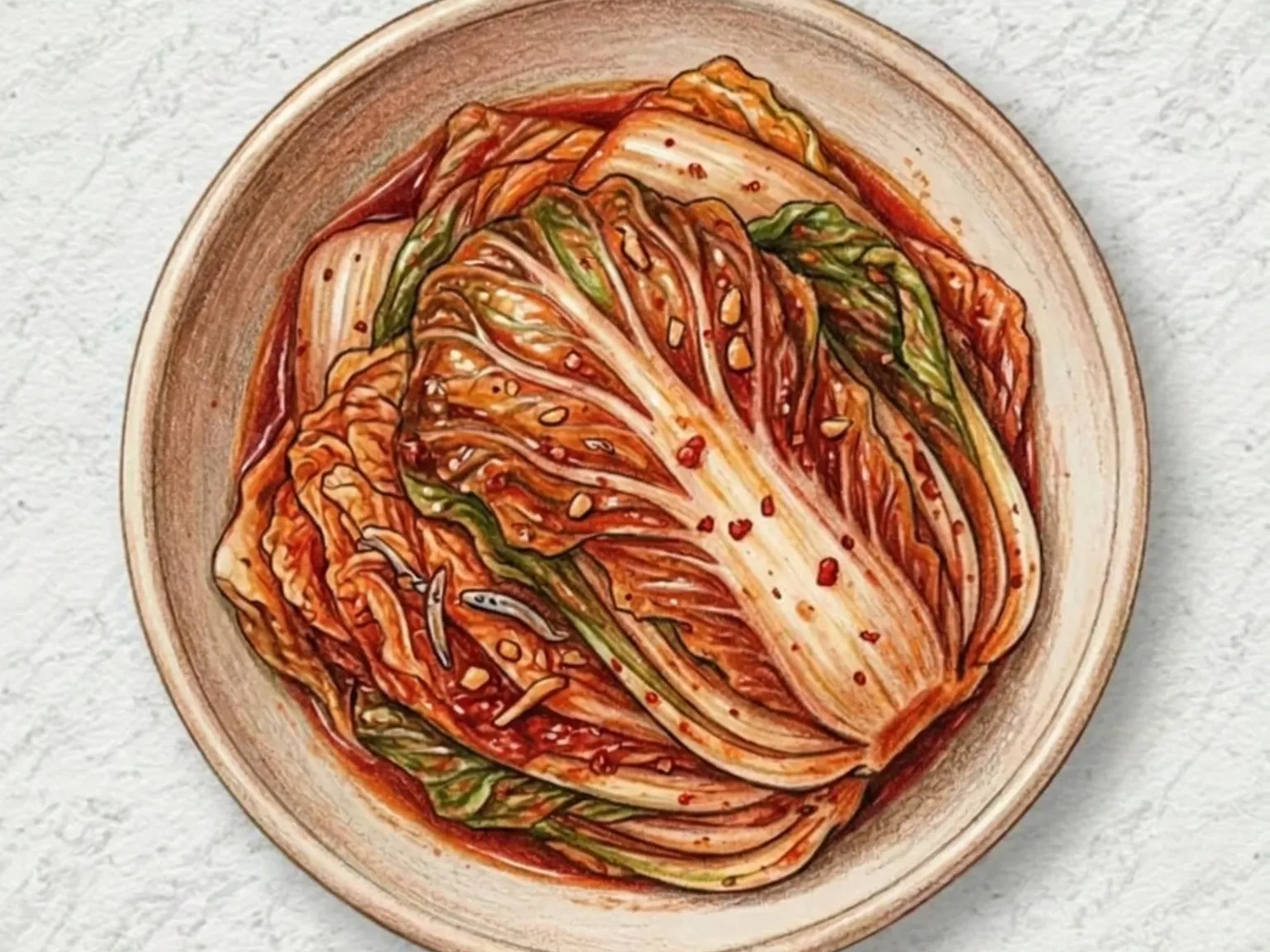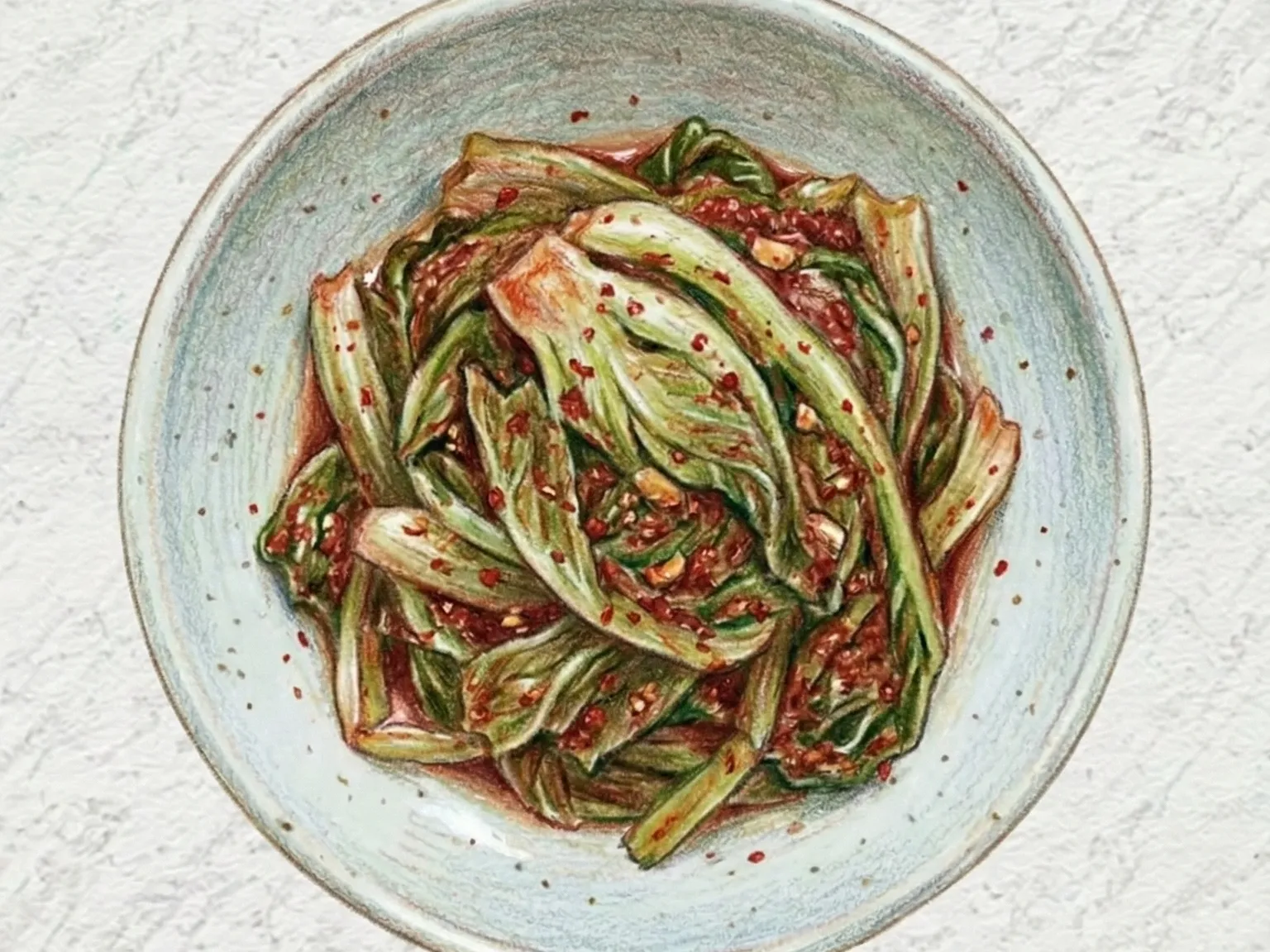
Korean Coastal Hogfennel Kimchi
Bangpungnamul kimchi is a seasonal Korean kimchi made by dressing coastal hogfennel herb in a chili-based seasoning paste. The herb is first lightly salted to soften its fibers, then mixed with Korean chili flakes, anchovy fish sauce, soup soy sauce, minced garlic, and ginger. Sweet rice paste acts as a binder, helping the seasoning adhere evenly to each leaf. Sliced scallions are folded in for a crisp textural element. The herb's natural bitterness mellows noticeably during fermentation, producing a flavor profile distinct from standard napa cabbage kimchi. One day at room temperature followed by refrigerated storage achieves a balanced level of fermentation that preserves the herb's character while developing lactic acidity.
Adjust Servings
Instructions
- 1
Trim tough stems, blanch for 20 seconds, then shock in cold water.
- 2
Squeeze dry, cut into 5 cm pieces, and lightly salt for 5 minutes.
- 3
Mix chili flakes, soup soy sauce, fish sauce, garlic, ginger, and rice paste.
- 4
Add 4 cm-cut scallion into seasoning first to release aroma.
- 5
Gently toss in bangpungnamul and transfer to a container.
- 6
Rest 2 hours at room temperature, refrigerate, and serve from the next day.
As an Amazon Associate, we may earn from qualifying purchases.
Tips
Nutrition (per serving)
More Recipes

Korean Shepherd's Purse Kimchi
Naengi kimchi is a seasonal Korean side dish where shepherd's purse - an early-spring wild herb - is blanched for just twenty seconds in salted boiling water to remove bitterness without killing its distinctive herbal fragrance. The cooled, squeezed greens are dressed in a paste of gochugaru, anchovy fish sauce, minced garlic, and sweet rice paste, which provides enough viscosity to coat each stem evenly. The fish sauce's fermented depth meets the herb's green, earthy character to build a layered flavor that neither ingredient achieves alone. Sesame seeds scattered on top add a quiet toasted crunch. Resting the kimchi in the refrigerator for at least two hours lets the seasoning settle and deepen before serving.

Korean Napa Cabbage Kimchi
Baechu kimchi is Korea's defining fermented food, made by salting napa cabbage and layering it with a paste of gochugaru, anchovy fish sauce, garlic, ginger, and glutinous rice paste. The cabbage is salted with coarse sea salt for six to eight hours until the stems become flexible but retain their crunch; under-salting leads to mushy kimchi, while over-salting masks the seasoning flavors. The glutinous rice paste serves a dual purpose: it acts as a glue that helps the seasoning adhere to each leaf, and it provides sugars that feed lactobacillus during fermentation. Julienned radish mixed into the filling adds textural contrast, and scallions contribute another layer of savory depth. After one day at room temperature to kick-start fermentation, the kimchi moves to the refrigerator where acidity develops slowly. At two to three weeks, the heat from gochugaru, the umami from fish sauce, and the tang from lactic acid reach their optimal balance.

Korean Bok Choy Kimchi (Gochugaru Fermented Quick)
Cheonggyeongchae kimchi is a bok choy kimchi prepared by halving the heads lengthwise, salting them for twenty minutes, and coating each leaf layer with a paste of gochugaru, salted shrimp, anchovy fish sauce, and sweet rice paste. Keeping the salting time short preserves the stems' crisp snap, while the leaves soften just enough to hold the seasoning. Julienned scallions and carrot add color and textural variety, and adjusting the fish sauce quantity based on the salted shrimp's salinity keeps the overall salt level balanced. After four hours of room-temperature fermentation followed by refrigeration, this kimchi is ready within a day and offers a lighter, crunchier character than traditional napa cabbage kimchi.

Korean Bitter Herb Kimchi
Sseumbagwi kimchi is a traditional Korean fermented side dish made from sseumbagwi, a wild bitter herb harvested in spring. The herb is soaked in cold water for twenty minutes to temper its pronounced bitterness, salted for fifteen minutes, then dressed in a thick paste of gochugaru, sand lance fish sauce, minced garlic, ginger, sweet rice paste, and plum syrup alongside scallion pieces. The rice paste gives the seasoning enough body to cling to the thin stems and leaves, and the plum syrup smooths out both the bitterness and the salt's sharpness. Five hours of room-temperature fermentation followed by refrigeration allows lactic acid to develop gradually, layering a tangy depth over the herb's inherent bitter-green character. The flavor is most complex around day three. If the bitterness is too strong, an additional change of soaking water before seasoning brings it under control.

Korean Seasoned Coastal Hogfennel Greens
Coastal hogfennel - bangpung - is a wild herb from Korea's seaside cliffs, prized for its pungent, celery-like aroma. Blanched one minute in salted water to tame bitterness while preserving herbal fragrance, the greens are dressed simply with doenjang, garlic, and sesame oil. Minimal seasoning lets the herb's character lead. A seasonal specialty from spring markets in coastal regions like Gangwon-do and Jeju.

Korean Seasoned Wild Chive
A pungent, no-cook spring side dish - raw Korean wild chives with a sharp garlic kick that clears the palate in one bite. Dallae emerges from hillsides in March, thinner and far more intense than cultivated chives. Dressed in soy sauce, gochugaru, vinegar, sugar, and sesame oil, the tiny bulbs and slender leaves deliver a nose-clearing zing. Koreans pair this muchim with doenjang-jjigae, where the raw chive's sharpness contrasts the stew's depth.