Korean Bangwool Yangbaechu Kimchi (Brussels Sprout Kimchi)
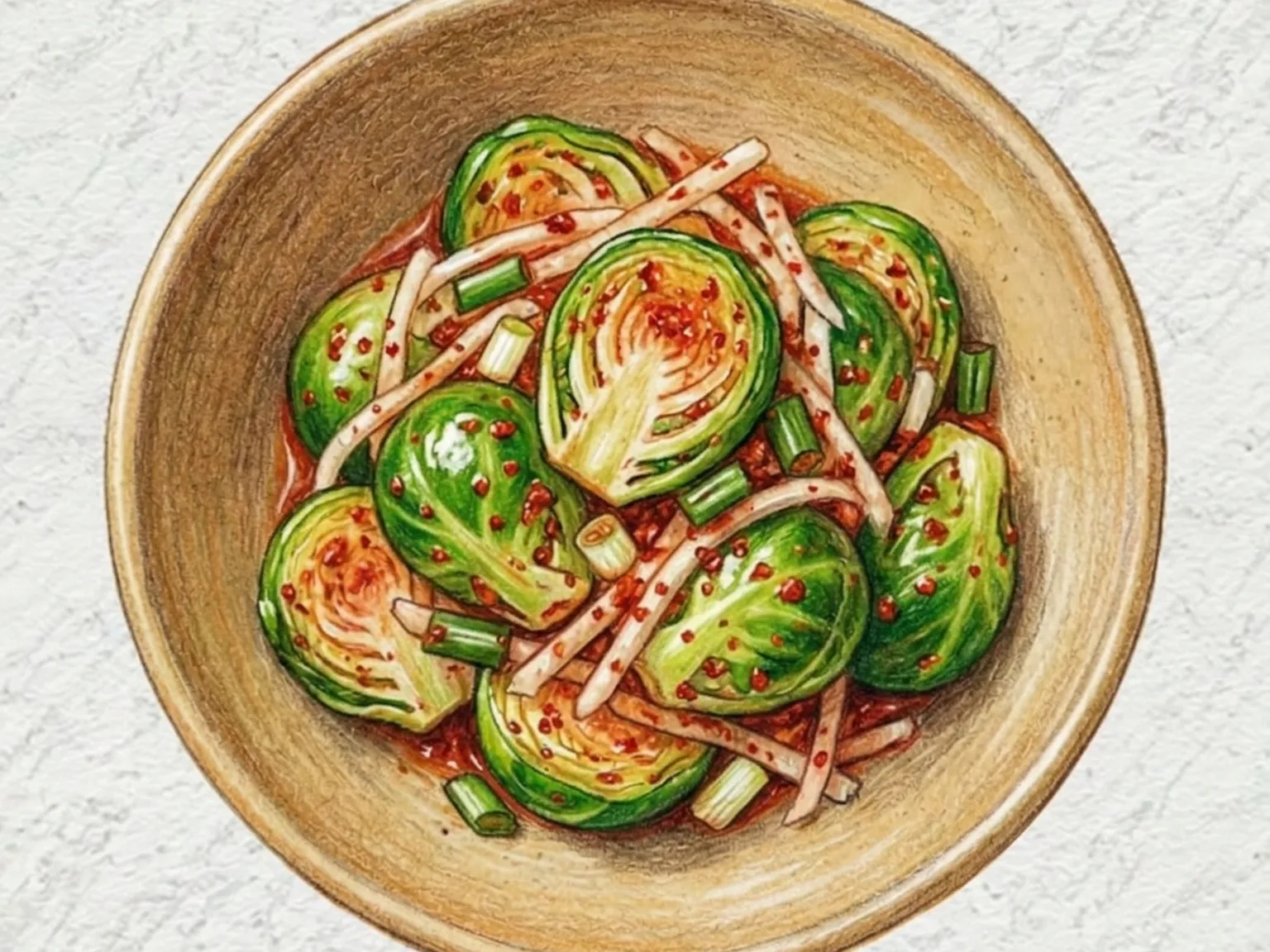
Bangwool yangbaechu kimchi is a creative Korean kimchi made from halved Brussels sprouts brined in salt, then dressed with gochugaru, fish sauce, garlic, and apple. The sprouts retain their firm, dense crunch even after salting, releasing a natural sweetness as you chew that balances the spicy-salty seasoning. Apple adds a fruit sweetness that softens the chili heat, and scallions contribute a fresh note. This seasonal kimchi combines the fermented depth of traditional kimchi with the compact, sweet character of Brussels sprouts.
Adjust Servings
Instructions
- 1
Score a shallow cross on each stem end and brine for 20 minutes.
- 2
Rinse the sprouts in cold water and drain completely.
- 3
Julienne radish and cut scallions into 3-4 cm pieces.
- 4
Mix chili flakes, fish sauce, garlic, ginger, and apple puree into a bright seasoning paste.
- 5
Work seasoning between leaves, then toss with radish and scallions.
- 6
Store airtight, ferment 4 hours at room temperature, then refrigerate 2-3 days.
As an Amazon Associate, we may earn from qualifying purchases.
Tips
Nutrition (per serving)
More Recipes

Korean Cabbage Kimchi (Crunchy Green Cabbage Kimchi)
Yangbaechu kimchi is a Korean cabbage kimchi made by salting green cabbage and tossing it with chili flakes, fish sauce, and minced garlic. The thicker leaves and lower moisture content of green cabbage compared to napa cabbage result in a noticeably crunchier texture that persists through fermentation. The natural sweetness of cabbage softens the heat from the chili seasoning, while carrot and scallion pieces add color and freshness. Six hours of fermentation at room temperature followed by refrigeration lets the tanginess develop gradually. It serves as a lighter alternative when traditional napa kimchi feels too heavy.

Korean Green Onion Kimchi
Daepa kimchi is made by cutting large green onions into six- to seven-centimeter lengths and gently coating them in a paste of gochugaru, anchovy fish sauce, soy sauce, plum extract, and glutinous rice paste. The rice paste acts as a binder that keeps the seasoning clinging to the onion surfaces throughout fermentation instead of sliding off. Handling the stalks carefully so they stay intact is important for presentation, and splitting thicker white portions lengthwise gives the paste more surface area to penetrate. Eight hours of room-temperature fermentation followed by two days of refrigeration brings the kimchi to its peak, where the sharp allium bite of the green onion meets the deep fermented umami of the fish sauce.

Korean Napa Cabbage Kimchi
Baechu kimchi is Korea's defining fermented food, made by salting napa cabbage and layering it with a paste of gochugaru, anchovy fish sauce, garlic, ginger, and glutinous rice paste. The cabbage is salted with coarse sea salt for six to eight hours until the stems become flexible but retain their crunch; under-salting leads to mushy kimchi, while over-salting masks the seasoning flavors. The glutinous rice paste serves a dual purpose: it acts as a glue that helps the seasoning adhere to each leaf, and it provides sugars that feed lactobacillus during fermentation. Julienned radish mixed into the filling adds textural contrast, and scallions contribute another layer of savory depth. After one day at room temperature to kick-start fermentation, the kimchi moves to the refrigerator where acidity develops slowly. At two to three weeks, the heat from gochugaru, the umami from fish sauce, and the tang from lactic acid reach their optimal balance.

Korean Mustard Leaf Kimchi
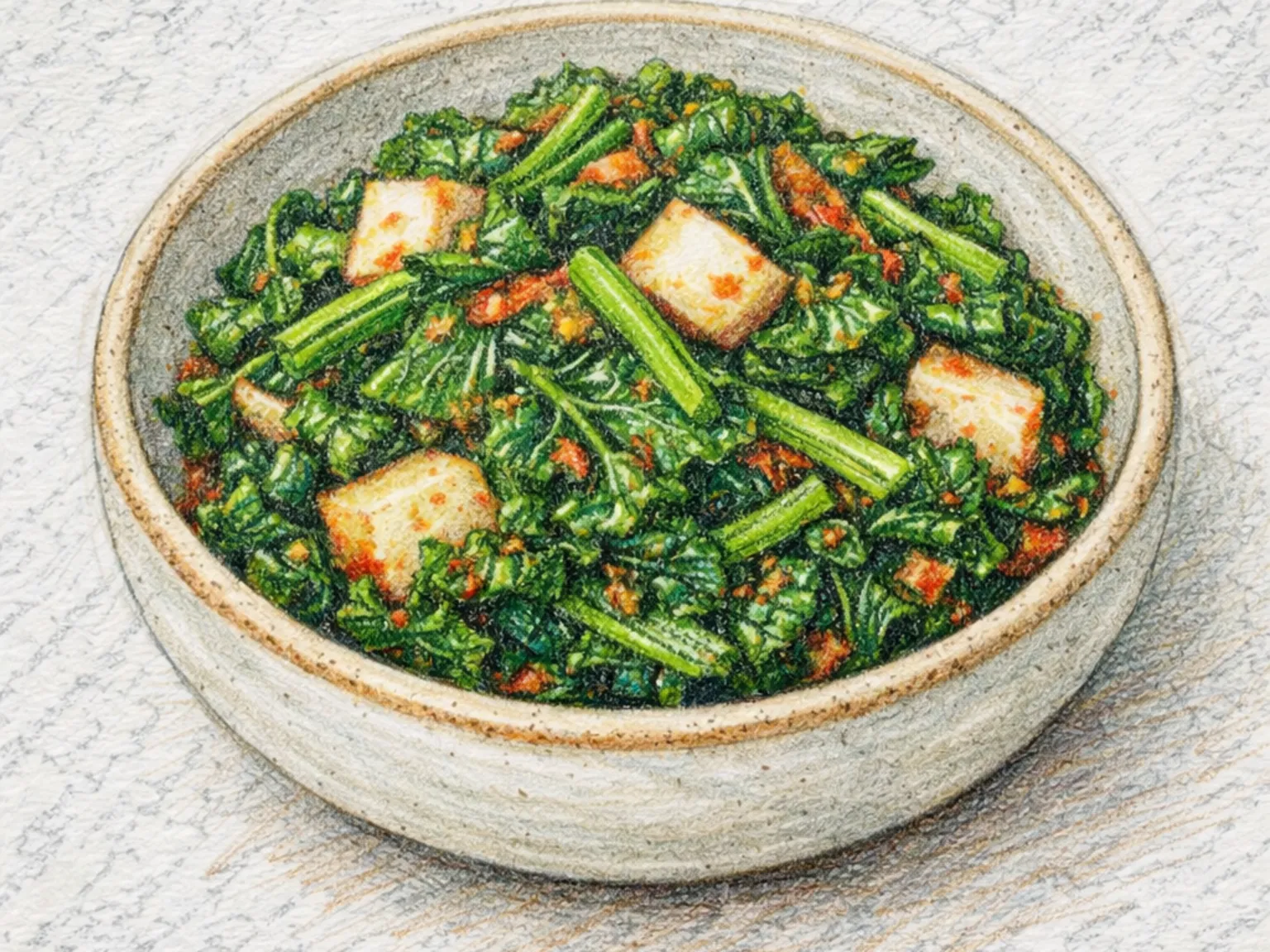
A fiery, wasabi-like kimchi with a punch far bolder than regular napa cabbage kimchi - mustard greens fermented with gochugaru and anchovy fish sauce. The brassica oils in the leaves transform during fermentation into a sharp pungency that cuts through rich pork and soup-rice bowls. Plum extract tempers the acidity, balancing the aggressive aroma and deep saltiness. A signature preparation of Korea's Jeolla province, gat kimchi is for anyone who finds standard kimchi too mild.

Korean Seasoned Perilla Sprout Namul
Kkaetsun-namul-muchim uses young perilla shoots rather than the mature leaves, blanched and dressed with doenjang and perilla oil. Kkaetsun has more tender stems and a more concentrated aroma than full-grown kkaennip, and it appears in traditional markets mainly from summer into early autumn. Trimming the thick lower stems and blanching for just forty seconds preserves the fragrance while softening the fibrous stalks. Hand-dressing with doenjang, soup soy sauce, garlic, and deulgirum (perilla oil) creates a double layer of herbal nuttiness - the fermented paste's earthy umami meeting the shoot's intense green perfume. Perilla oil is preferred over sesame oil here because it belongs to the same botanical family as the shoots, creating a more harmonious pairing. This seasonal namul is a strong alternative when you want something beyond the usual sigeumchi (spinach).

Korean Restaurant-Style Kkakdugi
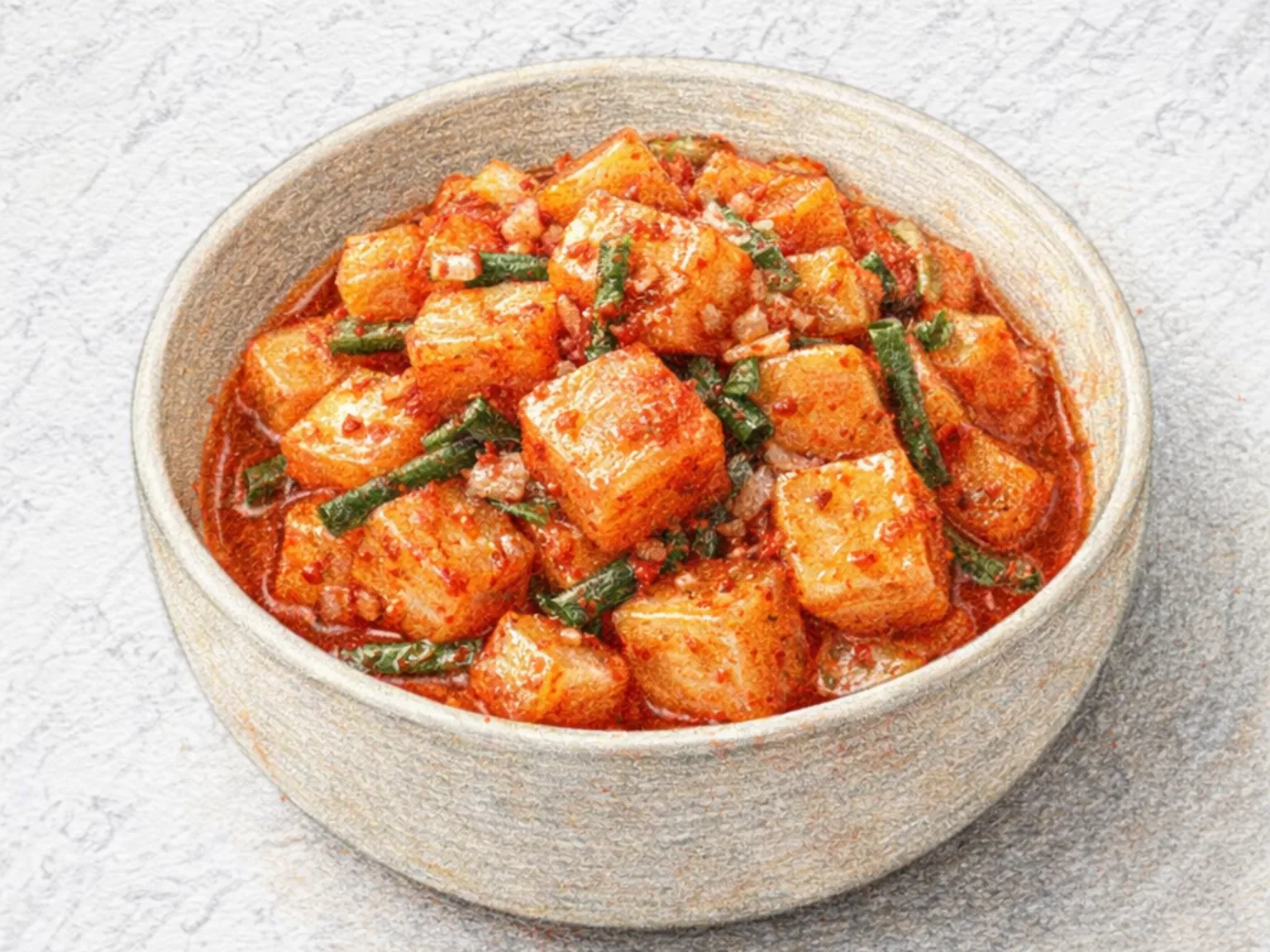
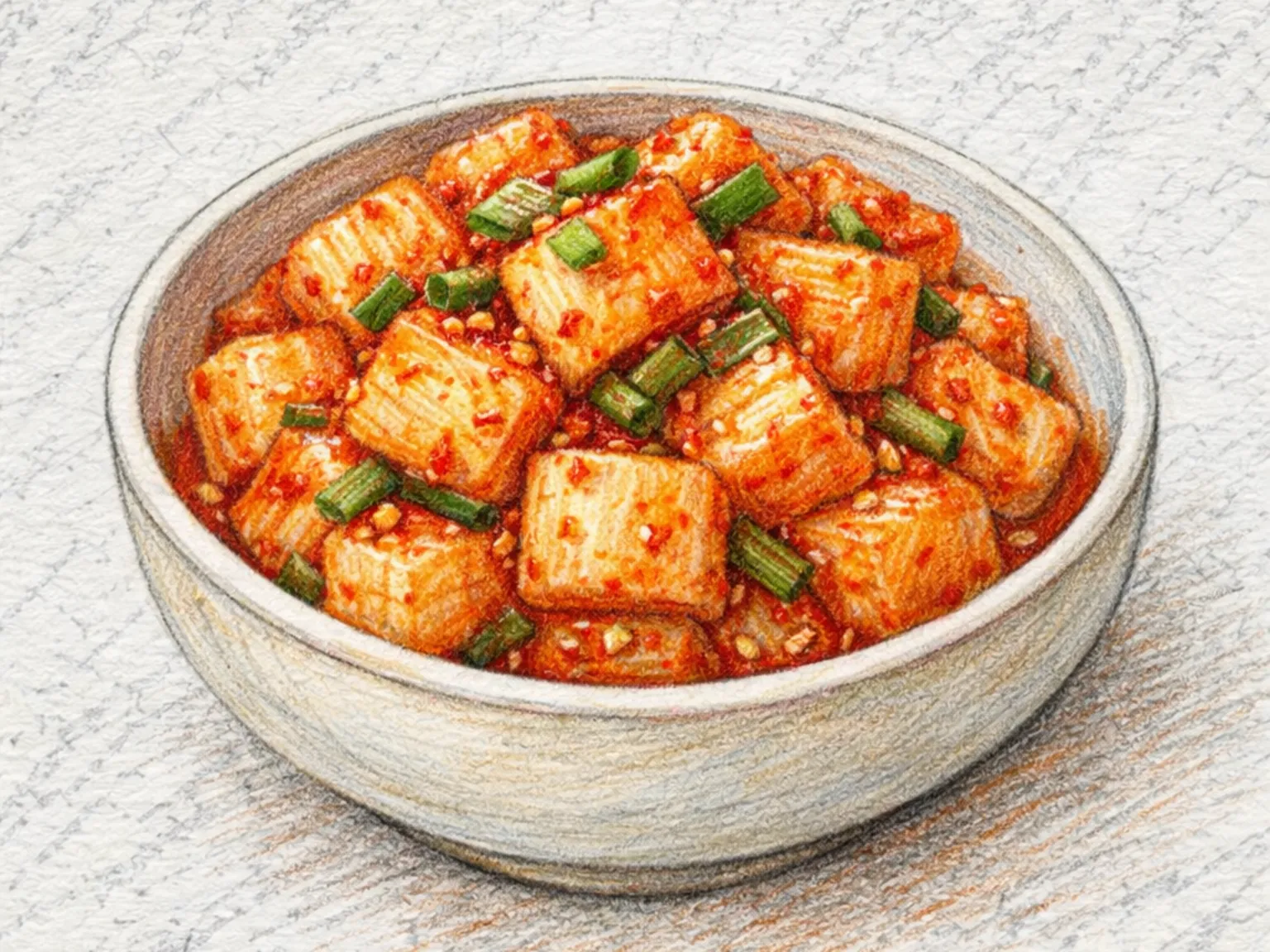
Sikdang-style kkakdugi is the cubed radish kimchi served free at virtually every Korean restaurant, standing alongside baechu-kimchi as a non-negotiable table banchan. Cutting the Korean radish into chunky 2 cm cubes ensures the interior stays crunchy even after salting and fermentation. Twenty minutes in coarse salt draws moisture, then the cubes are dressed with gochugaru, myeolchi-aekjeot (anchovy fish sauce), garlic, ginger, and sugar. The fish sauce provides the umami backbone that deepens during fermentation, while ginger suppresses off-flavors and sharpens the finish. One day at room temperature triggers lactic acid production - the signature tingle that signals active fermentation - followed by refrigeration where the flavor matures over two to three weeks. Winter radish carries more natural sugar, so the added sugar can be reduced; in summer, cutting the room-temperature rest to half a day prevents over-fermentation.