Beet and Goat Cheese Salad
Quick answer
Beet and goat cheese salad begins with whole beets wrapped in foil and roasted at 200°C for forty-five to sixty minutes, long enough for their raw, earthy undertone to co...
What makes this special
- Roasting whole beets at 200°C for one hour concentrates their natural sugars into a deep, earthy sweetness.
- Roasting whole beet at 200°C for 45-60 minutes concentrates sugary sweetness
- Goat cheese acidity cuts through the beet's dense sweetness
Key ingredients
Core cooking flow
- 1 Preheat the oven to 200°C. Wash 300 g beets, dry the skins well, and wrap th...
- 2 Roast the wrapped beets for 35 to 40 minutes, then test the center with a toothpick.
- 3 Let the beets cool until easy to handle, then rub off the skins with gloves or a towel.
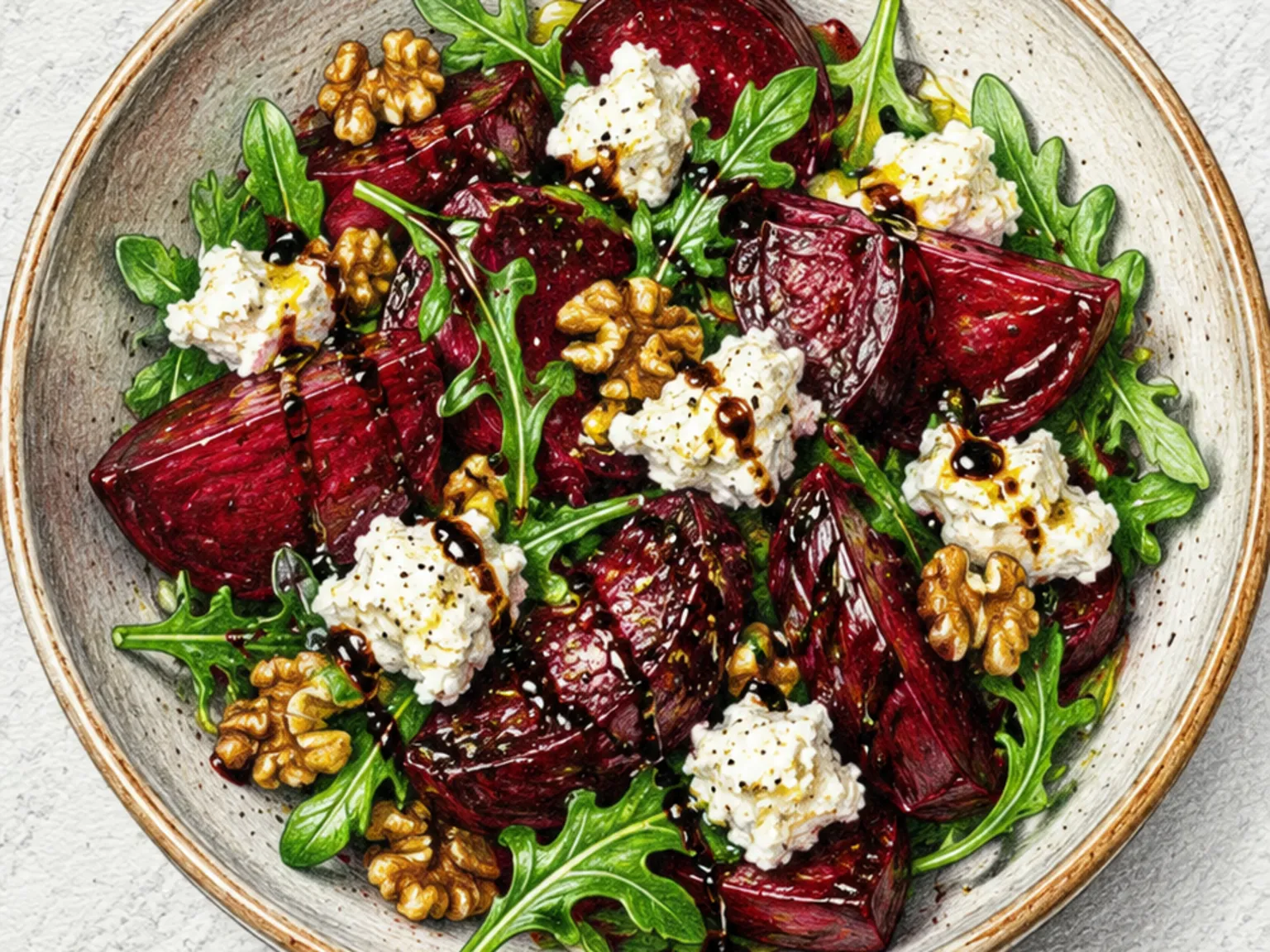
Beet and goat cheese salad begins with whole beets wrapped in foil and roasted at 200°C for forty-five to sixty minutes, long enough for their raw, earthy undertone to convert almost entirely into a concentrated, caramel-adjacent sweetness. Peeling the skins while the beets are still warm requires only the pressure of a paper towel - they slip off cleanly - and slicing them before they cool preserves the vivid crimson-purple cross-section that makes the dish visually striking. Crumbled goat cheese placed on the warm slices softens slightly, and its tangy acidity cuts through the dense sweetness of the roasted root rather than competing with it. Walnuts toasted briefly in a dry pan lose much of their raw bitterness, developing a nuttiness that bridges the mineral quality of the beet and the dairy sharpness of the cheese. Balsamic reduction does more than dress the plate: its concentrated sweet-tart intensity ties the separate components into a coherent whole. Arugula underneath the beet slices provides a peppery bitterness that sharpens the contrast against the sweetness, giving the salad a complexity well beyond what its short ingredient list suggests. A simple dressing of extra-virgin olive oil and lemon juice over the greens keeps the balance light and clear.
Instructions
Read the steps as a cooking flow: prep, heat, seasoning, doneness control, and finish.
- 1Prep
Preheat the oven to 200°C.
Wash 300 g beets, dry the skins well, and wrap them tightly in foil so the juices stay inside and the beets steam as they roast.
- 2Step
Roast the wrapped beets for 35 to 40 minutes, then test the center with a toothpick.
If it meets resistance, roast 10 minutes longer; when it slides in easily, remove them.
- 3Prep
Let the beets cool until easy to handle, then rub off the skins with gloves or a towel.
Cool fully before cutting into wedges so the edges stay clean.
- 4Season
Wash 80 g arugula and dry it thoroughly in a colander or with towels.
If the leaves stay wet, the dressing will thin out and slide off the salad.
- 5Control
Put 30 g walnuts in a dry pan over medium-low heat and toast for about 1 minute 30 seconds.
Shake often, and remove them as soon as they smell nutty.
- 6Finish
Whisk 1 tbsp balsamic vinegar, 2 tbsp olive oil, and 1 tsp honey until glossy.
Plate arugula, beets, 70 g goat cheese, and walnuts, then drizzle lightly and serve at once.
After the steps
Pick a recipe that fits this dish.
Continue with shared ingredients, meal pairings, or a similar method.
Recipes That Go Well With This
More Salads →Based on shared ingredients and meal pairing
Apple Fennel Walnut Salad
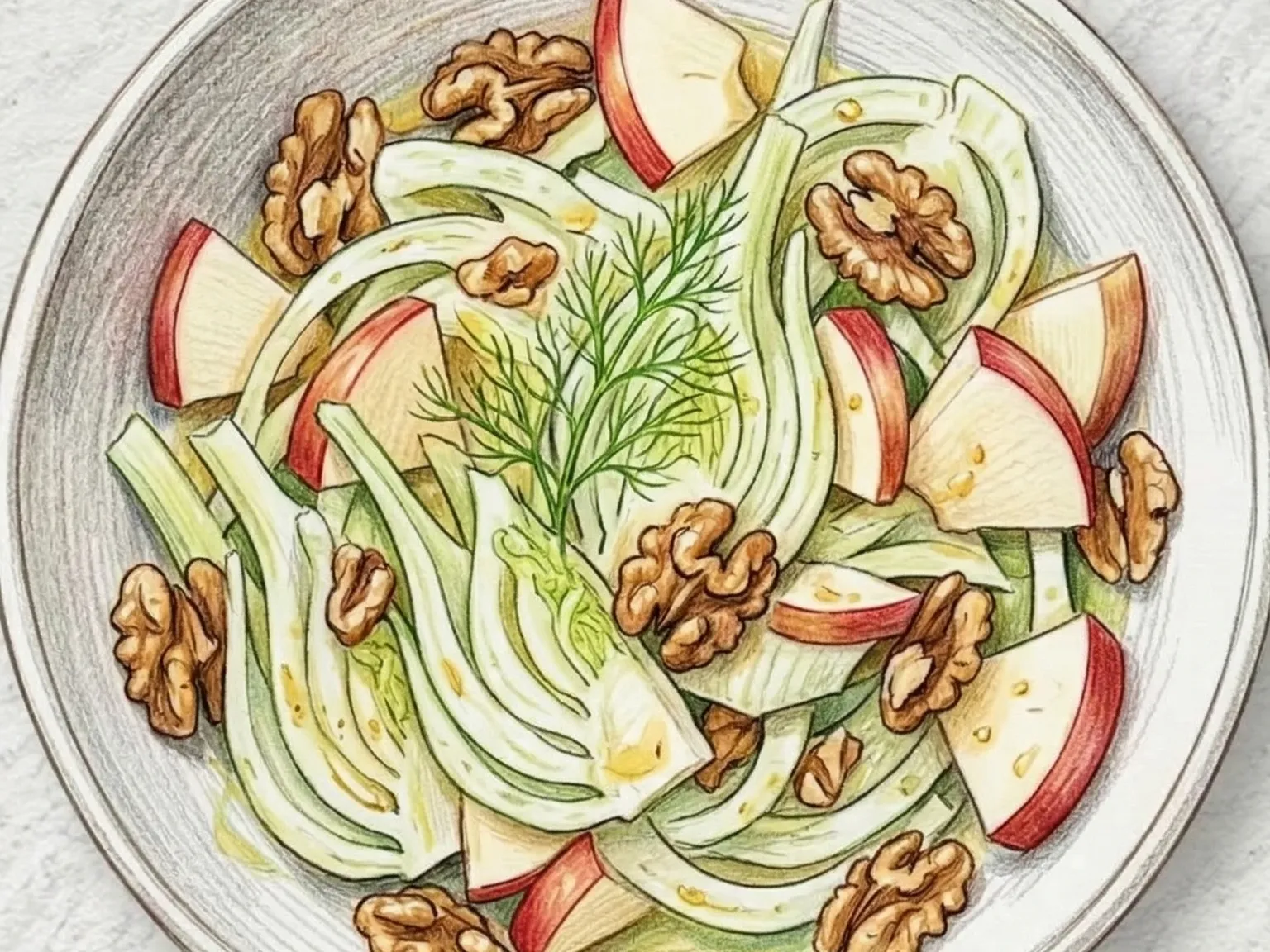
This salad pairs three ingredients whose textures and flavors run in different directions - crisp apple, anise-scented fennel, and bitter walnuts - and unifies them with a honey-lemon dressing. Thinly sliced fennel bulb contributes a licorice-like fragrance that is more aromatic than sweet, while its celery-crisp texture holds a firm contrast against the apple's softer flesh. Toasted walnuts add a crunchy, tannic bitterness that anchors the lighter elements and keeps the salad from reading as merely sweet. The dressing is deliberately minimal - fresh lemon juice, honey, a small amount of olive oil, and a pinch of salt - so the ingredients carry the flavor rather than the sauce. Assembling just before serving prevents the apple from browning. Salads of this type appear on autumn and winter tables in France and Italy when local apples and fennel come into season together, and can be served as a standalone starter or alongside roasted poultry, where the anise note in the fennel cuts through the meat's richness. Fennel has a long association with digestive support in Mediterranean cooking, which is partly why it has traditionally been served alongside fatty meats, and this salad draws on the same pairing logic.
Spinach Strawberry Salad
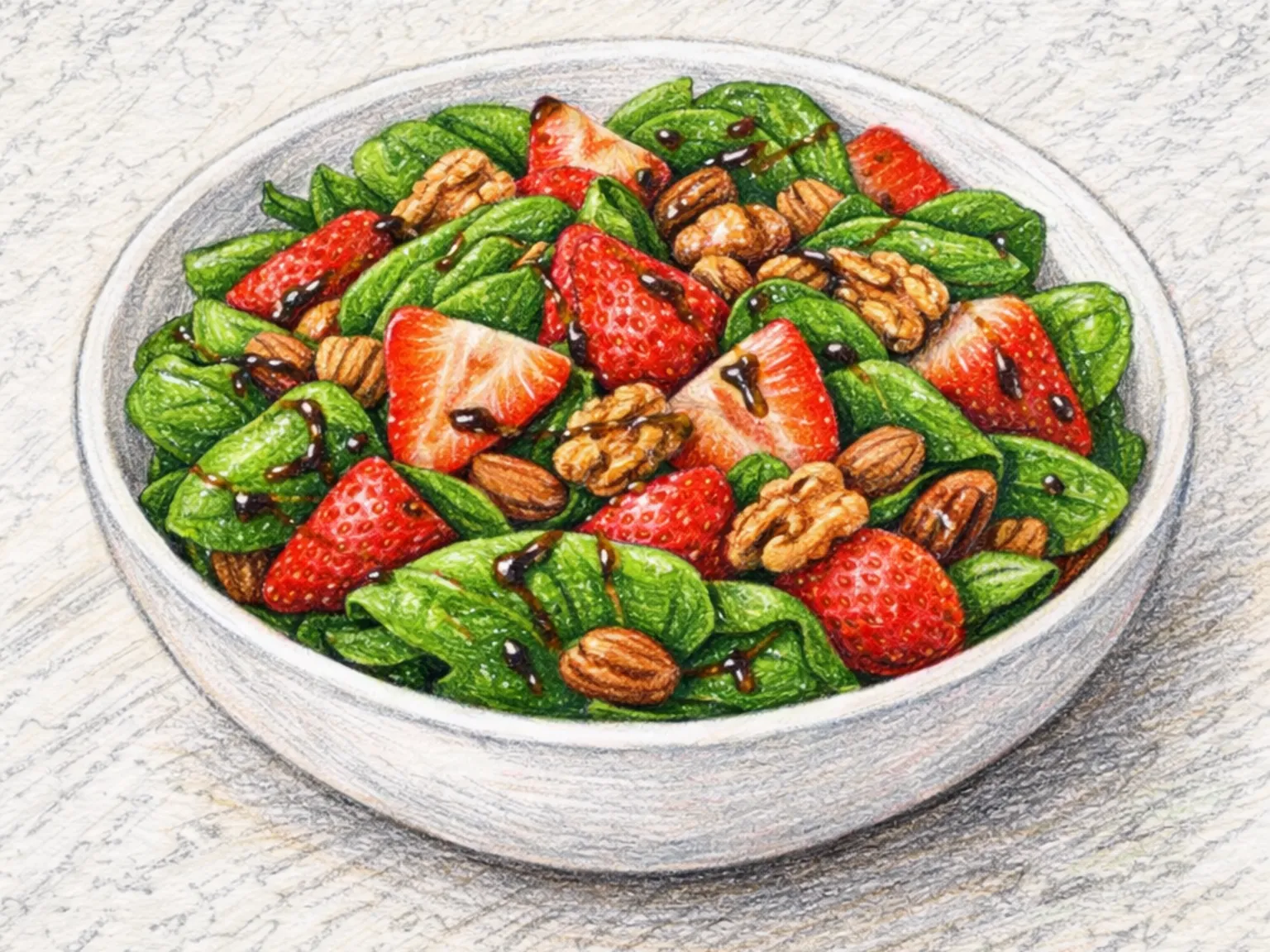
Spinach strawberry salad lays thinly sliced strawberries and toasted walnuts over a bed of baby spinach with rings of red onion, then finishes with a whisked dressing of balsamic vinegar, olive oil, and honey. The strawberries' bright acidity and natural sugar merge with the balsamic's concentrated grape tang in a way that makes the two components inseparable in the mouth, while honey bridges them with a round sweetness that keeps the dressing from tipping sharp. Toasting walnuts in a dry pan for two minutes draws their oils to the surface, intensifying the nutty aroma and adding a satisfying crisp snap that contrasts with the soft spinach and juicy fruit. Red onion's peppery heat cuts through the sweetness and prevents the salad from feeling like a dessert. Drying the spinach thoroughly before assembly is not optional: water left on the leaves dilutes the dressing and pools at the bottom of the bowl, washing out the flavors that took care to build. Crumbled feta or thinly sliced almonds can be added for additional richness without disrupting the existing balance.
Cod en Papillote (French Parchment-Steamed Cod with Vegetables)
Cod en papillote involves wrapping cod fillets along with several specific ingredients including sliced zucchini, cherry tomatoes, shallots, fresh thyme, and rounds of lemon. These components are drizzled with olive oil and a small amount of dry white wine before being enclosed within a piece of parchment paper that is crimped tightly at the edges to create a secure seal. The prepared parcel is placed into an oven preheated to 200 degrees Celsius and baked for a duration of fifteen to eighteen minutes. This cooking technique relies on the sealed packet to trap steam inside, which cooks the fish with a gentle heat and ensures that the flesh remains moist throughout the entire process. As the white wine and lemon heat up, they produce an aromatic steam that penetrates the mild texture of the cod, providing it with a distinct brightness and a clean overall flavor profile. The addition of thyme introduces a subtle herbal quality that works in conjunction with the natural sweetness released by the vegetables as they soften under the heat. Olive oil serves to integrate the various elements of the dish while contributing a smooth and rich mouthfeel. When the parchment is eventually opened at the dining table, the accumulated aromas are released immediately, which turns the simple act of serving into an integral part of the meal. If parchment paper is unavailable, aluminum foil serves as an effective substitute for creating the necessary seal. Furthermore, the selection of vegetables is flexible and can be adjusted according to the current season, as ingredients such as sliced carrots, asparagus, or spinach can be incorporated as natural alternatives within the wrap.
Roasted Vegetable Salad
Roasted vegetable salad cuts bell pepper, zucchini, eggplant, and onion into evenly sized pieces, roasts them at 200 degrees Celsius for 20 to 25 minutes, and serves them over peppery arugula with a drizzle of balsamic vinegar. At high oven heat the surface moisture evaporates rapidly, triggering both the Maillard reaction and caramelization simultaneously, so the vegetables develop concentrated natural sweetness alongside scattered charred edges that carry a smoky depth. The bitter, peppercorn-like bite of arugula provides a direct counterpoint to the caramelized sweetness of the roasted vegetables, keeping each forkful from feeling one-dimensional. Balsamic vinegar's thick, concentrated acidity pulls the disparate flavors together into a single coherent whole. Maintaining a thickness of 1.5 to 2 centimeters for each piece is important because thinner cuts dry out completely in the oven's dry heat and turn leathery, losing the interior moisture that makes roasted vegetables satisfying. Shaving Parmigiano-Reggiano over the top or scattering pine nuts adds a savory, nutty layer that makes the salad more substantial.
Serve with this
Korean Stuffed Shiitake Jeon
Pyogo-jeon is a Korean holiday dish of fresh shiitake mushroom caps stuffed with seasoned ground pork, coated in flour and egg batter, and pan-fried until golden. After removing the stems, the inner surface of each cap is dusted with flour-this thin starch layer acts as glue that prevents the meat filling from separating during cooking. Placing the meat side down first allows the filling to set from the heat before flipping, so the stuffed mushroom holds its shape throughout. Three to four minutes per side over medium heat is enough to turn the egg coating golden-brown while cooking the pork through completely. The shiitake's deep, earthy umami merges with the pork juices inside the sealed egg shell, delivering a concentrated savory bite.
Chamnamul Walnut Pesto Trofie
Chamnamul walnut pesto trofie is a fusion pasta that coats twisted trofie in a pesto made from Korean chamnamul (wild parsley), walnuts, Parmigiano, and olive oil. Chamnamul has a lighter, more herbaceous quality than basil, with a faintly bitter finish that gives the pesto a distinctly Korean aromatic character. Walnuts contribute a heavier, more assertive nuttiness than pine nuts, thickening the sauce and anchoring the savory depth together with the aged cheese. The spiral grooves of trofie hold the pesto in every ridge, releasing an even concentration of flavor with each bite. Adding sufficient olive oil during blending slows oxidation and prevents the chamnamul's green color from darkening too quickly. The pasta is best eaten immediately after tossing, when both the color and fragrance are at their peak.
Fuzhu (Dried Bean Curd) Mala Xiang Guo
This spicy stir-fry features chewy fuzhu and crisp vegetables tossed in a numbing mala sauce. The dried bean curd skin is soaked in lukewarm water with a pinch of salt for at least two hours, giving it a soft, sponge-like structure that absorbs the savory sauce. To prepare the dish, minced garlic and dried chilies are sautéed in oil, followed by thinly sliced pork belly cooked on high heat until the fat renders. The rehydrated fuzhu and firm cabbage and bok choy stalks are added next, coated in the mala sauce, and stir-fried quickly. In the final seconds, bean sprouts and leafy greens are tossed in for less than thirty seconds to keep their crisp texture, creating a contrast with the chewy bean curd. Ingredients like fish balls or sliced lotus root can be added for extra texture.
Similar recipes
French Celeriac Remoulade
Celeriac remoulade shreds thickly peeled celeriac into fine matchsticks and dresses them in a mixture of Dijon mustard, mayonnaise, lemon juice, and white wine vinegar. Tossing the shreds immediately with half the lemon juice prevents enzymatic browning, while the rest goes into the dressing to balance acidity. The Dijon's sharp heat cuts through the mayonnaise's richness, and the white wine vinegar keeps the finish clean and bright. Cutting the matchsticks as thin as possible maximizes surface area so the dressing absorbs quickly and evenly. A 15-minute chill in the refrigerator lets the flavors settle throughout; overnight refrigeration deepens the result further. The salad pairs well with cold meats and charcuterie, where its tangy crunch offsets richer textures.
Cheese Fondue
Cheese fondue melts grated Gruyere and Emmental into warmed white wine to create a thick, glossy cheese dip served with cubed baguette. Rubbing the inside of the pot with a halved garlic clove lays down a gentle garlic base before the wine goes in. Tossing the grated cheese with cornstarch before adding it gradually to the warm wine is what prevents the proteins from clumping and keeps the texture smooth and flowing. A small amount of lemon juice cuts through the richness of the cheese, and the wine's acidity balances the salt from the aged cheeses. The heat must stay low throughout - high flame causes the fat to separate from the protein almost immediately, turning the fondue grainy and unappetizing. If the sauce thickens too much, a small addition of warm wine brings it back. Originating in the Alpine regions of Switzerland and France as a winter method for using hardened cheese, fondue has become a communal dish shared around the table and is now enjoyed worldwide.
Salade Niçoise
Salade Nicoise is a classic salad from Nice in southern France that arranges tuna, soft-boiled eggs, olives, anchovies, tomatoes, and blanched green beans in separate sections on a plate, finished with a vinaigrette of olive oil, lemon juice, and Dijon mustard. The traditional presentation keeps each ingredient in its own zone rather than tossing everything together. Soft-boiling the eggs for six minutes yields a runny yolk that acts as a natural dressing when broken. The salty depth of anchovies and the oily richness of olives add complexity over the mild tuna, while the mustard vinaigrette brightens and ties the whole plate together with its acidity.