Korean Mushroom Perilla Seed Risotto
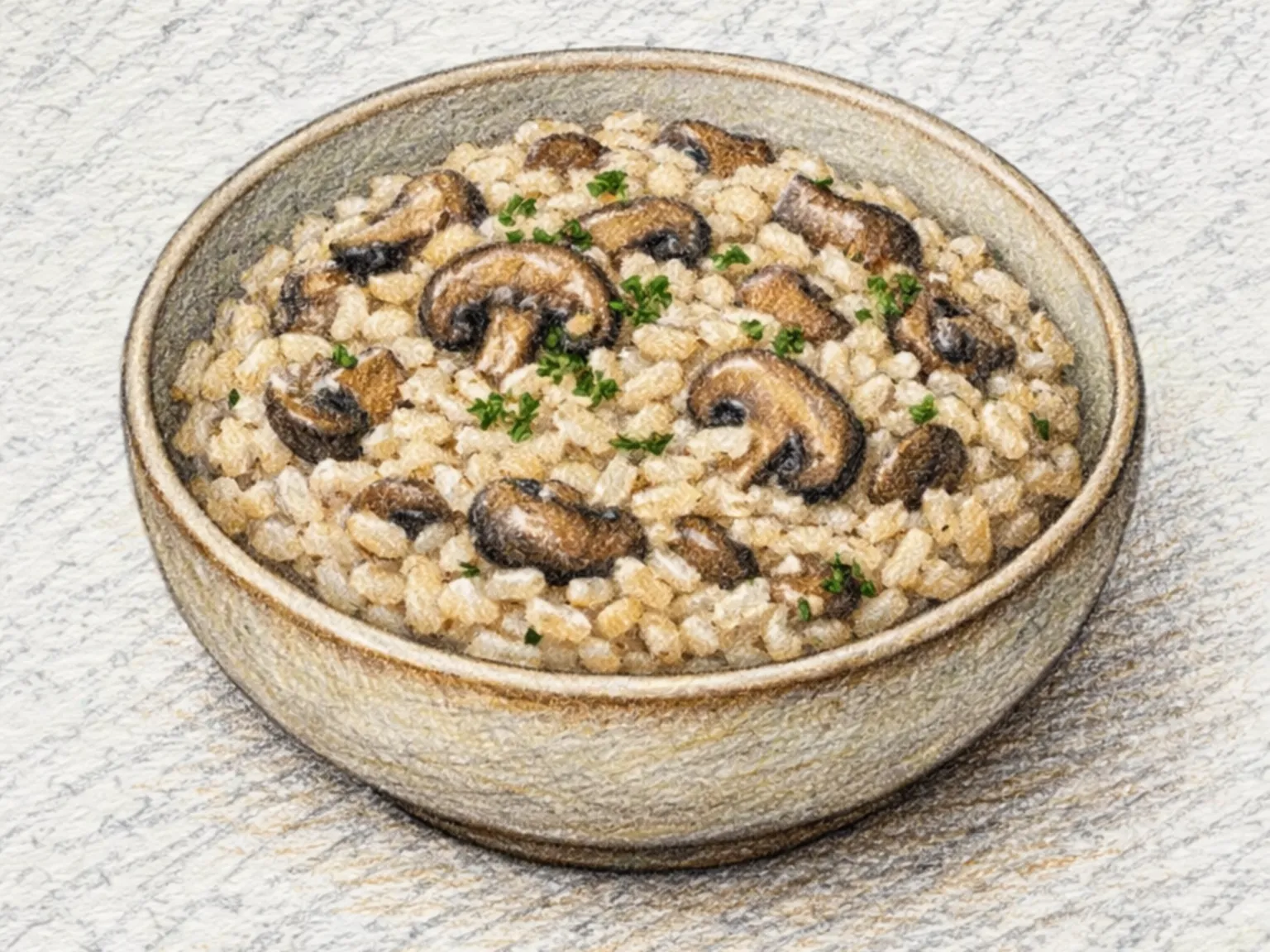
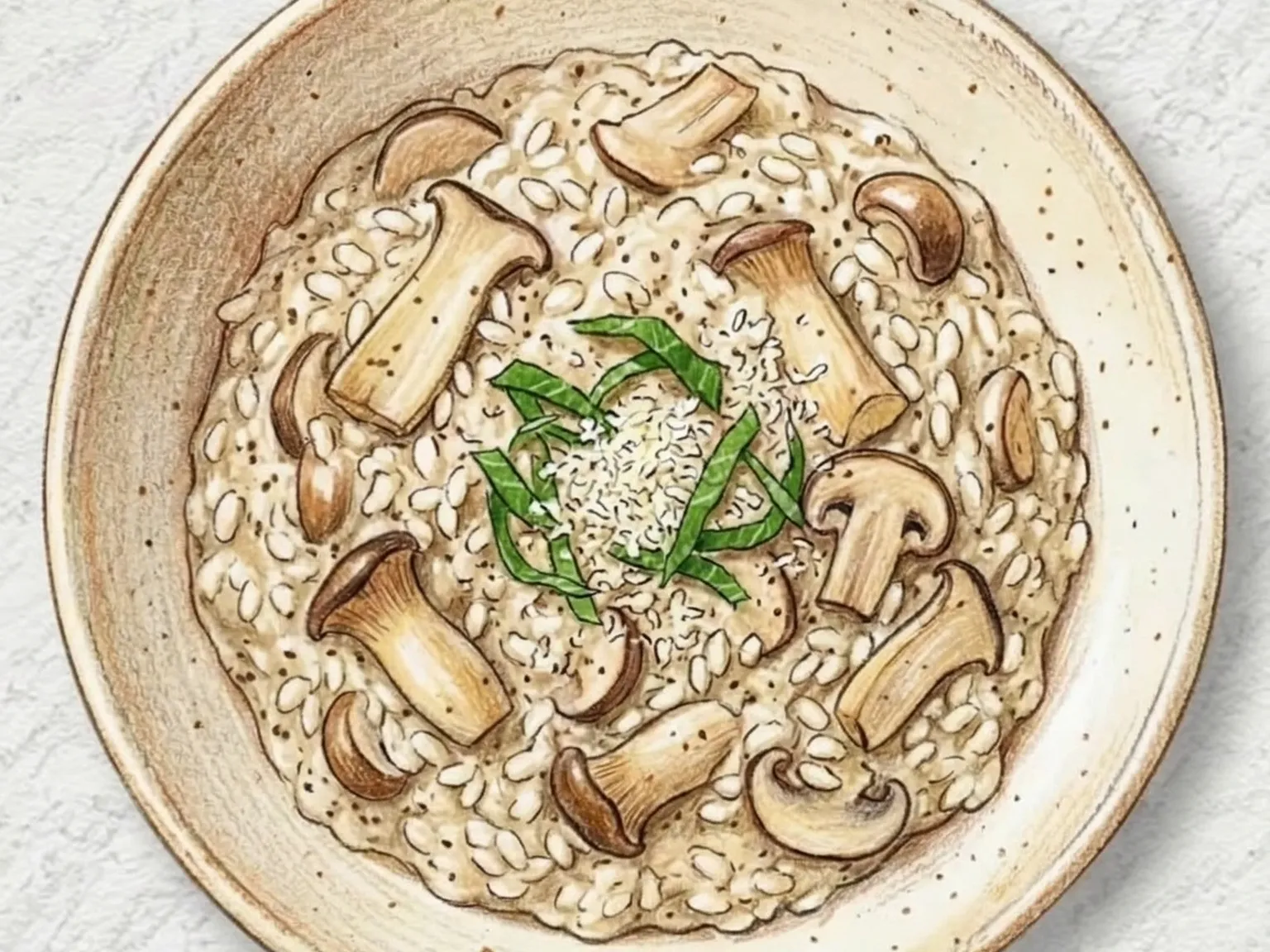
King oyster and button mushrooms are sauteed with onion and garlic, then Arborio rice is slowly cooked in warm vegetable stock, one ladle at a time, until the grains release their starch into a creamy consistency. Perilla seed powder and grated Parmesan are folded in at the very end, merging Italian creaminess with the distinctive roasted-nut flavor of Korean perilla. The key is keeping the stock warm throughout so the rice cooks evenly without seizing, and adding perilla powder last to preserve its volatile aroma. Even without meat, the mushrooms provide substantial umami depth.
Adjust Servings
Instructions
- 1
Finely chop mushrooms and onion, and keep the stock warm.
- 2
Heat olive oil and sauté onion and garlic for 2 minutes.
- 3
Add mushrooms and cook 3 minutes, then stir in rice to coat.
- 4
Add warm stock one ladle at a time, stirring until the rice is tender.
- 5
Stir in perilla powder and cheese for 1 minute to finish the texture.
- 6
Adjust seasoning with salt and serve immediately.
As an Amazon Associate, we may earn from qualifying purchases.
Tips
Nutrition (per serving)
More Recipes

Korean Truffle Mushroom Pot Rice
Shiitake and king oyster mushrooms are generously added to a pot of rice and cooked so their released moisture and earthy fragrance infuse every grain. The shiitake stays chewy while thick-sliced king oyster offers a meaty, substantial bite. Once the rice is done, a few drops of truffle oil are drizzled over the top, layering the mushrooms' natural earthiness with the truffle's deep, aromatic intensity. Mixing in a soy-seasoned sauce adds a salty edge that brings the whole bowl into balance.

Korean Perilla-Grilled Mushrooms
Songhwa mushrooms have thick caps with high moisture content, so they stay succulent and chewy when grilled. Sliced into thick pieces and tossed with a simple mix of perilla oil, soy sauce, garlic, salt, and pepper, they cook for about three minutes per side on a hot pan. The perilla oil imparts a distinctly nutty, toasted aroma that differs from sesame. Ground perilla seed is sprinkled on just before the heat is turned off, releasing fragrance without scorching. Finished with chopped chives, this vegetarian dish works equally well as a rice side or a drinking snack.

Mushroom Risotto
Mushroom risotto cooks unwashed arborio rice in olive oil and butter to activate the surface starch, then adds warm chicken stock one ladle at a time over 18 to 20 minutes of continuous stirring. Not rinsing the rice is essential - the starch released during cooking is what creates the signature creamy consistency without any cream. The mushrooms are sauteed on high heat until their moisture evaporates and they develop a deep brown color, which concentrates the earthy aroma. White wine is added to the toasted rice and stirred until absorbed, leaving behind a subtle acidity once the alcohol cooks off. Finishing off the heat with cold butter and grated Parmesan - a step called mantecatura - gives the risotto its glossy, velvety texture.

Korean Fried Rice (Simple Leftover Rice Stir-Fry)
Korean fried rice is the ultimate utility dish, designed to turn leftover rice and whatever vegetables remain in the refrigerator into a satisfying meal in under ten minutes. Green onion hits the hot oil first to create a fragrant scallion-infused base, followed by diced carrot and beaten egg that gets scrambled into rough curds. Cold rice - essential because its lower moisture content prevents clumping - goes in next and is tossed vigorously over high heat until every grain separates and picks up a thin coat of oil. Soy sauce poured along the rim of the pan sizzles on contact with the hot metal, developing a toasted aroma that distinguishes a well-made fried rice from a mediocre one. A crack of black pepper and a final swirl of sesame oil complete the seasoning. The recipe is intentionally open-ended: ham, kimchi, shrimp, or any leftover protein slots in without altering the basic technique, which is why this dish appears on Korean dinner tables more often than almost any other.

Korean Shiitake Mushroom Rice
Pyogo-beoseot-bap is a Korean pot rice that cooks thickly sliced shiitake mushrooms on top of soaked rice, allowing the mushrooms' concentrated umami to infuse every grain as steam circulates under the lid. Once the rice is done, it is mixed with a soy-sesame dipping sauce made from soy sauce, sesame oil, chopped scallion, and toasted sesame seeds, which amplifies the earthy depth of the mushrooms. The shiitakes retain a meaty chew even after cooking, giving the dish a satisfying bite that rivals meat-based rice bowls. Adding julienned carrot introduces subtle sweetness and a splash of color. This is a staple vegetarian option in Korean home cooking, prized for its simplicity and the way a single ingredient can carry an entire meal.

Korean Mushroom Pancake (Crispy Shiitake and King Oyster Jeon)
Beoseot-jeon is a Korean mushroom pancake made by slicing king oyster and shiitake mushrooms thin, coating them in a light batter of Korean pancake mix, egg, and water, then pan-frying until golden. King oyster mushrooms contribute a firm, chewy bite from their thick stems, while shiitake caps trap batter in their natural ridges, creating extra-crispy edges. The key is to keep the batter coating thin so the earthy mushroom flavor comes through clearly, and to blot the sliced mushrooms dry before mixing-excess moisture makes the pancake soggy instead of crisp. Dipping in cho-ganjang, a mix of soy sauce and vinegar, brings out the mushrooms' natural umami.