Korean Mushroom Soft Tofu Porridge
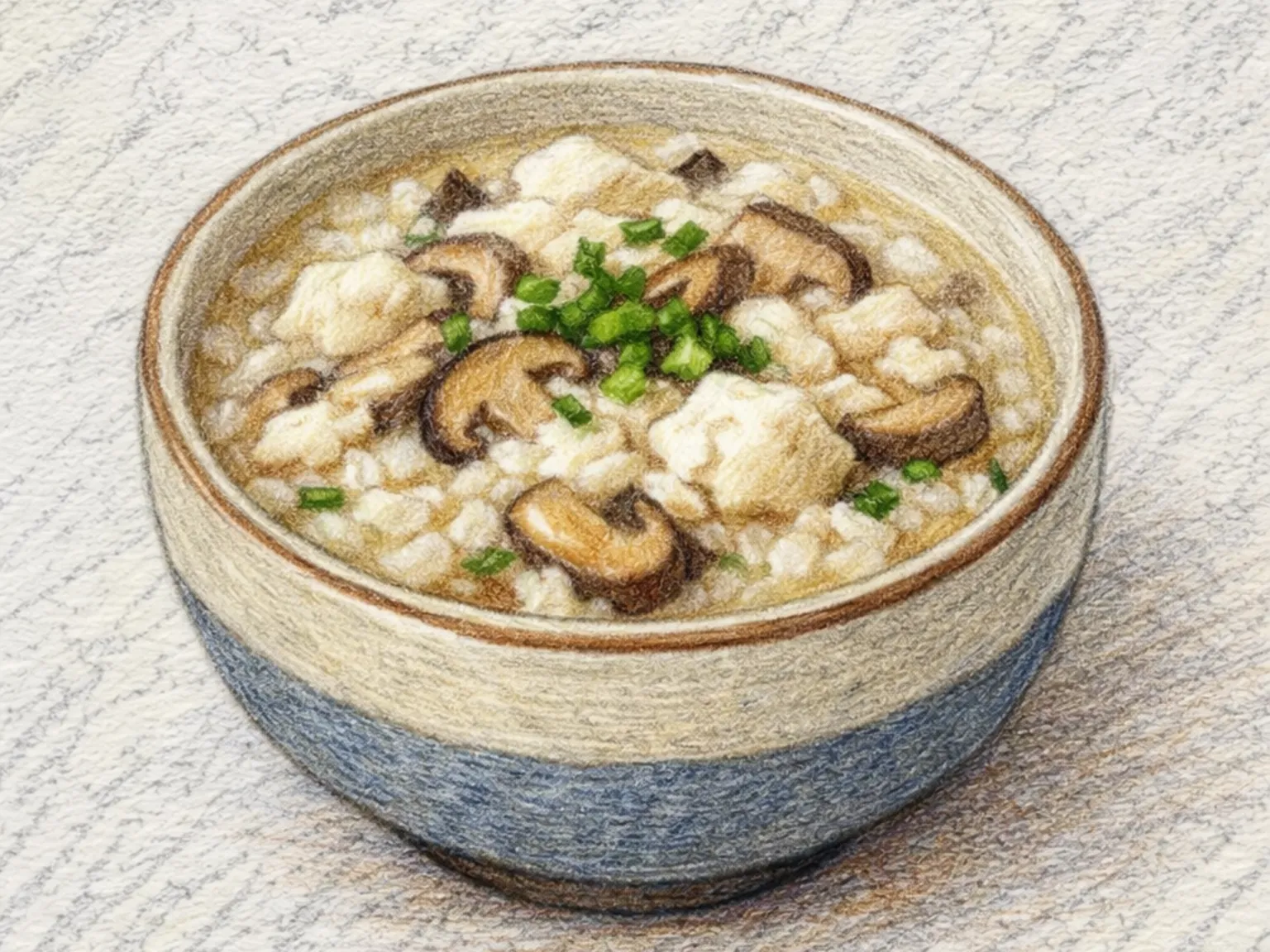
Shiitake mushrooms and onion are sauteed in perilla oil, then simmered with soaked rice in kelp stock until the grains soften into porridge. Spoonfuls of silken tofu are folded in at the end, creating pillowy clusters throughout the bowl that contrast with the smooth rice base. The kelp stock provides gentle umami without heaviness, while perilla oil adds a slightly bitter, herbal edge distinct from sesame oil. Finished with soup soy sauce and chopped scallion, the porridge is light enough for a recovering appetite yet substantial enough to serve as a full meal.
Adjust Servings
Instructions
- 1
Soak rice for 30 minutes, then drain well.
- 2
Heat perilla oil and saute onion and mushrooms for 2 minutes.
- 3
Add soaked rice and stir for 1 minute to coat grains.
- 4
Add stock in batches and simmer 15 minutes, stirring often.
- 5
Add spoonfuls of soft tofu, season, simmer 3 more minutes, and finish with scallion.
As an Amazon Associate, we may earn from qualifying purchases.
Tips
Nutrition (per serving)
More Recipes

Korean Shrimp Porridge (Creamy Rice Porridge with Shrimp Broth)
Saeu-juk is a Korean shrimp porridge that simmers rice with shell-on shrimp to draw out a gentle oceanic broth. The heads and shells are cooked down to build a flavorful stock, while the shrimp meat is minced and stirred in separately so each spoonful carries bursts of umami. Diced zucchini and carrot add mild sweetness that balances the seafood character. Soaked rice is first toasted in sesame oil before the liquid goes in, which gives the finished porridge a nuttier base and slightly thicker consistency. The result is a light, nourishing bowl with a clean finish - commonly served as a gentle breakfast or a recovery meal, where the warmth and mild flavor are as important as the nutrition.

Korean Blue Crab Porridge
Blue crab is boiled for twelve minutes to extract a rich, naturally sweet stock, then the meat is carefully picked from the shell and reserved. Soaked rice is toasted in sesame oil in the same pot for a nutty coating, then the crab stock is added and everything simmers over medium-low heat, stirred frequently. Once the porridge thickens, diced vegetables, garlic, and the reserved crab meat join the pot for a final ten-minute cook. Adding the crab meat late preserves its delicate sweetness. Seasoned simply with soup soy sauce and salt, this juk delivers clean oceanic flavor in a smooth, comforting consistency.

Korean Napa Cabbage Doenjang Porridge
Baechu doenjang juk is a Korean porridge where soaked rice is first toasted in sesame oil to build a nutty base, then simmered slowly in anchovy stock with dissolved doenjang, napa cabbage, and onion. Toasting the rice grains in oil before adding liquid gives the finished porridge a roasted depth that plain boiled rice cannot achieve. The doenjang is strained through a sieve into the stock so the porridge remains smooth without grainy bits. Finely chopped onion melts into the broth as it cooks, contributing a quiet sweetness, while the napa cabbage softens until it nearly dissolves into the texture of the porridge. Stirring frequently over medium-low heat for at least twenty minutes ensures the rice breaks down evenly. A drop of sesame oil and a seasoning adjustment with guk-ganjang finishes the dish. The result is a bowl that feels gentle on the stomach while carrying the full fermented complexity of doenjang.

Korean Bok Choy Crab Porridge
Cheonggyeongchae gesal juk is a Korean porridge that begins by sauteing onion and ginger in sesame oil to build an aromatic base, then simmering soaked rice with crab meat until the grains soften into a smooth, flowing consistency. Bok choy is stirred in near the end, keeping its vibrant green color and gentle crunch intact. The crab imparts a subtle sweetness that elevates the porridge beyond ordinary, while ginger keeps the flavor clean and free of any fishiness. Light on the stomach and warming from the inside, it serves well as a morning meal or a soothing bowl during seasonal transitions.

Korean Beoseot Jjigae (Mushroom Stew)
Oyster, shiitake, and enoki mushrooms are simmered in kelp-infused water to create a light, clean-flavored stew. Tofu and sliced onion add body and gentle sweetness, while soup soy sauce and garlic keep the seasoning understated. The result is a low-fat, warming dish where the distinct textures and umami of the mushrooms take center stage.

Korean Water Dropwort Tofu Soup
Minari-dubu-guk is a mild, clear Korean soup that pairs soft cubes of tofu with water dropwort, an herb prized for its bright, celery-like fragrance. The soup is built on a simple anchovy-kelp stock, into which the tofu goes first and simmers gently. Water dropwort is added only in the final moments before the flame is turned off, so its hollow stems retain a slight crunch and its volatile aromatic compounds stay intact rather than cooking away. Seasoning is minimal - soup soy sauce, garlic, and perhaps a pinch of salt - because the point of this soup is restraint: the clean stock, the herb's green perfume, and the pillowy tofu are meant to speak quietly. Spring is the ideal season, when water dropwort is at its most tender and aromatic. Korean cooks often serve this alongside richer, heavier dishes because the light broth acts as a palate cleanser between bites. It is the kind of soup that rarely draws attention at the table yet is always missed when absent.