Korean Stuffed Bossam Kimchi
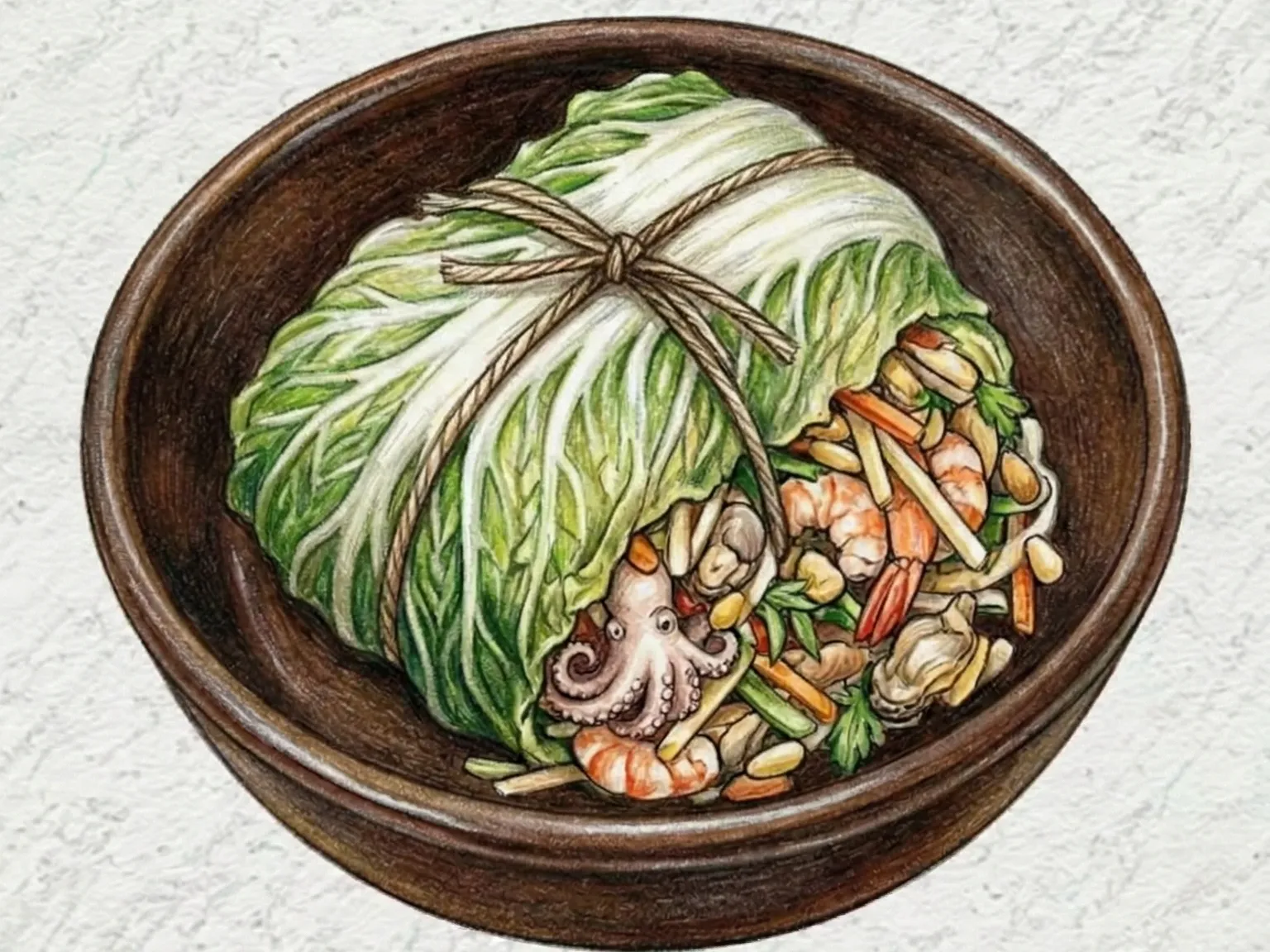
Bo-kimchi is a premium Korean stuffed kimchi where brined napa cabbage leaves are wrapped around a filling of julienned radish, water dropwort, chestnuts, jujubes, shrimp, and pine nuts, then tied and left to ferment. Each ingredient in the stuffing contributes its own flavor during fermentation, building a complex layered taste enclosed in a single cabbage bundle. Shrimp and pine nuts add richness, while chestnuts and jujubes lend a subtle sweetness that sets this apart from everyday kimchi. This is a celebratory preparation traditionally made for holidays and formal occasions in Korean court cuisine.
Adjust Servings
Instructions
- 1
Salt cabbage for 5 hours, rinse, and drain completely.
- 2
Julienne radish, pear, chestnuts, and blanch/chop octopus.
- 3
Mix chili flakes, fish sauce, garlic, and rice paste, then combine with filling.
- 4
Stuff the filling into cabbage leaves and wrap into compact bundles.
- 5
Store in a container, ferment 12 hours at room temp, then refrigerate 3-4 days.
As an Amazon Associate, we may earn from qualifying purchases.
Tips
Nutrition (per serving)
More Recipes

Korean Turnip Kimchi (Diced Gochugaru Water Fermented)
Sunmu kimchi is a brined kimchi made with diced turnips seasoned in chili flakes, fish sauce, garlic, and ginger juice, then submerged in water to ferment with its own liquid. Turnips have a naturally higher sweetness and denser flesh than Korean radish, so they stay firm and crunchy even after fermentation. Scallions woven through the batch add an aromatic layer that rounds out the spice. One day at room temperature followed by two days of refrigeration produces a cool, tangy brine that is refreshing to drink on its own. Adding turnip greens, if available, deepens both the color and the fragrance.

Korean Seokbakji Radish Kimchi
Seokbakji is a Korean chunky radish kimchi where large-cut Korean radish cubes are salted for one hour, drained, then tossed with a seasoning of gochugaru, salted shrimp, minced garlic, and ginger alongside scallion pieces. Keeping the radish in large chunks is key - smaller cuts turn mushy during fermentation, while big cubes maintain their firm crunch through the process. Salted shrimp provides the fermented umami foundation that chili flakes alone cannot deliver. One day of room-temperature fermentation followed by two days of refrigeration develops a refreshing lactic tang, and the liquid that the radish releases becomes a flavorful brine. Served next to hot rice soups like seolleongtang or gukbap, the cold, crunchy kimchi cuts through the richness of the broth.

Korean Bitter Herb Kimchi
Sseumbagwi kimchi is a traditional Korean fermented side dish made from sseumbagwi, a wild bitter herb harvested in spring. The herb is soaked in cold water for twenty minutes to temper its pronounced bitterness, salted for fifteen minutes, then dressed in a thick paste of gochugaru, sand lance fish sauce, minced garlic, ginger, sweet rice paste, and plum syrup alongside scallion pieces. The rice paste gives the seasoning enough body to cling to the thin stems and leaves, and the plum syrup smooths out both the bitterness and the salt's sharpness. Five hours of room-temperature fermentation followed by refrigeration allows lactic acid to develop gradually, layering a tangy depth over the herb's inherent bitter-green character. The flavor is most complex around day three. If the bitterness is too strong, an additional change of soaking water before seasoning brings it under control.

Korean Cheonggak Kimchi (Seaweed Kimchi)
Cheonggak kimchi is made with cheonggak, a type of green seaweed, mixed with julienned radish and scallions in a seasoning of gochugaru, anchovy fish sauce, and sweet rice paste. The seaweed contributes a distinctive chewy, almost crunchy texture and a concentrated ocean aroma that sets this kimchi apart from plant-based varieties. Seasoning the radish first and then tossing the seaweed in quickly is important because overworking toughens the seaweed's delicate structure. After one day of refrigeration the brine from the seaweed mingles with the fermented seasoning, producing a kimchi with pronounced marine depth that pairs naturally with seafood dishes and mild rice soups.

Korean Restaurant-Style Kkakdugi
Sikdang-style kkakdugi is the cubed radish kimchi served free at virtually every Korean restaurant, standing alongside baechu-kimchi as a non-negotiable table banchan. Cutting the Korean radish into chunky 2 cm cubes ensures the interior stays crunchy even after salting and fermentation. Twenty minutes in coarse salt draws moisture, then the cubes are dressed with gochugaru, myeolchi-aekjeot (anchovy fish sauce), garlic, ginger, and sugar. The fish sauce provides the umami backbone that deepens during fermentation, while ginger suppresses off-flavors and sharpens the finish. One day at room temperature triggers lactic acid production - the signature tingle that signals active fermentation - followed by refrigeration where the flavor matures over two to three weeks. Winter radish carries more natural sugar, so the added sugar can be reduced; in summer, cutting the room-temperature rest to half a day prevents over-fermentation.

Korean Kimchi Jjigae (Kimchi Stew)
Kimchi jjigae is the quintessential Korean home-cooked stew, built on well-fermented kimchi and pork belly simmered together until the flavors fully meld. The kimchi's sharp acidity breaks down the richness of the pork fat, producing a broth that is simultaneously tangy, spicy, and deeply savory. A spoonful of doenjang adds another layer of fermented complexity, while tofu blocks absorb the fiery liquid. Finished with a drizzle of sesame oil, it is the definitive comfort food served with steamed rice.