Barley Puff Brittle (Korean Puffed Barley Walnut Sesame Candy)
Desserts Medium

Barley Puff Brittle (Korean Puffed Barley Walnut Sesame Candy)

Quick answer

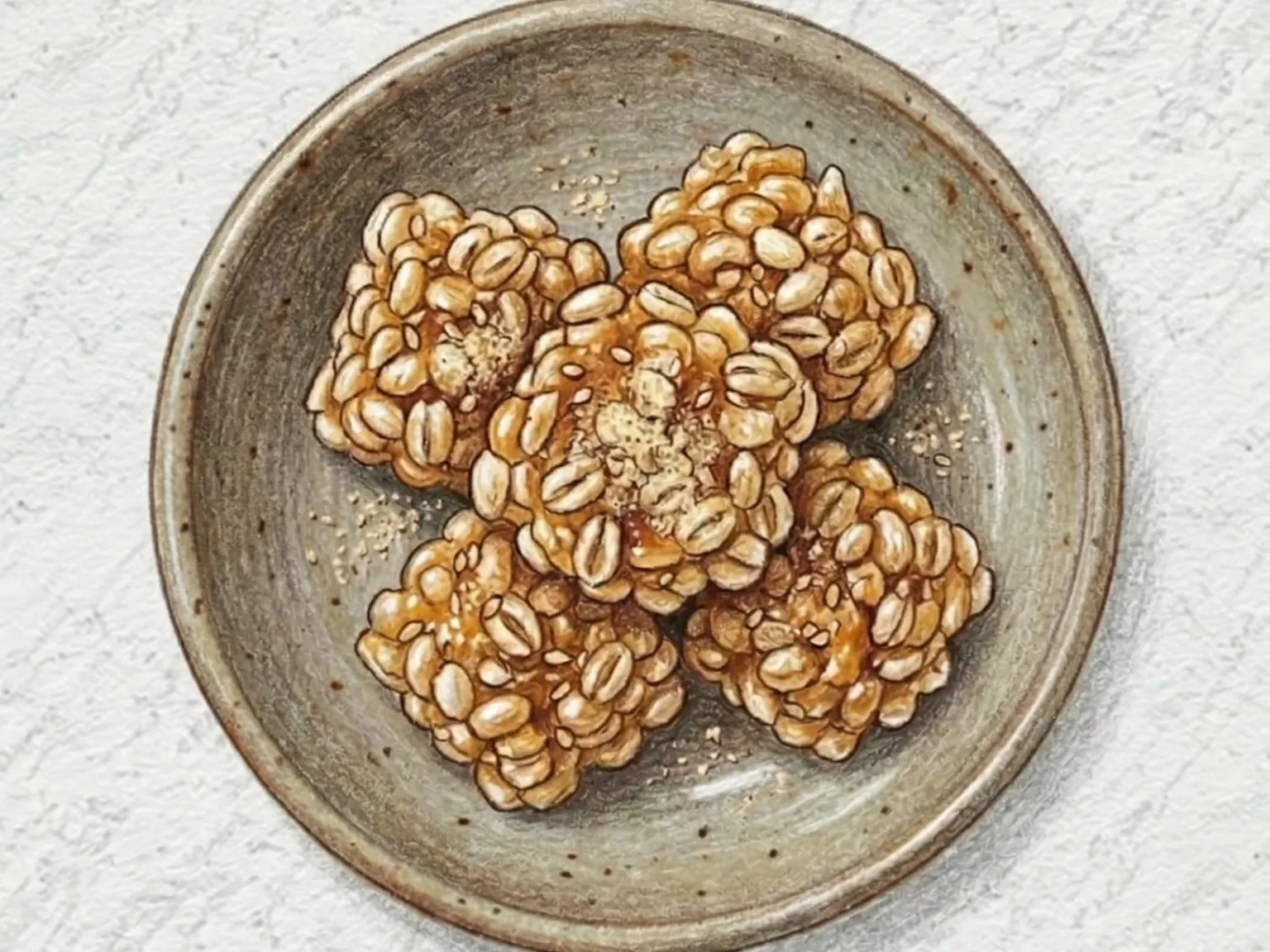
Bori-gangjeong is a Korean barley puff brittle made by tossing puffed barley and roughly chopped walnuts with toasted sesame seeds in a syrup of rice malt, sugar, and hon...

What makes this special

  • Rice malt syrup cooked to 118°C ensures a crisp, non-sticky finish for this Bori-gangjeong barley brittle.
  • Syrup must reach 118°C for the brittle to set crisp, not sticky
  • Roughly chopped walnuts add chew between puffs of light barley
Total time
35 min
Level
Medium
Servings
4 servings
Ingredients
7
Calories
271 kcal
Protein
5 g

Key ingredients

puffed barleyrice syrupsugarhoneysesame oil

Core cooking flow

  1. 1 Roughly chop 40g walnuts and toast in a dry pan over medium heat for 2 minut...
  2. 2 Combine 120g corn syrup, 25g sugar, and 20g honey in a pot and cook over med...
  3. 3 Reduce heat to low, add 8ml sesame oil, and quickly stir into the syrup to h...

Bori-gangjeong is a Korean barley puff brittle made by tossing puffed barley and roughly chopped walnuts with toasted sesame seeds in a syrup of rice malt, sugar, and honey cooked precisely to 118 degrees Celsius. Temperature is the deciding variable: below that threshold the brittle never fully sets and stays soft and sticky even when cool, while above it the result hardens into something that resists the teeth uncomfortably. Once the correct temperature is reached, the mixture must be worked quickly - the syrup sets fast. Sesame oil stirred in at the very end coats the barley in a layer of nutty fragrance that ties the toasty grain, the honey sweetness, and the dense crunch of walnut together. Scoring the slab while it is still pliable is essential: cuts made after the brittle fully sets tend to crack rather than slice cleanly, and the pieces lose their uniform shape. The deep sweetness of the rice malt syrup and the nuttiness of the barley combine into a straightforward but lingering flavor that keeps the hand returning to the plate.

Prep 15min Cook 20min 4 servings
Recipes by ingredient → honey sesame oil

Instructions

Read the steps as a cooking flow: prep, heat, seasoning, doneness control, and finish.

6 steps
  1. 1
    Finish

    Roughly chop 40g walnuts and toast in a dry pan over medium heat for 2 minutes until fragrant, then transfer to a plate to cool.

  2. 2
    Control

    Combine 120g corn syrup, 25g sugar, and 20g honey in a pot and cook over medium-low heat without stirring until the mixture reaches 118C; if no thermometer, a drop in cold water should form a soft, pliable ball.

  3. 3
    Control

    Reduce heat to low, add 8ml sesame oil, and quickly stir into the syrup to help the bubbling subside before adding the dry ingredients.

  4. 4
    Step

    Add 180g puffed barley, the toasted walnuts, and 12g toasted sesame seeds all at once, then toss vigorously within 30 seconds so every piece is evenly coated before the syrup begins to set.

  5. 5
    Prep

    Transfer to a parchment-lined rectangular mold and press firmly with a wet spatula to a uniform 1.5cm thickness so the brittle holds its shape when cut.

  6. 6
    Prep

    Score the surface into serving-size pieces before it fully cools, then break or cut completely once cool and store in an airtight container.

After the steps

Pick a recipe that fits this dish.

Continue with shared ingredients, meal pairings, or a similar method.

Recipes That Go Well With This

More Desserts →

Based on shared ingredients and meal pairing

Honey Rice Puff Cookies (Korean Double-Fried Puffed Glutinous Rice)
Shared ingredient: rice syrup Desserts

Honey Rice Puff Cookies (Korean Double-Fried Puffed Glutinous Rice)

Yugwa is a traditional Korean rice puff cookie that is prepared using a base of glutinous rice flour mixed with makgeolli, which is a type of fermented Korean rice wine. This dough is shaped into individual pieces and then left to dry for a duration of at least two hours. This drying period is a mandatory step in the process because any residual moisture within the dough will lead to dangerous oil splattering when the pieces are placed into the frying fat. The cooking process requires a specific two-stage frying technique involving both low and high oil temperatures to facilitate a dramatic expansion of the dough. Tiny air pockets are created within the mixture by the yeast present in the makgeolli during the initial preparation stages. These pockets expand rapidly during the second frying stage at a higher heat, which results in the hollow internal structure that is the defining characteristic of the cookie. Once the frying is complete, the pieces are tossed in a warm glaze consisting of honey and rice syrup. This sticky coating serves to anchor a final layer of puffed rice to the exterior of the cookie. Ground cinnamon is incorporated into the recipe to provide a subtle warm spice that complements the nutty and fermented flavors of the glutinous rice. When consumed, the finished cookie shatters into light, airy shards, offering a texture that is nearly weightless compared to other varieties of Korean confections. Traditionally, yugwa is featured on tables during ancestral rites for the Chuseok and Seollal holidays and remains a common choice for gift-giving during these festive seasons.

Saenggang Jeonggwa (Candied Ginger)
Shared ingredient: rice syrup Desserts

Saenggang Jeonggwa (Candied Ginger)

Saenggang jeonggwa is a traditional Korean candied ginger prepared by slicing fresh ginger thin, blanching it twice to reduce the raw heat, then simmering the pieces slowly in a glaze of sugar and grain syrup. A ten-minute soak in cold water draws out the sharpest bite first, and two rounds of boiling soften the pungency further while leaving the clean, aromatic core intact. The slices are cooked on low heat until the syrup reduces to a thick, glossy coat on the surface, at which point lemon juice is added to introduce an acidity that keeps the sweetness from becoming cloying. Once dried on a rack and rolled in granulated sugar, the finished pieces carry a crisp, crystalline shell on the outside. On the first bite, the sugar crust shatters, and the chewy, syrup-saturated ginger beneath releases a slow, building warmth that lingers well after the piece is finished.

Injeolmi Crumble Cheesecake
Serve together Baking

Injeolmi Crumble Cheesecake

This fusion dessert combines the nutty flavor of Korean roasted soybean powder, known as injeolmi, with a cream cheese base. The batter is prepared by mixing softened cream cheese with sugar, salt, eggs, and heavy cream. Sifted sweet rice flour is folded in to create a chewy texture reminiscent of traditional rice cakes inside the dense cake, while a portion of roasted soybean powder adds a gentle nuttiness. The topping consists of a crumble made by rubbing the remaining soybean powder with melted unsalted butter, which is scattered over the batter. Baking at 165 degrees Celsius for 40 to 45 minutes yields a crisp crumble top that contrasts with the smooth, thick cheese layer underneath. Chilling the cake in the refrigerator for at least three hours settles the structure and deepens the roasted aroma. It pairs well with green tea or grain lattes.

Korean Rice Puff Confection
Similar recipe Baking

Korean Rice Puff Confection

Gangjeong is a traditional Korean confection made from puffed glutinous rice bound together with warm grain syrup and pressed into molds to set. The production begins with glutinous rice that is soaked, steamed, dried thoroughly, and then deep-fried until each grain expands into a white, airy puff. The timing of the next step matters: the puffs must be turned through the hot grain syrup quickly, before the syrup cools, so that the coating bonds everything together evenly without sogginess. As the syrup cools, it hardens into a structure that feels solid when pressed but shatters cleanly under the teeth, then dissolves into a gentle sweetness on the tongue. The grain syrup is mild and naturally caramel-like, not aggressively sweet, so the toasted, nutty character of the puffed rice remains the dominant flavor. Black sesame seeds, pine nuts, or peanuts folded in before pressing add layers of nuttiness and a pleasant variation in texture. Brightly colored versions dyed with food coloring are a traditional fixture on Korean holiday tables. An oven-drying method that skips the deep frying step exists for those who want to reduce oil use, though the texture differs slightly. Stored in an airtight container away from humidity, gangjeong keeps its crunch for several days.

Serve with this

Korean Corn Dog
Street food Medium

Korean Corn Dog

Korean corn dogs are a street food built around two fillings: a sausage, mozzarella cheese, or both together, skewered on a stick and coated in a thick batter made from pancake mix before being rolled in panko breadcrumbs and fried at 170 degrees Celsius. The panko creates a coarse, jagged exterior that shatters on the first bite, while the inner batter layer stays dense and chewy, producing a layered texture that is central to the appeal. Inside, the mozzarella stretches in long pulls as the heat melts it, mixing with the salty sausage in a way that makes each bite unpredictable. Immediately after frying, the hot dog is rolled in granulated sugar, which clings to the crisp surface and creates the signature sweet-and-salty contrast that sets the Korean version apart from American corn dogs. Ketchup and mustard are standard condiments. Variations are common: some stalls use only cheese, others stack rice cake, potato cubes, or shrimp alongside the sausage for extra texture. Korean corn dogs are sold at street stalls, night markets, and bunsik shops.

🧒 Kid-Friendly 🏠 Everyday
Prep 20min Cook 15min 4 servings
Korean Ssanghwa Herbal Tea
Drinks Hard

Korean Ssanghwa Herbal Tea

Ssanghwa-cha is a traditional Korean tonic tea made by slow-simmering astragalus root, angelica root, cinnamon bark, licorice, and jujube in approximately 1800 ml of water over low heat for more than fifty minutes. The prolonged extraction coaxes layered complexity from each herb, producing a brew that is simultaneously bitter, sweet, and warmly aromatic with cinnamon woven through every sip. Jujubes added during the simmer soften the sharpest herbal edges while contributing a mild natural sweetness that rounds the overall profile. Honey is stirred in after straining to let each person adjust the sweetness to taste. The tea is poured hot into a ceramic cup and finished with a small cluster of pine nuts whose oil blooms on contact with the steaming surface, releasing a gentle, nutty fragrance. The deep medicinal warmth lingers in the throat long after each sip, making the drink a reliable remedy for fatigue and cold weather.

🍺 Bar Snacks 🎉 Special Occasion
Prep 10min Cook 60min 4 servings
Chicago Deep Dish Pizza
Western Medium

Chicago Deep Dish Pizza

Chicago deep dish pizza is a pie-style pizza where dough is pressed into a deep cast iron or dark metal pan to cover the bottom and climb the walls, then layered with mozzarella cheese and Italian sausage before crushed tomatoes and oregano are spread across the top. Positioning the sauce on the uppermost layer shields the cheese from direct oven heat, preventing it from scorching while the tomato reduces and concentrates over the long bake. The sausage must be pre-cooked with onion to drive off excess moisture, keeping the thick base from turning soggy under the weight of the filling. Stretching the dough wide enough to reach the rim keeps the molten contents contained during baking. After 30 to 35 minutes at 220 degrees Celsius, the pizza requires at least ten minutes of resting before slicing so the interior sets and the layers hold their shape when cut. The dish traces its origins to Pizzeria Uno in Chicago in 1943 and has since become one of the city's defining foods.

🎉 Special Occasion 🧒 Kid-Friendly
Prep 25min Cook 35min 4 servings

Similar recipes

Korean Rice Puff Gangjeong
Street food Easy

Korean Rice Puff Gangjeong

Ssal-gangjeong is a traditional Korean confection made by binding puffed rice, roasted peanuts, sunflower seeds, and black sesame in a syrup of rice malt and sugar, then pressing the mixture into a mold to set. Controlling syrup temperature is essential: heating too high makes the bars rock-hard once cooled, so stopping when the syrup forms soft threads keeps the final texture crisp yet breakable. The airy crunch of puffed rice contrasts with the firm bite of whole nuts, while black sesame adds a lingering toasty undertone. Scoring the slab before it fully cools produces clean cuts, and storing in an airtight container preserves the crispness for several days.

🧒 Kid-Friendly 🏠 Everyday
Prep 20min Cook 15min 4 servings
Flower Rice Pancakes (Glutinous Rice Cakes with Edible Flowers)
Desserts Medium

Flower Rice Pancakes (Glutinous Rice Cakes with Edible Flowers)

Hwajeon is a traditional Korean rice pancake made by kneading glutinous rice flour with salt and warm water, portioning the dough into 30-gram rounds, and pan-frying on low heat with edible flower petals pressed onto the surface. Low heat is not optional: high heat chars the outside while leaving the center gummy, whereas patient cooking at a gentle temperature produces a uniform chew all the way through. The petals must be dried completely before use to avoid oil splatter, and they are pressed in while the top of the pancake is still slightly underdone so they bond firmly rather than sitting loose on the surface. Different flowers shift the character of each batch: azalea delivers a faintly floral note, chrysanthemum a subtler, more herbal impression, and rose a soft sweetness. Served alongside honey and pine nuts, the honey draws out the mild sweetness of the rice dough, and the pine nuts add a resinous, oily richness that rounds out the last bite.

🧒 Kid-Friendly 🌙 Late Night
Prep 20min Cook 15min 2 servings
Jeungpyeon (Fermented Makgeolli Rice Cake)
Desserts Medium

Jeungpyeon (Fermented Makgeolli Rice Cake)

Jeungpyeon is a traditional Korean fermented rice cake made by mixing rice flour with makgeolli, resting the batter in a warm place for one hour until air pockets form throughout, then steaming for eighteen to twenty minutes. The yeast and lactic acid bacteria in the makgeolli break down the rice starch and generate small bubbles, and a supplementary amount of baking powder ensures the cake rises into a soft, sponge-like crumb. Raisins and pumpkin seeds pressed onto the surface just before steaming absorb heat and steam, the raisins plumping and the seeds releasing their richness directly into the top of the cake. Wrapping the steamer lid in cloth catches condensation before it can drip down and dimple the surface, which is the key to a smooth top. Unlike plain steamed rice cakes, jeungpyeon carries a faint tang and fermentation aroma from the makgeolli that sets it apart. Records place it at Joseon royal banquets, and it remains a particular favorite as a summer dessert when its lightness is most welcome.

🧒 Kid-Friendly 🎉 Special Occasion
Prep 20min Cook 25min 4 servings

Tips

If syrup temperature is low, texture turns chewy; use a thermometer.
Lightly oil the knife with sesame oil to prevent sticking.

Nutrition (per serving)

Calories
271
kcal
Protein
5
g
Carbs
39
g
Fat
11
g