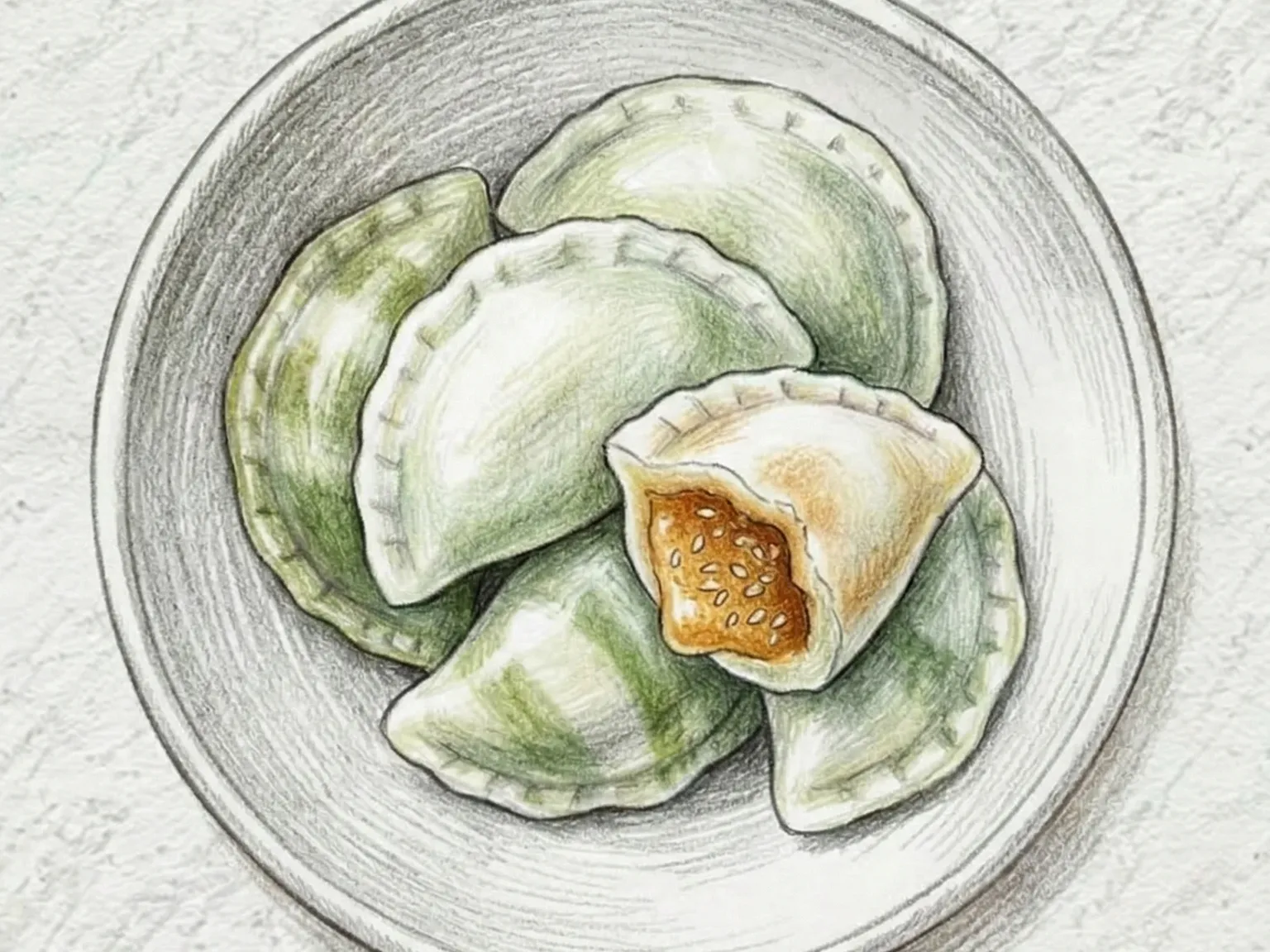
Half-moon Rice Cake (Sesame Honey Filled Steamed Rice Cake)
Quick answer
Kkul songpyeon are traditional half-moon rice cakes shaped by hand from rice flour dough and filled with a paste of finely ground toasted sesame seeds, honey, and dark br...
What makes this special
- Kkul songpyeon half-moon rice cakes are steamed over pine needles with a melting sesame honey filling.
- Honey and dark sugar in sesame filling melt into moist paste during steaming
- Pine needle bed lends a faint resinous note to the rice cake surface
Key ingredients
Core cooking flow
- 1 Mix 300g non-glutinous rice flour with 3g salt, gradually pour in 190ml boil...
- 2 Grind 40g sesame seeds finely in a mortar, then mix with 35g honey and 20g d...
- 3 Take 20g portions of dough, press a deep hollow in the center, add 1 teaspoo...
Kkul songpyeon are traditional half-moon rice cakes shaped by hand from rice flour dough and filled with a paste of finely ground toasted sesame seeds, honey, and dark brown sugar, then steamed over a bed of fresh pine needles. Grinding the sesame seeds fine enough to form a cohesive mixture with honey and sugar is important -- the oil-rich nuttiness and dense sweetness bind together into a smooth filling that turns moist and paste-like as steam penetrates the rice dough during cooking. Arranging pine needles at the bottom of the steamer imparts a faint resinous, woody fragrance to the surface of each rice cake after 15 minutes of steaming, layering over the natural grain aroma of the rice flour dough. After steaming, a quick rinse in cold water stops carry-over cooking, and a thin brush of sesame oil gives each songpyeon a glossy sheen while preventing them from sticking together. Shaping songpyeon together as a family at Chuseok is one of the most recognizable autumn traditions in Korea, and the saying that beautifully shaped songpyeon foretells a beautiful daughter remains widely repeated today.
Instructions
Read the steps as a cooking flow: prep, heat, seasoning, doneness control, and finish.
- 1Season
Mix 300g non-glutinous rice flour with 3g salt, gradually pour in 190ml boiling water while kneading by hand until the dough is as soft and smooth as an earlobe.
- 2Season
Grind 40g sesame seeds finely in a mortar, then mix with 35g honey and 20g dark brown sugar to make the filling.
- 3Step
Take 20g portions of dough, press a deep hollow in the center, add 1 teaspoon of filling, then gather the edges and seal firmly with no gaps.
- 4Step
Place seam-side down, gently press with two fingers into a half-moon shape, and pinch a decorative pattern along the rim to form the classic songpyeon silhouette.
- 5Control
Line the steamer with 15g pine needles, arrange the songpyeon without touching, and steam over high heat for 15 minutes until fully cooked through.
- 6Finish
Rinse quickly in cold water to firm the surface and add elasticity, drain well, then coat each songpyeon with a thin layer of sesame oil from 10ml to give it a glossy finish.
After the steps
Pick a recipe that fits this dish.
Continue with shared ingredients, meal pairings, or a similar method.
Recipes That Go Well With This
More Desserts →Based on shared ingredients and meal pairing
Honey-Filled Rice Cakes (Steamed Glutinous Rice with Brown Sugar Syrup)
Kkultteok are bite-sized Korean rice cakes made by kneading glutinous rice flour with hot water, wrapping each 20-gram round of dough around a filling of dark brown sugar, ground cinnamon, and chopped walnuts, then steaming for eight to ten minutes. After steaming, a light brush of sesame oil gives the surface a sheen and keeps the pieces from sticking together, and a final roll in roasted soybean powder adds a dry, nutty outer coating. Biting through the soft, chewy shell releases a pool of melted brown sugar syrup with cinnamon warmth, while the walnut fragments provide crunch against the sticky interior. The most critical step is pinching the dough seam shut as tightly as possible: if the seal fails during steaming, the molten brown sugar syrup leaks out and the rice cake ends up hollow and dry.
Jeungpyeon (Fermented Makgeolli Rice Cake)
Jeungpyeon is a traditional Korean fermented rice cake made by mixing rice flour with makgeolli, resting the batter in a warm place for one hour until air pockets form throughout, then steaming for eighteen to twenty minutes. The yeast and lactic acid bacteria in the makgeolli break down the rice starch and generate small bubbles, and a supplementary amount of baking powder ensures the cake rises into a soft, sponge-like crumb. Raisins and pumpkin seeds pressed onto the surface just before steaming absorb heat and steam, the raisins plumping and the seeds releasing their richness directly into the top of the cake. Wrapping the steamer lid in cloth catches condensation before it can drip down and dimple the surface, which is the key to a smooth top. Unlike plain steamed rice cakes, jeungpyeon carries a faint tang and fermentation aroma from the makgeolli that sets it apart. Records place it at Joseon royal banquets, and it remains a particular favorite as a summer dessert when its lightness is most welcome.
Korean Mashed Potato Bread
Korean Mashed Potato Bread is a snack featuring a potato filling wrapped in a chewy dough. The dough combines bread flour and tapioca starch, which prevents the crust from hardening after cooling, maintaining a soft, elastic texture. Boiled potatoes are mashed while hot with sugar and salt before being wrapped in the dough. Varying sugar levels in the filling and the dough create a layered sweetness. The outer surface is coated with roasted soybean powder and black sesame powder to replicate the earthy look of Gangwon potatoes. Small holes are poked on the surface with chopsticks for a realistic appearance. The bread is baked at 170 C for twenty to twenty-five minutes. Adding mayonnaise to the filling yields a creamier and richer taste.
Steamed White Rice Cake (Soft Crumbly Korean Traditional Rice Dessert)
Baekseolgi is a white steamed rice cake made entirely from non-glutinous rice flour, with modest sugar and salt added. The ingredient list is short, which means technique determines the result. Sifting the flour two to three times builds air into the fine particles; that incorporated air produces the characteristic crumbly, soft texture after steaming. Skip the sifting and the cake steams dense and coarse. Moisture level is checked by hand: the flour should clump when squeezed but fall apart with a light touch. Too dry and the inside comes out powdery even after steaming; too wet and the surface turns sticky. The steamer must be fully boiling before the flour goes in, and strong steam maintained continuously for twenty to twenty-five minutes without lifting the lid. A cotton cloth laid under the lid catches condensation before it can drip onto the surface - those drops create wet patches that spoil the even white finish. Sugar is kept low, letting the clean, neutral sweetness of the rice come through. The cake firms up as it cools, so it is best eaten warm. Dried jujube slices or pumpkin seeds pressed into the surface before steaming add color to the otherwise plain white top.
Serve with this
Korean Kkul Tarae Honey Threads
Kkul tarae is a traditional Korean confection made by boiling rice syrup, corn syrup, and sugar to between 115 and 125 degrees Celsius, cooling the candy ring, then repeatedly stretching and folding it with dustings of glutinous rice flour until thousands of hair-thin strands form. The finished thread bundle is filled with roasted peanut, almond, and black sesame powders mixed together, rolled up, and cut into bite-sized pieces. Temperature control during candy cooking is critical: below 115 degrees the syrup stays too pliable to hold shape, above 125 it hardens before you can work it. Each stretch-and-fold cycle doubles the strand count and makes the bundle progressively lighter and more cloud-like, so the final texture in the mouth is a slow, silky dissolve rather than a chew. High humidity causes the delicate strands to stick to one another, making rapid work in a dry environment essential. Near Gyeongbokgung Palace and other tourist areas in Seoul, vendors often demonstrate the stretching process live as part of the sale.
Korean Job's Tears Walnut Latte
Yulmu-hodu latte is a traditional Korean grain-based beverage prepared by combining job's tears and walnuts with milk to create a thick and consistent texture. The preparation begins by soaking the job's tears in water for a minimum of two hours. This extended soaking period is necessary to soften the grains thoroughly, ensuring they pulverize completely during the blending process to avoid a gritty or sandy mouthfeel. Once softened, the job's tears are dry-toasted along with the walnuts in a pan. This heat application serves to caramelize the starches within the grains, which effectively removes the scent of raw grain and replaces it with a concentrated, roasted aroma. After the toasted ingredients are blended with milk, the liquid is passed through a fine strainer to achieve a smooth and silky finish. Sweetness is added using honey, accompanied by a small amount of salt to highlight the deep profile of the roasted nuts. A light sprinkle of ground cinnamon is applied to the surface to provide a subtle spice that balances the grounded flavor of the grain base. For cold servings, it is important to dissolve the honey while the liquid is still warm to ensure it distributes thoroughly throughout the drink instead of settling at the bottom of the container. The resulting beverage offers a depth of flavor and a rounded profile that is far more prominent than what is found in mass-produced, packaged versions of similar grain drinks.
Buffalo Wings
Buffalo wings coat chicken wings in baking powder and roast them at high heat for forty-five minutes, producing a crisp skin without deep-frying. The baking powder raises the skin's pH to accelerate the Maillard reaction and drives out moisture faster, yielding a crunch that rivals the fryer. Straight from the oven, the wings are tossed in a sauce of melted butter and hot sauce - the butter tempers the vinegar-based heat into something that coats the tongue rather than burning it, and a touch of white vinegar at the end sharpens the finish. Blue cheese dipping sauce and celery sticks served alongside provide a cooling, creamy contrast and a crisp palate cleanser between bites.
Similar recipes
Mugwort Crumble Rice Cake
Ssuk beomuri is a traditional Korean spring rice cake made by tossing chopped fresh mugwort into a dry blend of rice flour, glutinous rice flour, and sugar, then steaming the loose mixture in a cloth-lined steamer. Water is worked in gradually by hand rather than poured all at once, a step that produces a texture that crumbles apart lightly while remaining moist inside rather than turning dense or gummy. Glutinous rice flour accounts for about a quarter of the blend and provides enough stickiness to hold the pieces together without making them chewy throughout. Using raw mugwort without blanching preserves the volatile aromatic compounds that would otherwise be lost in hot water, resulting in a deep, grassy fragrance that defines the cake. Steaming at full heat for fifteen minutes followed by a three-minute resting period with the lid on ensures the center cooks through evenly without the surface drying out. A generous topping of sweetened red bean crumble adds a thick, earthy sweetness that complements the clean herbal notes of mugwort. Young spring mugwort harvested between late March and April carries the most concentrated aroma, making that window the ideal season for this cake.
Korean Choco Pie (Marshmallow Cream Chocolate Cake)
Two soft chocolate cake rounds sandwich a layer of melted marshmallow cream, and the whole assembly is dipped in dark chocolate to form a glossy shell. The cake batter combines cake flour with cocoa powder and is baked just until set; overbaking dries out the sponge and ruins the pillow-soft texture that defines this treat. Marshmallows melted over a water bath turn into a light, stretchy cream that acts as a cushion between the rounds, pulling slightly with each bite. Adding a small amount of butter to the melted coating chocolate produces a thinner, smoother shell that sets with a clean snap and resists fingerprints. Chilled, the chocolate hardens and adds a crisp layer of contrast; at room temperature, the entire piece softens into a unified, yielding bite. This is the homemade version of Korea's iconic convenience-store snack, and making it from scratch allows control over the chocolate quality and the generosity of the filling.
Korean Five-Color Songpyeon
Osack songpyeon are five-color rice cakes made for Chuseok, Korea's harvest festival. Rice flour dough is divided into portions and tinted with natural colorants including mugwort powder for green, gardenia water for yellow, and grape juice for purple, then kneaded with boiling water to develop a chewy, cohesive texture that raw-water dough cannot achieve. Each piece is filled with toasted sesame mixed with sugar or with sweetened red bean paste, then carefully pinched shut and shaped into a half-moon. Steaming for 20 minutes on a thick bed of pine needles imparts a subtle resinous fragrance to the surface, creating a layered aroma of wood and cooked grain that is distinctive to songpyeon and nothing else. A brush of sesame oil applied immediately after steaming gives each cake a glossy finish and prevents them from sticking together as they cool. The temperature and quantity of the boiling water during the kneading stage are the main variables that determine whether the final texture is perfectly chewy or disappointingly stiff. Traditionally, the entire family gathers the night before Chuseok to shape the rice cakes together, and that shared effort is considered inseparable from the taste.