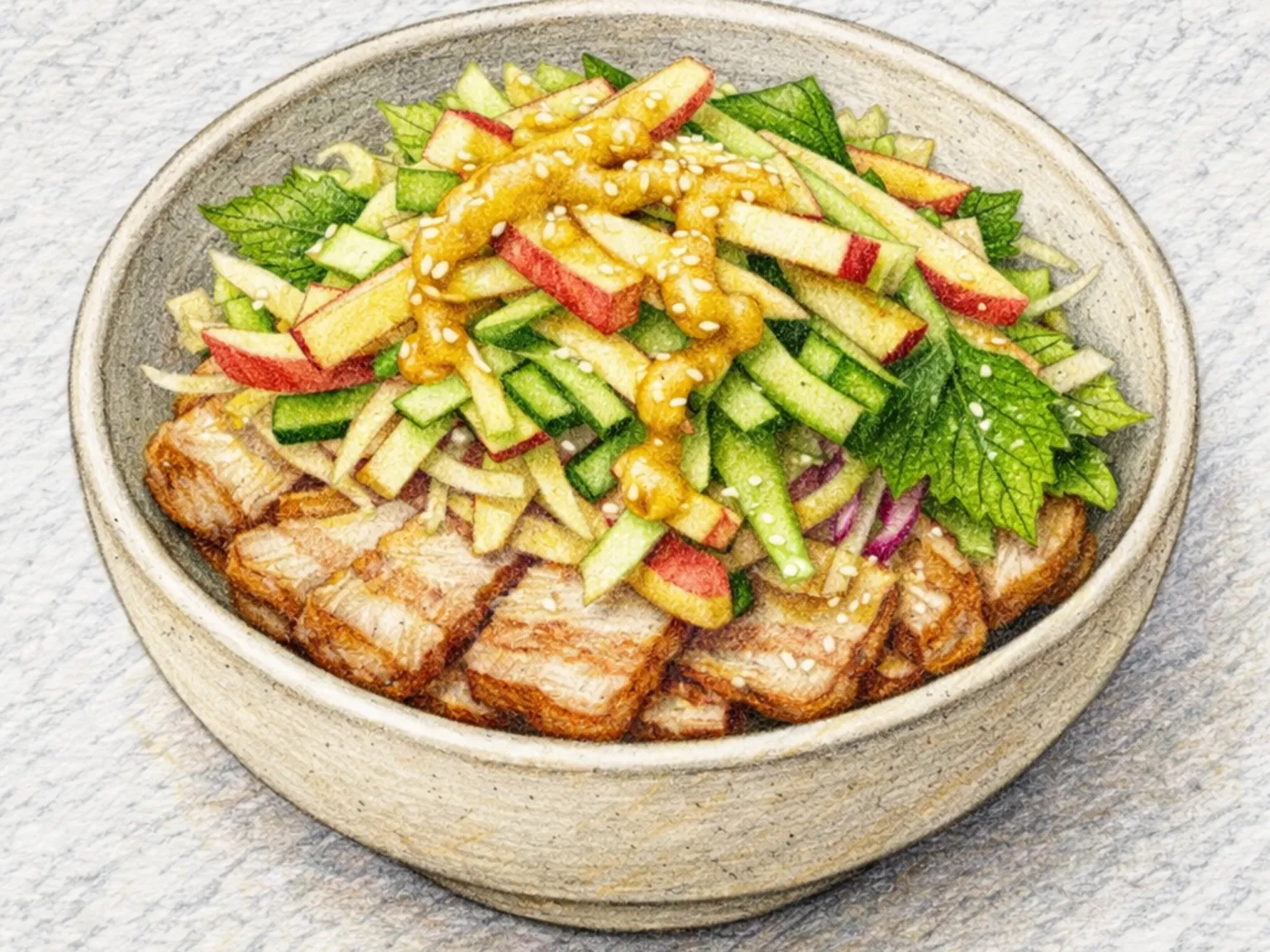
Pork Bossam Apple Mustard Salad
Bossam apple mustard salad arranges thinly sliced boiled pork belly over shredded cabbage and cucumber, then dresses the plate with crisp apple slices and a sharp mustard vinaigrette. Chilling the boiled pork before slicing firms the fat cap and yields clean, even cuts. Cabbage and cucumber provide a crunchy base that contrasts with the soft, fatty pork, and the apple introduces a fruit sweetness that lifts the plate. Korean hot mustard dissolved into a soy-vinegar dressing sends a nasal heat through each bite that cuts the richness, and perilla leaves layered underneath suppress any residual pork aroma with their herbal fragrance.
Adjust Servings
Instructions
- 1
Slice bossam pork thinly and warm in a dry pan for 1 minute to refresh aroma.
- 2
Shred cabbage and perilla, slice cucumber into half-moons, and briefly soak apple slices in vinegar water.
- 3
Whisk mustard, vinegar, syrup, salt, and pepper to make the dressing.
- 4
Toss vegetables and apple with half the dressing first.
- 5
Add pork and toss once more with the remaining dressing.
- 6
Plate with height and serve immediately before texture softens.
As an Amazon Associate, we may earn from qualifying purchases.
Tips
Nutrition (per serving)
More Recipes

Seaweed Stem and Apple Mustard Salad
Salted seaweed stems are soaked to remove excess brine, then blanched briefly to achieve a firm, slightly chewy bite that defines this Korean salad's texture. Julienned apple adds crisp sweetness that contrasts with the seaweed's oceanic mineral flavor. Thinly sliced onion, soaked to mellow its sting, contributes a subtle sharpness. The dressing mixes Korean mustard paste with vinegar and oligosaccharide syrup - the mustard delivers a sharp nasal heat, while the syrup smooths the vinegar's acidity into something rounder. Tossing the apple with lemon juice first prevents browning, and a three-minute rest after dressing lets the flavors meld without overdressing the delicate stems.

Chwinamul Apple Doenjang Salad
Chwinamul (aster scaber) is blanched briefly to preserve its herbal, slightly bitter character, then combined with thin-sliced apple and cucumber for crisp sweetness. The dressing is built on doenjang - Korean fermented soybean paste - which adds a deep umami layer uncommon in typical salad dressings. Perilla oil rounds out the nuttiness, while red onion contributes a sharp edge that keeps the bowl from feeling heavy. The salad is best in spring when chwinamul is freshly harvested and most aromatic.

Yuja Mustard Chicken Naengchae Salad
Yuja mustard chicken naengchae salad shreds boiled chicken breast along the grain and tosses it with julienned cucumber, Korean pear, bell pepper, and cabbage in a dressing of yuja marmalade, Korean mustard paste, vinegar, and sesame oil. Soaking the chicken breast in lightly salted water for ten minutes before boiling helps the muscle fibers retain moisture, keeping the shredded meat tender rather than dry. The yuja marmalade brings a bright citrus fragrance, and the Korean mustard delivers a sharp, nasal heat - vinegar binds these two strong personalities into a cohesive dressing. Slicing the pear just before serving preserves its juice and crisp sweetness. Adding two-thirds of the dressing first, then tasting and adjusting, prevents the acidity from overwhelming the delicate balance of the salad.

Seaweed Chip Avocado Corn Salad
Gimbugak - deep-fried seaweed chips coated in glutinous rice paste - is crushed over the finished salad to deliver a savory crunch distinct from ordinary croutons. Ripe avocado provides a creamy fat base, while blanched sweet corn adds a gentle grain sweetness that balances the richness. Cherry tomatoes and shredded red cabbage bring color and bright acidity, and a light dressing of lime juice with fine chili powder leaves a gentle heat on the finish. The chips soften quickly once they touch moisture, so they must be added at the very last moment.

Korean Bossam Kimchi Rice Bowl
Bossam kimchi deopbap is a Korean rice bowl that repurposes leftover bossam - tender boiled pork and well-fermented bossam kimchi - by stir-frying them with onion in a sweet-spicy gochujang sauce and serving it all over hot rice. The tangy crunch of the kimchi plays off the moist, savory pork, while the sauce ties every element together with warmth and depth. It is a practical and satisfying meal that needs no side dishes, making it an efficient way to transform bossam leftovers into an entirely new dish. The contrast between the soft, slow-cooked pork and the sharp acidity of fermented kimchi keeps each bite lively, and the gochujang glaze adds just enough heat to make you want more.

Korean Gochujang Pork Bulgogi
Gochujang dwaeji bulgogi marinates pork neck in gochujang, soy sauce, chili flakes, garlic, and plum syrup, then stir-fries it over high heat for an intensely flavored main course. The plum syrup provides a bright, tangy sweetness that counterbalances the fermented heat of gochujang. Perilla leaves are tossed in at the very end, their herbal aroma cutting through the richness of the pork and adding a distinctive Korean fragrance. Onion melts into the sauce for rounded sweetness while green onion contributes a fresh bite. It is excellent served over rice or wrapped in lettuce leaves for contrasting textures.