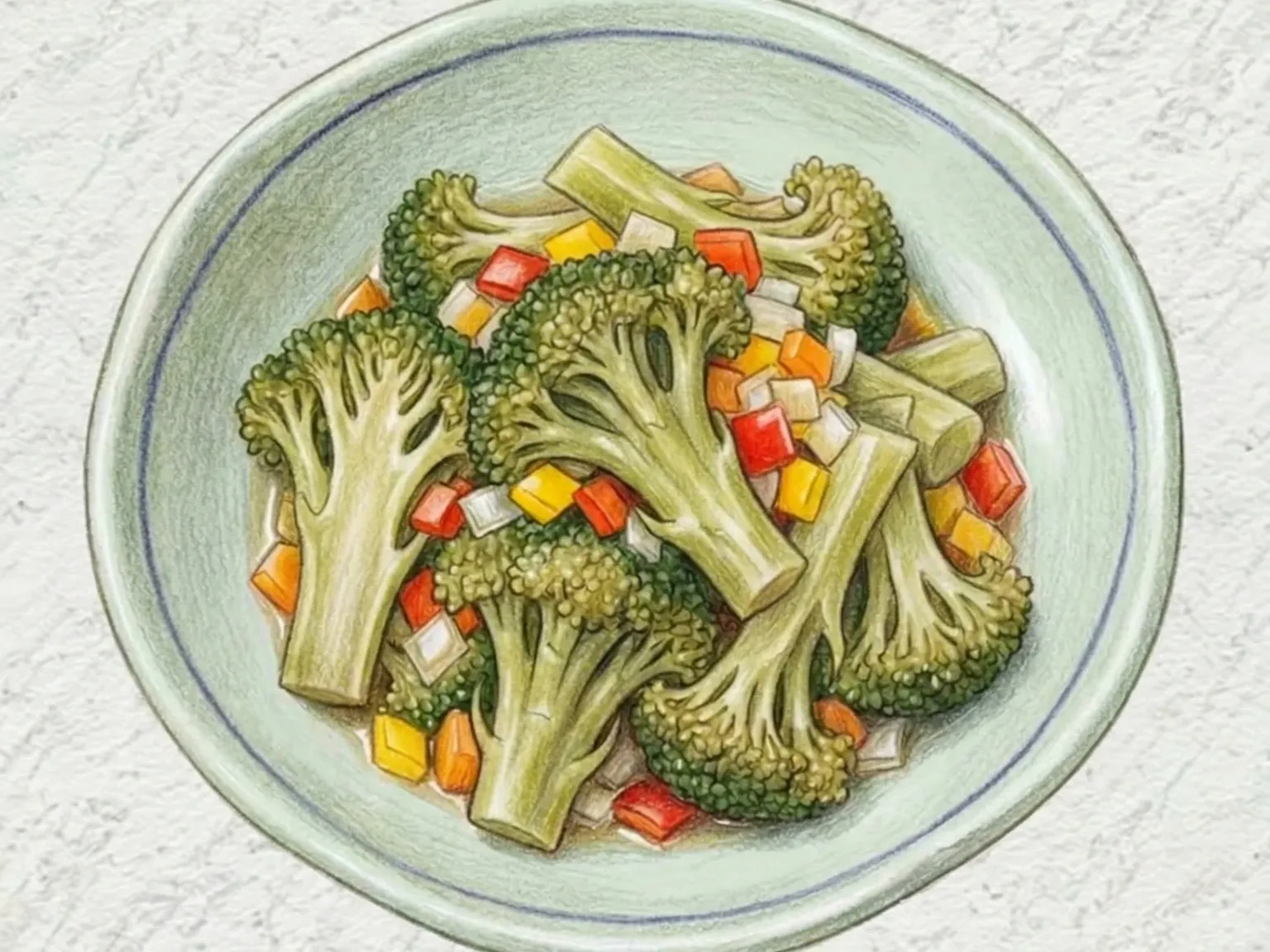
Korean Pickled Broccoli (Blanched Soy Vinegar Brine)
Quick answer
- Active time
- 25 min
- Waiting
- See the steps
- Level
- Easy
- Servings
- 2 servings
- Ingredients
- 8
About this dish
Crisp stems and tender florets sit side by side in this soy pickle, a contrast that depends on keeping the blanch to 40 seconds and moving the broccoli straight into ice water.
Read more
Unlike many hot-brine pickles, this one waits until the brine is completely cool, because warm liquid softens the florets. Red bell pepper and onion add sweetness and a flash of red against the green. The crunch is best in the first two days, while the seasoning reaches all the way through after 3 to 4 days. It packs easily into a lunch box and keeps for up to 2 weeks in the fridge.
Ingredients
Instructions
- 1
Cut 300 g broccoli into bite-size florets and slice the stems 1 cm thick.
Soak them in salted water for 5 minutes, then rinse well under running water so grit trapped between the florets is removed.
- 2
Bring a generous pot of water to a full boil and add the broccoli for only 40 seconds.
As soon as it turns bright green, lift it out and place it in ice water to stop the cooking.
- 3
Drain the cooled broccoli thoroughly in a sieve.
If excess water remains, the brine will taste diluted, so press the pieces lightly with a towel without crushing the tender florets.
- 4
Cut 0.5 red bell pepper and 0.3 onion into 2 cm pieces, similar to the broccoli size.
Pack them with the broccoli in a sterilized glass jar, leaving enough space for the brine to flow through.
- 5
Put 120 ml soy sauce, 120 ml vinegar, 120 ml water, 70 g sugar, and 0.5 tsp black peppercorns in a pot.
Stir until the sugar dissolves, then boil hard over high heat for 2 to 3 minutes.
- 6
Cool the brine completely at room temperature before pouring it into the jar, because warm brine softens the broccoli.
Refrigerate at least 12 hours before serving chilled, and expect fuller seasoning after 3 to 4 days.
Official cooking and safety guidance
Public-agency cooking and food safety guidance that applies to this recipe.
Official cooking and safety guidance
-
Produce preparation
Wash produce under running water before cutting or peeling it. Do not use soap or household detergent.
Source: U.S. Food and Drug Administration. Selecting and Serving Produce Safely
Sources checked 2026-08-03
Use-up ingredient planner
Turn these ingredients into two more meals
The overlap excludes basic seasonings. Open the next recipe and your selected dishes will stay with you.
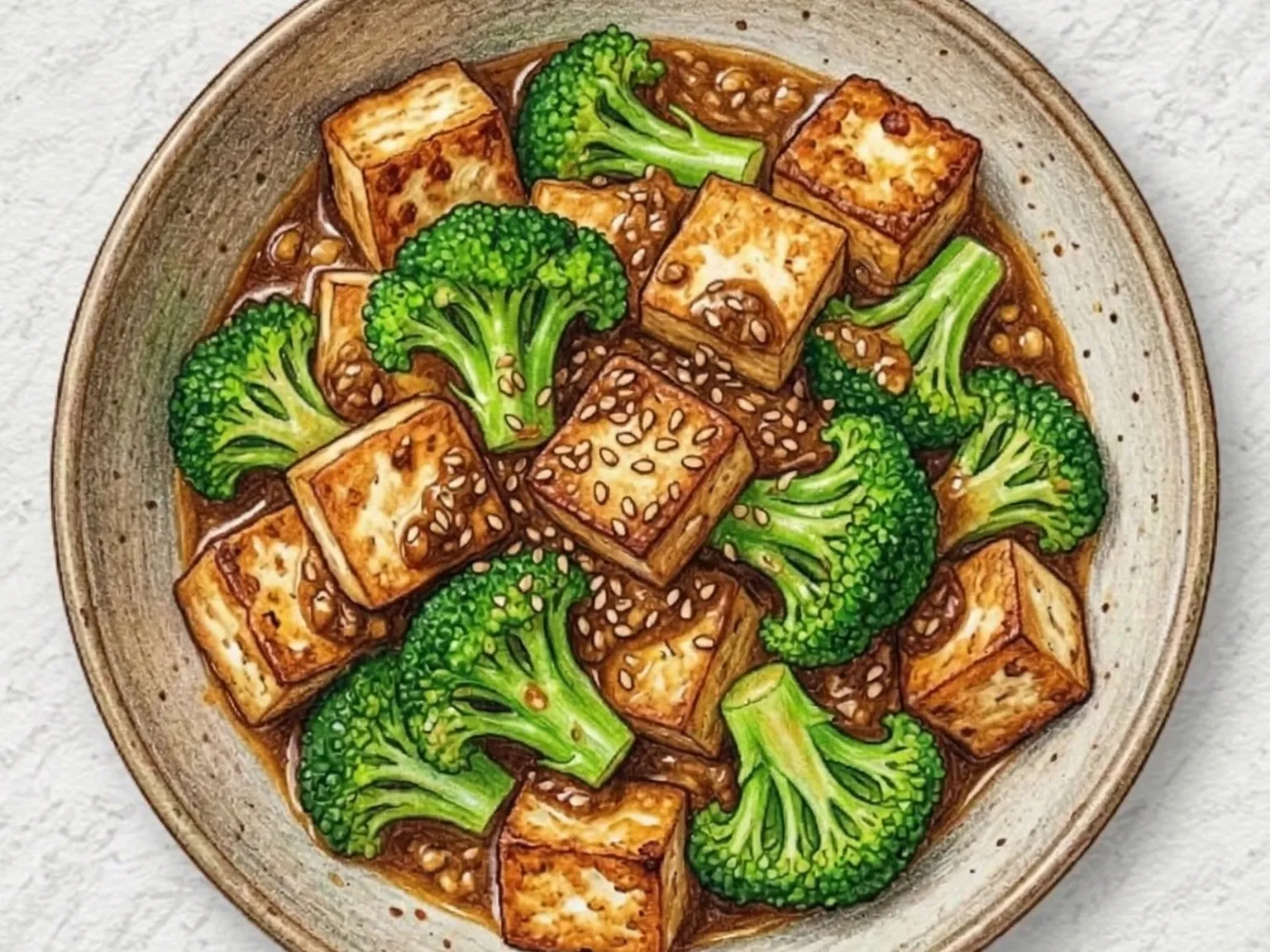
Korean Beurokolli Dubu Doenjang Bokkeum (Broccoli Tofu Doenjang Stir-fry)
broccoli, onion
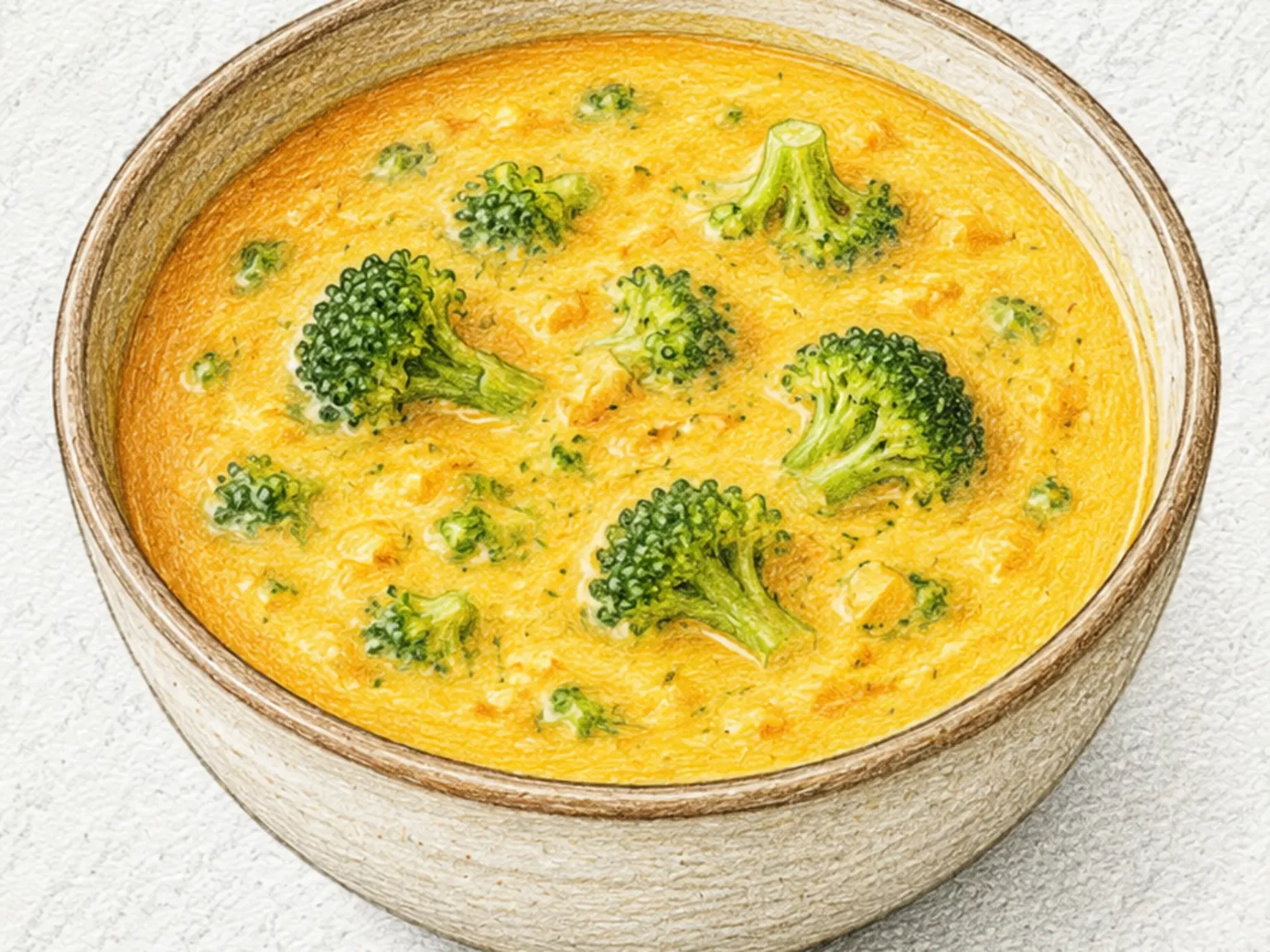
Broccoli Cheddar Soup
broccoli, onion
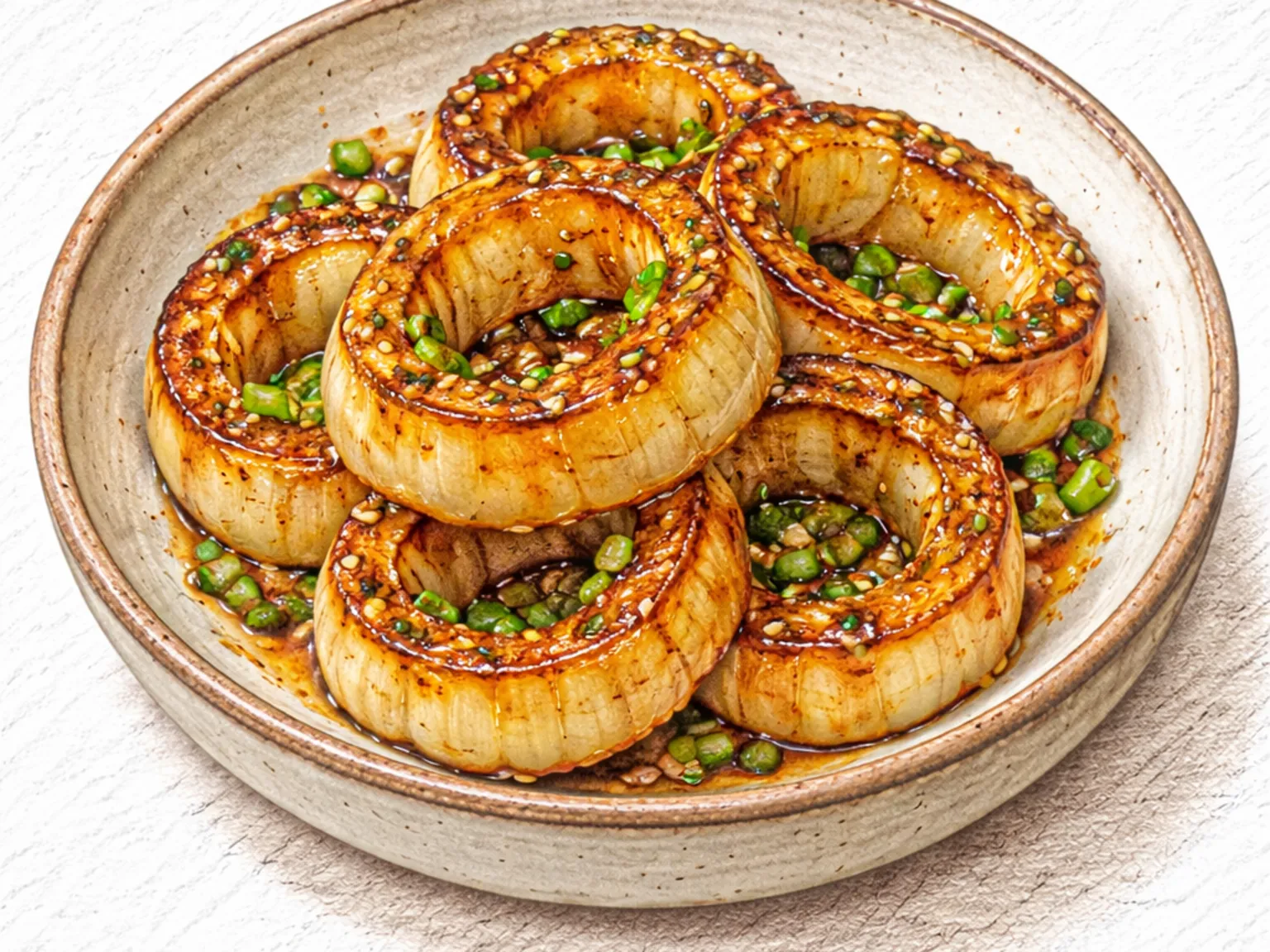
Korean Grilled Doenjang Onions
onion