Buchu Beef Mustard Salad (Seared Beef & Chive Mustard Salad)
Quick answer
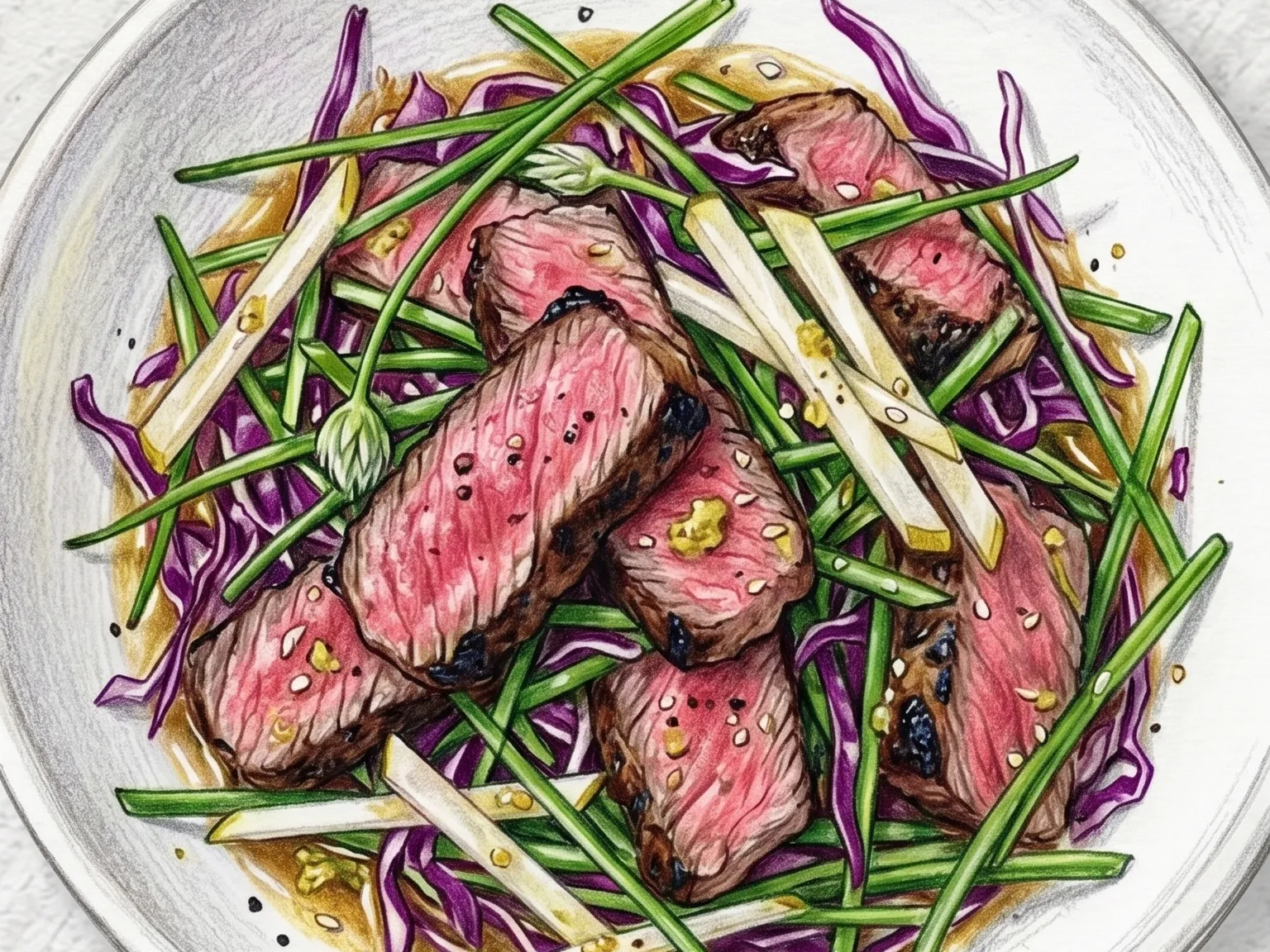
Buchu beef mustard salad sears lean beef round over high heat to char the surface while keeping the center pink, then slices it thick over a bed of garlic chives and shre...
What makes this special
- Quickly seared lean beef over high heat yields a charred crust with a tender, pink center.
- High-heat sear of 90 seconds gives char outside while keeping pink inside
- Yeongyeoja mustard dressing's pungent heat cleans up the beef's richness
Key ingredients
Core cooking flow
- 1 Pat 180 g lean beef round very dry with paper towels, then season evenly with a small pinch of salt.
- 2 Heat a pan over high heat until it just begins to smoke.
- 3 Remove the beef to a board and rest it for 5 minutes without cutting.
Buchu beef mustard salad sears lean beef round over high heat to char the surface while keeping the center pink, then slices it thick over a bed of garlic chives and shredded red cabbage. Hot mustard dissolved into a soy-vinegar dressing produces a sharp nasal heat that cuts directly through the beef fat with each bite. Julienned Korean pear adds a crisp, clean sweetness that balances the salt and acidity of the dressing, while the garlic chives contribute their pungent, onion-forward aroma as a defining note. Slicing the beef at least 1 cm thick prevents it from toughening as it cools, and resting the seared meat for five minutes before cutting keeps the juices in. The salad comes together in the time it takes the beef to rest.
Instructions
Read the steps as a cooking flow: prep, heat, seasoning, doneness control, and finish.
- 1Season
Pat 180 g lean beef round very dry with paper towels, then season evenly with a small pinch of salt.
Let it stand for about 5 minutes so the surface dries, which helps it sear instead of steaming.
- 2Control
Heat a pan over high heat until it just begins to smoke.
Add the beef and leave it untouched for about 1 minute 30 seconds, letting the surface brown deeply before moving it.
- 3Prep
Remove the beef to a board and rest it for 5 minutes without cutting.
Once the juices settle, slice it 1 cm thick against the grain so it stays tender as it cools.
- 4Prep
Cut 100 g garlic chives into 5 cm lengths and shred 80 g red cabbage into fine 0.2 cm strips.
Slice 90 g Korean pear into thin matchsticks so it mixes evenly without weighing down the greens.
- 5Season
Put 1 tsp hot mustard paste in a bowl first, then gradually whisk in soy sauce, vinegar, honey, and sesame oil.
Keep whisking until smooth and glossy, then taste for sharpness before dressing the salad.
- 6Finish
Right before serving, gently toss the garlic chives, red cabbage, and pear with two-thirds of the dressing.
Arrange the sliced beef on top, drizzle with the remaining dressing, and serve before the chives wilt.
After the steps
Pick a recipe that fits this dish.
Continue with shared ingredients, meal pairings, or a similar method.
Recipes That Go Well With This
More Salads →Based on shared ingredients and meal pairing
Naengi Beef Salad (Shepherd's purse)
Fresh naengi - shepherd's purse - is blanched to mellow its earthy bite while keeping the fragrance intact. Beef sirloin is sliced thin and seared quickly so the surface chars lightly and the center stays moist. Julienned Korean pear bridges the beef's richness and the naengi's mild bitterness with clean sweetness. A dressing of soy sauce, vinegar, sesame oil, and plum extract balances salty, sour, and subtly sweet, while red onion and toasted sesame seeds finish with sharpness and nutty crunch.
Korean Chive Salad with Doenjang Dressing
Garlic chives -- buchu -- carry a sharper, more pungent bite than Western chives, and this banchan keeps them raw to preserve every bit of that intensity. Chives are cut into short segments, rinsed in cold water to crisp up the cell walls, then tossed for no more than twenty seconds in a dressing of doenjang, vinegar, and gochugaru. Going beyond that window draws out moisture from the leaves, leaving the whole dish limp and waterlogged before it even reaches the table. The fermented paste locks onto the flat surface of each blade, releasing a salty, umami-heavy punch with every bite. Vinegar cuts through the richness of the doenjang with a light acidity that keeps the finish clean, and the gochugaru adds a dry, lingering heat. Best assembled minutes before serving and eaten alongside a bowl of rice.
Korean Grilled Deodeok Root
Deodeok-gui is a traditional Korean mountain vegetable dish where peeled deodeok roots are pounded flat with a mallet, coated in a paste of gochujang, gochugaru, honey, sesame oil, and garlic, then grilled over high heat. The pounding step is critical: it breaks down the tough fibers so the seasoning absorbs evenly and the root develops a pleasant chewiness instead of remaining stringy. Soaking the peeled deodeok in lightly salted water for about thirty minutes before pounding draws out the sharpest bitterness, leaving only the characteristic mellow, slightly medicinal aroma the root is known for. That bittersweet quality sits in balance between the fermented spice of gochujang and the sweetness of honey. Quick grilling at high temperature chars the glaze just enough to add smokiness while keeping the interior moist; applying the seasoning paste in two stages during grilling builds a thicker, glossier layer on the surface. Toasted sesame seeds scattered on top contribute nuttiness that complements the wild herb's earthy, resinous character.
Grilled Mackerel Perilla Salad
Grilled mackerel perilla salad starts by salting mackerel fillets for five minutes, then patting them completely dry before setting them skin-side down in a hot pan. The drying step draws surface moisture out of the fish so the skin crisps sharply in the pan rather than steaming, and the brief salt also damps down the mackerel's characteristic fishiness. Four minutes skin-side down followed by two minutes on the flesh side leaves the exterior with a firm, golden crust while the interior stays moist and just cooked through. Once off the heat the fish is broken into irregular pieces and scattered over a bed of romaine, thinly sliced perilla leaves, cucumber batons, and radish sprouts. A dressing of soy sauce, yuzu marmalade, and sesame oil brings the whole dish together: the aromatic acidity of yuzu cuts cleanly through the oily richness of mackerel in a way that a plain rice vinegar dressing cannot. Cutting perilla into thin ribbons rather than tearing it distributes the herb's peppery, anise-like fragrance evenly across every forkful so no bite is without it. The contrast of warm fish against cold vegetables and crisp greens makes each serving feel alive rather than flat.
Serve with this
Doenjang Clam Spinach Orzo
Doenjang clam spinach orzo is a one-bowl pasta built by cooking orzo in doenjang-seasoned vegetable stock alongside clams in a method borrowed directly from risotto technique. The clams are first purged in salt water to remove sand, then steamed open in white wine so they release their briny cooking liquid into the pan. That liquid merges with the already-present fermented depth of doenjang to form a layered savory base that carries the pasta from the very first minute of cooking. Toasting the orzo in butter or oil before adding any liquid coats the starch on each grain, a step that slows its release and produces a consistently creamy sauce by the end rather than a gluey mass or a watery broth. The stock goes in two or three additions rather than all at once, each addition added only once the previous one has been absorbed, and the pasta is stirred throughout so the released starch works into the liquid rather than sinking to the bottom. Spinach added in the final thirty to sixty seconds of cooking wilts just enough to turn tender without losing its bright green color or dissolving into the sauce. A knob of cold butter stirred in off heat as the finishing touch emulsifies into the sauce, adding a glossy sheen and a rounded, buttery richness that ties all the flavors together.
Soybean Paste Stew with Clams
Doenjang jjigae with clams is one of the most frequently made stews in Korean households, built on the combination of fermented soybean paste's deep, earthy flavor and the clean briny umami of manila clams. The clams are purged of sand before being added to a pot of doenjang-laced broth, where they open and release their salty, seawater-flavored liquor directly into the soup. The result transforms the base from something merely savory into something distinctly oceanic and complex. Zucchini softens in the bubbling broth and contributes a natural sweetness as it breaks down, while blocks of soft tofu act as sponges, soaking up the seasoned liquid and releasing it in a burst of hot, flavorful broth when bitten into. Sliced cheongyang chili peppers are added to interrupt the heaviness of the fermented paste and sharpen the overall flavor. The stew is typically served in an earthenware pot while still bubbling, alongside rice. Many Koreans ladle the broth directly over their bowl of rice. The recipe adapts to any season: assembled with leftover summer vegetables from the refrigerator for a lighter version, or cooked piping hot in a stone pot through winter.
Red Lentil Soup
Red lentil soup is a Middle Eastern and Mediterranean staple made by simmering red lentils with cumin, turmeric, and vegetable stock until the lentils dissolve into a silky, golden broth. Onion and garlic are sauteed in olive oil, then the ground spices are toasted briefly to bloom their earthy, warm aromatics into the fat, which flavors the entire pot. Red lentils require no soaking - they go straight into the stock and break down within twenty to twenty-five minutes, their skins splitting apart to create a naturally creamy texture without the need for blending. A generous squeeze of lemon juice at the end is essential, cutting through the heaviness of the spices with a bright, clean acidity. A final drizzle of olive oil over each bowl adds a layer of richness that deepens every spoonful.
Similar recipes
Charred Broccolini Doenjang Lentil Salad
Charred broccolini doenjang lentil salad halves broccolini lengthwise, coats it in olive oil, and chars it in a very hot pan for 4 to 5 minutes until the cut edges darken and take on a bitter, smoky note. Cooked lentils add a starchy, filling body to the bowl. A dressing of doenjang, Dijon mustard, apple cider vinegar, and minced garlic layers fermented depth against sharp acidity. Roughly chopped walnuts break open with each bite and release a fatty, toasted richness. The apple cider vinegar cuts through the salt of the doenjang, keeping the dressing balanced. Draining the lentils thoroughly is necessary to prevent the dressing from diluting, and letting the assembled bowl rest five minutes before serving allows the grains to draw in the seasoning.
Water Parsley & Beef Salad
Beef marinated in soy sauce and pear juice is seared over high heat just long enough to develop a caramelized, deeply savory crust on the outside while the interior stays moist and tender. The cooked bulgogi is laid over a bed of fragrant minari and crisp lettuce, so each forkful carries both the warm, rich meat and the cool, crunchy vegetables. Thinly sliced red onion soaked in cold water to tame its bite then scattered through the bowl melds smoothly with the sweet-savory marinade coating the beef. A light toss of the remaining sesame oil from the pan coats the greens with a round, nutty aroma, and toasted sesame seeds sprinkled generously over the top complete the plate. Minari wilts quickly and loses its herbal fragrance once it is dressed, so it should only be combined with the other ingredients moments before the dish reaches the table. The warm meat against the cold greens creates a temperature contrast that makes each bite more dynamic. A spoonful of ssamjang dressing or a splash of yuzu vinegar can shift the flavor profile when variety is wanted.
Korean Soy Pulp Porridge (High-Protein Okara Anchovy Stock Porridge)
Soy pulp (okara) and soaked rice simmer together in anchovy stock, creating a thick, protein-rich porridge with a hearty body. Onion and garlic are first sauteed in sesame oil to build an aromatic base, then the rice goes in for a brief toast before the stock is added. Once the rice is half-cooked, soy pulp and diced zucchini join the pot, and constant stirring over low heat is essential since okara scorches quickly if left unattended. Seasoned with just salt and black pepper, this juk has a nutty, beany depth from the soy pulp paired with the clean umami of anchovy stock, making it filling yet light on the palate. Making the okara at home by blending soaked soybeans in a blender yields a noticeably fresher, more pronounced soy aroma than the packaged version and elevates the overall flavor of the finished porridge.