Korean Chive Shrimp Jeon (Crispy Chive and Shrimp Pancake)

Korean Chive Shrimp Jeon (Crispy Chive and Shrimp Pancake)

Quick answer

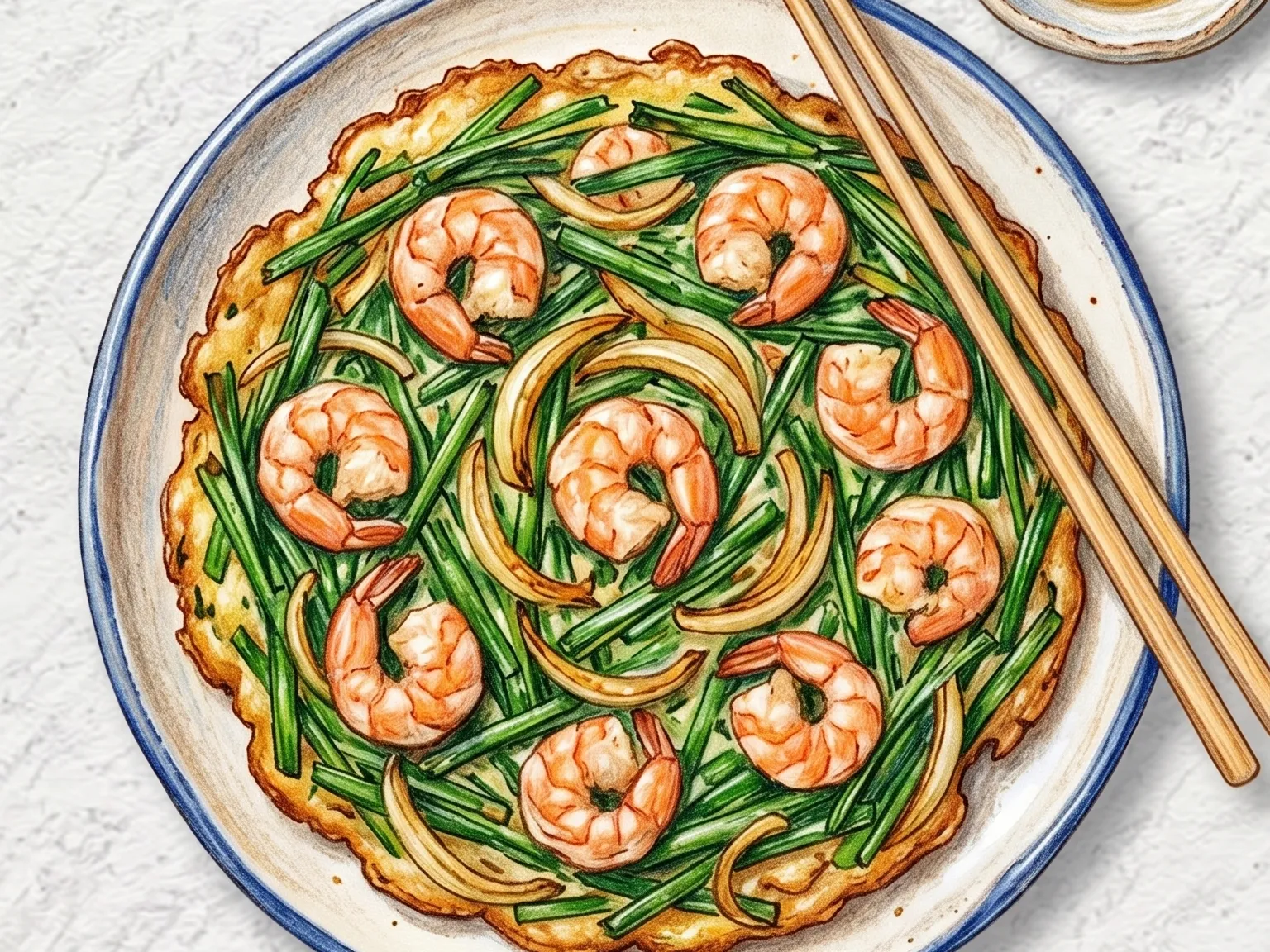
Buchu-saewu-jeon is a Korean garlic chive and shrimp pancake made by folding coarsely chopped shrimp, garlic chives, and julienned onion into an egg-enriched batter befor...

What makes this special

  • Coarsely chopped shrimp and garlic chives retain a bouncy texture inside this Korean Chive Shrimp Jeon.
  • Coarsely chopped shrimp, not minced, keeps the bouncy texture and sweetness intact
  • Eggs bind the batter so shrimp-studded pieces hold together when flipped
Total time
32 min
Level
Easy
Servings
2 servings
Ingredients
9
Calories
410 kcal
Protein
24 g

Key ingredients

garlic chivespeeled shrimpKorean pancake mixeggwater

Core cooking flow

  1. 1 Cut 150g chives into uniform 5cm lengths and thinly julienne 60g onion along...
  2. 2 Pat 200g shrimp dry thoroughly with paper towels, then chop coarsely with a...
  3. 3 In a bowl, combine 130g pancake mix, 2 eggs, 140g cold water, half a teaspoo...

Buchu-saewu-jeon is a Korean garlic chive and shrimp pancake made by folding coarsely chopped shrimp, garlic chives, and julienned onion into an egg-enriched batter before pan-frying over medium heat. Leaving the shrimp in rough chunks rather than mincing them fine is what gives each bite a distinct, springy snap along with the natural sweetness of shellfish. Onion softens and caramelizes as it cooks, tempering the brine of the shrimp, while a pinch of black pepper adds quiet warmth behind the other flavors. Spreading the batter thin and cooking for three minutes before flipping ensures the shrimp-studded edges turn crisp and lacy while the chive-packed center stays moist and tender. Egg raises the batter's binding strength so the pancake holds together cleanly when turned. The finished jeon pairs especially well with a soy-vinegar dipping sauce, which draws out the sweetness of the seafood more clearly than a plain soy sauce would.

Prep 20min Cook 12min 2 servings
Recipes by ingredient → egg onion

Instructions

Read the steps as a cooking flow: prep, heat, seasoning, doneness control, and finish.

6 steps
  1. 1
    Prep

    Cut 150g chives into uniform 5cm lengths and thinly julienne 60g onion along the grain, keeping each ingredient ready separately.

  2. 2
    Prep

    Pat 200g shrimp dry thoroughly with paper towels, then chop coarsely with a knife so chunky pieces remain for a springy bite.

    Grinding too fine will remove the texture entirely.

  3. 3
    Season

    In a bowl, combine 130g pancake mix, 2 eggs, 140g cold water, half a teaspoon of salt, and a dash of pepper, mixing until completely lump-free to form the batter.

  4. 4
    Prep

    Add chives, julienned onion, and chopped shrimp to the batter and fold gently 2 to 3 times with a spatula until every piece is evenly coated.

  5. 5
    Control

    Spread 3 tbsp oil evenly in a pan over medium heat, pour and spread the batter thinly, and cook undisturbed for 3 minutes.

    Loud sizzling oil around the edges indicates the temperature is right.

  6. 6
    Heat

    When the edges are crisp and golden and the underside is firm, flip in one confident motion and cook 2 to 3 more minutes until the shrimp turns pink throughout and the pancake is evenly golden.

After the steps

Pick a recipe that fits this dish.

Continue with shared ingredients, meal pairings, or a similar method.

Recipes That Go Well With This

More Grilled →

Based on shared ingredients and meal pairing

Korean Chive Seafood Pancake
Shared ingredient: garlic chives Grilled

Korean Chive Seafood Pancake

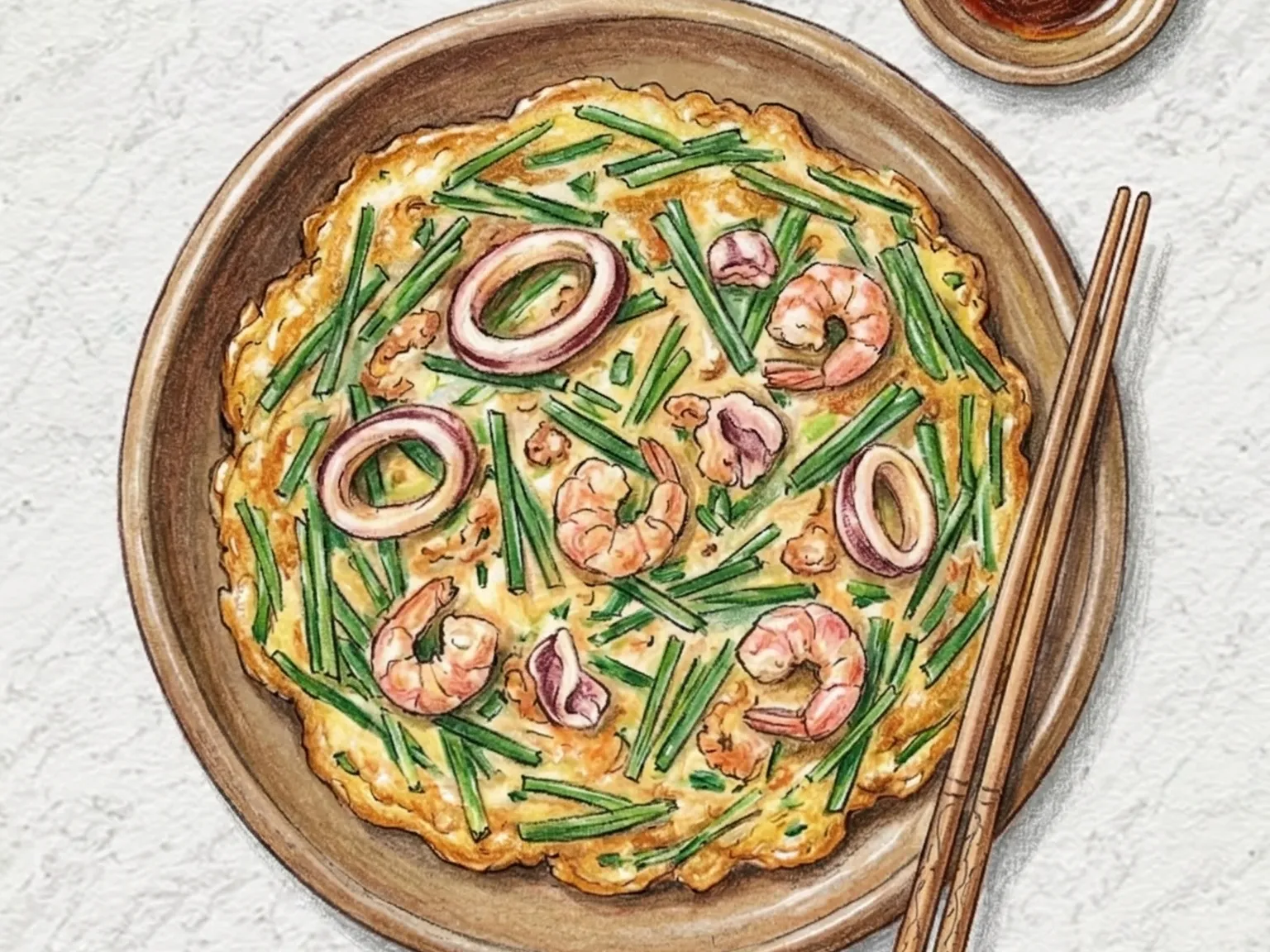
Buchu-haemul-jeon is a Korean chive and seafood pancake that combines garlic chives cut to five-centimeter lengths with sliced squid and peeled shrimp in a batter of Korean pancake mix, water, and salt. The garlic chives release a sharp, aromatic fragrance as they cook, which infuses the pancake from edge to edge. Squid provides a dense chew while shrimp adds a snappier, springier bite, so each piece of the finished pancake has a slightly different texture depending on what's in it. Because both seafood and chives release moisture during cooking, the batter needs to start thicker than for a plain vegetable jeon - otherwise the center will stay wet and fail to brown properly. Spreading it thin across the pan and maintaining steady medium heat crisps the edges into a lacy, oil-fried border while keeping the seafood-laden interior moist. Flipping cleanly in one motion preserves the structure. A dipping sauce of brewed soy sauce, vinegar, and gochugaru brings out the natural sweetness of the shellfish.

Korean Water Parsley Shrimp Pancake
Shared ingredient: korean pancake mix Pancakes

Korean Water Parsley Shrimp Pancake

Minari shrimp jeon is a spring pancake made by folding water parsley and cocktail shrimp into a seasoned pancake-mix batter with egg and pan-frying until golden. The parsley contributes a bright, distinctive herbal fragrance that pairs naturally with the mild, clean sweetness of the shrimp. Finely chopped onion works into the batter for understated sweetness, and a splash of soy sauce adds a layer of savory depth. The parsley stems hold their crunch inside the cooked pancake, providing a satisfying bite throughout.

Manduguk (Korean Dumpling Clear Broth Soup)
Serve together Soups

Manduguk (Korean Dumpling Clear Broth Soup)

Manduguk is a Korean dumpling soup in which hand-folded dumplings stuffed with ground pork, tofu, scallion, and garlic are dropped into a clear, simmering broth, typically anchovy-kelp stock or beef broth, and cooked until they float. As the dumplings cook, their thin wheat-flour wrappers release a subtle starch that gives the broth a barely perceptible body, while the filling leaks savory juices that enrich the liquid gradually. A thin drizzle of beaten egg stirred in near the finish creates silken wisps on the surface of the broth and gives the bowl a more finished appearance. Shredded egg strips and crumbled dried seaweed scattered on top add a pleasant contrast in color and a faint oceanic note to the flavor. Many Korean households serve manduguk on Lunar New Year as an alternative to tteokguk, and some combine the two by adding sliced rice cakes alongside the dumplings. Dumplings can be made in large batches and frozen raw, which means this soup can be pulled together quickly on weeknights without sacrificing any of the flavor that comes from homemade filling. A small dish of soy-vinegar dipping sauce served alongside lets each person adjust the seasoning at the table, and the light acidity of the sauce cuts through the mild broth in a way that makes the contrast between the two worth trying.

Korean Pan-fried Oyster Jeon
Similar recipe Grilled

Korean Pan-fried Oyster Jeon

Gul-jeon is a Korean dish featuring oysters that are pan-fried in a delicate coating of flour and egg. The preparation starts with fresh seasonal oysters that are rinsed carefully in a mild salt water solution to ensure they are clean. Once the rinsing is complete, it is necessary to pat each oyster until it is thoroughly dry. This particular step is crucial because residual water leads to oil splattering during the frying process and prevents the flour from adhering to the surface in a uniform manner. The intended result is a very thin layer of flour, as a thick coating will muffle the natural oceanic brine of the oyster. After the light dusting of flour, the oysters are submerged in beaten egg. This egg batter serves as an insulating layer that conducts heat slowly into the center of the seafood. This specific cooking method keeps the interior of the oyster plump and moist while the exterior reaches a soft golden color. As the oysters cook, they release a distinct mineral aroma associated with fresh seafood. Adding finely chopped garlic chives shortly before the cooking is finished provides a sharp, garlicky contrast that emphasizes the natural mineral profile of the dish. It is important to cook the oysters over a steady medium flame for approximately two minutes on each side. If the heat is set too high, the egg exterior will scorch before the inside is sufficiently warmed through. When flipping the oysters, you should do so carefully and avoid pressing down on them with a spatula. In instances where the oysters are exceptionally large, pressing them into a flatter shape prior to the start of the cooking process will facilitate more even heat distribution throughout the piece.

Serve with this

Korean Stir-Fried Sweet Potato Stems
Side dishes Medium

Korean Stir-Fried Sweet Potato Stems

Goguma julgi - sweet potato stems - are the above-ground vines of the sweet potato plant, a byproduct that Korean cooks transform into a summer namul rather than discarding. The most labor-intensive step is peeling each stem by hand, pinching the outer skin with a fingernail and pulling it away to reveal the tender core beneath. After blanching for two minutes and rinsing in cold water, the stems are stir-fried in perilla oil with garlic and seasoned with soup soy sauce. Perilla powder stirred in at the end thickens the remaining liquid into a nutty glaze. In season during summer, the stems are harvested from sweet potato fields before the tubers themselves are dug up.

🏠 Everyday 🍱 Lunchbox
Prep 30min Cook 10min 4 servings
Korean Beef Fried Rice (Soy-Marinated Ground Beef Stir-fried Rice)
Rice Easy

Korean Beef Fried Rice (Soy-Marinated Ground Beef Stir-fried Rice)

Sogogi bokkeumbap stir-fries soy-marinated ground beef with diced vegetables and day-old rice over high heat for a deeply savory fried rice. The beef goes in first, rendering its fat and leaving behind a flavorful fond that coats the pan. Onion, carrot, and zucchini follow, cooking just until their edges soften and their natural sugars begin to caramelize. Cold rice is added and tossed vigorously to break up clumps, picking up the soy seasoning and meat juices as it fries. A final drizzle of sesame oil right before plating adds a fragrant, nutty finish. The beef infuses the rice with a meaty depth while the vegetables keep the dish from feeling heavy, making it a quick, satisfying meal from everyday pantry ingredients.

🏠 Everyday 🍱 Lunchbox
Prep 10min Cook 10min 2 servings
Korean Pickled Taro Stems
Kimchi Medium

Korean Pickled Taro Stems

Torandae jangajji is a Korean pickled side dish made from taro stems. The outer fibrous skin is peeled away first, and the stems are salted and then blanched. Raw taro stems contain calcium oxalate crystals that cause an unpleasant prickling sensation in the throat, and blanching effectively neutralizes this before the stems are packed into the pickling liquid. The brine is made by bringing soy sauce, vinegar, and sugar to a boil, and it is poured over the stems while still hot so the seasoning penetrates quickly and evenly. Sliced garlic and ginger are simmered in the brine before it is poured, which infuses the liquid with deep aromatic warmth without any of the sharp pungency those ingredients carry raw. After two to three days of refrigerating, each piece develops a layered depth of salty, savory flavor with a clean vinegar brightness underneath. The defining characteristic of this pickle is its distinctive fibrous crunch, which stays satisfying even after the stems have fully absorbed the brine. It works as a rice accompaniment throughout the week and doubles as a drinking snack alongside soju.

🍱 Lunchbox 🏠 Everyday
Prep 30min Cook 15min 4 servings

Similar recipes

Korean Chive Clam Jeon (Garlic Chive and Clam Seafood Pancake)
Pancakes Medium

Korean Chive Clam Jeon (Garlic Chive and Clam Seafood Pancake)

Buchu-bajirak-jeon is a seafood pancake of garlic chives and clam meat, pan-fried in a batter made with a mix of all-purpose pancake flour and rice flour. The rice flour addition increases the chew and gives the finished jeon a slightly more resilient texture than plain flour batters. Clam meat releases a briny, oceanic liquid as it cooks that seeps into the batter and flavors it throughout, while the chives add a sharp, grassy counterpoint. Minced garlic and diagonally sliced cheongyang chili worked into the batter suppress any fishiness and build a layered fragrance. A generous amount of oil in the pan over medium heat produces edges that crisp and brown like the outside of a fritter. Waiting until the bottom is fully set before flipping prevents the pancake from tearing. Served with soy dipping sauce or a seasoned soy mixture, the clean salinity of the clams comes through clearly.

🍺 Bar Snacks 🏠 Everyday
Prep 25min Cook 15min 4 servings
Korean Shrimp Jeon (Egg-Battered Pan-Fried Shrimp Pancake)
Grilled Easy

Korean Shrimp Jeon (Egg-Battered Pan-Fried Shrimp Pancake)

Saeu-jeon is a Korean shrimp pancake where peeled, deveined medium shrimp are butterflied, seasoned with salt and pepper, dredged in flour, dipped in beaten egg, and pan-fried for one to two minutes per side over medium heat. Butterflying flattens each shrimp so heat transfers evenly across the surface, and the flour layer between the shrimp and egg acts as adhesive that keeps the coating from sliding off. Shaking excess flour through a sieve before dipping ensures an even egg coat and uniform thickness across every piece, and medium heat is essential-too high and the egg scorches while the shrimp inside stays undercooked. The shrimp should be removed the moment the flesh turns pink; any additional time on the heat contracts the protein and turns the texture tough.

🍺 Bar Snacks 🎉 Special Occasion
Prep 15min Cook 10min 2 servings
Korean Tofu Jeon (Golden Egg-Coated Pan-Fried Tofu)
Grilled Easy

Korean Tofu Jeon (Golden Egg-Coated Pan-Fried Tofu)

Dubu-jeon is a Korean pan-fried tofu dish and a standard side dish in everyday home cooking as well as a fixture on ancestral rite tables. Firm tofu is sliced to about 1 cm thickness, seasoned with salt and pepper, dusted in a thin layer of flour to help the coating adhere, dipped in beaten egg, then fried on each side in a lightly oiled pan until the exterior turns golden and set. Pressing the tofu before cooking is the most important preparatory step: wrapping the slices in paper towels and placing a heavy object on top for at least fifteen minutes removes enough moisture to prevent the oil from splattering and allows the egg coating to bond tightly to the surface. Three to four uninterrupted minutes per side over medium heat are needed to develop an even golden crust without burning the egg; turning the pieces too often strips the batter away and leaves patches of bare tofu. The fried tofu is mild and nutty on its own, but a dipping sauce of soy sauce mixed with a small amount of vinegar and red pepper flakes adds salt, acidity, and heat that transform the simple base into something more complex. Eaten hot, the egg coating is thin and slightly crisp; as it cools the exterior softens while the interior remains tender.

🍺 Bar Snacks 🏠 Everyday
Prep 12min Cook 8min 2 servings

Tips

Do not overmix; minimal stirring keeps the jeon tender.
Leave some shrimp chunks for better texture.

Nutrition (per serving)

Calories
410
kcal
Protein
24
g
Carbs
29
g
Fat
20
g