Buckwheat Noodle Salad

Buckwheat Noodle Salad

Quick answer

Thoroughly rinsing boiled soba noodles in cold water removes the starchy film that forms on the surface during cooking.

What makes this special

  • Rinsing buckwheat soba under cold water removes excess starch so the tsuyu dressing clings to every strand.
  • Rubbing noodles under cold water removes starch so tsuyu clings to each strand
  • Rice vinegar added to tsuyu gives a clean finish after the umami
Total time
22 min
Level
Easy
Servings
2 servings
Ingredients
8
Calories
350 kcal
Protein
11 g

Key ingredients

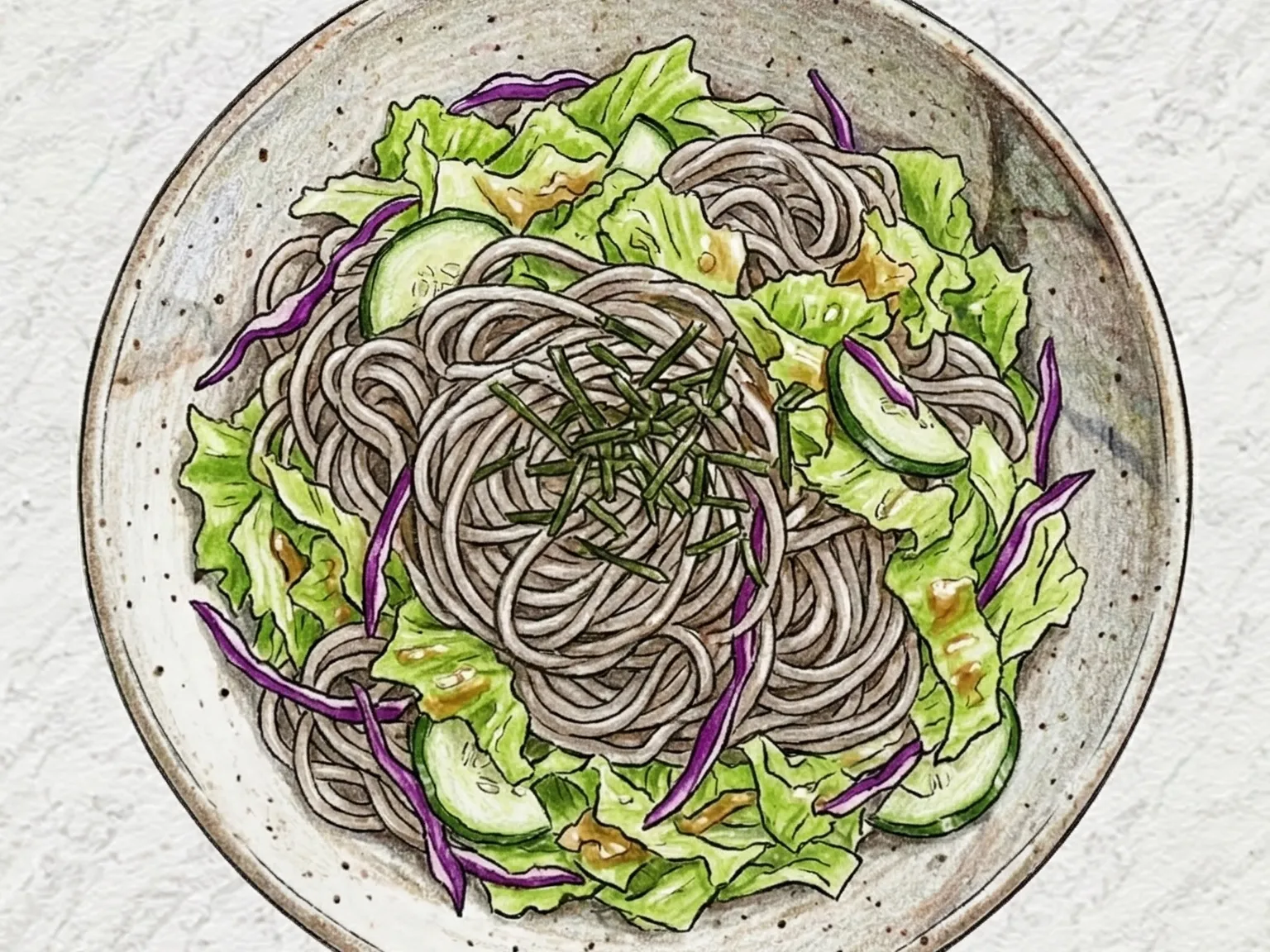
Soba noodlesLeaf lettuceCucumberRed cabbageShredded seaweed

Core cooking flow

  1. 1 Shake excess water from 100 g lettuce, then cut 90 g cucumber and 60 g red c...
  2. 2 Bring a generous pot of water to a full boil over high heat and add 160 g soba noodles.
  3. 3 Drain the noodles in a sieve and rinse them under cold water, rubbing them g...

Thoroughly rinsing boiled soba noodles in cold water removes the starchy film that forms on the surface during cooking. This specific step prevents the noodles from clumping together and ensures the dressing coats each strand evenly. Rinsing multiple times produces a firm and elastic texture, highlighting the characteristic coarse bite of the buckwheat. The sauce relies on a base of tsuyu combined with rice vinegar to provide a sharp acidity that cleanses the palate after every bite. This combination avoids the heavy residue often found in oil-based dressings. Shredded lettuce and sliced cucumber add a crisp, watery element to the bowl, while the addition of red cabbage provides a purple visual contrast against the brown noodles. A final topping of roasted seaweed strips adds a toasted ocean scent to the dish. For a complete meal, adding chicken breast or a boiled egg provides additional protein. The dressing remains stable when prepared in advance and stored in the refrigerator, allowing for quick assembly when the vegetables and noodles are ready.

Prep 15min Cook 7min 2 servings
Recipes by ingredient → cucumber vinegar

Instructions

Read the steps as a cooking flow: prep, heat, seasoning, doneness control, and finish.

6 steps
  1. 1
    Heat

    Shake excess water from 100 g lettuce, then cut 90 g cucumber and 60 g red cabbage into thin 0.3 cm strips.

    Keep the vegetables chilled so they stay crisp while the noodles cook.

  2. 2
    Control

    Bring a generous pot of water to a full boil over high heat and add 160 g soba noodles.

    Stir right away to separate the strands, then boil for 6 to 7 minutes until cooked but still firm.

  3. 3
    Step

    Drain the noodles in a sieve and rinse them under cold water, rubbing them gently by hand at least three times.

    Continue until the surface no longer feels slippery, which removes starch and prevents clumping.

  4. 4
    Step

    Leave the rinsed noodles in the sieve for 2 to 3 minutes so they drain thoroughly.

    Shake them lightly because excess water will dilute the tsuyu dressing and make the flavor taste weak.

  5. 5
    Season

    Mix 2 tbsp tsuyu sauce with 1 tbsp vinegar in a bowl until even.

    Pour it over the noodles and chilled vegetables only right before serving, then toss lightly so the noodles do not turn soggy.

  6. 6
    Finish

    Arrange the salad in bowls so the colors remain visible, then scatter 5 g shredded seaweed and 1 tsp sesame seeds on top.

    Serve immediately while the noodles are cold, springy, and evenly coated.

After the steps

Pick a recipe that fits this dish.

Continue with shared ingredients, meal pairings, or a similar method.

Recipes That Go Well With This

More Salads →

Based on shared ingredients and meal pairing

Soba Sesame Salad (Chilled Buckwheat Noodle Sesame Dressing)
Shared ingredient: soba noodles Salads

Soba Sesame Salad (Chilled Buckwheat Noodle Sesame Dressing)

Soba sesame salad is a cold noodle dish in which cooked buckwheat noodles are rinsed repeatedly in cold water to remove surface starch, then tossed with julienned cucumber, carrot, and red cabbage in a dressing of soy sauce, rice vinegar, sesame oil, and sesame seeds. The earthy, nutty character of buckwheat pairs naturally with toasted sesame, and rice vinegar's light acidity keeps the dish from feeling heavy despite the sesame oil. Thorough rinsing in cold water is the technical cornerstone of this recipe: residual starch left on the noodles dilutes the dressing on contact and causes the strands to clump into an uneven mass, disrupting the balance of flavors in every bite. Cucumber and red cabbage introduce a fresh crunch that contrasts the springy noodle texture, and julienned carrot threads a mild sweetness through the bowl that offsets the saltiness and acidity of the dressing. Cutting the vegetables into thin, uniform strips allows them to distribute evenly among the noodles so that each forkful carries a balanced mix. The dressing should be mixed in advance but added to the noodles only just before serving, since soaking too long causes the noodles to absorb the liquid and soften. A light and satisfying single-bowl meal, particularly well suited to warmer months.

Sunomono Cucumber Salad (Japanese Sweet Vinegar Cucumber Slices)
Shared ingredient: cucumber Salads

Sunomono Cucumber Salad (Japanese Sweet Vinegar Cucumber Slices)

Sunomono cucumber salad slices cucumber paper-thin, salts the slices for five minutes to draw out excess moisture, then squeezes them firmly dry before tossing with rehydrated wakame in a dressing of rice vinegar, sugar, and a touch of soy sauce. Squeezing the cucumber after salting is what keeps the vinegar dressing sharp and concentrated through the whole dish rather than gradually diluting into a watery pool. The crisp, snappy texture of the cucumber and the slippery, silky texture of the wakame sit beside each other in every bite, and toasted sesame seeds scattered over the top add a nutty fragrance that rounds out the clean, acidic finish. Blanching the wakame briefly after soaking removes any residual sea smell and keeps its color vivid green. Cutting the cucumber as thinly as possible, in rounds or half-moons, helps the dressing penetrate quickly and gives the salad an even, delicate texture throughout. The preparation requires no heat at all and takes under fifteen minutes, making it a practical and refreshing side dish for summer meals or as a palate-cleanser alongside grilled meats.

Mitsuba Oyakodon (Japanese Chicken Egg Rice Bowl with Mitsuba Herb)
Serve together Asian

Mitsuba Oyakodon (Japanese Chicken Egg Rice Bowl with Mitsuba Herb)

This Japanese chicken and egg rice bowl features chicken thighs and sliced onions simmered in dashi stock, soy sauce, and mirin. The chicken is cut into bite-sized pieces and cooked in the broth until tender. Beaten eggs are added in two batches: the first half is allowed to set slightly before the remainder is poured, creating a mixture of firm and silky, runny textures. To keep the egg texture soft, it is important not to overbeat the eggs before cooking. Fresh mitsuba, a Japanese wild parsley, is cut into four-centimeter pieces and placed on top during the last twenty seconds of cooking with the lid closed. This brief steaming preserves its delicate celery-like fragrance and green color. Letting the dish rest off the heat for thirty seconds before serving over warm rice ensures a smooth custard-like texture that coats each grain.

Mushroom Memil Soba (Warm Buckwheat Noodles in Mushroom Dashi)
Similar recipe Noodles

Mushroom Memil Soba (Warm Buckwheat Noodles in Mushroom Dashi)

Beoseot memil soba is a warm buckwheat noodle soup built on dashi stock seasoned with soy sauce and mirin, with shiitake and oyster mushrooms simmered for five minutes so their concentrated woodsy depth moves fully into the broth. Dried shiitake contributes far more umami than fresh, and oyster mushrooms torn along the grain absorb more liquid than sliced. The soba noodles are cooked separately and rinsed in cold water to strip off surface starch, which keeps the broth clear and prevents the noodles from turning soft. A small curl of yuzu zest placed on top just before serving sends a sharp citrus note across the broth's earthy weight, lifting the finish without overpowering it. Green onion scattered on top adds a layer of fresh aroma and color.

Serve with this

Classic Wedge Salad
Western Easy

Classic Wedge Salad

Classic Wedge Salad features crisp iceberg lettuce wedges topped with a rich blue cheese dressing, crispy bacon, and cherry tomatoes. Preparing this dish requires cutting the lettuce into four wedges while leaving the core intact to hold the leaves together. The dressing is made by mixing half of the blue cheese with sour cream, mayonnaise, and lemon juice, leaving a few small cheese chunks, while the rest is kept for topping. Washing the lettuce and shaking out any water between the layers is essential to prevent the dressing from thinning. The bacon is cooked until crisp and drained well on paper towels. The salad is assembled by placing the cold wedges on a plate, pouring the dressing over, and topping with the bacon, halved tomatoes, remaining blue cheese, and sliced chives.

🥗 Light & Healthy ⚡ Quick
Prep 15min Cook 5min 2 servings
Kimchi Tofu Alfredo Farfalle (Creamy Kimchi Bow-Tie Pasta)
Pasta Easy

Kimchi Tofu Alfredo Farfalle (Creamy Kimchi Bow-Tie Pasta)

Kimchi tofu Alfredo farfalle is a fusion pasta that counters the richness of a cream-and-Parmesan Alfredo sauce with the lactic acidity of well-fermented kimchi. Garlic bloomed in butter forms the aromatic base, then cream, milk, and Parmigiano are combined into the classic Alfredo sauce, after which chopped kimchi is folded in to introduce fermented tang and a layer of umami that a standard Alfredo lacks. Firm tofu cut into cubes and pan-fried until each side is golden provides a mild, neutral protein element with direct textural contrast against the smooth sauce. Farfalle's pinched center holds pockets of sauce against each piece of pasta, delivering a consistent hit of creaminess in every bite, and freshly ground black pepper draws a sharp line through the richness at the finish. The entire dish moves from pan to plate in about 15 minutes.

🏠 Everyday ⚡ Quick
Prep 10min Cook 15min 2 servings
Korean Grilled Aged Kimchi
Grilled Easy

Korean Grilled Aged Kimchi

Well-aged napa kimchi is shaken free of excess marinade and placed directly onto a hot skillet or grill over medium-high heat. Both sides cook until the edges take on a light char. The longer the kimchi has fermented, the more pronounced its acidity becomes, and that sourness undergoes a caramelization reaction when it hits direct heat, converting into a mellow roasted sweetness that is distinct from fresh kimchi. Sprinkling a small amount of sugar onto the surface before or during grilling accelerates this reaction and deepens the color. Once both sides are grilled, sesame oil is brushed on and sesame seeds are scattered over the top, adding a nutty aromatic layer that complements the smoky, slightly bitter char. Only four ingredients are involved, but the quality of the kimchi matters significantly. Properly fermented kimchi with developed acidity produces far more complex flavor than fresh kimchi would. The contrast between the crisp, slightly caramelized exterior and the moist, tender interior is at its best immediately after cooking.

🍺 Bar Snacks ⚡ Quick
Prep 5min Cook 10min 2 servings

Similar recipes

Wafu Daikon Salad (Shredded Radish with Japanese Soy Dressing)
Salads Easy

Wafu Daikon Salad (Shredded Radish with Japanese Soy Dressing)

Wafu daikon salad shreds daikon radish into very fine julienne strips and dresses them with a Japanese wafu dressing made from soy sauce, rice vinegar, and sesame oil, finished with bonito flakes and torn nori. Soaking the shredded daikon in cold water for five minutes draws out excess starch and maximizes its crisp, snappy texture - draining and drying thoroughly afterward prevents the dressing from becoming diluted. The dressing layers soy salt over the gentle acidity of rice vinegar and the nuttiness of sesame oil, giving depth to the otherwise neutral radish. Bonito flakes placed on top wave gently in the residual heat and release a smoky umami that permeates the salad. Shredded nori adds a briny crunch that creates textural contrast throughout the bowl.

🥗 Light & Healthy ⚡ Quick
Prep 15min 2 servings
Grapefruit Shiso Shrimp Salad
Salads Medium

Grapefruit Shiso Shrimp Salad

Grapefruit shiso shrimp salad brings together ice-chilled blanched shrimp, membrane-free grapefruit segments, shredded shiso leaves, and thinly sliced cucumber and radish, all tossed in a yuja marmalade dressing. Blanching the shrimp for exactly two minutes and transferring them immediately to ice water locks in a firm, springy texture by contracting the protein rapidly while preventing the rubbery toughness that comes from overcooking. Removing all of the white pith from the grapefruit eliminates bitterness and leaves only the clean, tart juice of the flesh. Cutting the segments free from the membrane also makes the pieces easier to eat in a single bite. The dressing is built from yuja marmalade, rice vinegar, olive oil, and pepper, and the yuzu's floral acidity layers on top of the grapefruit to create a pronounced citrus profile that is bright but not harsh. The mint-like herbal quality of shiso leaves neutralizes any trace of fishiness from the shrimp and ties the Japanese-influenced flavor framework together. The crisp bite of cucumber and radish contrasts with the softness of the shrimp and grapefruit segments. Serving the salad well chilled is necessary to keep every texture and fragrance sharp and distinct rather than muted.

🥗 Light & Healthy 🎉 Special Occasion
Prep 20min Cook 5min 2 servings
Cold Buckwheat Noodles
Noodles Easy

Cold Buckwheat Noodles

Mori soba is a Japanese cold noodle preparation where buckwheat noodles are boiled, rinsed under cold running water until firm, and served on a bamboo draining mat alongside a chilled tsuyu dipping broth. The nutty, slightly grainy character of buckwheat is the foundation of the dish, with each mouthful releasing an earthy, grain-forward fragrance. Tsuyu, concentrated from katsuobushi, kombu, soy sauce, and mirin and then chilled, is rich in umami and strong enough that a brief dip coats the noodles completely without drowning them. Wasabi and thin-sliced scallion stirred directly into the broth add sharp heat and a clean green note, while a pinch of shredded nori over the noodles introduces a subtle oceanic undertone. After boiling, the noodles must be cooled thoroughly in ice water to lock in their elasticity and prevent them from turning soft before serving.

🌙 Late Night ⚡ Quick
Prep 10min Cook 10min 2 servings

Tips

Rinse noodles thoroughly for a cleaner, chewier texture.
Add dressing right before serving to prevent soggy noodles.

Nutrition (per serving)

Calories
350
kcal
Protein
11
g
Carbs
58
g
Fat
8
g