Pork Rice Bowl (Sweet-Salty Glazed Pork over Rice)
Quick answer
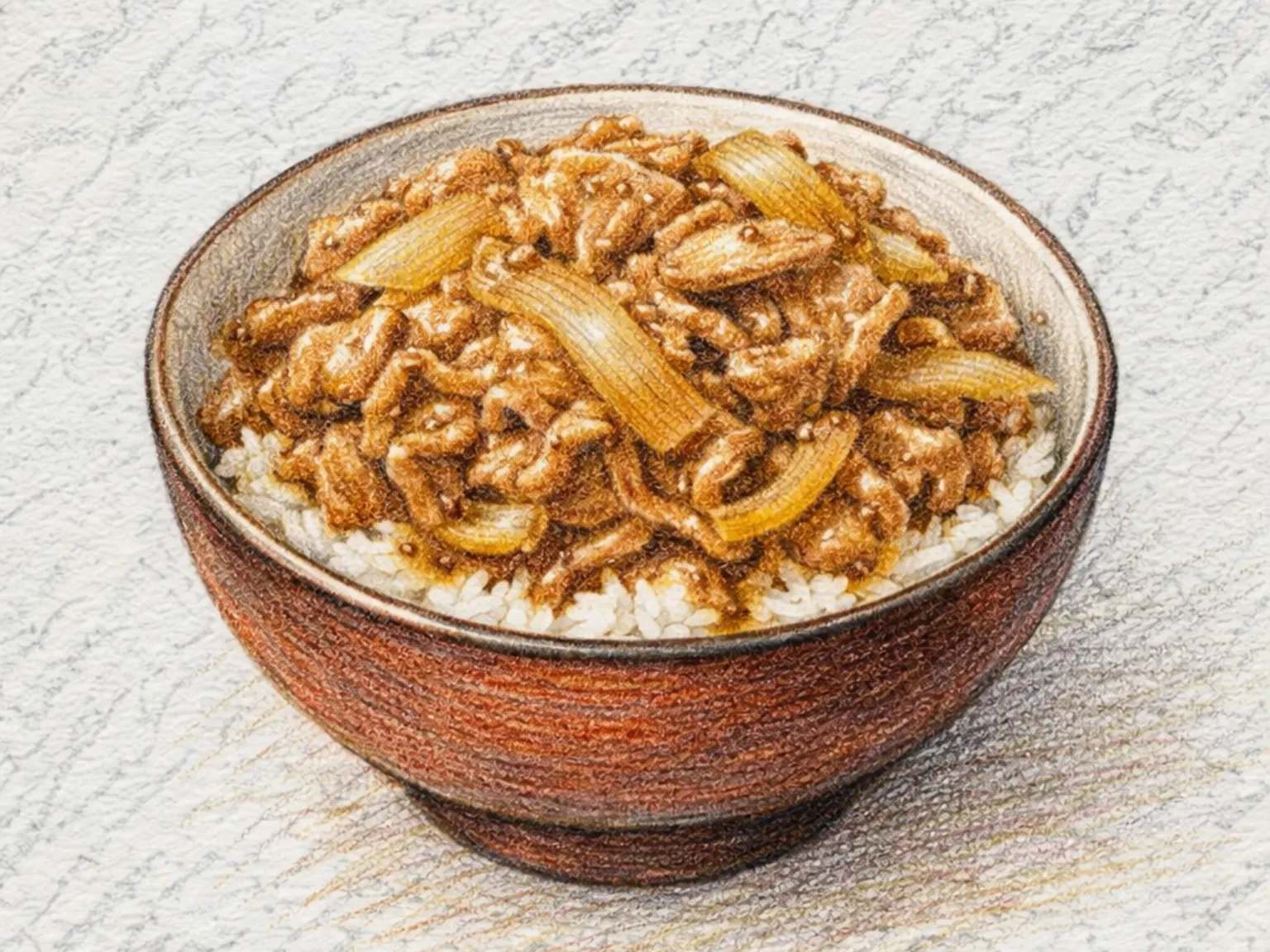
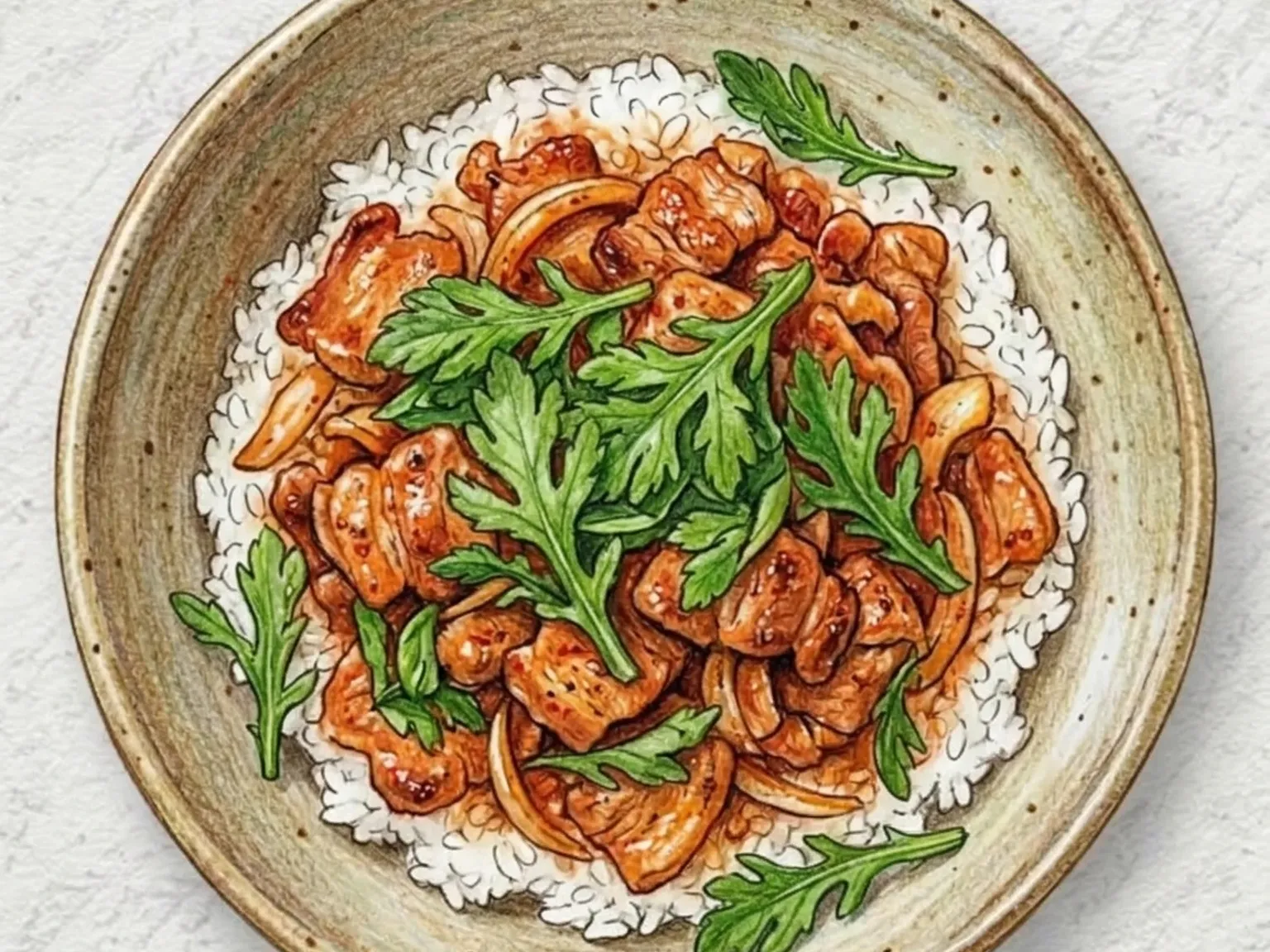
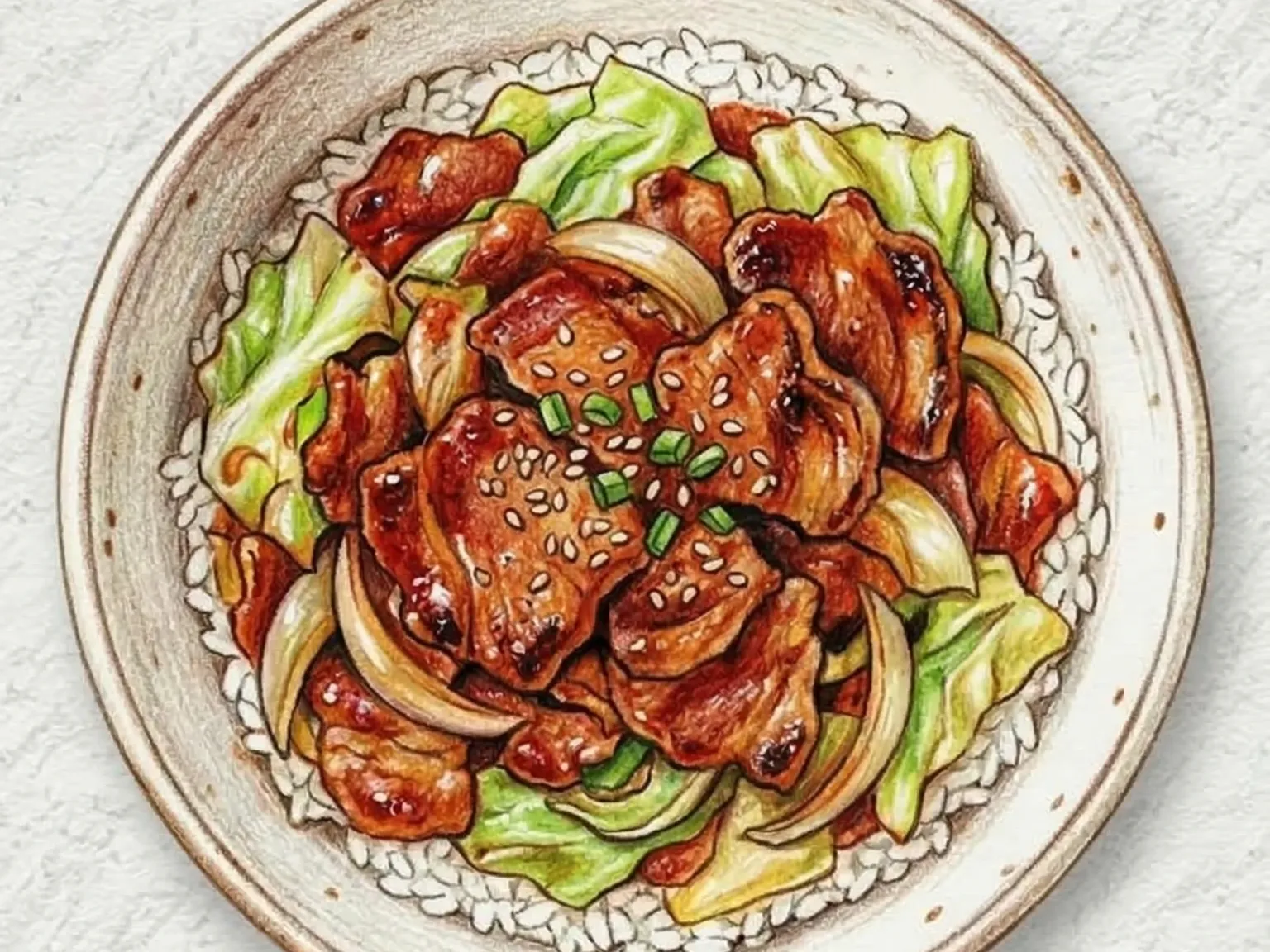
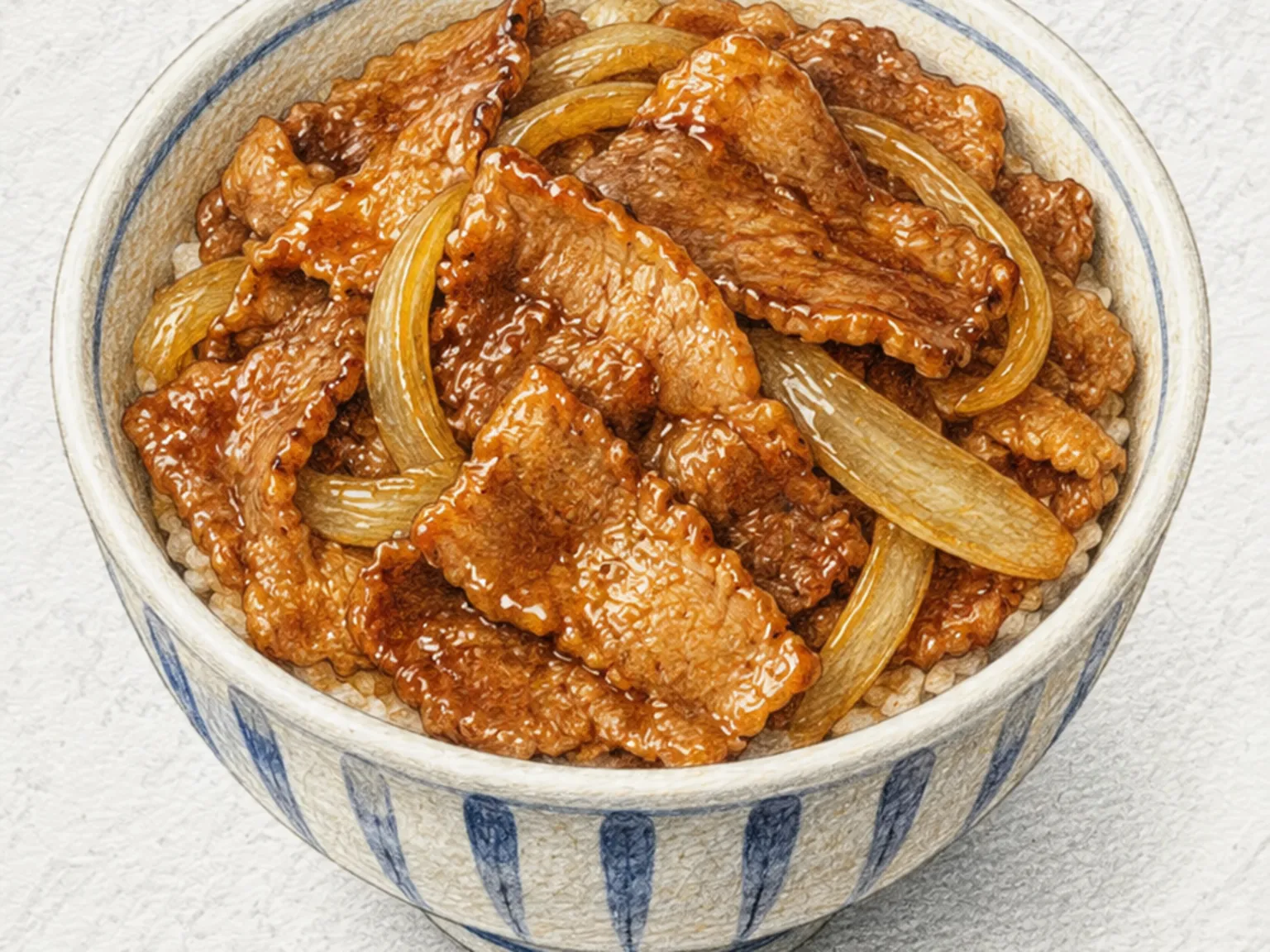
Butadon is a Japanese pork rice bowl that originated in Obihiro, Hokkaido, where thin slices of pork belly or shoulder are simmered with onion in a glaze of soy sauce, mi...
What makes this special
- This Obihiro-style Butadon features thin pork slices simmered in a sweet and salty soy glaze.
- Soy, mirin, and sugar sauce traces the original Obihiro-style butadon profile
- Onion fully dissolves into the sauce contributing natural sweetness without texture
Key ingredients
Core cooking flow
- 1 Thinly slice 120g onion 0.5cm thick with the grain and finely mince or grate 1 tsp ginger.
- 2 Bring 120ml water, 2 tbsp soy sauce, 1 tbsp mirin, 1 tbsp sugar, and ginger...
- 3 Add the onion and simmer over medium heat for 2 minutes, extracting its sweetness into the sauce.
Butadon is a Japanese pork rice bowl that originated in Obihiro, Hokkaido, where thin slices of pork belly or shoulder are simmered with onion in a glaze of soy sauce, mirin, and sugar, then laid over a bowl of steamed rice. The soy salt and sugar sweetness balance precisely as the meat absorbs the sauce, while the onion dissolves gradually into the cooking liquid, contributing a natural sweetness that deepens the glaze. Where the pork meets the pan, the edges caramelize into a slightly charred coating that adds a roasted dimension to the otherwise clean, saucy topping. Hokkaido pork, with its firm texture and higher fat content, is traditional, though any well-marbled cut works. The preparation is genuinely simple - one pan, one sauce, no elaborate knife work - which is exactly why it became a staple weeknight meal across Japan.
Instructions
Read the steps as a cooking flow: prep, heat, seasoning, doneness control, and finish.
- 1Prep
Thinly slice 120g onion 0.5cm thick with the grain and finely mince or grate 1 tsp ginger.
Fresh ginger is key for taming the pork's gamey notes.
- 2Control
Bring 120ml water, 2 tbsp soy sauce, 1 tbsp mirin, 1 tbsp sugar, and ginger to a boil in a pot over medium heat.
Boiling the sauce first ensures the sugar fully dissolves for an even glaze when the meat is added.
- 3Control
Add the onion and simmer over medium heat for 2 minutes, extracting its sweetness into the sauce.
As the onion turns translucent, it enriches the broth with natural sugars.
- 4Control
Add 280g pork shoulder slices one by one without overlapping and cook over medium heat for 5 minutes.
As the pork absorbs the sauce and darkens, turn each piece once to cook both sides evenly.
- 5Control
Turn off the heat when the sauce reduces to a glossy glaze coating the pork.
Pull back from the heat before the sauce reduces to zero - about 2-3 tbsp should remain in the pan or it will turn bitter.
- 6Season
Spoon 2 cups of rice into wide donburi bowls, pile pork and onion on top, and spoon over the remaining pan sauce.
Eat immediately so the sweet-salty sauce soaks into every grain.
After the steps
Pick a recipe that fits this dish.
Continue with shared ingredients, meal pairings, or a similar method.
Recipes That Go Well With This
More Rice →Based on shared ingredients and meal pairing
Chicken and Egg Rice Bowl
Oyakodon simmers bite-size chicken thigh and sliced onion in a soy-mirin broth, then binds everything with a soft-set egg before sliding it over steamed rice. The name means 'parent and child,' referring to the chicken and egg sharing the same bowl. Onion goes into the broth first to release its natural sweetness, followed by the chicken, which cooks just until tender. Beaten eggs are poured in a circular motion and the lid goes on briefly, leaving the egg custardy rather than fully set. That half-cooked egg absorbs the savory-sweet broth and coats each grain of rice. Despite using only a handful of ingredients, the layered umami from soy sauce and mirin gives the dish a satisfying depth.
Chicken Soboro Rice Bowl (Ground Chicken and Scrambled Egg over Rice)
Soboro-don is a Japanese-style rice bowl that tops steamed rice with two side-by-side mounds: savory minced chicken and sweet scrambled egg. The chicken is seasoned with soy sauce, sugar, mirin, and ginger juice, then stirred constantly with chopsticks over medium heat until it breaks into fine, crumbly grains that are individually coated in glaze. The egg is treated the same way - beaten, poured into a pan, and stirred into soft, fluffy curds. Arranged half-and-half on the rice, the brown chicken and bright yellow egg create a visual contrast that makes the bowl inviting. Both toppings share a gentle sweetness balanced by soy umami, and their fine, loose texture means every bite blends effortlessly with the rice beneath.
Korean Braised Potatoes (Soy-Glazed Braised Potato Banchan)
Gamja-jorim - soy-braised potatoes - is among the top five most frequently made banchan in Korean households, alongside kimchi, kongnamul, and gyeran-mari. Small potatoes are parboiled whole until just fork-tender, then transferred to a mixture of soy sauce, sugar, rice syrup, garlic, and water. The braising happens over medium-low heat for fifteen minutes with the lid off, allowing the sauce to reduce gradually into a thick, syrupy glaze. Constant gentle stirring prevents the soft potatoes from sticking or breaking apart. As the liquid evaporates, each potato develops a dark amber, lacquered surface while the interior remains starchy and yielding. The taste is straightforwardly sweet-salty with a garlic undertone - comfort food in its most elemental form. Korean mothers often make a large batch on weekends, refrigerating it to serve cold throughout the week. The dish improves overnight as the glaze continues to penetrate the potato's interior.
Steak Rice Bowl (Seared Beef with Soy-Garlic Glaze over Rice)
A thick-cut beef steak is seared at high heat until a deep brown crust forms, then sliced and fanned over a bowl of hot rice. A glaze of soy sauce, garlic, and mirin is spooned over the slices, coating them in a glossy, caramelized finish. As the warm rice absorbs the pan juices, each spoonful carries the full weight of the beef's seared flavor. A runny fried egg or a small dab of wasabi on the side balances the richness with creaminess or heat.
Serve with this
Korean Bok Choy Kimchi (Gochugaru Fermented Quick)
Cheonggyeongchae kimchi is a bok choy kimchi prepared by halving the heads lengthwise, salting them for twenty minutes, and coating each leaf layer with a paste of gochugaru, salted shrimp, anchovy fish sauce, and sweet rice paste. Keeping the salting time short preserves the crisp snap of the stems, while the leaves soften just enough to hold the seasoning. Julienned scallions and carrot add color and textural variety, and adjusting the fish sauce quantity based on the salted shrimp salinity keeps the overall salt level balanced. After four hours of room-temperature fermentation followed by refrigeration, this kimchi is ready within a day and offers a lighter, crunchier character than traditional napa cabbage kimchi.
Refreshing Spicy Mulhoe Broth
A golden ratio recipe for a refreshing, spicy, and sweet-and-sour Mulhoe broth.
Cheonggukjang Jjigae (Korean Fermented Soybean Stew)
Cheonggukjang is a stew made from fast-fermented soybean paste. The short fermentation period produces a pungent, assertive aroma that mellows into a deeply nutty, savory flavor once the pot comes to a boil. Kimchi, zucchini, tofu, and onion are added to the bubbling liquid, each absorbing the thick, earthy broth as it simmers. Traditionally served piping hot in a stone pot, the stew is poured directly over freshly steamed rice -- a combination that represents one of the most enduring forms of Korean home cooking.
Similar recipes
Yakitori Rice Bowl (Soy-Mirin Glazed Grilled Chicken over Rice)
Direct heat and a repetitive glazing process define the preparation of this chicken skewer bowl. Small pieces of chicken thigh are secured onto skewers and grilled over a flame while a mixture of soy sauce, mirin, and sugar is applied in thin, sequential layers. This technique builds a lacquered surface through caramelization, which directs the sweet and salty flavors to the exterior of the meat. Applying the sauce too heavily in a single pass often leads to burning and an uneven crust. Because chicken thigh contains natural fats, the meat remains moist and tender even under high temperatures. When the cooked pieces are removed from the skewers and placed onto the rice, the excess glaze permeates the grains to provide sufficient seasoning. Sprinkling shichimi togarashi or sansho powder introduces a sharp or citrus-like contrast to the sweetness of the chicken. While chicken breast serves as a leaner alternative, it requires a longer marinating period and a shorter time on the grill to prevent the meat from drying out. The tare sauce can be prepared in advance and stored in the refrigerator for several weeks. Adding a halved soft-boiled egg or sliced scallions provides different textures and prevents the meal from feeling repetitive.
Japanese Ginger Soy Braised Chicken
Toriniku shigureni is a Japanese-style simmered dish of ground chicken cooked down with julienned ginger, soy sauce, mirin, and sugar until most of the liquid evaporates. The chicken is browned first over medium heat, then ginger is added for its sharp bite before the braising liquid goes in. As the sauce reduces over six minutes, it concentrates into a sweet-salty glaze that clings to the meat. The ginger tames any gamey notes while adding warmth, making this a versatile topping for rice bowls or a compact side dish for packed lunches.
Yaki Onigiri (Japanese Soy-Glazed Grilled Rice Balls)
Yaki onigiri are Japanese grilled rice balls prepared using freshly cooked rice that has been lightly seasoned with salt. The rice grains are shaped into triangles or rounds while they remain warm and pliable, as the grains lose their natural binding ability once they cool and lose their moisture. During the shaping process, pressure must be applied with even distribution across the rice to prevent the grains from becoming a dense and compacted mass. This careful handling ensures that the interior of the rice ball maintains a soft texture with each individual grain remaining distinct after the grilling process is complete. The cooking method involves pan-grilling the rice balls using a small amount of sesame oil over a medium-low flame. This specific heat level is necessary to allow the starch on the surface of the rice to caramelize at a slow pace, resulting in a thin and crackling crust while the center of the onigiri remains moist. It is important to let the rice balls sit undisturbed in the pan for three to four minutes on each side before they are turned. This waiting period allows the outer layer to set properly and prevents the rice from tearing or sticking to the pan when it is time to flip them. A glaze made from a combination of soy sauce, mirin, and sugar is applied to the surface in several thin coats. Brushing the glaze on in multiple light passes, rather than applying a large amount of the liquid at the start, prevents the sugar content from burning or charring. This technique creates a deep savory flavor and a lacquered sheen on the exterior of the rice. The finished onigiri have a savory and slightly sweet profile, with edges that become chewy where the glaze has concentrated during the cooking process. A narrow strip of nori seaweed is often wrapped around the base of the rice ball to provide a salty element that balances the glazed exterior. When served with miso soup and pickled radish, these grilled rice balls function as a light meal.