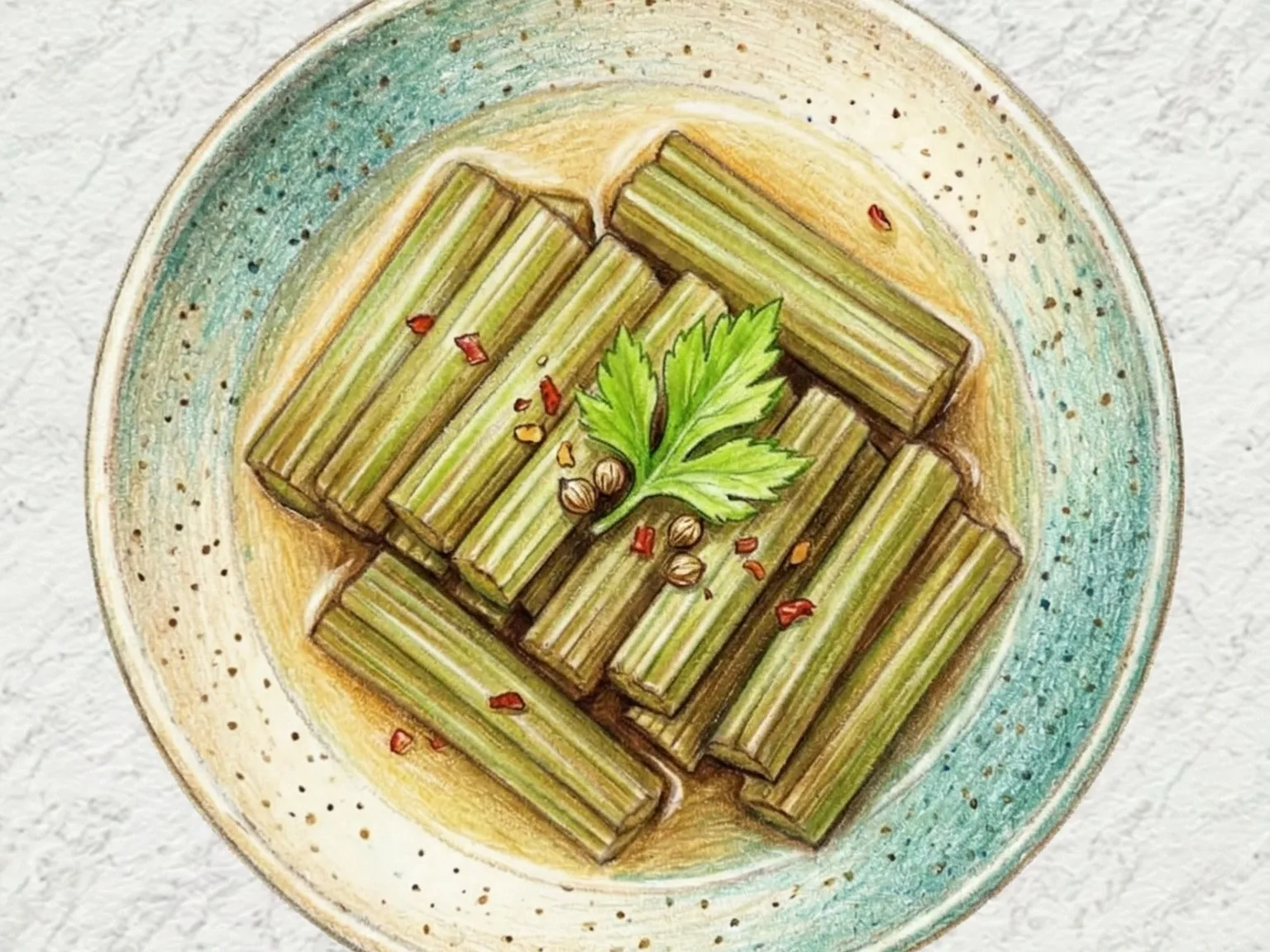
Korean Celery Jangajji (Blanched Soy Lemon Pickle)
Blanch the celery for only 30 seconds and rinse it in cold water right away so it stays crisp, then drain it until the surface moisture is mostly gone. Heat 150 ml soy sauce, 200 ml water, 120 ml vinegar, and 60 g sugar, turn off the heat as soon as it boils, cool it for 5 minutes, and pour it warm over celery packed with thin skin-on lemon slices and 4 whole garlic cloves. Keep it sealed in the refrigerator and serve from the second day.
Quick answer
- Active time
- 23 min
- Waiting
- See the steps
- Level
- Easy
- Servings
- 4 servings
- Ingredients
- 7
About this dish
Celery's raw sharpness puts some people off, but a soy pickle softens it into a cool, herbal crunch.
Read more
Pulling the tough strings off the stalks and blanching for thirty seconds takes away the grassy edge while keeping the scent. Skin-on lemon slices and whole garlic cloves sit between the pieces, adding citrus and a mild bite. It is ready cold from the second day and tastes fuller after four to five days.
Ingredients
Instructions
- 1
Trim 300 grams of celery, catch the tough strings at the stalk ends with a knife tip, and pull them away cleanly.
Cut into five-centimeter pieces, halving thick stalks so the pickle seasons evenly.
- 2
Bring a pot of water to a rolling boil, add the celery, and blanch for only thirty seconds.
When the color brightens, rinse immediately in cold water so the pieces stay crisp instead of turning limp.
- 3
Spread the cooled celery in a colander and drain until the surface moisture is mostly gone.
Shake off trapped water before packing, because excess water will dilute the soy, vinegar, and sugar brine.
- 4
Combine 150 milliliters soy sauce, 200 milliliters water, 120 milliliters vinegar, and 60 grams sugar in a pot.
Stir over medium heat until the sugar dissolves, then turn off the heat as soon as it boils.
- 5
Pack the drained celery snugly into a sterilized airtight container.
Slice half a lemon thinly with the peel on, then tuck the slices and four whole garlic cloves between the celery pieces.
- 6
Cool the brine for five minutes, then pour it in while still warm and press the celery below the liquid.
Seal tightly, refrigerate, and serve chilled from the second day, with deeper flavor after four to five days.
Official cooking and safety guidance
Public-agency cooking and food safety guidance that applies to this recipe.
Official cooking and safety guidance
-
Produce preparation
Wash produce under running water before cutting or peeling it. Do not use soap or household detergent.
Source: U.S. Food and Drug Administration. Selecting and Serving Produce Safely
Sources checked 2026-08-03
Use-up ingredient planner
Turn these ingredients into two more meals
The overlap excludes basic seasonings. Open the next recipe and your selected dishes will stay with you.
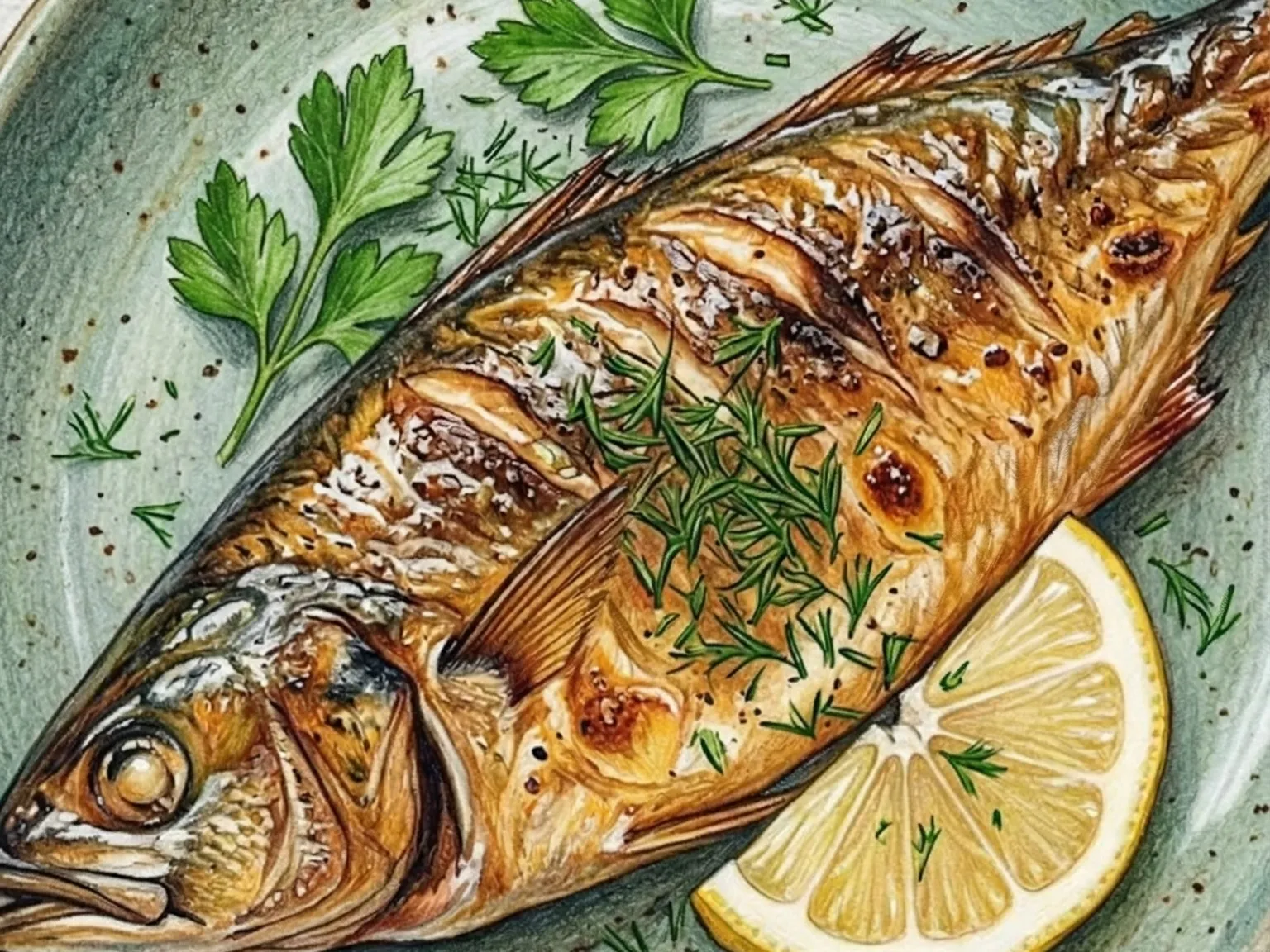
Korean Grilled Atka Mackerel
lemon
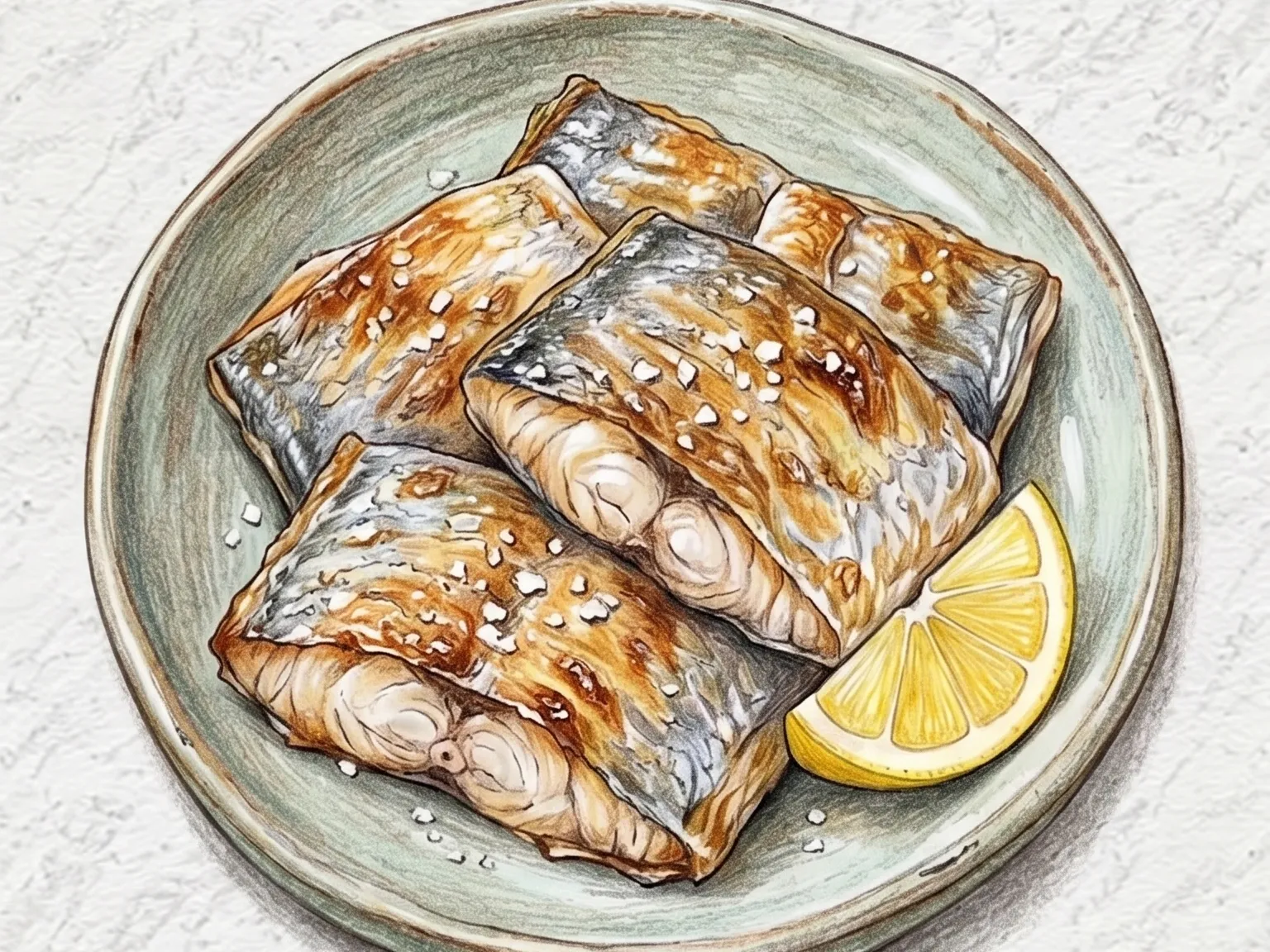
Korean Grilled Beltfish (Galchi-gui)
lemon
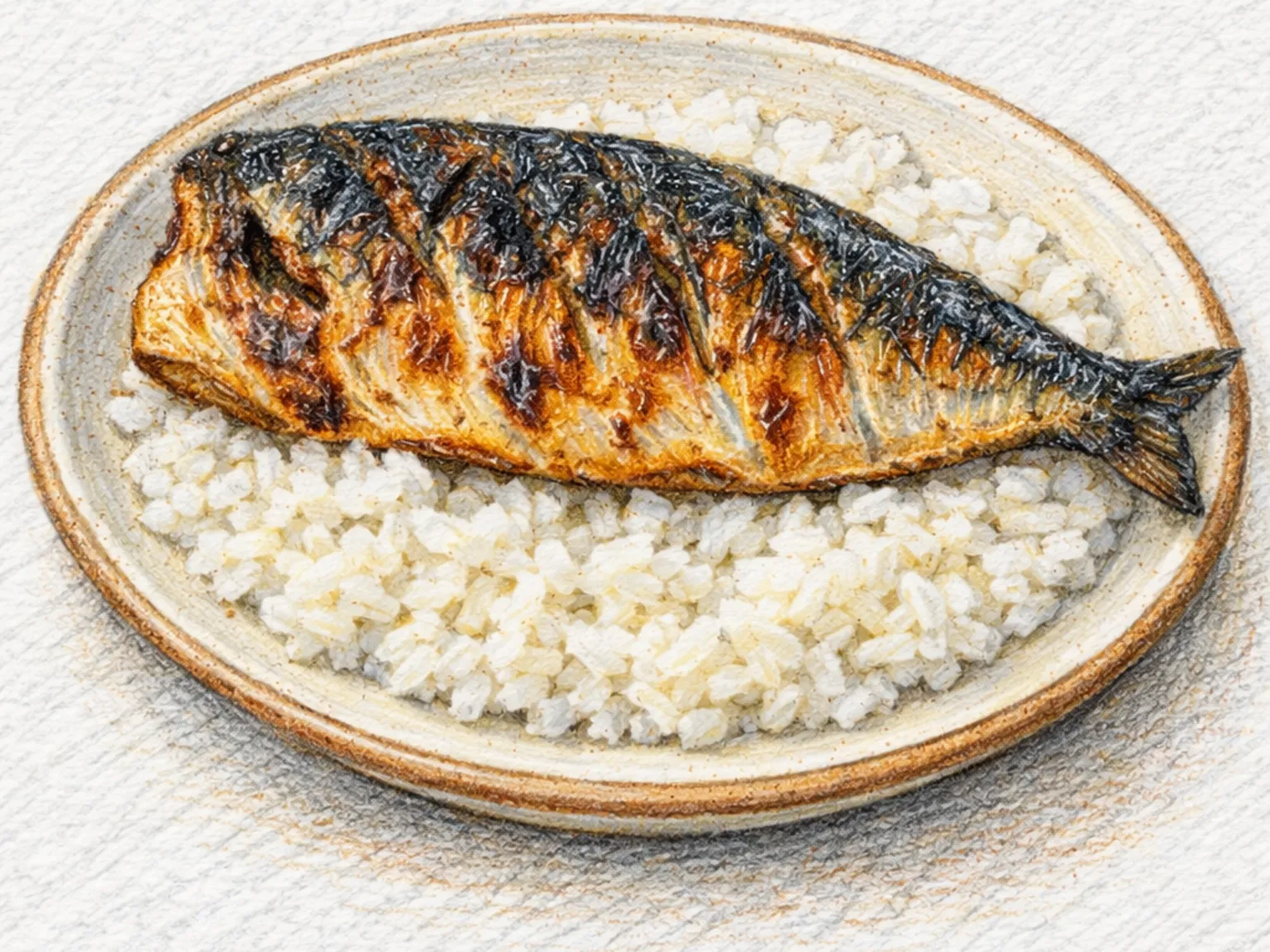
Korean Salted Mackerel Grill
lemon