Korean Tuna Gimbap (Chamchi Gimbap)
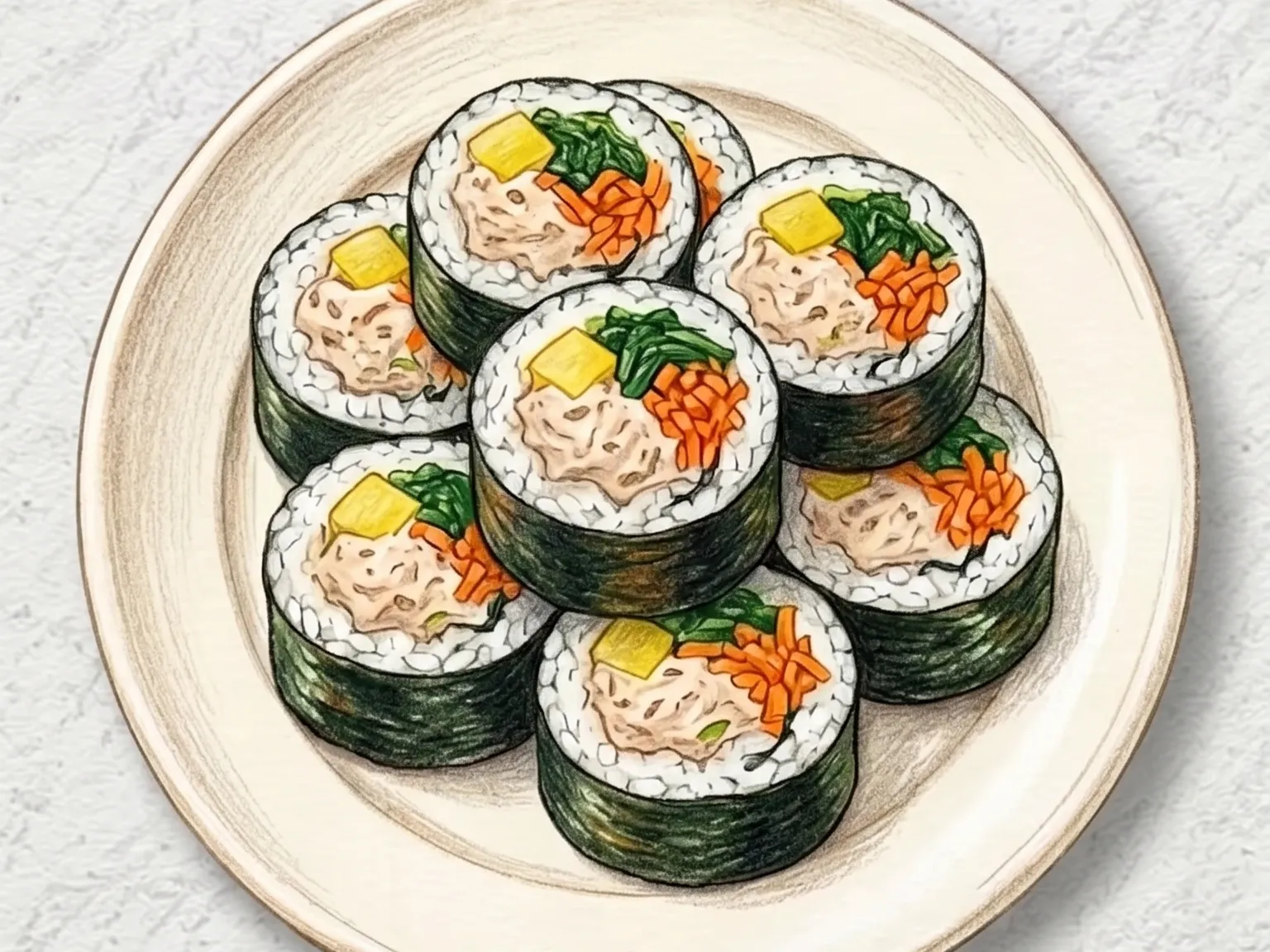
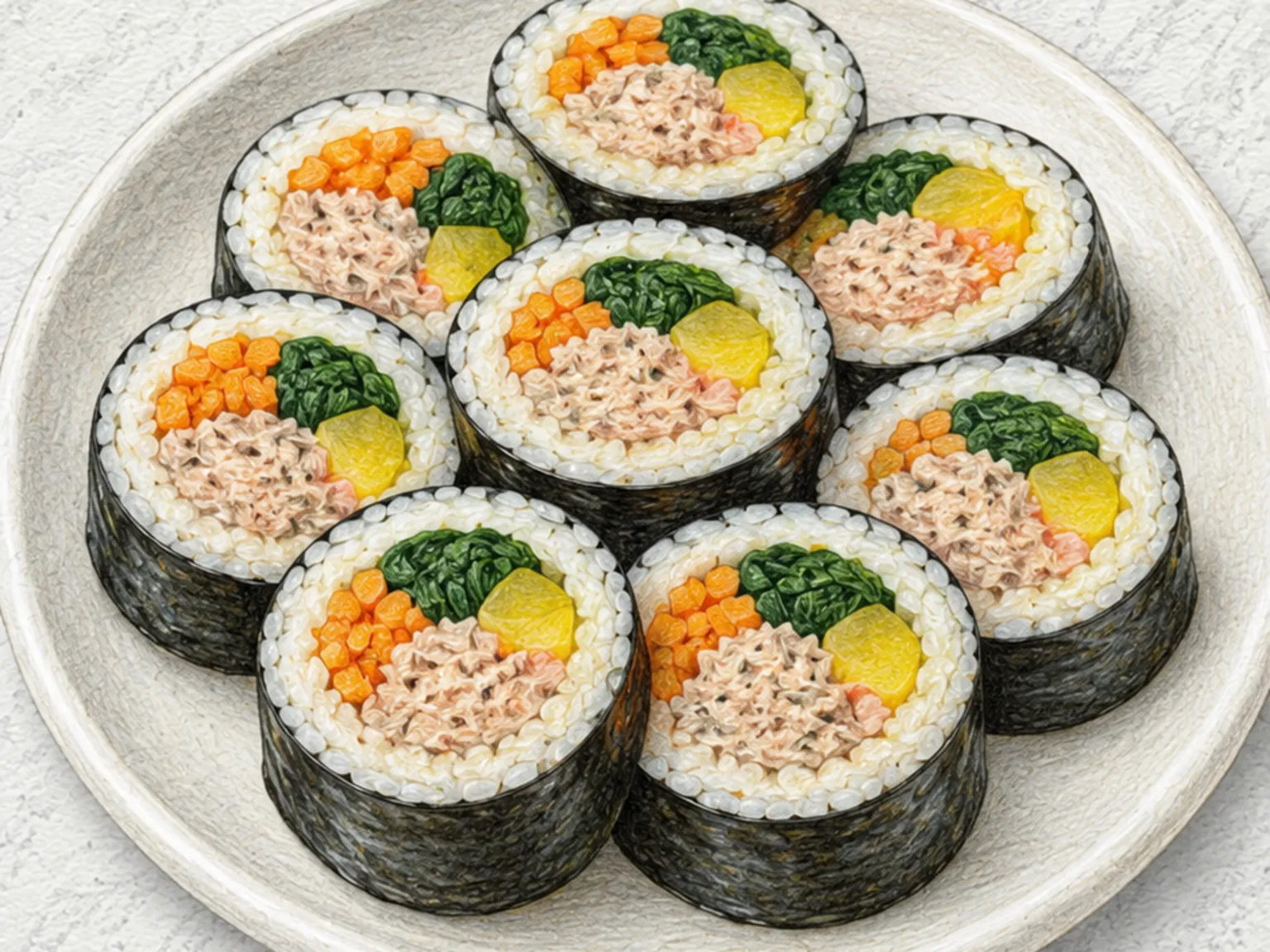
Chamchi gimbap is a Korean seaweed rice roll filled with canned tuna mixed with mayonnaise, along with carrot, spinach, and pickled radish, all wrapped tightly in seasoned rice and a sheet of roasted gim. The creamy tuna filling contrasts with the crisp vegetables, while the tangy pickled radish adds a bright note that keeps each bite interesting. It has been a beloved lunchbox and picnic staple in Korea for generations, easy to eat sliced into rounds and portable enough to take anywhere. The sesame oil brushed on the outside gives the roll a subtle sheen and a toasty aroma, and each cross-section reveals a colorful spiral of ingredients that makes it as visually appealing as it is flavorful.
Adjust Servings
Instructions
- 1
Drain tuna and mix with mayonnaise.
- 2
Julienne and saute carrot. Blanch spinach and season with sesame oil and salt.
- 3
Beat eggs, make a thin omelette, and cut into long strips.
- 4
Mix rice with sesame oil and salt.
- 5
Spread rice thinly on seaweed and arrange fillings on top.
- 6
Roll tightly, brush with sesame oil, and cut into bite-sized pieces.
As an Amazon Associate, we may earn from qualifying purchases.
Tips
Nutrition (per serving)
Variations
Tuna Kimchi Gimbap
A flavorful gimbap filled with rich tuna and tangy kimchi. Each bite brings a mix of mild heat and soft, savory texture.
Tuna Mayo Gimbap
A popular gimbap filled with creamy tuna mayo. The rich filling pairs perfectly with seasoned rice and crispy seaweed for an addictively simple snack.
More Recipes

Korean Seaweed Rice Roll
Gimbap is a Korean seaweed rice roll made by spreading sesame-oil-and-salt-seasoned rice thinly over a sheet of gim, then lining up individually prepared fillings - spinach namul, sauteed carrot, egg strip, ham, pickled radish, and braised burdock - and rolling tightly. Each filling is cooked separately so distinct flavors and textures meet in a single bite. The rice must cool slightly before spreading to keep the seaweed from going limp. When sliced, the cross-section reveals concentric rings of color, and a brush of sesame oil on the finished roll deepens the nuttiness of the seaweed.

Korean Beef Gimbap (Soy-Marinated Beef Seaweed Rice Roll)
Sogogi-gimbap is a Korean seaweed rice roll featuring beef marinated in soy sauce and sugar, then stir-fried. The sweet-savory beef is rolled alongside sesame-seasoned rice, blanched spinach, sauteed carrots, and thin egg omelet strips inside a sheet of gim. The soy marinade from the beef seeps slightly into the rice, distributing flavor evenly through each cross-section slice. Thinly cut against the grain, the beef stays tender when bitten, while the spinach and carrot provide crisp texture and vegetable sweetness to balance the richness.

Korean Tuna Fried Rice (Quick Canned Tuna Stir-Fried Rice)
Chamchi bokkeumbap is a staple Korean home-style fried rice made by stir-frying canned tuna - oil and all - with diced onion, carrot, and green onion, then tossing in rice and seasoning with soy sauce and sesame oil. The tuna oil coats each grain, delivering a savory richness that needs little else to taste complete. It is the kind of dish that comes together from whatever is already in the pantry and fridge, requiring no special shopping trip. When you need a quick, filling meal with minimal effort, this is often the first recipe that comes to mind in Korean households.

Korean Avocado Gimbap (Creamy Avocado Crab Seaweed Rice Roll)
Avocado gimbap is a contemporary Korean creation that appeared in the 2010s as avocado became widely available in Korean grocery stores and cafes. Traditional gimbap uses danmuji, ham, and seasoned vegetables rolled in seaweed and rice, but this version places thick slices of ripe avocado at the center, where its buttery, neutral creaminess complements the sesame-oiled rice without competing with the other fillings. The avocado must be firm enough to hold its shape when sliced but soft enough to yield when bitten - the narrow window between underripe and overripe is critical. The rice is seasoned lightly with sesame oil and salt, and the nori provides a toasty, oceanic wrapper that grounds the mild avocado. Often paired with crab stick, cucumber, and a thin strip of egg jidan for color and protein. The cross-section reveals concentric rings of green, white, and yellow that make this gimbap one of the most visually striking versions. Popular as a light lunch or picnic food in Korean cities.

Korean Tuna Mini Gimbap (Addictive Bite-Sized Tuna Mayo Seaweed Rolls)
Tuna mayak gimbap are bite-sized rolls made by cutting seaweed sheets in half, spreading a thin layer of sesame-oil-seasoned rice, and filling with tuna-mayo, pickled radish, sauteed carrot, and blanched spinach. Draining the canned tuna thoroughly before mixing with mayonnaise prevents sogginess while keeping the filling creamy. The pickled radish provides a sharp crunch that cleanses the palate between each piece, and the lightly sauteed carrot brings a touch of natural sweetness. Their miniature size ensures every ingredient registers in a single bite, delivering a compact burst of balanced flavor.

Korean Chicken Gimbap (Crispy Chicken Tender Seaweed Rice Roll)
Chicken gimbap is a Korean seaweed rice roll filled with air-fried crispy chicken tenders, sesame-salt seasoned rice, lettuce, and mayonnaise. The chicken needs to be rolled immediately after cooking so the fried coating retains its crunch inside the gimbap. Mayonnaise forms a creamy bridge between the rice and chicken, while lettuce adds a fresh, crisp layer of moisture. Mixing hot sauce into the mayo creates a spicy variation that can be adjusted to taste.