Chicken Curry Rice
Rice Easy

Chicken Curry Rice

Quick answer

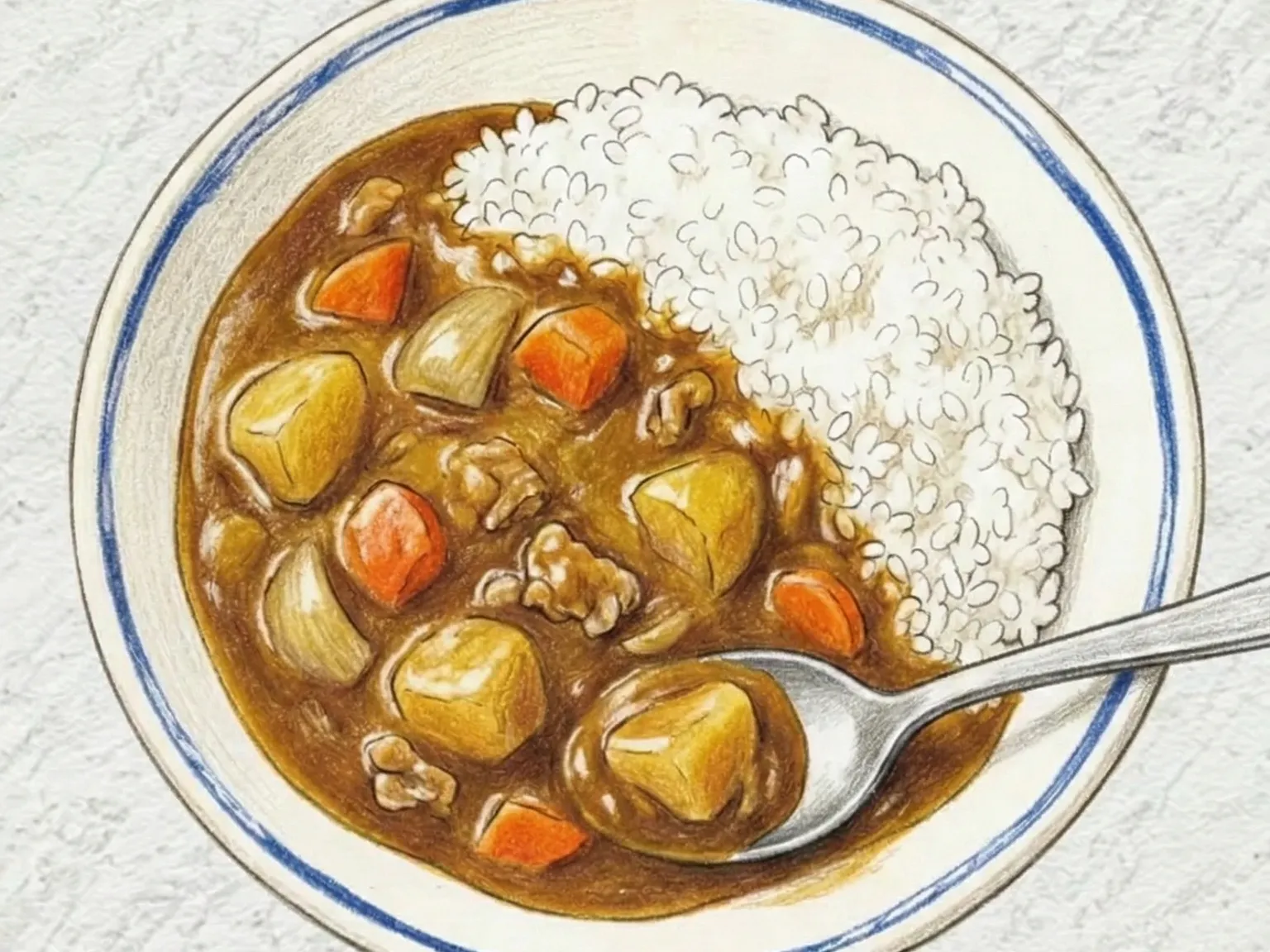
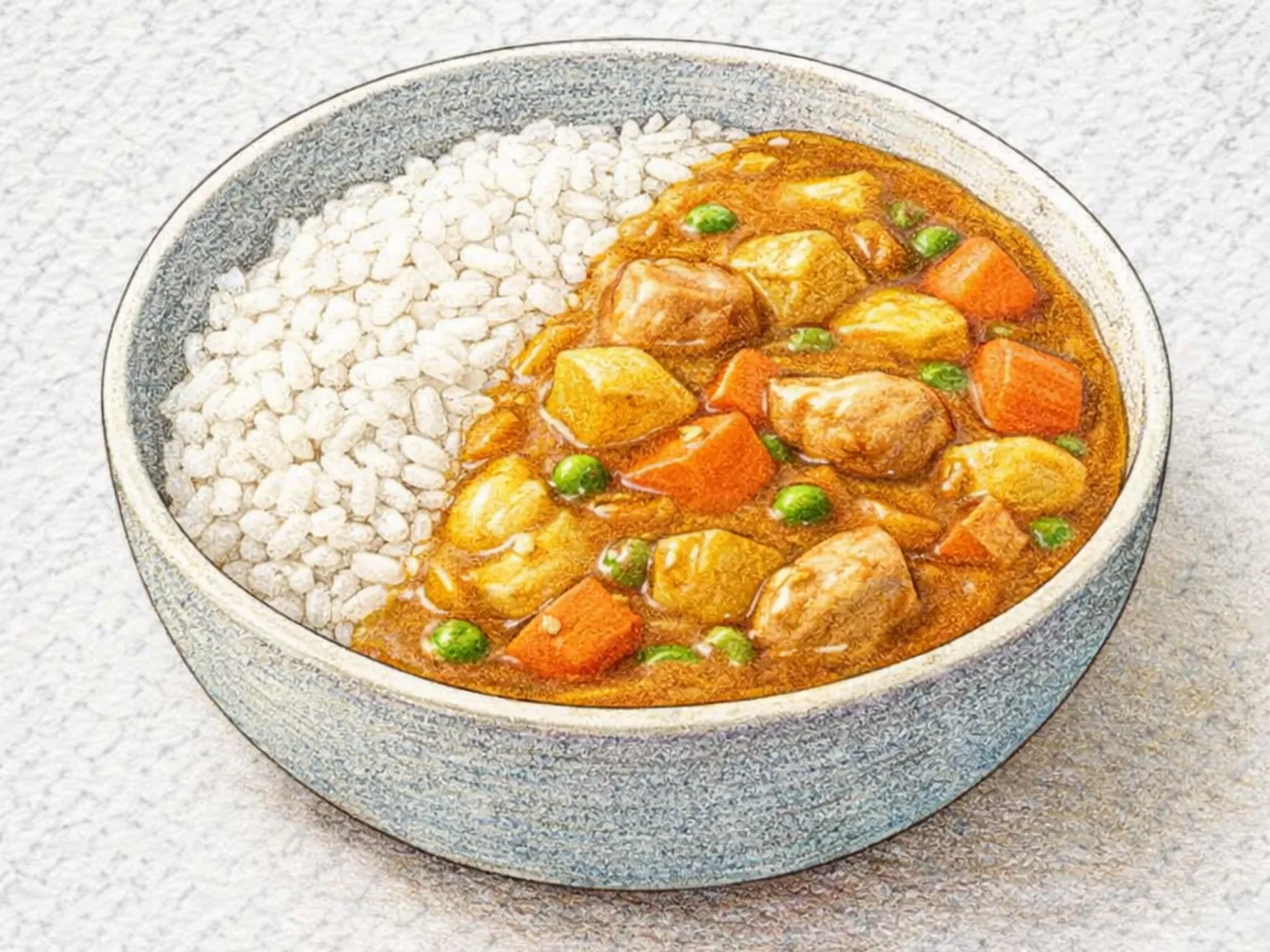
Chicken curry rice is a Japanese-style curry where bite-sized chicken thigh, potato, carrot, and onion simmer together until the curry roux melts into a thick, glossy sauce.

What makes this special

  • Softened potato edges release starch to naturally thicken the sauce in this Chicken Curry Rice.
  • Potato edges break down slightly, releasing starch that thickens the sauce over the rice
  • Chicken thigh stays moist even with extended simmering, holding sauce deep in the meat
Total time
40 min
Level
Easy
Servings
4 servings
Ingredients
9
Calories
760 kcal
Protein
32 g

Key ingredients

Cooked riceChicken thighPotatoCarrotOnion

Core cooking flow

  1. 1 Cut 420g chicken thigh into 3-4cm pieces, and dice 250g potato, 140g carrot...
  2. 2 Heat 1 tbsp oil in a pot over medium heat and cook the chicken until the sur...
  3. 3 Add onion, carrot, and potato and saute for 3 minutes.

Chicken curry rice is a Japanese-style curry where bite-sized chicken thigh, potato, carrot, and onion simmer together until the curry roux melts into a thick, glossy sauce. The spice blend is gentle rather than fiery, with a mellow sweetness drawn from the slowly cooked vegetables. Chicken thigh meat stays moist and succulent even after prolonged simmering, absorbing the curry flavor throughout. The potato pieces break down slightly at the edges, thickening the sauce further and giving it a starchy body that clings to each spoonful of rice. A one-pot format makes it easy to scale -- prepare a large batch and the flavor deepens further overnight as everything continues to meld, making it well-suited for family dinners or weekly meal prep.

Prep 15min Cook 25min 4 servings

Instructions

Read the steps as a cooking flow: prep, heat, seasoning, doneness control, and finish.

6 steps
  1. 1
    Heat

    Cut 420g chicken thigh into 3-4cm pieces, and dice 250g potato, 140g carrot, and 220g onion to similar sizes.

    Even sizing ensures everything cooks at the same rate. Cut potato slightly larger since it breaks apart if too small.

  2. 2
    Control

    Heat 1 tbsp oil in a pot over medium heat and cook the chicken until the surface turns white and develops light browning.

    Thoroughly browning the chicken lets Maillard aromas dissolve into the curry sauce for deeper flavor.

  3. 3
    Season

    Add onion, carrot, and potato and saute for 3 minutes.

    This draws sweetness from the onion and lightly coats the vegetables with oil, helping the curry sauce penetrate deeper later.

  4. 4
    Control

    Pour in 850ml water and bring to a boil over medium-high heat.

    Skim any foam, then reduce to medium-low and simmer with the lid slightly ajar for 12 minutes until vegetables are tender.

  5. 5
    Step

    Turn off heat and stir in 120g curry roux until completely dissolved with no lumps.

    Never add roux over active heat - it will sink to the bottom and scorch before dissolving.

  6. 6
    Finish

    Add 1 tbsp butter and simmer on low for 5 more minutes, stirring until the curry reaches a thick, glossy sauce consistency.

    Butter adds sheen and a creamy flavor that elevates the dish. Serve over 4 cups of rice.

After the steps

Pick a recipe that fits this dish.

Continue with shared ingredients, meal pairings, or a similar method.

Recipes That Go Well With This

More Rice →

Based on shared ingredients and meal pairing

Japanese Curry Rice
Shared ingredient: cooked short-grain rice Asian

Japanese Curry Rice

Kare raisu is one of the most frequently cooked meals in Japanese households, using commercially prepared curry roux blocks that produce a milder, thicker, and sweeter result than Indian curry. Beef or chicken is cut into bite-sized pieces and stir-fried with onion, potato, and carrot before water is added and the pot simmers until the potatoes turn tender. The heat is lowered and the curry roux blocks are broken in and stirred until fully dissolved; the roux contains flour and fat that thicken the liquid into a glossy, coating sauce. Keeping the heat low after adding the roux is critical because high heat causes the thick sauce to scorch on the bottom. The finished curry deepens in flavor if rested overnight, as the vegetables continue to release their sweetness into the sauce. Unlike Indian curry with its layered spice blends, Japanese curry draws its appeal from the consistent, approachable flavor that a single roux block delivers every time.

Chicken and Egg Rice Bowl
Shared ingredient: cooked short-grain rice Rice

Chicken and Egg Rice Bowl

Oyakodon simmers bite-size chicken thigh and sliced onion in a soy-mirin broth, then binds everything with a soft-set egg before sliding it over steamed rice. The name means 'parent and child,' referring to the chicken and egg sharing the same bowl. Onion goes into the broth first to release its natural sweetness, followed by the chicken, which cooks just until tender. Beaten eggs are poured in a circular motion and the lid goes on briefly, leaving the egg custardy rather than fully set. That half-cooked egg absorbs the savory-sweet broth and coats each grain of rice. Despite using only a handful of ingredients, the layered umami from soy sauce and mirin gives the dish a satisfying depth.

Korean Acorn Jelly Cold Broth Bowl
Serve together Soups

Korean Acorn Jelly Cold Broth Bowl

Dotori-muksabal is a chilled Korean acorn jelly broth bowl where thinly sliced acorn jelly sits in a cold, tangy-sweet seasoned broth. Acorn jelly carries a distinctly earthy, mildly astringent aftertaste and a firm, bouncy texture that becomes noticeably more pronounced once it has chilled thoroughly. The broth, a mixture of stock seasoned with soy sauce, vinegar, and sugar, must be cold before pouring over the jelly to keep that cool snap alive from the first bite to the last. Chopped kimchi adds fermented heat and a pungent sourness, while julienned cucumber contributes a clean crunch, and both ingredients cut through the jelly's neutral flavor with sharp contrasts that make the bowl far more lively than its simple appearance suggests. A spoonful of gochugaru-spiked seasoning ties the components together. The dish is notably low in calories and rich in dietary fiber, making it an appealing light meal on hot days.

Chicken Soboro Rice Bowl (Ground Chicken and Scrambled Egg over Rice)
Similar recipe Rice

Chicken Soboro Rice Bowl (Ground Chicken and Scrambled Egg over Rice)

Soboro-don is a Japanese-style rice bowl that tops steamed rice with two side-by-side mounds: savory minced chicken and sweet scrambled egg. The chicken is seasoned with soy sauce, sugar, mirin, and ginger juice, then stirred constantly with chopsticks over medium heat until it breaks into fine, crumbly grains that are individually coated in glaze. The egg is treated the same way - beaten, poured into a pan, and stirred into soft, fluffy curds. Arranged half-and-half on the rice, the brown chicken and bright yellow egg create a visual contrast that makes the bowl inviting. Both toppings share a gentle sweetness balanced by soy umami, and their fine, loose texture means every bite blends effortlessly with the rice beneath.

Serve with this

Korean Crispy Glazed Tofu Bites
Side dishes Medium

Korean Crispy Glazed Tofu Bites

Dubu gangjeong applies the double-coating logic of Korean fried chicken to tofu, pressing each cube dry before dredging in potato starch, frying until the shell turns shattering crisp, then tossing in a concentrated sticky glaze. The dish originated in temple cuisine as a meatless adaptation of gangjeong and has since become a staple anju in Korean bars. Pressing the tofu is non-negotiable: at least twenty minutes under a heavy weight wrapped in paper towels removes enough moisture to prevent oil from splattering and allows the starch coating to adhere evenly. Potato starch produces a noticeably thinner and more translucent crust than wheat flour, which cracks cleanly rather than bending when bitten. The glaze is made by boiling gochujang, soy sauce, sugar, and rice syrup together until large bubbles break on the surface, signaling that the mixture has concentrated and will cling rather than pool. Pouring the hot glaze over the fried tofu and tossing quickly coats every surface in an even, lacquer-like finish. The defining quality of a well-made dubu gangjeong is the contrast between the caramelized shell with its slight chew and the soft, almost custard-like interior. Once made, it must be eaten within ten minutes before the coating absorbs moisture and goes soft.

🏠 Everyday 🧒 Kid-Friendly
Prep 18min Cook 15min 2 servings
Korean Pollack Roe Tofu Stew
Stews Easy

Korean Pollack Roe Tofu Stew

Myeongnan-dubu-jjigae is a Korean stew built around whole pollack roe simmered in anchovy and kelp stock. As the broth comes to a boil, the roe gradually loosens and disperses into the liquid, releasing a briny, concentrated umami that permeates every ingredient in the pot. Using anchovy-kelp stock rather than plain water lets the oceanic character of the roe come through without competition. Firm tofu cut into one-centimeter slices absorbs the savory broth while holding its shape throughout cooking, unlike soft tofu which breaks apart. Red pepper flakes, minced garlic, and sliced green onion finish the stew with a clean, spicy edge. The grainy, textured bite of the intact roe kernels is what sets this stew apart from other Korean jjigae. Cooking time should be kept short: once the broth reaches a full boil, the heat is reduced immediately, because prolonged boiling dissolves the roe completely and erases the textural contrast. Spooning the broth and roe together over steamed rice and mixing it in is the most satisfying way to eat it.

🏠 Everyday ⚡ Quick
Prep 10min Cook 15min 2 servings
Korean Red Cabbage Kimchi
Kimchi Easy

Korean Red Cabbage Kimchi

Jeokchae kimchi is made by salting red cabbage leaves, then tossing them in a seasoning of gochugaru, sand lance fish sauce, minced garlic, and Korean pear juice before a short fermentation. Red cabbage has thicker, denser leaves than napa cabbage, so it holds its crunch well after brining rather than going soft. The anthocyanin pigment in the red cabbage reacts with the chili seasoning to produce a vivid purple color rather than the typical red associated with kimchi, making it visually striking on the table. Pear juice provides a gentle fruit sweetness underneath the heat and spice, while sand lance fish sauce builds enough savory depth that even a brief fermentation yields full flavor. Scallions add a fresh, aromatic finish that ties the seasoning together. The result is a kimchi that is crunchy, spicy, and umami-rich simultaneously, with a distinctive character that sets it apart from traditional napa kimchi.

🍱 Lunchbox 🏠 Everyday
Prep 30min 2 servings

Similar recipes

Tea Rice Bowl (Japanese Green Tea Poured Rice with Salmon)
Rice Easy

Tea Rice Bowl (Japanese Green Tea Poured Rice with Salmon)

Ochazuke is a Japanese dish of cooked rice topped with grilled salmon flakes, dried seaweed, green onion, and wasabi, over which hot green tea is poured just before eating. The astringent bitterness of the green tea works against the fatty richness of the salmon, cutting through the oil and keeping the palate clean throughout the bowl. Wasabi adds a sharp, nasal heat that punctuates each spoonful differently depending on how much dissolves into the surrounding liquid. A light drizzle of soy sauce provides a salty baseline that ties the ingredients together without overpowering the tea. The seaweed flakes soften and dissolve into the hot liquid, gradually releasing a subtle oceanic aroma that spreads through the broth. As the meal progresses, the rice releases some starch into the tea, thickening the broth slightly and shifting the flavor toward the end. Using dashi stock made from kombu and bonito instead of green tea produces a richer, more umami-forward version. Variations with pickled plum or mentaiko in place of salmon are equally common.

🥗 Light & Healthy ⚡ Quick
Prep 10min Cook 10min 2 servings
Yakitori Rice Bowl (Soy-Mirin Glazed Grilled Chicken over Rice)
Rice Medium

Yakitori Rice Bowl (Soy-Mirin Glazed Grilled Chicken over Rice)

Direct heat and a repetitive glazing process define the preparation of this chicken skewer bowl. Small pieces of chicken thigh are secured onto skewers and grilled over a flame while a mixture of soy sauce, mirin, and sugar is applied in thin, sequential layers. This technique builds a lacquered surface through caramelization, which directs the sweet and salty flavors to the exterior of the meat. Applying the sauce too heavily in a single pass often leads to burning and an uneven crust. Because chicken thigh contains natural fats, the meat remains moist and tender even under high temperatures. When the cooked pieces are removed from the skewers and placed onto the rice, the excess glaze permeates the grains to provide sufficient seasoning. Sprinkling shichimi togarashi or sansho powder introduces a sharp or citrus-like contrast to the sweetness of the chicken. While chicken breast serves as a leaner alternative, it requires a longer marinating period and a shorter time on the grill to prevent the meat from drying out. The tare sauce can be prepared in advance and stored in the refrigerator for several weeks. Adding a halved soft-boiled egg or sliced scallions provides different textures and prevents the meal from feeling repetitive.

🏠 Everyday 🍺 Bar Snacks
Prep 20min Cook 15min 2 servings
Japanese Ginger Soy Braised Chicken
Stir-fry Easy

Japanese Ginger Soy Braised Chicken

Toriniku shigureni is a Japanese-style simmered dish of ground chicken cooked down with julienned ginger, soy sauce, mirin, and sugar until most of the liquid evaporates. The chicken is browned first over medium heat, then ginger is added for its sharp bite before the braising liquid goes in. As the sauce reduces over six minutes, it concentrates into a sweet-salty glaze that clings to the meat. The ginger tames any gamey notes while adding warmth, making this a versatile topping for rice bowls or a compact side dish for packed lunches.

🏠 Everyday 🌙 Late Night
Prep 10min Cook 12min 2 servings

Tips

Resting overnight deepens flavor and improves texture.
Add 1 tsp chili flakes if you want a spicier curry.

Nutrition (per serving)

Calories
760
kcal
Protein
32
g
Carbs
98
g
Fat
25
g