Korean Chamnamul Kimchi (Pimpinella Kimchi)
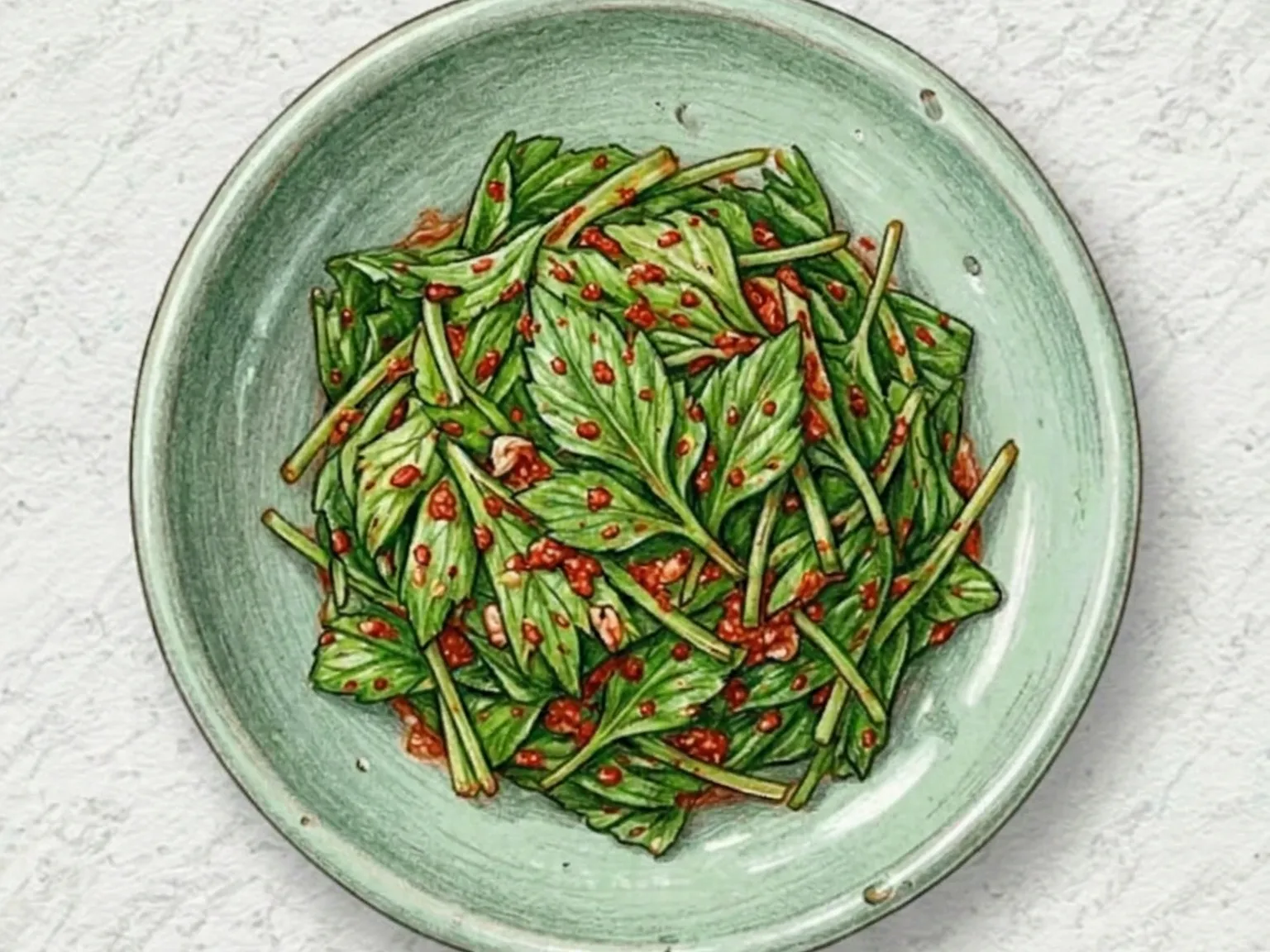
Chamnamul kimchi is a spring kimchi made by salting chamnamul greens for just ten minutes to wilt them slightly, then dressing them in gochugaru, anchovy fish sauce, and salted shrimp without rinsing. Skipping the rinse allows the residual salt to convert into umami during fermentation, deepening the overall flavor. Pureed Korean pear and onion blended with sweet rice paste form the seasoning base, contributing natural sweetness that softens the chili heat. After three hours of initial fermentation at room temperature followed by refrigeration, the kimchi reaches its best balance within one to two days, when the grassy herbal aroma of chamnamul meets the fermented depth of the fish sauce.
Adjust Servings
Instructions
- 1
Discard wilted leaves, wash thoroughly, and cut greens into 6 cm pieces.
- 2
Salt for 10 minutes; do not rinse, just squeeze out moisture.
- 3
Blend pear and onion finely, then combine with rice paste.
- 4
Add chili flakes, fish sauce, salted shrimp, and garlic to make seasoning.
- 5
Mix in greens evenly and press into a container.
- 6
Rest 3 hours at room temperature, refrigerate, and ferment 1-2 days.
As an Amazon Associate, we may earn from qualifying purchases.
Tips
Nutrition (per serving)
More Recipes

Korean Chamnamul Jangajji (Pimpinella Pickles)
A fragrant Korean spring pickle that captures chamnamul's unique herbal aroma in a gentle soy-and-apple-vinegar brine - ready to eat in just one day. The greens are loosely packed in a jar and covered with warm (not boiling) brine to preserve the volatile aromatics. Apple vinegar produces a rounder, softer acidity than standard rice vinegar, complementing the grassy sweetness of chamnamul. A squeeze of lemon juice brightens the finish. Best consumed within five days for peak fragrance.

Korean Pepper Leaf Kimchi
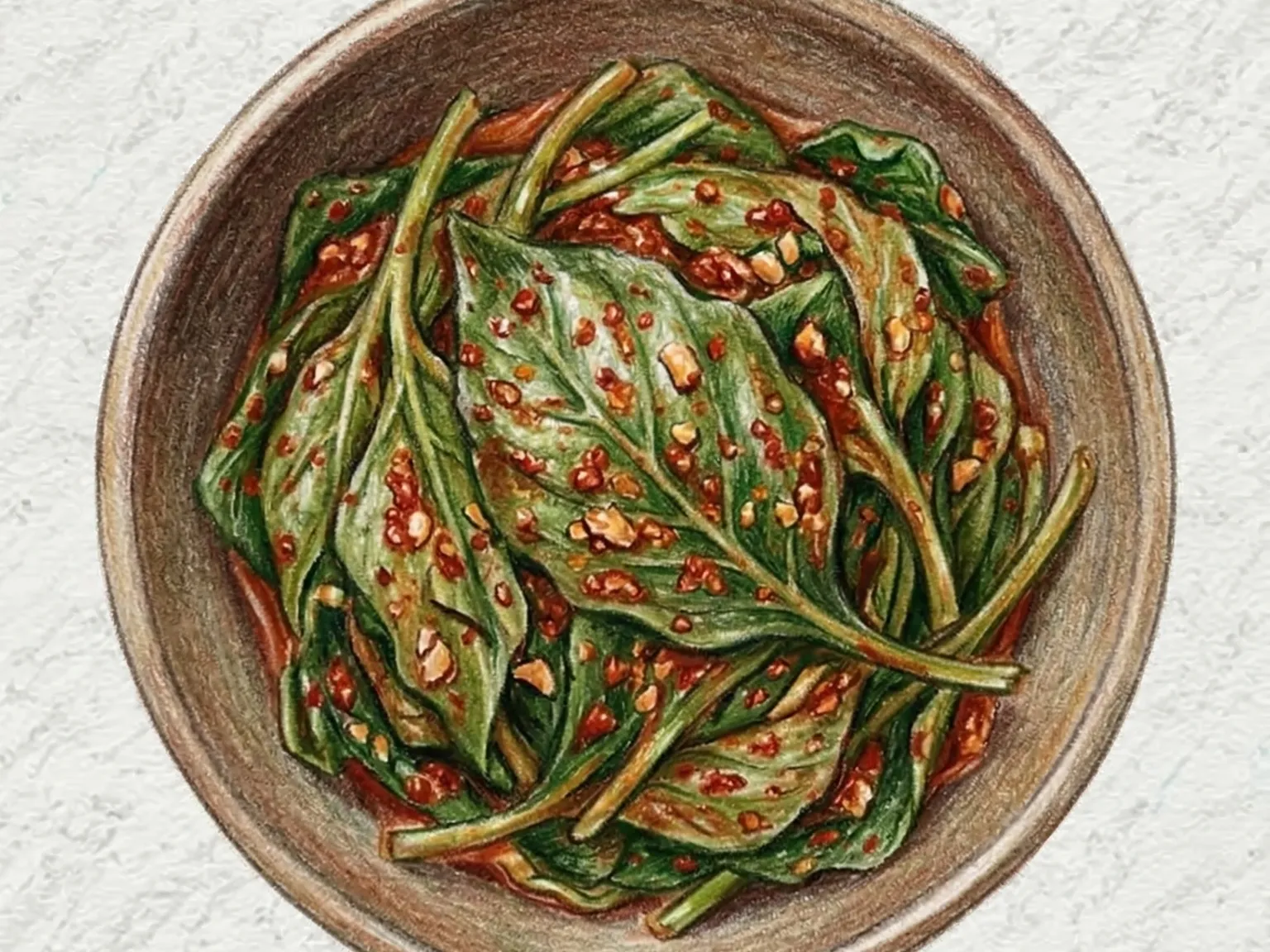
Gochuip kimchi is a Korean pepper leaf kimchi where the leaves are briefly blanched to reduce volume and remove bitterness, then tossed with gochugaru, anchovy fish sauce, garlic, and glutinous rice paste for about a day of room-temperature fermentation. Blanching softens the leaves and allows the seasoning to cling evenly to their surfaces. The rice paste acts as both a binding agent and a fermentation accelerator, promoting lactic acid activity even in the short curing window. Beneath the spicy coating, the pepper leaves contribute a subtle green, herbaceous note that distinguishes this from standard napa kimchi, making it a distinctive summer preparation.

Korean Bitter Herb Kimchi
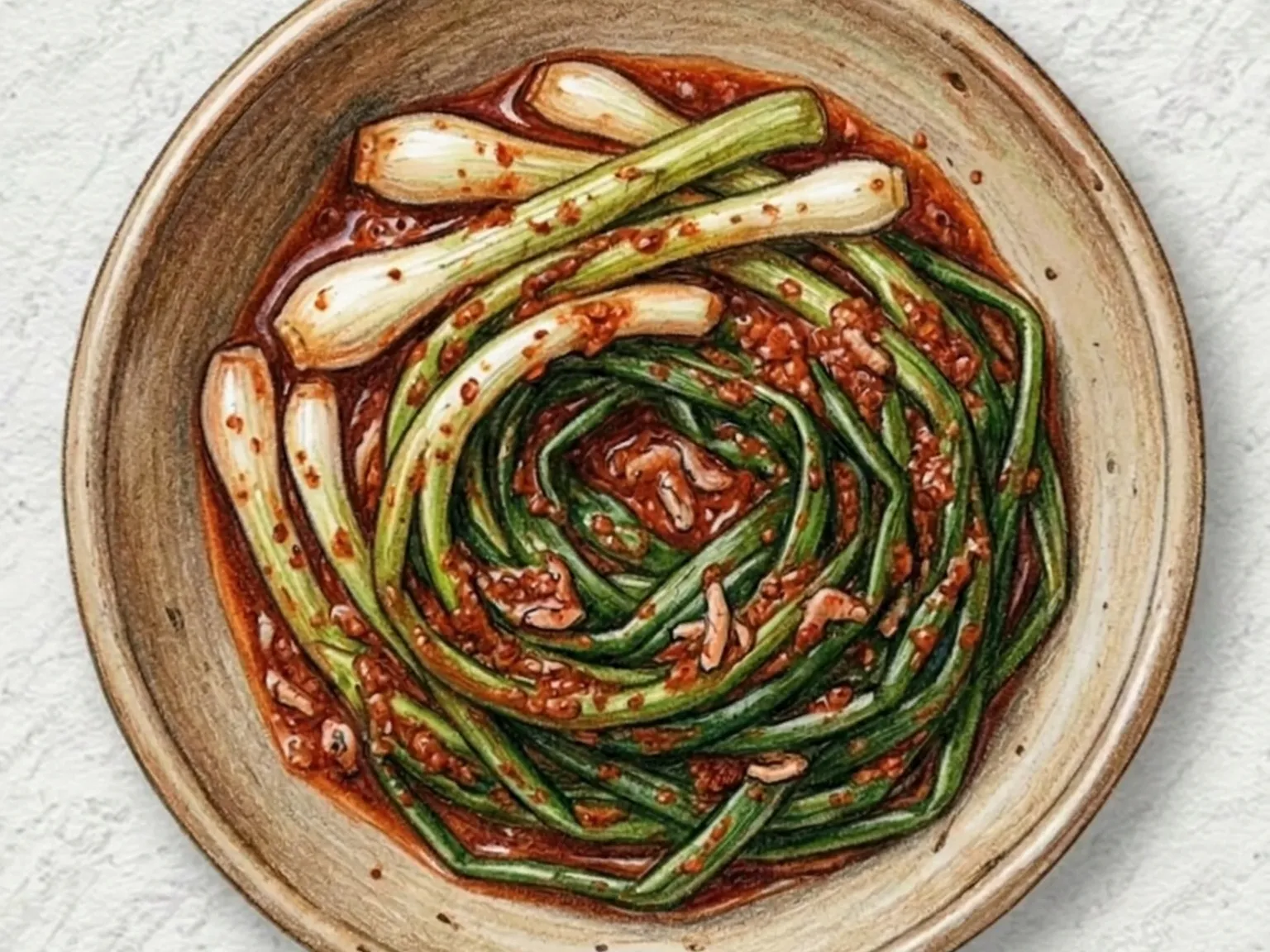
Sseumbagwi kimchi is a traditional Korean fermented side dish made from sseumbagwi, a wild bitter herb harvested in spring. The herb is soaked in cold water for twenty minutes to temper its pronounced bitterness, salted for fifteen minutes, then dressed in a thick paste of gochugaru, sand lance fish sauce, minced garlic, ginger, sweet rice paste, and plum syrup alongside scallion pieces. The rice paste gives the seasoning enough body to cling to the thin stems and leaves, and the plum syrup smooths out both the bitterness and the salt's sharpness. Five hours of room-temperature fermentation followed by refrigeration allows lactic acid to develop gradually, layering a tangy depth over the herb's inherent bitter-green character. The flavor is most complex around day three. If the bitterness is too strong, an additional change of soaking water before seasoning brings it under control.

Korean Cheonggak Kimchi (Seaweed Kimchi)
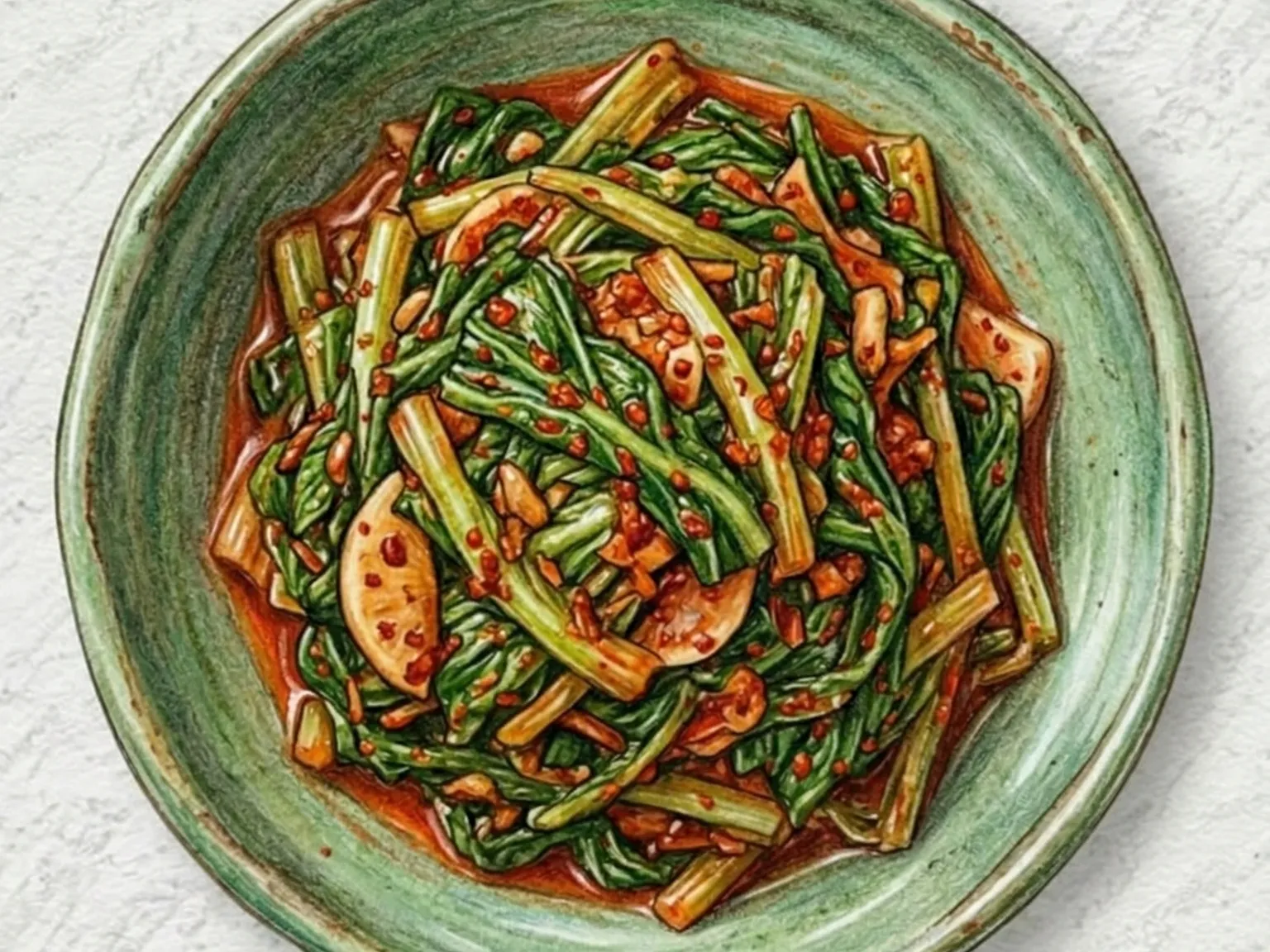
Cheonggak kimchi is made with cheonggak, a type of green seaweed, mixed with julienned radish and scallions in a seasoning of gochugaru, anchovy fish sauce, and sweet rice paste. The seaweed contributes a distinctive chewy, almost crunchy texture and a concentrated ocean aroma that sets this kimchi apart from plant-based varieties. Seasoning the radish first and then tossing the seaweed in quickly is important because overworking toughens the seaweed's delicate structure. After one day of refrigeration the brine from the seaweed mingles with the fermented seasoning, producing a kimchi with pronounced marine depth that pairs naturally with seafood dishes and mild rice soups.

Korean Seasoned Chamnamul Greens
Chamnamul - Korean pimpinella - grows wild in central Korea's mountain valleys and has been foraged since the Goryeo period. Its leaves carry a celery-like fragrance with a faint peppery finish. Blanched under a minute to preserve crispness, the greens are cut to 5 cm lengths and tossed with soy sauce, sesame oil, and garlic. Stems stay slightly firm while thinner leaves wilt just enough to absorb the dressing. A spring-only banchan, sometimes served raw when leaves are very young.

Korean Pimpinella Tofu Soup
Chamnamul (Korean pimpinella) brings a distinctive herbal fragrance to an anchovy-kelp stock base, creating a clear soup with pronounced aromatic character. Tofu is simmered first so it absorbs the savory broth, and the greens are added only at the end to preserve their bright scent. A finish of green onion and black pepper rounds out this two-serving soup that is light in body but strong in flavor definition.