Chamnamul Walnut Pesto Trofie
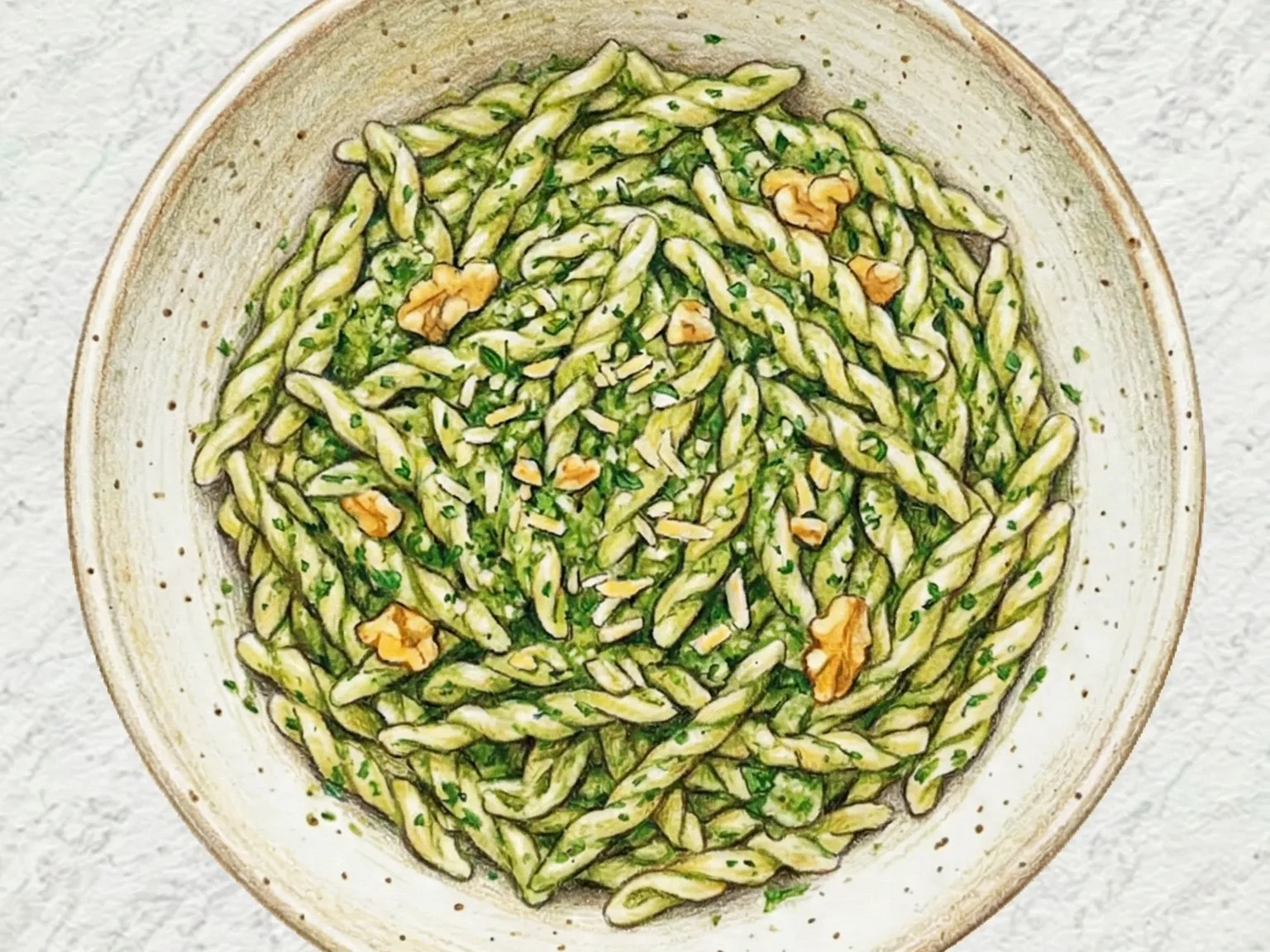
Chamnamul walnut pesto trofie coats twisted pasta shapes in a pesto made from Korean chamnamul (wild parsley), walnuts, Parmigiano, and olive oil. Chamnamul has a lighter, more herbaceous flavor than basil, with a faintly bitter finish that gives the pesto a distinctly Korean aromatic quality. Walnuts contribute a heavier, more robust nuttiness than pine nuts, thickening the sauce and anchoring the savory depth alongside the aged cheese. The spiral grooves of trofie trap the pesto in every fold, releasing flavor evenly with each bite. Adding enough olive oil during blending slows oxidation and keeps the chamnamul's green color from darkening too quickly.
Adjust Servings
Instructions
- 1
Bring a large pot of water to a boil, salt it, and cook the trofie to al dente.
- 2
Trim thick stems from chamnamul, rinse in cold water, and dry thoroughly.
- 3
Blend chamnamul, walnuts, cheese, garlic, lemon juice, and 3 tbsp olive oil until smooth.
- 4
Warm the pesto gently in a pan, then add cooked pasta and 3 tbsp pasta water.
- 5
Adjust consistency with remaining olive oil, season with salt and pepper, and serve immediately.
As an Amazon Associate, we may earn from qualifying purchases.
Tips
Nutrition (per serving)
More Recipes

Soy Butter Steak Garlic Spaghetti
Soy butter steak garlic spaghetti sears thick-cut sirloin at high heat, then glazes it in soy sauce and butter to create a savory, glossy pan sauce. The fond left from searing is deglazed with soy sauce and butter, then emulsified with pasta water into a thin, shiny coating for the spaghetti. Generous garlic is browned in olive oil beforehand to infuse the entire sauce with roasted garlic flavor, and tsuyu (Japanese seasoning concentrate) adds dashi-based umami from kombu and bonito. The steak is best served medium-rare and sliced, preserving its juices against the hot pasta. Black pepper and sliced scallions provide the finishing layer. Total cook time is about 20 minutes.

Chunjang Beef Ragu Tagliatelle
Chunjang beef ragu tagliatelle combines a slow-cooked ground beef ragu with Korean black bean paste and tomato passata, tossed through wide tagliatelle ribbons. Chunjang is a fermented black soybean paste that, when fried, releases a deep roasted umami that adds a flavor dimension absent from standard Italian ragus. Browning the ground beef hard over high heat before adding liquids develops a strong Maillard crust that intensifies the overall meatiness. The sauce then simmers on low heat until it reduces into a thick, glossy coating. Wide tagliatelle catches the dense ragu across its broad surface, ensuring each forkful carries both the tomato-chunjang depth and bits of seasoned beef.

Yuja Shrimp Basil Linguine
Yuja shrimp basil linguine keeps total shrimp cook time under three minutes to preserve a springy bite, deveining and patting them dry before searing. Garlic and red pepper flakes are gently sauteed in olive oil over low heat to build an aromatic base, and a splash of white wine cooks off quickly to add clean depth. Yuja marmalade brings citrus sweetness that is dialed in gradually since brands vary in sugar content, and three tablespoons of starchy pasta water bind the sauce into a light glaze that clings to the linguine. Basil leaves are folded in off the heat to keep their volatile oils intact, layering fresh herbal fragrance over the yuja's citrus notes.

Minari Pesto Chicken Gemelli
Minari pesto chicken gemelli features a pesto made from Korean water parsley (minari) and walnuts, producing a herbaceous sauce distinct from classic basil versions. Minari has a clean, slightly peppery green aroma that stands apart in the finished dish. Chicken thigh is pan-seared until golden and sliced, adding protein and savory depth. Parmesan cheese and olive oil give the pesto its creamy body, while lemon juice adds brightness that keeps the oily richness in check. Gemelli's twisted shape grips the thick pesto effectively, ensuring even distribution across the pasta. The cook time runs about 20 minutes including the chicken sear.

Korean Chamnamul Jangajji (Pimpinella Pickles)
A fragrant Korean spring pickle that captures chamnamul's unique herbal aroma in a gentle soy-and-apple-vinegar brine - ready to eat in just one day. The greens are loosely packed in a jar and covered with warm (not boiling) brine to preserve the volatile aromatics. Apple vinegar produces a rounder, softer acidity than standard rice vinegar, complementing the grassy sweetness of chamnamul. A squeeze of lemon juice brightens the finish. Best consumed within five days for peak fragrance.

Korean Spam Fried Rice (Crispy Spam Cubes with Egg and Rice)
Spam bokkeumbap is a Korean fried rice built around crispy cubes of pan-seared Spam, whose salty, caramelized edges give the dish an addictive quality. The Spam is diced small and dry-fried without added oil - its own rendered fat crisps the outside while keeping the inside moist and savory. Onion and scallion go in next for aromatic depth, followed by cold leftover rice that is tossed over high heat until every grain picks up the salty pork flavor left in the pan. Beaten egg is scrambled into the rice, coating the grains in a thin, soft layer. A splash of soy sauce and a drizzle of sesame oil finish the dish with umami and nuttiness. The whole thing comes together in under ten minutes, making it one of the fastest comfort meals in the Korean home-cooking repertoire.