Korean Herb Citrus Chicken Salad
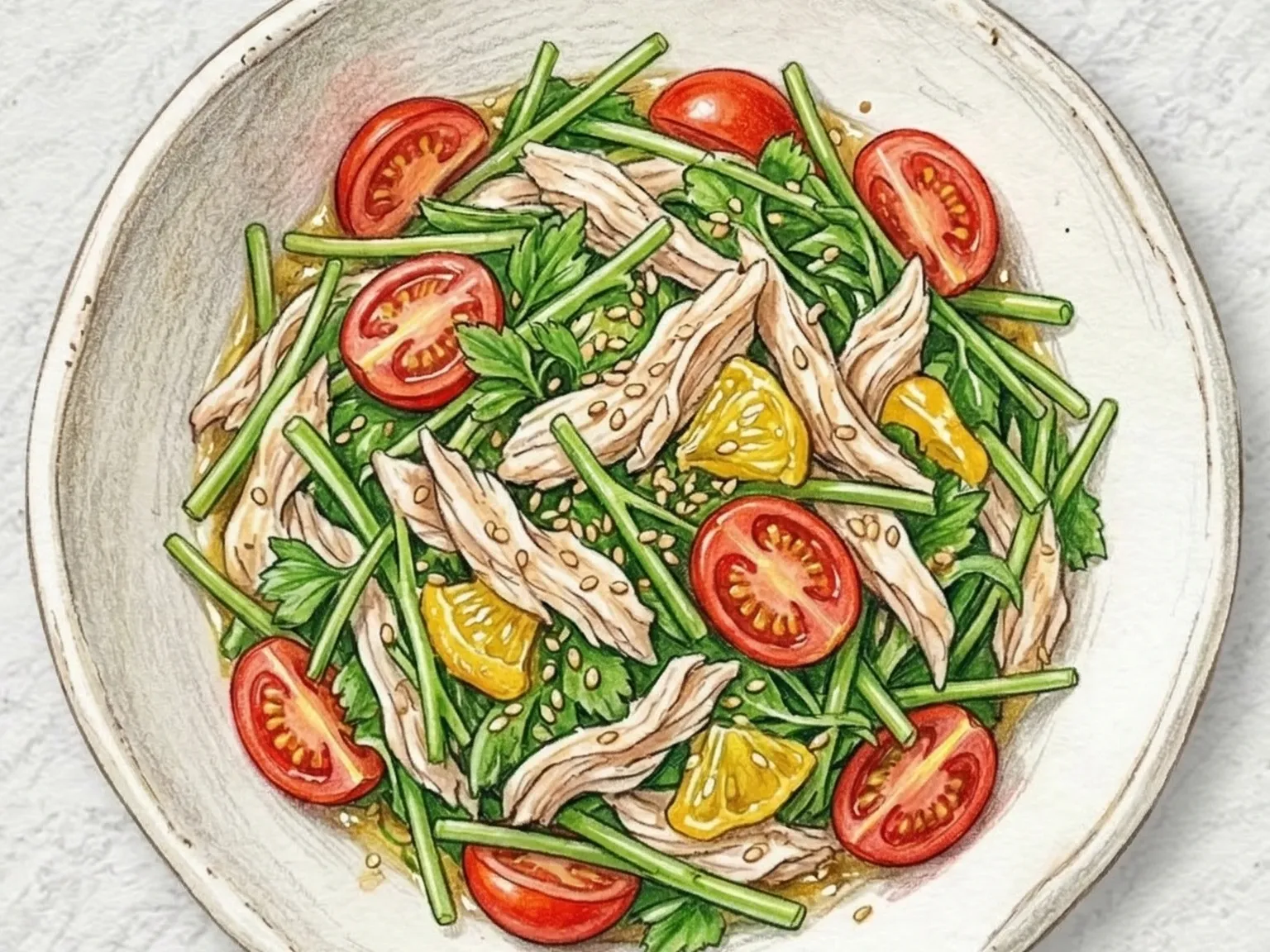
Korean herb citrus chicken salad salts chicken breast for 10 minutes before boiling, then shreds it along the grain for a lean protein base. Chamnamul stems are trimmed and cut to 5 cm to highlight the herb's distinctive mountain aroma, and romaine lettuce adds bulk and crunch. The dressing whisks together yuja-cheong, soy sauce, olive oil, and minced garlic, layering bittersweet citrus over salty umami depth. Cherry tomatoes are halved and patted lightly to control excess moisture, and sesame seeds scattered last provide a toasted finish that ties the flavors together.
Adjust Servings
Instructions
- 1
Season the chicken breast with a pinch of salt, rest for 10 minutes, then boil for 10 minutes and shred.
- 2
Trim tough stems from chamnamul and cut to 5 cm lengths; tear romaine into bite-size pieces.
- 3
Halve the cherry tomatoes and lightly pat dry so the salad does not get watery.
- 4
Whisk yuja-cheong, soy sauce, olive oil, and minced garlic into a citrus dressing.
- 5
Combine vegetables and chicken, toss with dressing, finish with sesame seeds, and serve immediately.
As an Amazon Associate, we may earn from qualifying purchases.
Tips
Nutrition (per serving)
More Recipes

Yuja Mustard Chicken Naengchae Salad
Yuja mustard chicken naengchae salad shreds boiled chicken breast along the grain and tosses it with julienned cucumber, Korean pear, bell pepper, and cabbage in a dressing of yuja marmalade, Korean mustard paste, vinegar, and sesame oil. Soaking the chicken breast in lightly salted water for ten minutes before boiling helps the muscle fibers retain moisture, keeping the shredded meat tender rather than dry. The yuja marmalade brings a bright citrus fragrance, and the Korean mustard delivers a sharp, nasal heat - vinegar binds these two strong personalities into a cohesive dressing. Slicing the pear just before serving preserves its juice and crisp sweetness. Adding two-thirds of the dressing first, then tasting and adjusting, prevents the acidity from overwhelming the delicate balance of the salad.

Deodeok Citrus Chicken Salad
Pan-seared chicken tenderloin develops a golden crust before being sliced and arranged alongside pounded deodeok root in this Korean-style salad. Orange segments cut through with bright acidity, lifting the earthy notes of the deodeok and the savory chicken. Arugula adds a peppery layer, and a soy-olive oil dressing bridges Korean and Western flavor profiles naturally. The dish is high in protein yet feels light due to the generous proportion of greens and fruit.

Naengi Scallop Yuja Salad
Scallops are seared in butter until golden-brown outside and translucent-tender inside. Blanched naengi contributes an earthy bitterness that contrasts the scallop's sweetness, and arugula adds peppery depth. The dressing dissolves yuja marmalade into white wine vinegar and olive oil for a bright citrus note that complements both seafood and spring greens. Orange segments on top introduce another tier of sweet acidity, making this a clean, aromatically vivid plate suited as a first course or guest dinner centerpiece.

Chicken Breast Salad (Poached Chicken & Yogurt Dressing)
Chicken breast is poached slowly at low temperature to keep its fibers moist, then shredded along the grain and piled over crisp romaine. Bell pepper adds mild sweetness, while hard-boiled egg contributes richness. The dressing blends plain yogurt with mustard and honey, coating the lean chicken in gentle acidity without heaviness. Scattered corn kernels pop between bites with a subtle sweetness that rounds out the bowl's overall flavor balance.

Korean Garlic Scape Chicken Breast Stir-fry
Maneuljjong dakgaseumsal bokkeum is a stir-fry of soy-marinated chicken breast cooked with ginger and garlic, then combined with garlic scapes cut to 5 cm and julienned carrot, finished in a glaze of oyster sauce and soy sauce. Chicken breast is naturally lean, and the oyster sauce compensates for its low fat by adding concentrated umami. The garlic scapes' crisp texture and the carrot's mild sweetness break up the chicken's plainness, while ginger neutralizes any poultry odor. The high-protein, low-fat profile makes this a practical option for meal prep and calorie-conscious eating.

Korean Lotus Root Chicken Breast Stir-fry
Yeongeun-dakgaseumsal-bokkeum stir-fries soy-and-wine-marinated chicken breast with lotus root, bell pepper, and onion. The lotus root is sliced 3mm thick and soaked in vinegar water to prevent browning and keep its crunch, while the chicken is cooked quickly over medium-high heat to avoid drying out. Oligosaccharide syrup mixed with soy sauce creates a glossy glaze that coats the ingredients, and bell pepper adds color and sweetness. The crisp, starchy bite of the lotus root paired with the lean chicken makes this a protein-rich banchan that stays grease-free and packs well for lunches.