Charim

2686 Korean & World Recipes

2686+ Korean recipes, clean and organized. Ingredients to instructions, all at a glance.

Korean Melon Pickle (Korean Melon Soy Vinegar Brine)
KimchiEasy

Korean Melon Pickle (Korean Melon Soy Vinegar Brine)

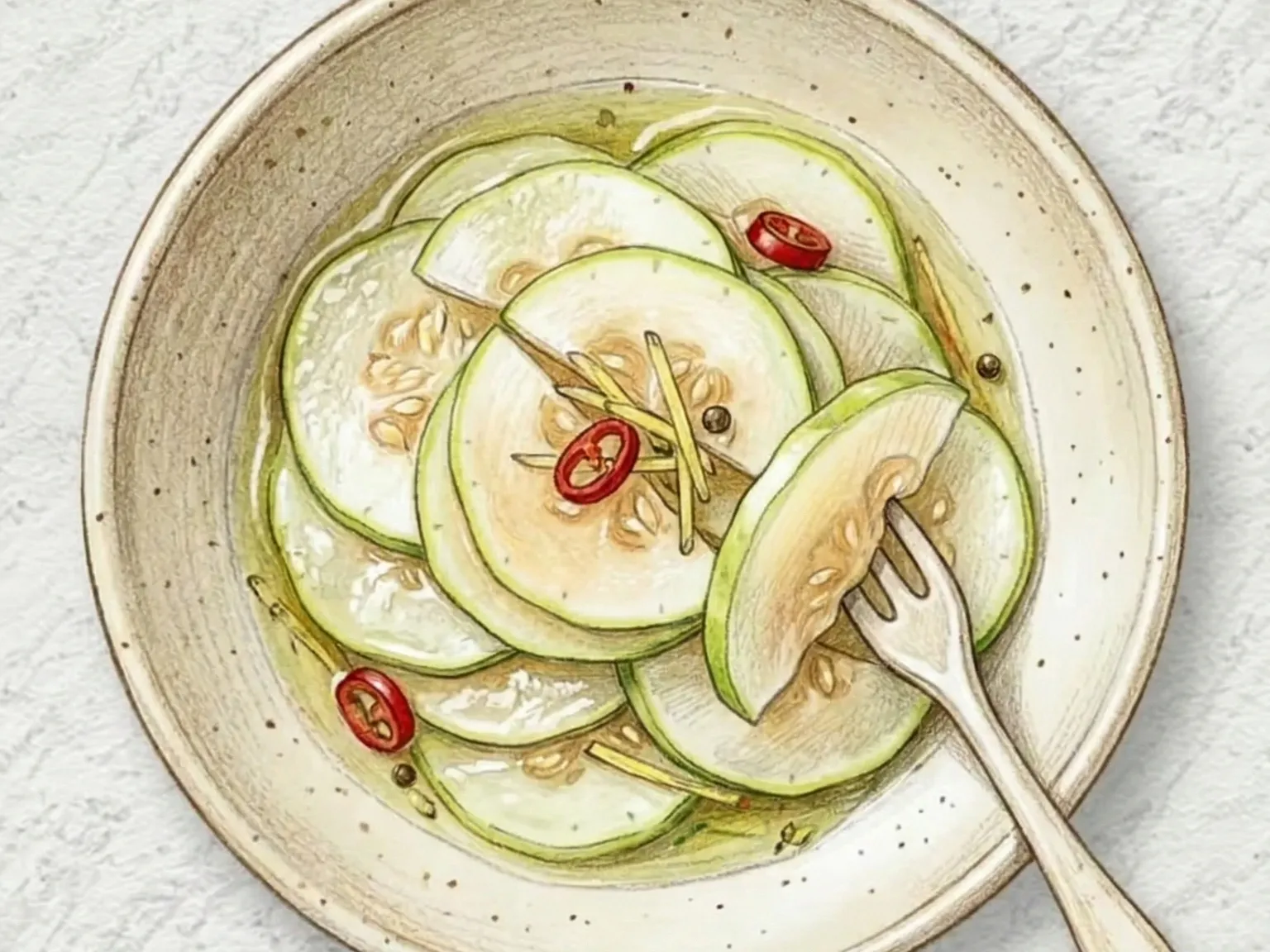
Chamoe jangajji is a Korean summer pickle made from firm Korean melon, seeded and sliced into thin half-moons, then cured in a brine of soy sauce, vinegar, and sugar. Salting the melon slices for fifteen minutes draws out excess moisture and prevents the brine from becoming diluted, helping the fruit hold its crunch over time. Sliced ginger added to the jar layers a warm, spicy note beneath the melon's naturally cool, sweet fragrance. After two days of refrigeration the sweet-sour-salty balance settles in, making this a refreshing seasonal banchan that works well on its own with rice or as a tangy topping for summer salads.

Prep 20minCook 12min4 servings

Adjust Servings

2servings
servings

Instructions

  1. 1

    Remove seeds and slice Korean melon into thin half-moons.

  2. 2

    Salt for 15 minutes, then drain excess moisture.

  3. 3

    Pack melon slices and ginger into a jar.

  4. 4

    Boil soy sauce, water, vinegar, and sugar to make brine.

  5. 5

    Cool the brine slightly and pour it into the jar.

  6. 6

    Refrigerate for 2 days and serve chilled.

🛒Shop Ingredients on Amazon

As an Amazon Associate, we may earn from qualifying purchases.

Tips

Use firm, less-ripe melon for better texture.
Great as a tangy topping for salads.

Nutrition (per serving)

Calories
102
kcal
Protein
2
g
Carbs
23
g
Fat
0
g

More Recipes

Korean Cherry Tomato Jangajji
KimchiEasy

Korean Cherry Tomato Jangajji

Tomato jangajji is a Korean soy-vinegar pickle made with peeled cherry tomatoes soaked in a boiled brine of soy sauce, vinegar, and sugar. Removing the skins allows the brine to penetrate the flesh quickly, creating an even sweet-salty-tangy flavor throughout each tomato. Sliced onion and fresh basil leaves added to the jar contribute crunch and an herbaceous note that elevates the tomatoes' natural fruitiness. After one day of chilling, the pickle develops a crisp, cold tanginess that makes it especially suited to warm-weather meals.

🍱 Lunchbox
Prep 25minCook 8min4 servings
Korean-Style Cabbage Pickle
KimchiEasy

Korean-Style Cabbage Pickle

Yangbaechu pickle is a quick Korean-style vinegar pickle made by pouring a hot brine of vinegar, sugar, salt, and whole peppercorns over bite-sized cabbage and carrot pieces. The hot liquid slightly wilts the vegetables while they retain a firm, crisp crunch. Whole black peppercorns add a subtle spiced note that gives the pickle more dimension than a plain vinegar soak. Ready after just one day of refrigeration, it is commonly served alongside fried cutlets, burgers, or other rich dishes to cut through greasiness. Best consumed within a week for peak crunchiness.

🍱 Lunchbox
Prep 15minCook 8min4 servings
Korean Miyeok Julgi Jangajji (Seaweed Stem Pickles)
KimchiEasy

Korean Miyeok Julgi Jangajji (Seaweed Stem Pickles)

Miyeok julgi jangajji is a Korean seaweed stem pickle made by soaking salted seaweed stems to remove excess salt, blanching briefly, and submerging them with onion and cheongyang chili in a brine of boiled dark soy sauce, vinegar, and sugar. The stems' distinctive crunchy-chewy texture holds up as they absorb the brine, and a faint oceanic note lingers beneath the soy sauce's savory depth and the vinegar's brightness. Onion adds natural sweetness to the pickling liquid, and the chili sharpens the finish with a clean heat. Reboiling and cooling the brine before a second pour extends shelf life, making this a long-lasting banchan in the refrigerator.

🥗 Light & Healthy🍱 Lunchbox
Prep 20minCook 12min4 servings
Korean Soy Pickled Cucumber
KimchiEasy

Korean Soy Pickled Cucumber

Oi jangajji is a Korean soy-pickled cucumber made by slicing cucumbers into one-centimeter rounds, lightly salting them, then packing them into a sterilized jar with garlic cloves and green chilies before pouring over a boiling brine of soy sauce, water, vinegar, and sugar. The hot liquid partially cooks the cucumber surface while the center stays crisp, and two days of cold fermentation lets the sweet-salty-sour brine soak through to the core. The green chilies leave a faint heat at the back of each bite, and whole garlic cloves release their aroma into the brine as they soften. Reboiling and re-pouring the brine once extends the pickle's crunch, making this a practical side dish that keeps well over a week in the refrigerator.

🏠 Everyday🍱 Lunchbox
Prep 20minCook 10min4 servings
Crispy Mushroom Tangsu (Sweet & Sour)
Side dishesMedium

Crispy Mushroom Tangsu (Sweet & Sour)

Double-fried oyster mushrooms with a shattering crust, drizzled in tangy sweet-and-sour sauce - a crowd-pleasing Korean tangsu that rivals the meat version. Coated in potato starch batter, they fry at 170°C, rest, then refry at 180°C for maximum crunch. A separate sauce of soy, vinegar, and sugar simmers with onion, bell pepper, and carrot, thickened with starch slurry. Poured over just before serving - or kept aside to preserve crunch.

🏠 Everyday🎉 Special Occasion
Prep 20minCook 18min4 servings
Korean Soy-Marinated Soybean Leaves
Side dishesMedium

Korean Soy-Marinated Soybean Leaves

Kongnip-jangajji is soybean leaves preserved in a seasoned soy brine - one of the two major leaf jangajji traditions alongside perilla leaf (kkaennip) jangajji. Soybean leaves are larger and thicker than perilla leaves, taking longer to absorb the pickling liquid but offering a more substantial chew, with each leaf large enough to wrap around a spoonful of rice. The brine - soy sauce, water, vinegar, and sugar boiled together - must cool completely before pouring over the leaves; hot liquid softens them into a limp state, destroying the desired texture. Garlic cloves, cheongyang chili, and onion slices added to the jar infuse the brine with aromatic complexity during the curing process, producing a more layered flavor than plain soy. A minimum of two days of refrigerated aging is needed for the seasoning to reach the leaf interior, and flipping the layers once daily ensures even penetration. The most common way to eat it is draped over hot steamed rice, ssam-style.

🏠 Everyday🍱 Lunchbox
Prep 15minCook 10min4 servings
More Kimchi