Korean Spicy Pollock Tripe Jeotgal
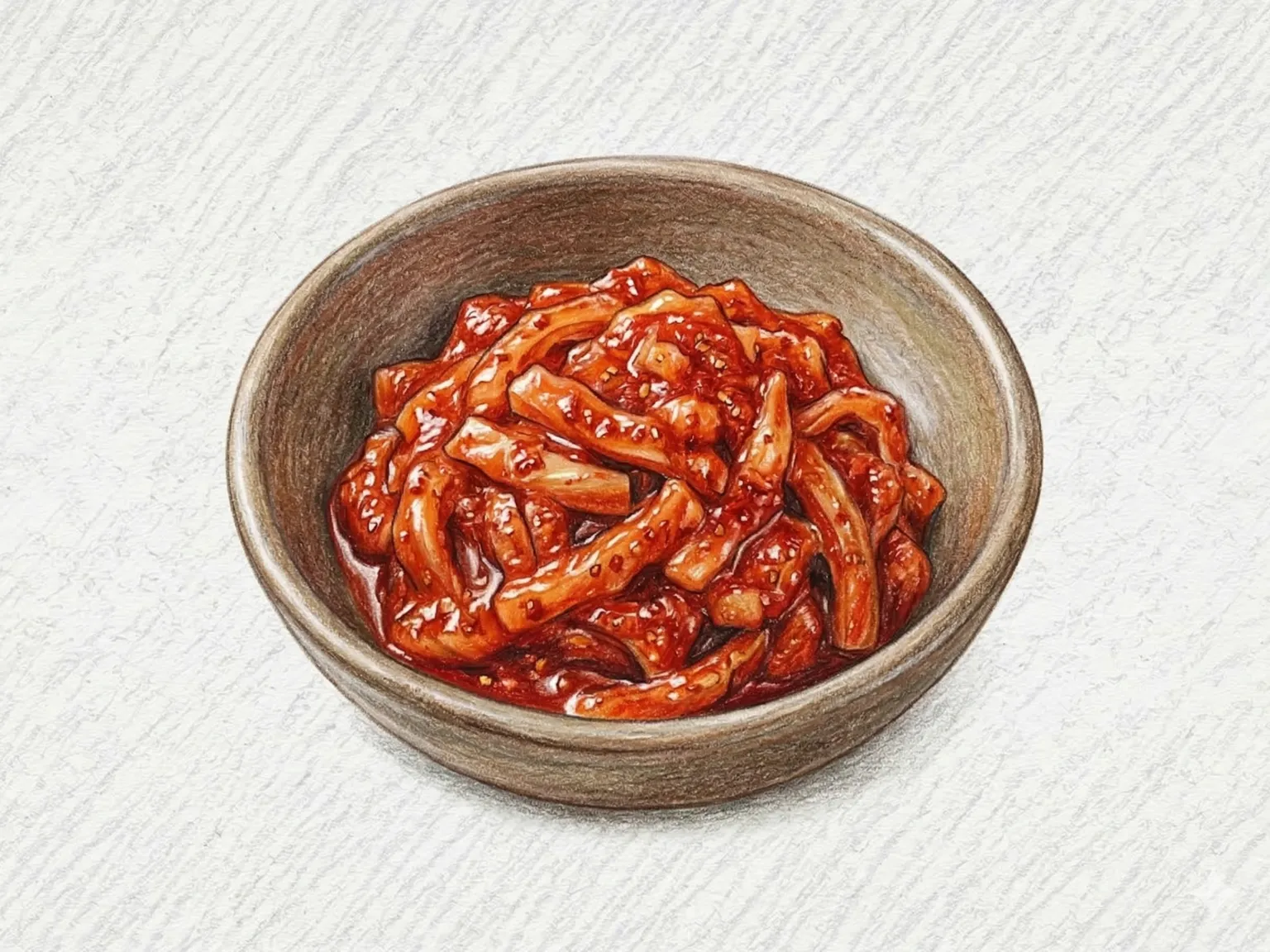
Changnan jeotgal is a traditional Korean fermented condiment made from pollock tripe that is cleaned thoroughly, salted with coarse salt for thirty minutes to firm the texture and draw out moisture, then seasoned with gochugaru, garlic, ginger, and fish sauce. Meticulous washing and complete drying of the tripe are essential for a clean-tasting result. The chili flakes and fish sauce develop a complex, salty umami during fermentation, while a small amount of sesame oil rounds out the aroma. Sealed and refrigerated for at least three days, the jeotgal deepens in flavor over time. Even a small portion placed on hot steamed rice delivers an intense savory punch.
Adjust Servings
Instructions
- 1
Clean pollock tripe thoroughly and salt for 30 minutes.
- 2
Rinse lightly in cold water and drain completely.
- 3
Mix chili flakes, garlic, ginger, fish sauce, and sugar for seasoning.
- 4
Toss tripe with seasoning and finish with sesame oil.
- 5
Store airtight and refrigerate for 3 days before serving.
As an Amazon Associate, we may earn from qualifying purchases.
Tips
Nutrition (per serving)
More Recipes

Korean Salted Pollock Roe Jeotgal
Myeongran jeotgal is a Korean salted pollock roe ferment where fresh roe sacs are cleaned of blood spots and membranes, brushed with rice wine to suppress fishiness, then coated in a curing blend of sea salt, gochugaru, and minced garlic before being sealed in a container with a piece of kelp. Over three to five days of cold fermentation, the salt extracts moisture from each tiny egg, concentrating the pop-and-burst texture while enzymatic breakdown generates a deep, briny umami. The chili flakes add a gentle warmth that complements rather than overwhelms the roe's natural flavor. Sliced thin and placed on hot steamed rice, the eggs release their salty, oceanic intensity with each bite.

Korean Spicy Salted Octopus Jeotgal
Nakji jeotgal is a Korean fermented octopus side dish made by salting cleaned octopus for forty-five minutes to draw out moisture and firm the flesh, then dressing it in a paste of gochugaru, minced garlic, ginger, anchovy fish sauce, and plum syrup. The initial salt cure tightens the octopus's naturally chewy texture, and the chili seasoning coats every surface in a spicy, crimson layer that penetrates deeper as it sits. Plum syrup counteracts any residual marine smell while adding a subtle fruit sweetness that balances the salt and heat. After two to three days of refrigeration, fermentation begins to develop, pushing the umami forward. Each piece has a springy, resistant chew that releases concentrated ocean flavor against the warmth of steamed rice.

Korean Spicy Fermented Squid Jeotgal
Ojingeo jeotgal is a Korean fermented squid preserve made by salting cleaned, finely chopped squid for one hour to firm the flesh and extract moisture, then dressing it in a paste of gochugaru, minced garlic, ginger, fish sauce, and corn syrup. The salt cure intensifies the squid's natural chewiness, and cutting the pieces small accelerates seasoning absorption during the two-to-three-day cold fermentation. Chili flakes coat every surface in a vibrant red layer that delivers steady heat, while corn syrup adds gloss and a mild sweetness that prevents the salt from dominating. Spooned over steamed rice, each piece offers a firm, springy chew followed by a wave of fermented umami. Mixing in a touch of sesame oil before serving softens the saltiness.

Korean Seasoned Salted Pollock Stomach
Changnanjeot - salt-fermented pollock stomach - belongs to Korea's jeotgal tradition, where seafood organs are brined for months until they develop intense umami. The stomach lining has a firm, slightly rubbery chew distinct from softer jeotgal like salted shrimp. Drained of excess brine and dressed with gochugaru, garlic, scallion, and sugar, it becomes a high-impact condiment banchan. A thumbnail-sized piece on rice delivers a concentrated burst of fermented marine salt and chili heat.

Korean Salted Oyster Jeotgal
Gul jeotgal is a traditional Korean fermented seafood condiment made by curing fresh winter oysters in solar salt with gochugaru, garlic, ginger, and plum extract, then aging at low temperature. Salt draws moisture from the soft oyster flesh, concentrating its marine umami into a potent, briny paste. Gochugaru adds color and a spicy dimension, while plum extract suppresses any fishiness that develops during fermentation and contributes a balancing acidity. Beyond serving as a banchan on its own over rice, gul jeotgal is commonly folded into napa cabbage kimchi filling, where it elevates the kimchi's savory depth by an order of magnitude.

Korean Seasoned Pollock Roe Banchan
Myeongranjeot-muchim dresses raw salted pollock roe with a near-minimal seasoning - a paradoxical dish where less seasoning produces more flavor, because the roe's own brininess and umami are the point. Korean myeongranjeot differs from Japanese mentaiko in being less aggressively salted and not coated in chili marinade by default. The membrane is peeled away and the loose eggs are placed in a bowl with sesame oil, a pinch of gochugaru, and finely sliced scallion, then folded together gently - vigorous stirring crushes the individual eggs and destroys the pop-on-the-tongue texture that defines the dish. The gochugaru adds a whisper of warmth and color without masking the roe's marine depth. Spooned over hot rice and mixed through, this banchan is an intense rice-thief - a small portion can carry an entire bowl of steamed rice. Substituting perilla oil for sesame oil shifts the flavor profile toward a cleaner, more neutral nuttiness.