Charred Cabbage Gamtae Salad

Charred Cabbage Gamtae Salad

Quick answer

Charred cabbage gamtae salad quarters baby napa cabbage lengthwise, brushes the cut sides with perilla oil, and sears them on a hot pan for 3-4 minutes per side until dee...

What makes this special

  • Cabbage seared for four minutes loses its raw sulfur aroma, replacing it with deep caramel sweetness.
  • High-heat charring 3-4 minutes eliminates raw cabbage smell; caramel sweetness rises
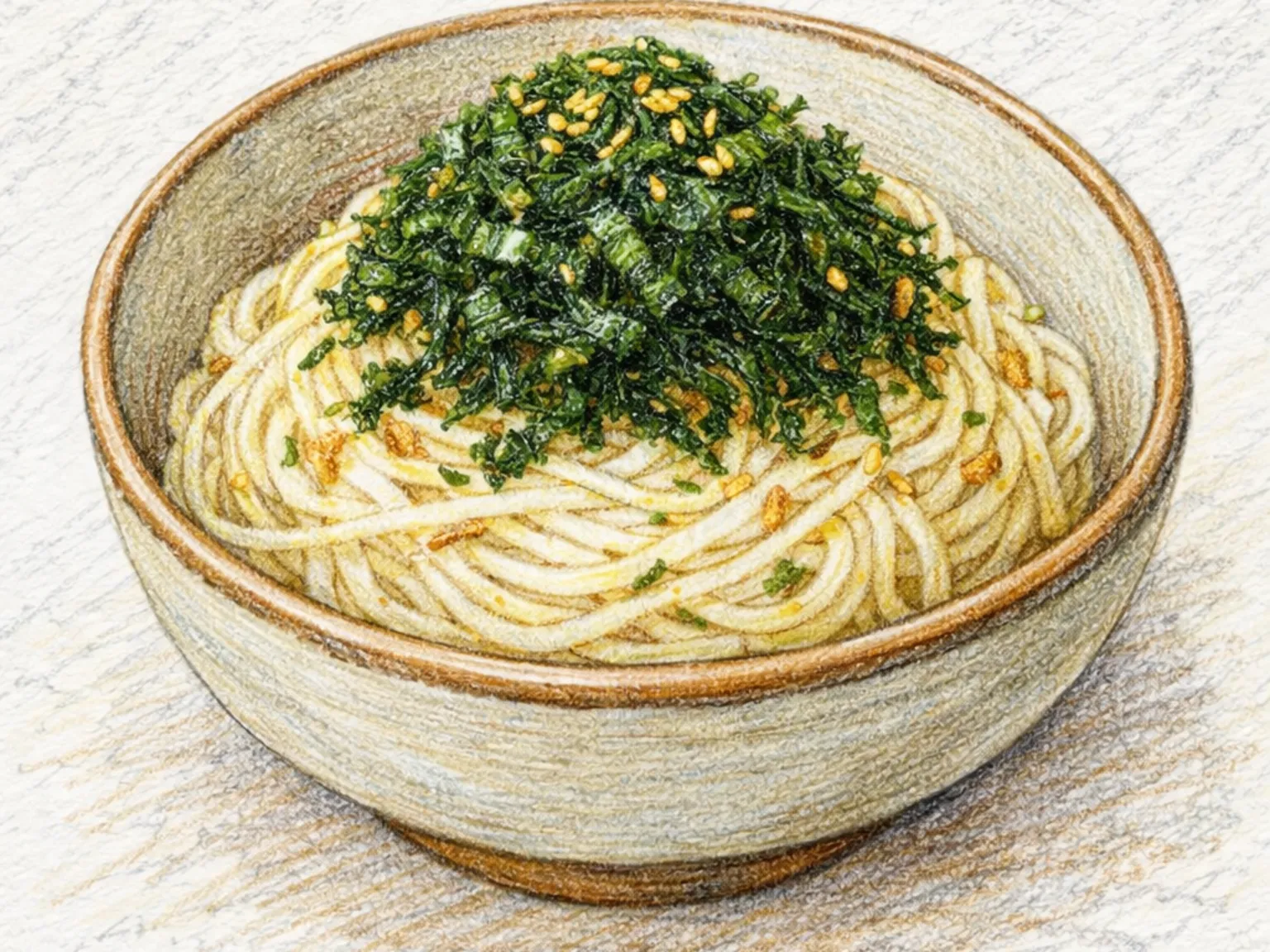
  • Hand-crushed gamtae on top adds seaweed umami and crisp texture
Total time
25 min
Level
Easy
Servings
4 servings
Ingredients
9
Calories
120 kcal
Protein
4 g

Key ingredients

baby napa cabbagegamtae seaweedcherry tomatoesscallionsdark soy sauce

Core cooking flow

  1. 1 Cut 500 g baby napa cabbage lengthwise into 4 wedges, trimming the cut faces so they sit flat in the pan.
  2. 2 Heat a pan or grill over high heat until it is fully hot before adding the cabbage.
  3. 3 Turn the wedges and sear the other cut side for another 3 to 4 minutes.

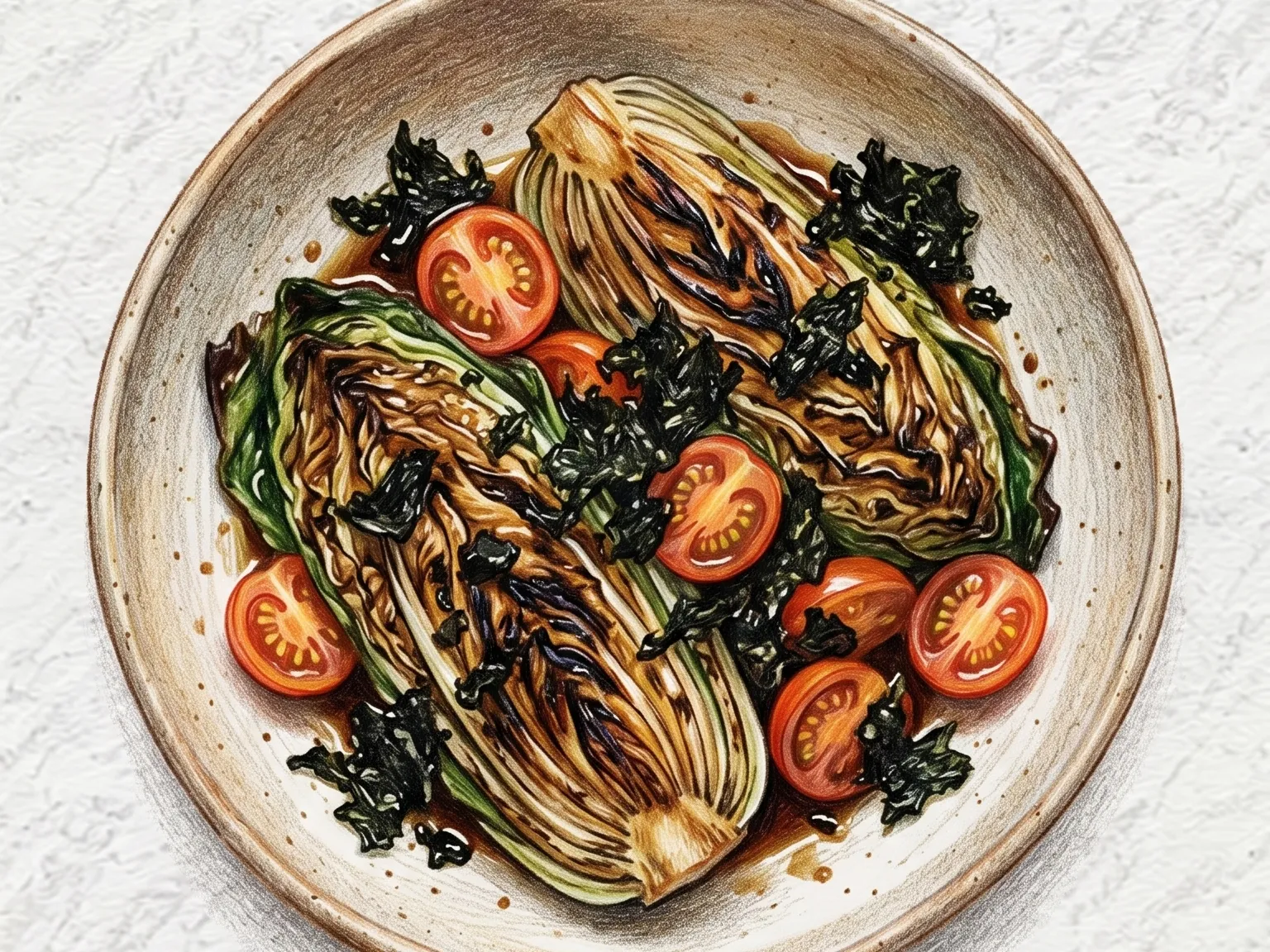
Charred cabbage gamtae salad quarters baby napa cabbage lengthwise, brushes the cut sides with perilla oil, and sears them on a hot pan for 3-4 minutes per side until deeply browned. The intense heat replaces raw cabbage's grassy bite with caramelized sweetness and smoky char, and gamtae seaweed crumbled by hand at the very end adds a crisp texture and concentrated ocean depth. A dressing of dark soy sauce, maesil syrup, brown rice vinegar, and perilla oil provides a salty-tangy base, while halved cherry tomatoes contribute juicy acidity. Serving the salad warm preserves both the cabbage's char aroma and the seaweed's crispness.

Prep 15min Cook 10min 4 servings

Instructions

Read the steps as a cooking flow: prep, heat, seasoning, doneness control, and finish.

6 steps
  1. 1
    Prep

    Cut 500 g baby napa cabbage lengthwise into 4 wedges, trimming the cut faces so they sit flat in the pan.

    Brush only the cut sides with a very thin layer of perilla oil so the cabbage chars instead of turning greasy.

  2. 2
    Control

    Heat a pan or grill over high heat until it is fully hot before adding the cabbage.

    Place the wedges cut-side down and sear for 3 to 4 minutes without pressing, until the surface becomes deep brown.

  3. 3
    Prep

    Turn the wedges and sear the other cut side for another 3 to 4 minutes.

    Remove them before the center turns limp; the outside should be charred and fragrant while the core remains crisp.

  4. 4
    Prep

    Halve 150 g cherry tomatoes so their juice can mix with the dressing, and slice 30 g scallions into 0.5 cm rounds.

    Crumble 6 g gamtae by hand only shortly before serving to keep it crisp.

  5. 5
    Season

    In a small bowl, mix 1.5 tbsp dark soy sauce, 1 tbsp maesil syrup, 1 tbsp brown rice vinegar, and 1.5 tbsp perilla oil.

    Stir until the salty, sweet, tangy, and nutty parts taste evenly balanced.

  6. 6
    Finish

    Arrange the hot charred cabbage on a plate, then add the cherry tomatoes and scallions.

    Scatter the gamtae and 1 tsp sesame seeds last, spoon the dressing evenly over everything, and serve immediately while warm and crisp.

After the steps

Pick a recipe that fits this dish.

Continue with shared ingredients, meal pairings, or a similar method.

Recipes That Go Well With This

More Salads →

Based on shared ingredients and meal pairing

Dotori-Muk Vegetable Salad (Acorn Jelly Salad)
Shared ingredient: scallions Salads

Dotori-Muk Vegetable Salad (Acorn Jelly Salad)

Dotori-muk (acorn jelly) is cut into bite-sized blocks and served with fresh lettuce, cucumber, and perilla leaves in this Korean salad. The jelly's smooth, firm texture creates a distinct contrast against the crunchy vegetables, while scallion lifts the overall aroma. A seasoning sauce of soy sauce, vinegar, gochugaru, and sesame oil gives the mild-flavored jelly a salty-tangy kick. Acorn jelly is notably low in calories and high in dietary fiber, and the tannins from acorn starch are traditionally believed to support digestion. The sesame oil and gochugaru in the dressing add a glossy richness and depth that transforms the otherwise neutral jelly into a cohesive, satisfying dish. Served chilled during summer, it works equally well as a light banchan when appetite runs low or as a refreshing standalone bowl.

Chamnamul Pear Tofu Salad
Shared ingredient: cherry tomatoes Salads

Chamnamul Pear Tofu Salad

Chamnamul pear tofu salad pan-sears firm tofu cubes for 6-8 minutes until the exterior turns golden and crisp while the inside stays soft. Chamnamul is cut into 5 cm lengths to preserve its fragrant mountain-herb character, and Korean pear is julienned thin so its clean juice sweetens each bite. A dressing of perilla oil, lemon juice, and soup soy sauce delivers nuttiness and umami in a single drizzle, and halved cherry tomatoes contribute a pop of acidity. Slicing the pear just before assembly minimizes browning, and toasted sesame seeds scattered on top add a final layer of warm, nutty aroma.

Korean Salt-Grilled Croaker
Serve together Grilled

Korean Salt-Grilled Croaker

Mineo-sogeum-gui is a Korean salt-grilled croaker where fillets are seasoned with only coarse sea salt and white pepper, then pan-fried skin-side down in olive oil. Croaker is a lean white-fleshed fish with a subtle but genuine depth of flavor, and restraint with seasoning allows that natural character to come through clearly. Patting the surface completely dry before cooking is critical, since any moisture on the skin prevents it from crisping and causes it to stick to the pan. A whisper-thin coat of flour on the fillet creates a light barrier that forms a delicate crust on contact with the hot oil. Placing the fillet skin-side down and cooking it that way for roughly seventy to eighty percent of the total time allows the flesh to finish gently from residual heat after flipping, which prevents it from drying out. Minced garlic is introduced only in the final minute so it perfumes the oil without burning. A squeeze of lemon juice and a scatter of sliced chives at the table add brightness that frames the clean flavor of the fish rather than competing with it. Fresh croaker is best from July through August, but frozen fillets can be prepared with the same method.

Roasted Sweet Potato Chwinamul Salad
Similar recipe Salads

Roasted Sweet Potato Chwinamul Salad

Roasted sweet potato chwinamul salad combines skin-on sweet potato cubes roasted at 200 degrees Celsius for 22 minutes with chwinamul blanched for just 20 seconds to preserve its distinctive herbaceous bitterness. A dressing of perilla oil, soy sauce, rice vinegar, and minced garlic delivers a rich nuttiness underscored by sharp acidity, which frames the sweet potato's natural sugars without masking them. Chickpeas contribute a mild, starchy body that balances the sweetness, while sunflower seeds and sesame seeds add scattered crunch throughout. Tossing the salad while the sweet potato is still warm rather than fully cooled allows the dressing to absorb into the starchy surface rather than sliding off. Blanching chwinamul longer than 20 seconds causes it to lose its characteristic bitter note and turn dull in color, so transferring it immediately to cold water after blanching is necessary to preserve both flavor and appearance.

Serve with this

Chamnamul Walnut Pesto Trofie
Pasta Easy

Chamnamul Walnut Pesto Trofie

Chamnamul walnut pesto trofie is a fusion pasta that coats twisted trofie in a pesto made from Korean chamnamul (wild parsley), walnuts, Parmigiano, and olive oil. Chamnamul has a lighter, more herbaceous quality than basil, with a faintly bitter finish that gives the pesto a distinctly Korean aromatic character. Walnuts contribute a heavier, more assertive nuttiness than pine nuts, thickening the sauce and anchoring the savory depth together with the aged cheese. The spiral grooves of trofie hold the pesto in every ridge, releasing an even concentration of flavor with each bite. Adding sufficient olive oil during blending slows oxidation and prevents the chamnamul's green color from darkening too quickly. The pasta is best eaten immediately after tossing, when both the color and fragrance are at their peak.

🥗 Light & Healthy 🎉 Special Occasion
Prep 15min Cook 12min 2 servings
Soybean Paste Stew with Clams
Asian Easy

Soybean Paste Stew with Clams

Doenjang jjigae with clams is one of the most frequently made stews in Korean households, built on the combination of fermented soybean paste's deep, earthy flavor and the clean briny umami of manila clams. The clams are purged of sand before being added to a pot of doenjang-laced broth, where they open and release their salty, seawater-flavored liquor directly into the soup. The result transforms the base from something merely savory into something distinctly oceanic and complex. Zucchini softens in the bubbling broth and contributes a natural sweetness as it breaks down, while blocks of soft tofu act as sponges, soaking up the seasoned liquid and releasing it in a burst of hot, flavorful broth when bitten into. Sliced cheongyang chili peppers are added to interrupt the heaviness of the fermented paste and sharpen the overall flavor. The stew is typically served in an earthenware pot while still bubbling, alongside rice. Many Koreans ladle the broth directly over their bowl of rice. The recipe adapts to any season: assembled with leftover summer vegetables from the refrigerator for a lighter version, or cooked piping hot in a stone pot through winter.

🏠 Everyday
Prep 12min Cook 25min 2 servings
Jambon-Beurre (Classic Butter and Ham Baguette)
Western Easy

Jambon-Beurre (Classic Butter and Ham Baguette)

The jambon-beurre is a staple French sandwich designed for daily consumption, consisting of a baguette, butter, and ham. Because the recipe uses only three primary ingredients, the specific characteristics of each component are fundamental to the assembly. A traditional version utilizes a baguette characterized by a crust that breaks easily and a crumb that provides a chewy texture. The butter chosen is typically a cultured unsalted variety. It is necessary to bring the butter to room temperature to ensure it is soft enough to spread across the bread without damaging the soft interior. The ham used is jambon blanc, which is prepared in thin slices to build the layers of the sandwich. A light application of Dijon mustard on one side of the bread provides a sharp and peppery flavor profile. This ingredient serves to balance the heavy fat content of the butter against the natural saltiness found in the ham. Sliced cornichons are included inside the bread to add a level of tart acidity. These pickles help to reduce the overall weight of the sandwich ingredients and maintain a consistent balance of flavors in every bite.

⚡ Quick 🏠 Everyday
Prep 8min 2 servings

Similar recipes

Seaweed Stem and Apple Mustard Salad
Salads Easy

Seaweed Stem and Apple Mustard Salad

Salted seaweed stems are soaked to remove excess brine, then blanched briefly to achieve a firm, slightly chewy bite that defines this Korean salad's texture. Julienned apple adds crisp sweetness that contrasts with the seaweed's oceanic mineral flavor. Thinly sliced onion, soaked to mellow its sting, contributes a subtle sharpness. The dressing mixes Korean mustard paste with vinegar and oligosaccharide syrup - the mustard delivers a sharp nasal heat, while the syrup smooths the vinegar's acidity into something rounder. Tossing the apple with lemon juice first prevents browning, and a three-minute rest after dressing lets the flavors meld without overdressing the delicate stems.

🥗 Light & Healthy 🍱 Lunchbox
Prep 14min Cook 2min 2 servings
Korean Broccoli Doenjang Salad
Side dishes Easy

Korean Broccoli Doenjang Salad

Blanched broccoli tossed in doenjang dressing is a modern Korean banchan that pairs Western ingredients with traditional fermented seasoning. Florets and thinly sliced stems blanch for ninety seconds in salted boiling water, then shock in cold water to lock in vivid green color and a firm, crisp bite. The dressing is built from doenjang stirred with rice vinegar and oligosaccharide syrup, combining fermented salt depth, acidity, and a gentle natural sweetness that lifts rather than masks the vegetable's mild bitterness. Using the stems alongside the florets eliminates waste and adds textural variety to each bite. Ready in under ten minutes and holds well refrigerated for two days.

🥗 Light & Healthy 🏠 Everyday
Prep 10min Cook 5min 4 servings
Korean Stir-fried Mushrooms
Stir-fry Easy

Korean Stir-fried Mushrooms

Oyster mushrooms and shiitake are stir-fried over high heat until their moisture evaporates and their natural umami concentrates into each bite. Wiping the mushrooms with a damp cloth instead of rinsing under water is not a minor detail: washing introduces excess moisture that lowers pan temperature the moment the mushrooms hit the surface, which causes them to steam rather than sear. The pan must stay hot enough that the mushrooms develop light golden edges through the Maillard reaction, and that narrow window is when the deepest nutty flavor emerges. Water-logged mushrooms never reach it. Soy sauce supplies the salinity, and black pepper adds a sharp accent without obscuring the mushrooms' own flavor. Sesame oil is added after the heat is turned off to preserve its volatile fragrance; adding it while the pan is still hot burns off the aromatic compounds before they have a chance to coat the mushrooms. A handful of sliced green onion tossed in at the end brings color and a sharp, fresh bite against the earthy backdrop. At roughly 120 calories per serving, this side dish fits comfortably into any calorie-conscious meal plan while delivering plant-based protein and dietary fiber in a form that actually tastes worth eating.

🥗 Light & Healthy 🏠 Everyday
Prep 12min Cook 8min 2 servings

Tips

Avoid overcooking; char the surface hard while keeping the core crisp.
Add gamtae at the end to preserve its crisp aroma.

Nutrition (per serving)

Calories
120
kcal
Protein
4
g
Carbs
13
g
Fat
6
g