Charred Corn Bulgur Gochujang Salad
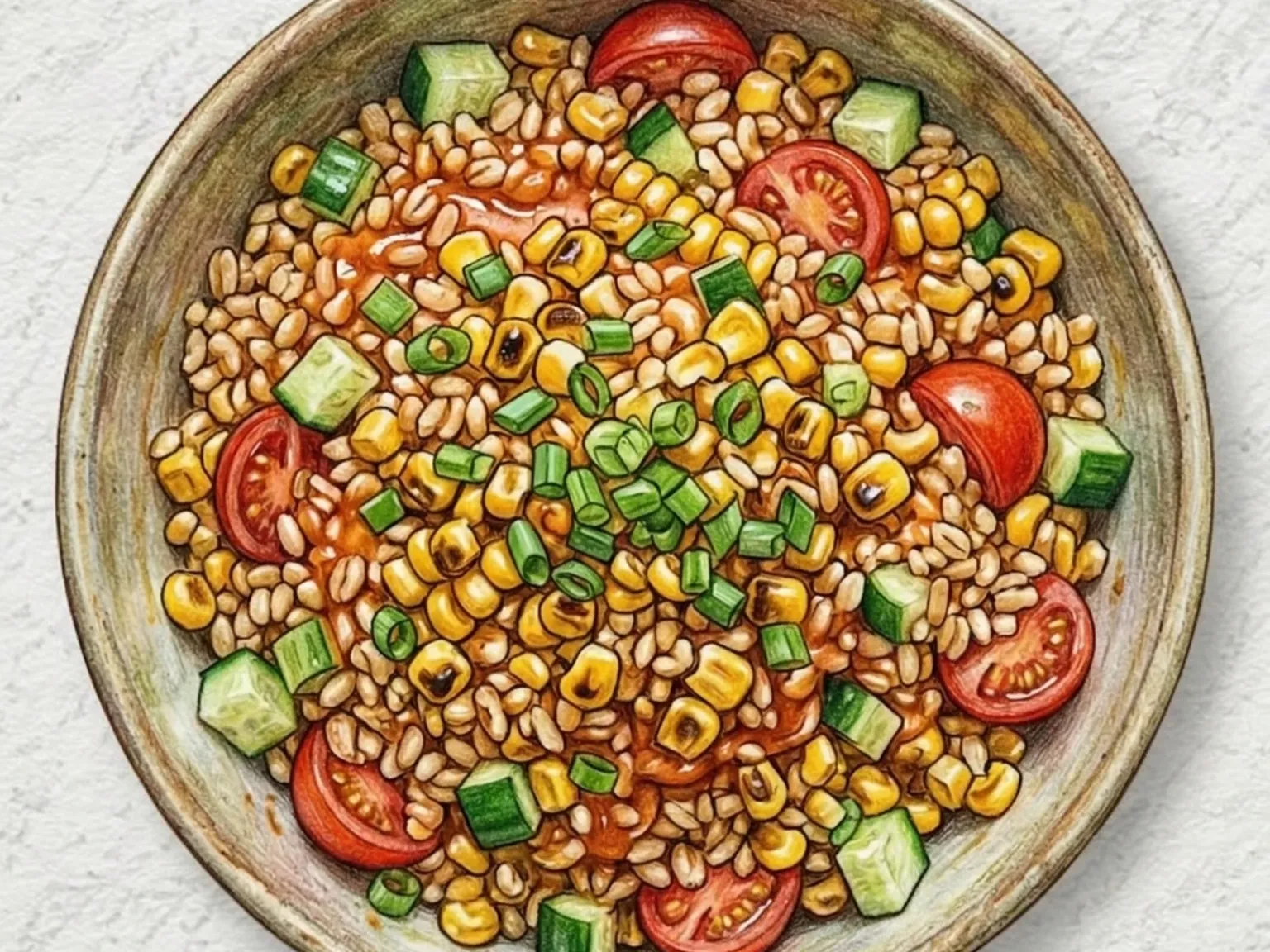
Charred corn bulgur gochujang salad dry-chars corn kernels in a hot pan for three minutes to caramelize their natural sugars, then combines them with bulgur wheat cooked for eight minutes to a chewy, al dente finish. A smooth dressing of gochujang, olive oil, apple cider vinegar, and maple syrup coats the grains in spicy-sweet Korean flavor, and diced cucumber with halved cherry tomatoes provides moisture and bright acidity. Pulling the bulgur while still slightly firm prevents it from turning mushy, and resting the salad for 10 minutes at room temperature lets the grains soak up the dressing. Thinly sliced scallions add a mild onion note on top.
Adjust Servings
Instructions
- 1
Cook bulgur in boiling water for 8 minutes, then drain and cool.
- 2
Char corn in a hot pan over high heat for about 3 minutes.
- 3
Halve cherry tomatoes, dice cucumber, and finely slice scallions.
- 4
Whisk gochujang, olive oil, vinegar, maple syrup, and salt until smooth.
- 5
Combine bulgur, corn, tomatoes, cucumber, and scallions, then toss with dressing.
- 6
Let rest 10 minutes so grains absorb flavor, then serve chilled or at room temperature.
As an Amazon Associate, we may earn from qualifying purchases.
Tips
Nutrition (per serving)
More Recipes

Charred Broccolini Doenjang Lentil Salad
Charred broccolini doenjang lentil salad halves broccolini lengthwise, coats it in olive oil, and chars it in a hot pan for 4-5 minutes until the edges darken and turn slightly bitter-sweet. Cooked lentils bring a starchy, filling texture, and a thick dressing of doenjang, Dijon mustard, apple cider vinegar, and minced garlic layers fermented depth with sharp acidity. Roughly chopped walnuts release oily richness when bitten, and the apple cider vinegar tempers the salt of the doenjang. Draining the lentils thoroughly prevents the dressing from thinning, and resting the assembled salad five minutes before serving lets the grains absorb the seasoning more fully.

Bean Sprout Bulgur Seaweed Salad
Bulgur wheat brings a plump, nutty chew that pairs naturally with blanched bean sprouts, creating a hearty Korean grain salad with satisfying bite. The dressing - soy sauce, apple vinegar, sesame oil, and minced garlic - mirrors the classic Korean namul seasoning profile, tying grain and vegetable together seamlessly. Julienned carrot adds sweetness and color, while sliced scallion sharpens the finish with a mild onion bite. Roasted seaweed flakes are folded in just before serving to preserve their crunch; their oceanic saltiness plays off the earthy grain in a combination that is distinctly Korean.

Gochujang Chickpea Crunch Salad
Gochujang chickpea crunch salad centers on chickpeas roasted at 200 degrees Celsius for twenty minutes until crisp, tossed with hand-massaged kale, shredded red cabbage, julienned carrot, and half-moon cucumber slices in a gochujang dressing. The chickpeas must be dried completely and spread in a single layer so moisture can escape and the surface crisps evenly; cooling them fully before dressing prevents the crunch from softening too quickly. The dressing combines gochujang, soy sauce, maple syrup, rice vinegar, and sesame oil, layering fermented heat and sweetness over a tart backbone that brings out both the bitterness and natural sweetness of the vegetables. Massaging the stemmed kale by hand for one minute breaks down the tough fibers and opens the leaves to absorb the bold dressing throughout.

Barley Grain Salad
Barley grain salad builds on the chewy, nutty character of well-cooked pearl barley by tossing it with diced bell pepper, cucumber, and red onion in a lemon-herb dressing. Olive oil brings a rounded richness that pairs naturally with the grain's earthy flavor, while fresh lemon juice lifts the whole bowl with bright acidity. The raw vegetables contribute moisture and crunch that break up the density of the barley, keeping each forkful interesting. High in fiber and naturally filling, this Mediterranean-inspired salad works as a standalone light meal or as a substantial side next to grilled meat or fish.

Korean Spicy Gochujang Bulgogi
This spicy gochujang pork bulgogi builds its bold flavor from a marinade of gochujang, Korean chili flakes, soy sauce, garlic, and corn syrup applied to thick-cut pork neck. Stir-frying on medium-high heat drives off moisture first, allowing the sauce to caramelize and develop depth rather than turn watery. Onion goes in next, contributing natural sweetness that tempers the chili heat, followed by green onion for a fresh aromatic lift. Scoring thicker slices helps the marinade penetrate more evenly. The generous four-serving yield makes it a practical centerpiece for family dinners.

Korean Seaweed Salad (Tangy Chili-Vinegar Dressed Miyeok)
Miyeok-muchim is rehydrated seaweed dressed in cho-gochujang (vinegared chili paste) or cho-ganjang (vinegared soy sauce) - one of the most common ways Koreans consume miyeok outside of birthday soup. Thirty grams of dried miyeok expands eight to ten times its volume when soaked for twenty minutes, easily serving two - the most common beginner mistake is adding far too much dried seaweed. A brief blanch in boiling water deepens the color to a vivid green, reduces the marine odor, and a cold rinse afterward sets the slippery yet bouncy texture. Cho-gochujang dressing (gochujang mixed with vinegar and sugar) adds a sweet-sour-spicy layer that tempers the seaweed's natural brininess. Mixing in julienned cucumber creates a textural contrast between the silky seaweed and crunchy vegetable. At roughly fifty kilocalories per serving and rich in dietary fiber and iodine, this banchan is a mainstay of Korean health-conscious eating. Served chilled from the refrigerator, it is particularly refreshing in summer.