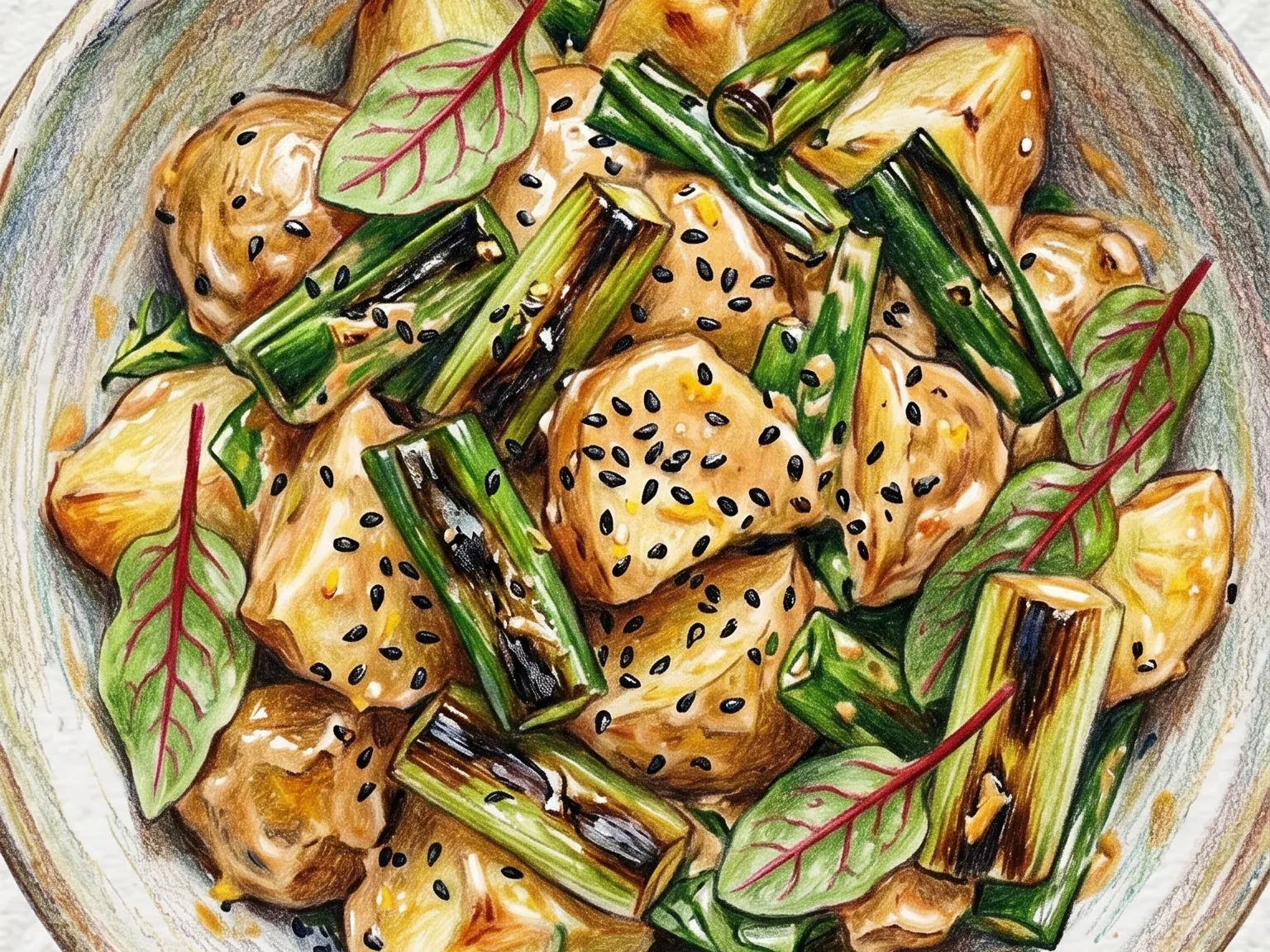
Charred Daepa Gamja Doenjang Salad (Charred Leek Potato Salad)
Quick answer
Charred daepa gamja doenjang salad combines boiled potatoes with large green onion segments that have been seared until deeply caramelized and smoky.
What makes this special
- Charring daepa leeks until browned removes their pungency and unlocks a concentrated, sweet onion flavor.
- Charring leek until deeply browned removes pungency, unlocking caramel sweetness
- Doenjang with lemon and honey adds fermented depth, acidity, and subtle sweetness
Key ingredients
Core cooking flow
- 1 Scrub 250 g potatoes well and cut them skin-on into 2 cm chunks.
- 2 When a toothpick slides through without resistance, drain the potatoes in a sieve.
- 3 Cut 120 g daepa into 5 cm pieces. Film the pan very lightly with olive oil a...
Charred daepa gamja doenjang salad combines boiled potatoes with large green onion segments that have been seared until deeply caramelized and smoky. The high heat strips away the raw onion bite and replaces it with a concentrated sweetness and char aroma. A dressing made from doenjang, lemon juice, honey, and olive oil layers fermented depth with bright acidity and a touch of sweetness, drawing out the mild flavor of the potato. Tossing the potatoes while still warm allows the dressing to absorb into the starchy flesh rather than sitting on the surface. Red chard adds color and a faint bitterness that gives the bowl a sense of direction, while black sesame seeds contribute a final nutty accent.
Instructions
Read the steps as a cooking flow: prep, heat, seasoning, doneness control, and finish.
- 1Control
Scrub 250 g potatoes well and cut them skin-on into 2 cm chunks.
Start them in cold, lightly salted water, then simmer over medium heat for about 10 minutes so the centers cook evenly.
- 2Step
When a toothpick slides through without resistance, drain the potatoes in a sieve.
Let them steam dry for about 2 minutes, because surface water will thin the doenjang dressing and weaken its cling.
- 3Control
Cut 120 g daepa into 5 cm pieces.
Film the pan very lightly with olive oil and sear over medium-high heat for 3 to 4 minutes, turning so several sides become dark brown and smoky.
- 4Step
Remove the daepa when the outside is deep brown and the inside has softened.
If the smell turns harsh instead of sweet and toasted, lower the heat slightly and turn the pieces right away.
- 5Step
In a small bowl, loosen 1 tbsp doenjang with 1 tbsp lemon juice, 1 tsp honey, and 0.5 tsp minced garlic first.
Whisk in 2 tbsp olive oil gradually until the dressing looks smooth and pourable.
- 6Step
Add the warm potatoes, charred daepa, and 60 g red chard to a bowl, then drizzle over the dressing.
Fold gently from the bottom to keep the potatoes intact, scatter 1 tsp black sesame seeds, and rest 3 minutes before serving.
After the steps
Pick a recipe that fits this dish.
Continue with shared ingredients, meal pairings, or a similar method.
Recipes That Go Well With This
More Salads →Based on shared ingredients and meal pairing
Pollock Roe Potato Crisp Salad
Potato slices are baked or pan-fried until golden and crisp, then topped with briny salted pollock roe for salt and umami in each bite. Greek yogurt mixed with mayonnaise creates a creamy base that softens the roe's intense seasoning. Romaine and cucumber provide fresh crunch contrasting with the crispy potato and popping roe granules. Lemon juice cuts through the richness, and shredded roasted seaweed deepens the seafood aroma - making this as enjoyable as a drinking snack as it is a side dish.
Charred Broccolini Doenjang Lentil Salad
Charred broccolini doenjang lentil salad halves broccolini lengthwise, coats it in olive oil, and chars it in a very hot pan for 4 to 5 minutes until the cut edges darken and take on a bitter, smoky note. Cooked lentils add a starchy, filling body to the bowl. A dressing of doenjang, Dijon mustard, apple cider vinegar, and minced garlic layers fermented depth against sharp acidity. Roughly chopped walnuts break open with each bite and release a fatty, toasted richness. The apple cider vinegar cuts through the salt of the doenjang, keeping the dressing balanced. Draining the lentils thoroughly is necessary to prevent the dressing from diluting, and letting the assembled bowl rest five minutes before serving allows the grains to draw in the seasoning.
Korean Grilled Deodeok Root
Deodeok-gui is a traditional Korean mountain vegetable dish where peeled deodeok roots are pounded flat with a mallet, coated in a paste of gochujang, gochugaru, honey, sesame oil, and garlic, then grilled over high heat. The pounding step is critical: it breaks down the tough fibers so the seasoning absorbs evenly and the root develops a pleasant chewiness instead of remaining stringy. Soaking the peeled deodeok in lightly salted water for about thirty minutes before pounding draws out the sharpest bitterness, leaving only the characteristic mellow, slightly medicinal aroma the root is known for. That bittersweet quality sits in balance between the fermented spice of gochujang and the sweetness of honey. Quick grilling at high temperature chars the glaze just enough to add smokiness while keeping the interior moist; applying the seasoning paste in two stages during grilling builds a thicker, glossier layer on the surface. Toasted sesame seeds scattered on top contribute nuttiness that complements the wild herb's earthy, resinous character.
Water Parsley Shrimp Salad
This Korean salad combines pan-seared shrimp with water parsley (minari) in a doenjang yogurt dressing that brings Korean fermented soybean paste together with plain yogurt in a lighter, creamier form than the paste alone. The shrimp are cooked just until opaque and springy - overcooking at this stage toughens them and diminishes their clean sweetness, which is the primary flavor note in the dish. Thinly sliced cucumber adds cool moisture and a fresh crunch throughout, and red onion soaked in cold water for at least ten minutes loses its raw harshness while keeping a pleasant mild sharpness. The dressing ratio technique matters: coating all the ingredients with two-thirds of the dressing first establishes a baseline seasoning, then tasting and adjusting with the remaining third ensures every component is evenly flavored without oversalting. Doenjang varies in salt intensity by brand and age, so tasting the dressing before assembling and balancing with extra yogurt or lemon juice prevents the final dish from being too salty. Sesame seeds scattered on top contribute a nutty finish that ties the Korean pantry elements together.
Serve with this
Doenjang Clam Spinach Orzo
Doenjang clam spinach orzo is a one-bowl pasta built by cooking orzo in doenjang-seasoned vegetable stock alongside clams in a method borrowed directly from risotto technique. The clams are first purged in salt water to remove sand, then steamed open in white wine so they release their briny cooking liquid into the pan. That liquid merges with the already-present fermented depth of doenjang to form a layered savory base that carries the pasta from the very first minute of cooking. Toasting the orzo in butter or oil before adding any liquid coats the starch on each grain, a step that slows its release and produces a consistently creamy sauce by the end rather than a gluey mass or a watery broth. The stock goes in two or three additions rather than all at once, each addition added only once the previous one has been absorbed, and the pasta is stirred throughout so the released starch works into the liquid rather than sinking to the bottom. Spinach added in the final thirty to sixty seconds of cooking wilts just enough to turn tender without losing its bright green color or dissolving into the sauce. A knob of cold butter stirred in off heat as the finishing touch emulsifies into the sauce, adding a glossy sheen and a rounded, buttery richness that ties all the flavors together.
Soybean Paste Stew with Clams
Doenjang jjigae with clams is one of the most frequently made stews in Korean households, built on the combination of fermented soybean paste's deep, earthy flavor and the clean briny umami of manila clams. The clams are purged of sand before being added to a pot of doenjang-laced broth, where they open and release their salty, seawater-flavored liquor directly into the soup. The result transforms the base from something merely savory into something distinctly oceanic and complex. Zucchini softens in the bubbling broth and contributes a natural sweetness as it breaks down, while blocks of soft tofu act as sponges, soaking up the seasoned liquid and releasing it in a burst of hot, flavorful broth when bitten into. Sliced cheongyang chili peppers are added to interrupt the heaviness of the fermented paste and sharpen the overall flavor. The stew is typically served in an earthenware pot while still bubbling, alongside rice. Many Koreans ladle the broth directly over their bowl of rice. The recipe adapts to any season: assembled with leftover summer vegetables from the refrigerator for a lighter version, or cooked piping hot in a stone pot through winter.
Red Lentil Soup
Red lentil soup is a Middle Eastern and Mediterranean staple made by simmering red lentils with cumin, turmeric, and vegetable stock until the lentils dissolve into a silky, golden broth. Onion and garlic are sauteed in olive oil, then the ground spices are toasted briefly to bloom their earthy, warm aromatics into the fat, which flavors the entire pot. Red lentils require no soaking - they go straight into the stock and break down within twenty to twenty-five minutes, their skins splitting apart to create a naturally creamy texture without the need for blending. A generous squeeze of lemon juice at the end is essential, cutting through the heaviness of the spices with a bright, clean acidity. A final drizzle of olive oil over each bowl adds a layer of richness that deepens every spoonful.
Similar recipes
Roasted Sweet Potato Chwinamul Salad
Roasted sweet potato chwinamul salad combines skin-on sweet potato cubes roasted at 200 degrees Celsius for 22 minutes with chwinamul blanched for just 20 seconds to preserve its distinctive herbaceous bitterness. A dressing of perilla oil, soy sauce, rice vinegar, and minced garlic delivers a rich nuttiness underscored by sharp acidity, which frames the sweet potato's natural sugars without masking them. Chickpeas contribute a mild, starchy body that balances the sweetness, while sunflower seeds and sesame seeds add scattered crunch throughout. Tossing the salad while the sweet potato is still warm rather than fully cooled allows the dressing to absorb into the starchy surface rather than sliding off. Blanching chwinamul longer than 20 seconds causes it to lose its characteristic bitter note and turn dull in color, so transferring it immediately to cold water after blanching is necessary to preserve both flavor and appearance.
Korean Potato Salad (Creamy Mashed Potato Ham Cucumber)
Korean potato salad arrived through Japan's yoshoku tradition but developed its own distinct identity in Korean home kitchens. Potatoes are boiled until tender and mashed while still hot, but not to a perfectly smooth consistency - leaving some lumps gives the salad a dual texture of creamy mashed potato and soft, intact chunks that hold together when eaten. Diced ham is pan-seared briefly to render out excess fat before being incorporated, preventing the finished salad from becoming greasy. Cucumber is salted and squeezed to remove water, which keeps the salad from turning watery as it sits. Boiled carrot is mixed in for color and a mild sweetness. The dressing is mayonnaise adjusted with sugar and salt, resulting in a distinctly sweet-creamy profile that is noticeably different from Western versions of the dish. Chilling the assembled salad for at least one hour before serving allows the seasoning to equalize throughout the mixture, improving the flavor considerably compared to eating it straight away. The salad is served as a banchan alongside rice, and it is also commonly spread inside sandwiches.
Kkaennip Mushroom Cream Farfalle
Kkaennip mushroom cream farfalle combines sliced button mushrooms and fresh perilla leaves in a cream sauce over bow-tie pasta. The mushrooms are sauteed in olive oil until their moisture cooks off and their flavor concentrates, with onion and garlic building the aromatic base. Heavy cream is then added to form the sauce, and shredded perilla goes in at the end so the leaves wilt just enough to release their fragrance without losing it to the heat. Parmesan contributes salt and a nutty underpinning, while farfalle's ridged and folded surface holds the sauce across every piece. The defining quality of the dish is the perilla itself, whose scent belongs to the sesame family and sits in entirely different territory from basil or mint - grassy, faintly resinous, and unmistakably Korean. Few other herbs could give a cream pasta this specific character.