Chef Salad
Quick answer
Chef salad starts with a base of crisp romaine that has been dried thoroughly so the dressing clings rather than sliding off diluted by residual water.
What makes this special
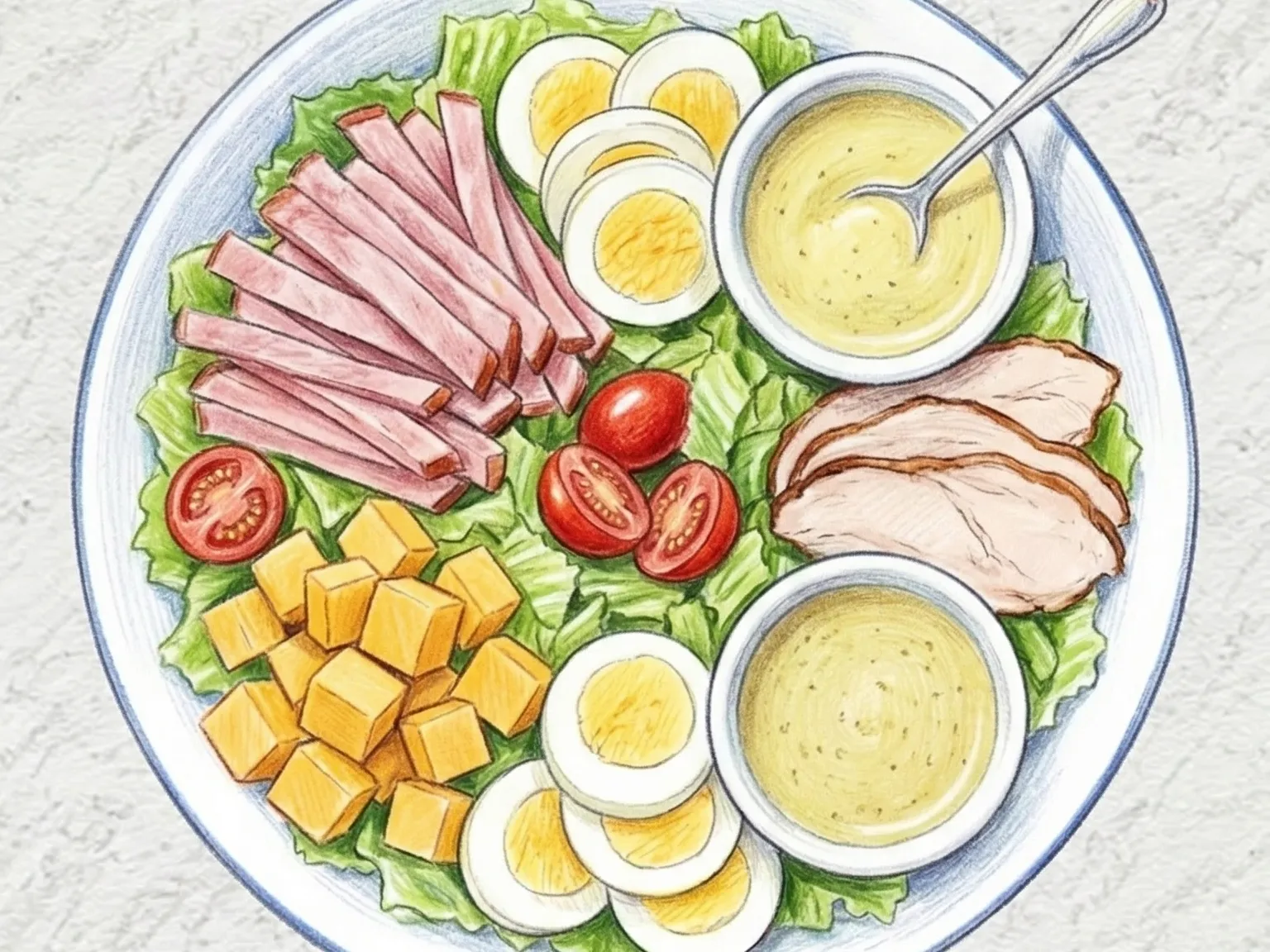
- A sectioned layout presents ham, turkey, and cheddar separately to keep individual flavors and colors sharp.
- Sectioned layout exposes each ingredient's color and shape without mixing
- Completely dried greens let the dressing cling instead of pooling below
Key ingredients
Core cooking flow
- 1 Bring a pot of water to a boil, add the 2 eggs, and cook over medium heat for 9 minutes.
- 2 Dry the cooled eggs, peel them, and cut each egg into quarters.
- 3 Wash 180 g romaine, drain it in a colander, and shake off as much water as possible.
Chef salad starts with a base of crisp romaine that has been dried thoroughly so the dressing clings rather than sliding off diluted by residual water. Sliced ham, turkey breast, cheddar cheese, halved hard-boiled eggs, and cherry tomatoes are arranged in separate sections over the lettuce without being tossed together, a presentation that keeps the individual components visually distinct and lets each diner control the ratio in every bite. A honey mustard dressing made from mustard, honey, and olive oil delivers sharpness from the mustard alongside the sweetness of honey and the rounded richness of the oil, connecting the salty deli meats and mild greens with a sweet-sharp bridge. Cherry tomatoes burst with bright acidity that cuts through the heavier elements when bitten. Cheddar sliced just before serving retains its full aroma at the cut surface rather than drying out. The finished salad is substantial enough to serve as a complete main course rather than a side.
Instructions
Read the steps as a cooking flow: prep, heat, seasoning, doneness control, and finish.
- 1Control
Bring a pot of water to a boil, add the 2 eggs, and cook over medium heat for 9 minutes.
Move them straight into cold water for 3 minutes so the shells loosen and the yolks stay moist.
- 2Season
Dry the cooled eggs, peel them, and cut each egg into quarters.
Wipe the knife between cuts if yolk sticks to it, which keeps the wedges neat and prevents the set yolks from crumbling over the salad.
- 3Prep
Wash 180 g romaine, drain it in a colander, and shake off as much water as possible.
Tear the leaves into bite-size pieces only after they feel dry to the touch, so the dressing will cling instead of thinning out.
- 4Prep
Cut 80 g ham and 80 g turkey into 2 cm strips or pieces, then separate any slices that are stuck together.
Slice the 60 g cheddar right before assembly so the cut surface stays aromatic and does not dry.
- 5Prep
Halve 120 g cherry tomatoes and keep the cut sides facing up briefly so their juice does not wet the lettuce early.
In a small bowl, mix 1 tbsp mustard, 1 tbsp honey, and 2 tbsp olive oil until glossy.
- 6Finish
Spread the romaine on a wide platter, then arrange the ham, turkey, cheddar, egg quarters, and tomatoes in separate sections.
Serve the dressing on the side, or spoon it on just before eating so the leaves stay crisp.
After the steps
Pick a recipe that fits this dish.
Continue with shared ingredients, meal pairings, or a similar method.
Recipes That Go Well With This
More Salads →Based on shared ingredients and meal pairing
Chicken Avocado Salad
Chicken avocado salad is a high-protein main dish salad that pairs pan-cooked chicken breast with ripe avocado over romaine lettuce, dressed in a simple lime and olive oil vinaigrette. The chicken must rest and cool completely before slicing so the juices redistribute inward rather than running out onto the cutting board, keeping the meat moist rather than dry. Avocado is sliced just before serving to maintain its creamy texture and prevent the surface from browning. Romaine provides a crunchy base that contrasts with the soft avocado, cucumber adds clean hydration, and cherry tomatoes contribute sharp acidity that prevents the bowl from feeling heavy or greasy. The dressing is deliberately minimal - just lime juice and olive oil - but the citrus acidity cuts through the avocado fat cleanly, creating a bright finish that keeps the overall plate feeling light despite the substantial protein content. The result is a salad that satisfies as a full meal without the denseness of cooked grains or hot dishes.
Cobb Salad
Cobb salad arranges grilled chicken breast, hard-boiled egg, avocado, crisp bacon, and cherry tomatoes in distinct, separate rows over chopped romaine. The traditional presentation keeps each ingredient untouched until the diner begins eating, allowing every forkful to be assembled to personal preference. Ranch dressing provides a creamy, tangy base that bridges the bacon's saltiness, the richness of avocado, and the lean protein of the chicken. Originating in 1930s Hollywood, the dish was conceived as a filling main-course salad and remains one of the most protein-dense salad formats in American cuisine.
Blackened Chicken Caesar Salad
Blackened chicken Caesar salad starts with chicken breast coated thickly in paprika, cayenne, garlic powder, onion powder, and dried herbs before hitting a very hot, dry pan. The spice coating undergoes rapid charring at high temperature, forming a dark, smoky crust that seals in moisture and concentrates the spice aromatics on the surface of the meat. The interior of the chicken stays juicy because the charred crust acts as an insulating barrier, provided the pan is hot enough from the start. Creamy Caesar dressing, made with anchovy paste, egg yolk, lemon, and Parmesan, wraps around the cold, crisp romaine and the sliced hot chicken alike, moderating the cayenne heat without erasing the spice character entirely. Shaved Parmesan adds sharp, salty depth throughout, while croutons introduce a crunchy textural break against the tender chicken and limp lettuce. Because blackening generates substantial smoke, proper ventilation or an outdoor cooking setup is strongly recommended. The dish functions as a full main course rather than a starter salad.
Three Bean Salad
Three bean salad consists of kidney beans, chickpeas, and fresh green beans that are prepared by blanching. The green beans undergo a brief cooking process in boiling water for three minutes, which ensures they retain a bright appearance and a snappy texture. In contrast, the kidney beans and chickpeas used are canned varieties that only require thorough rinsing and draining to remove any excess starch from their surface. The recipe includes red onions that have been thinly sliced and then soaked in cold water. This soaking step is used to remove the sharp, raw bite of the onion, resulting in a mild sweetness that integrates well with the other components. The dressing for this salad is a combination of olive oil, apple cider vinegar, and Dijon mustard. The apple cider vinegar contributes a soft acidity to the mixture, while the mustard introduces a sharp and peppery element that provides flavor to the beans. Storing the assembled salad in the refrigerator overnight is an important step because it allows the dressing to soak into the beans and the green beans. This waiting period makes the dish a suitable option for individuals looking to prepare their meals ahead of time.
Serve with this
Kimchi Bacon Mac and Cheese
Kimchi bacon mac and cheese layers aged kimchi's lactic tang and smoky bacon into a classic American cheddar cheese sauce over elbow macaroni. A butter-flour roux forms the base, with milk whisked in to build a béchamel before cheddar is melted into a thick, clinging sauce. Crisp bacon pieces add salt and crunch throughout, while chopped ripe kimchi introduces fermented acidity that counteracts the richness of the cheese. A pinch of gochugaru runs underneath with mild, warming heat. The tubular macaroni shape traps sauce inside and out, ensuring each forkful carries the full spectrum of creamy, tangy, and smoky flavors.
Grilled Tomahawk Steak
Grilled Tomahawk Steak is prepared by cooking a thick, bone-in ribeye cut to achieve a seared exterior and juicy interior. The steak must be taken out of refrigeration one hour before cooking to ensure the core reaches room temperature, which prevents uneven cooking. After patting the surface dry, the meat is seasoned with salt, black pepper, and olive oil. Searing the steak in a preheated hot pan creates a deep Maillard crust. The heat is then reduced to add butter, rosemary, and crushed garlic. Continuous spooning of the melted butter over the meat coats the surface with aromatics. Due to the thickness of the cut, the steak is finished in the oven and then rested for ten minutes to allow the juices to redistribute evenly before slicing.
Jianbing (Chinese Savory Breakfast Crepe)
Jianbing is a northern Chinese street breakfast crepe assembled on a flat griddle within minutes. A thin batter of mung bean flour and wheat flour is spread into a wide circle, then an egg is cracked directly on top and smeared across the surface while still liquid. Chopped scallion is scattered over the egg before the crepe is flipped briefly to set the other side. Sweet bean sauce and chili sauce are brushed on, followed by fresh cilantro and a crispy fried wonton sheet that provides the signature crunch. The mung bean flour gives the batter a distinctive nutty flavor and slightly crisp edge that plain wheat flour cannot replicate. The whole assembly is folded into a neat rectangle meant to be eaten by hand. Timing is critical for the wonton cracker, which should be added last to prevent sogginess, creating a layered contrast of soft crepe, runny egg, sharp sauce, and shattering crunch.
Similar recipes
Buchu Beef Mustard Salad (Seared Beef & Chive Mustard Salad)
Buchu beef mustard salad sears lean beef round over high heat to char the surface while keeping the center pink, then slices it thick over a bed of garlic chives and shredded red cabbage. Hot mustard dissolved into a soy-vinegar dressing produces a sharp nasal heat that cuts directly through the beef fat with each bite. Julienned Korean pear adds a crisp, clean sweetness that balances the salt and acidity of the dressing, while the garlic chives contribute their pungent, onion-forward aroma as a defining note. Slicing the beef at least 1 cm thick prevents it from toughening as it cools, and resting the seared meat for five minutes before cutting keeps the juices in. The salad comes together in the time it takes the beef to rest.
Waldorf Salad
The Waldorf Salad is a classic dish combining apples, celery, walnuts, and grapes coated in a mayonnaise-based dressing. To prepare it, fresh apple cubes are immediately tossed with lemon juice to prevent browning and maintain their color. The dressing is made by whisking mayonnaise with a small amount of sugar until smooth. Celery stalks are thinly sliced, and grapes are halved and seeded to provide a refreshing texture. The walnuts are toasted in a dry pan over low heat for two minutes to enhance their earthy flavor, which balances the sweetness of the mayonnaise. All the ingredients are gently folded together to prevent the fruit from releasing excess juices, which would make the salad watery. Chilling the salad in the refrigerator for thirty minutes allows the flavors to integrate while keeping the ingredients crisp.
Classic Wedge Salad
Classic Wedge Salad features crisp iceberg lettuce wedges topped with a rich blue cheese dressing, crispy bacon, and cherry tomatoes. Preparing this dish requires cutting the lettuce into four wedges while leaving the core intact to hold the leaves together. The dressing is made by mixing half of the blue cheese with sour cream, mayonnaise, and lemon juice, leaving a few small cheese chunks, while the rest is kept for topping. Washing the lettuce and shaking out any water between the layers is essential to prevent the dressing from thinning. The bacon is cooked until crisp and drained well on paper towels. The salad is assembled by placing the cold wedges on a plate, pouring the dressing over, and topping with the bacon, halved tomatoes, remaining blue cheese, and sliced chives.