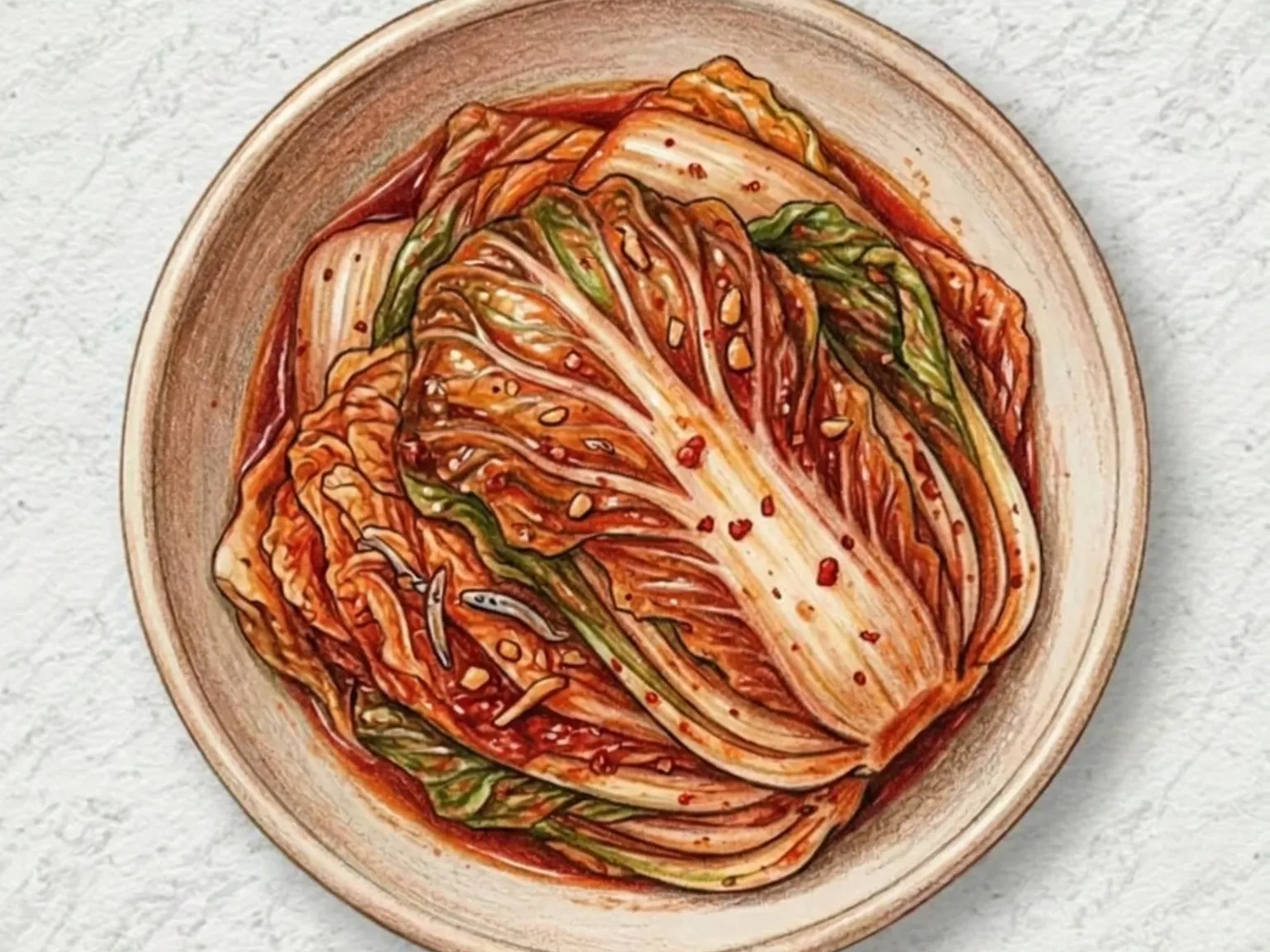
Korean Bok Choy Kimchi (Gochugaru Fermented Quick)
Cheonggyeongchae kimchi is a bok choy kimchi prepared by halving the heads lengthwise, salting them for twenty minutes, and coating each leaf layer with a paste of gochugaru, salted shrimp, anchovy fish sauce, and sweet rice paste. Keeping the salting time short preserves the stems' crisp snap, while the leaves soften just enough to hold the seasoning. Julienned scallions and carrot add color and textural variety, and adjusting the fish sauce quantity based on the salted shrimp's salinity keeps the overall salt level balanced. After four hours of room-temperature fermentation followed by refrigeration, this kimchi is ready within a day and offers a lighter, crunchier character than traditional napa cabbage kimchi.
Adjust Servings
Instructions
- 1
Split bok choy lengthwise, rinse, and salt it for 20 minutes.
- 2
Rinse lightly in cold water and drain thoroughly.
- 3
Mix chili flakes, salted shrimp, garlic, fish sauce, and rice paste into a seasoning paste.
- 4
Julienne scallions and carrot, then combine with the seasoning.
- 5
Coat seasoning lightly between each bok choy leaf layer.
- 6
Store in a container, ferment 4 hours at room temperature, then refrigerate for 1 day.
As an Amazon Associate, we may earn from qualifying purchases.
Tips
Nutrition (per serving)
More Recipes

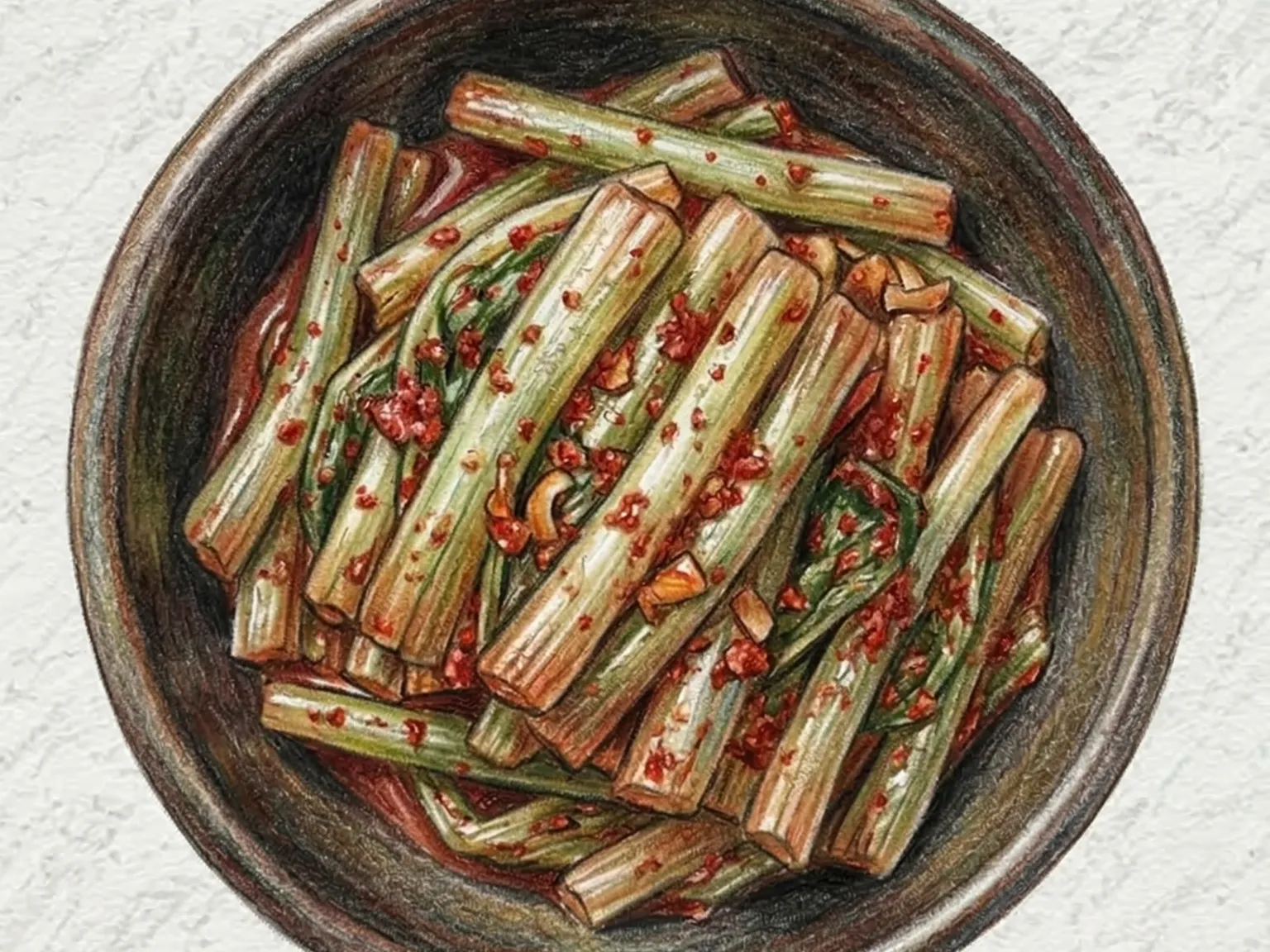
Korean Pickled Bok Choy (Soy Vinegar Chili Brine)
Cheonggyeongchae jangajji is a Korean pickled bok choy dish made by halving the heads and submerging them in a boiled brine of soy sauce, vinegar, and sugar with Cheongyang chili, garlic, and ginger. The thick white stems retain their crunch after pickling while the tender green leaves absorb the brine softly, creating two contrasting textures in a single piece. Cheongyang chili leaves a clean, lingering heat at the finish, and ginger contributes a warm undertone to the pickling liquid. Draining the bok choy thoroughly before pickling keeps the brine clear, and after two days of refrigeration the seasoning penetrates evenly for a balanced banchan.

Korean Cubed Radish Kimchi
Kkakdugi is a staple Korean kimchi made from radish cut into 2 cm cubes, brined in coarse salt, then seasoned with gochugaru, salted shrimp, garlic, and ginger before fermentation. Salting draws out moisture from the cubes, creating a contrast between the damp interior and the snappy outer surface. Salted shrimp layers its briny seafood depth beneath the chili heat, and as fermentation progresses, the radish's natural sugars emerge to balance the spice with a clean sweetness. The accumulated brine at the bottom of the jar develops a refreshing tang that makes kkakdugi the essential companion to rich, milky soups like seolleongtang and gomtang.

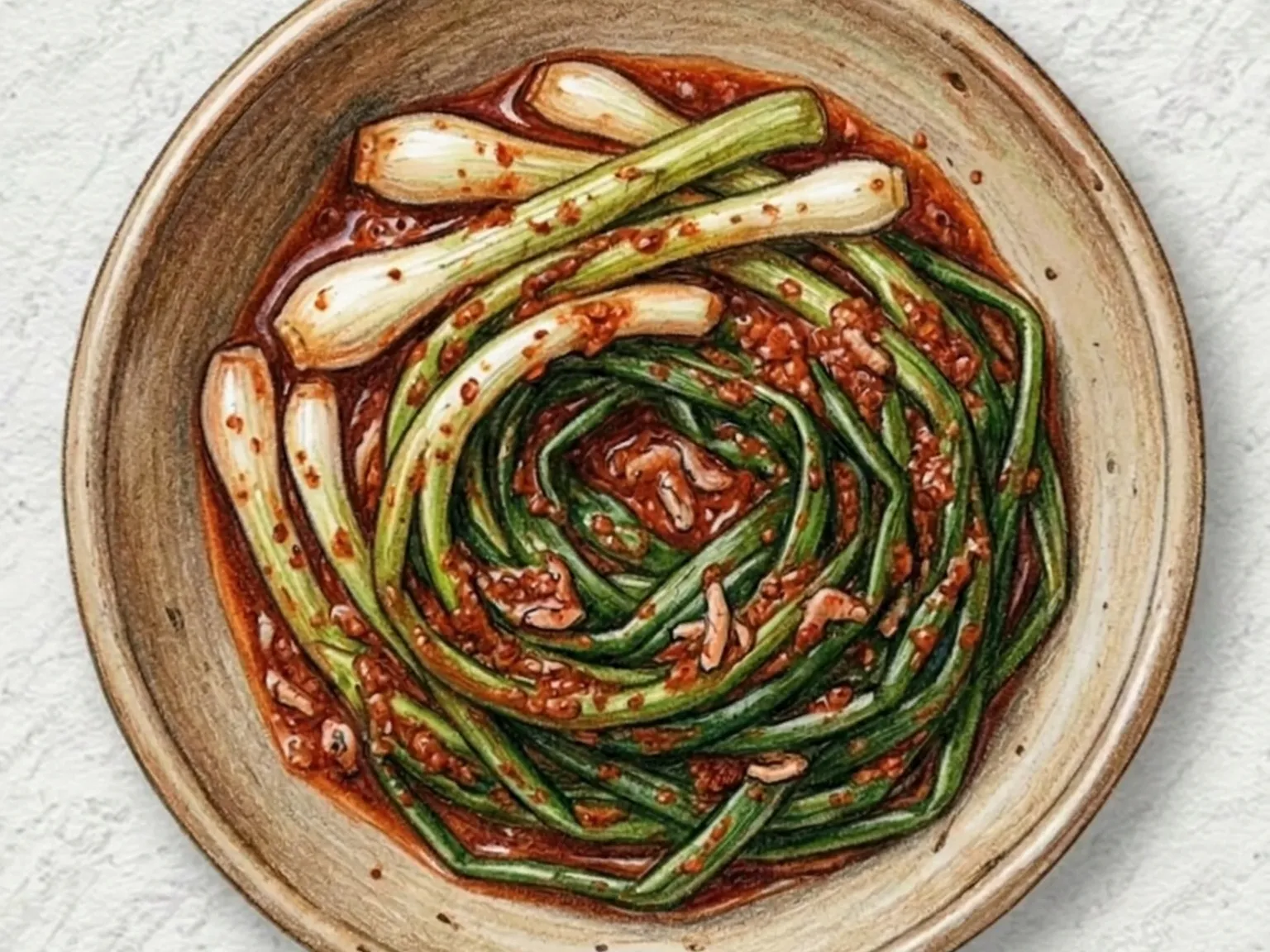
Korean Scallion Kimchi (Whole Stalk Anchovy Shrimp Paste)
Jjokpa kimchi is a traditional Korean scallion kimchi made by lightly brining whole scallions in coarse salt, then coating them from root to tip with a seasoning paste of anchovy fish sauce, salted shrimp, gochugaru, and sweet rice paste. The dual seafood condiments build a layered umami that the rice paste locks onto the scallion surface, preventing the flavor from diluting as moisture releases during fermentation. The white bulb sections stay crisp and absorb the chili heat, while the green tops wilt into a soft, pungent layer with a sharp allium bite. After six hours at room temperature followed by a day in the refrigerator, the seasoning stabilizes into a balanced, punchy side dish that works alongside steamed rice or grilled pork belly.

Korean Coastal Hogfennel Kimchi
Bangpungnamul kimchi is a seasonal Korean kimchi made by dressing coastal hogfennel herb in a chili-based seasoning paste. The herb is first lightly salted to soften its fibers, then mixed with Korean chili flakes, anchovy fish sauce, soup soy sauce, minced garlic, and ginger. Sweet rice paste acts as a binder, helping the seasoning adhere evenly to each leaf. Sliced scallions are folded in for a crisp textural element. The herb's natural bitterness mellows noticeably during fermentation, producing a flavor profile distinct from standard napa cabbage kimchi. One day at room temperature followed by refrigerated storage achieves a balanced level of fermentation that preserves the herb's character while developing lactic acidity.

Korean Restaurant-Style Kkakdugi
Sikdang-style kkakdugi is the cubed radish kimchi served free at virtually every Korean restaurant, standing alongside baechu-kimchi as a non-negotiable table banchan. Cutting the Korean radish into chunky 2 cm cubes ensures the interior stays crunchy even after salting and fermentation. Twenty minutes in coarse salt draws moisture, then the cubes are dressed with gochugaru, myeolchi-aekjeot (anchovy fish sauce), garlic, ginger, and sugar. The fish sauce provides the umami backbone that deepens during fermentation, while ginger suppresses off-flavors and sharpens the finish. One day at room temperature triggers lactic acid production - the signature tingle that signals active fermentation - followed by refrigeration where the flavor matures over two to three weeks. Winter radish carries more natural sugar, so the added sugar can be reduced; in summer, cutting the room-temperature rest to half a day prevents over-fermentation.

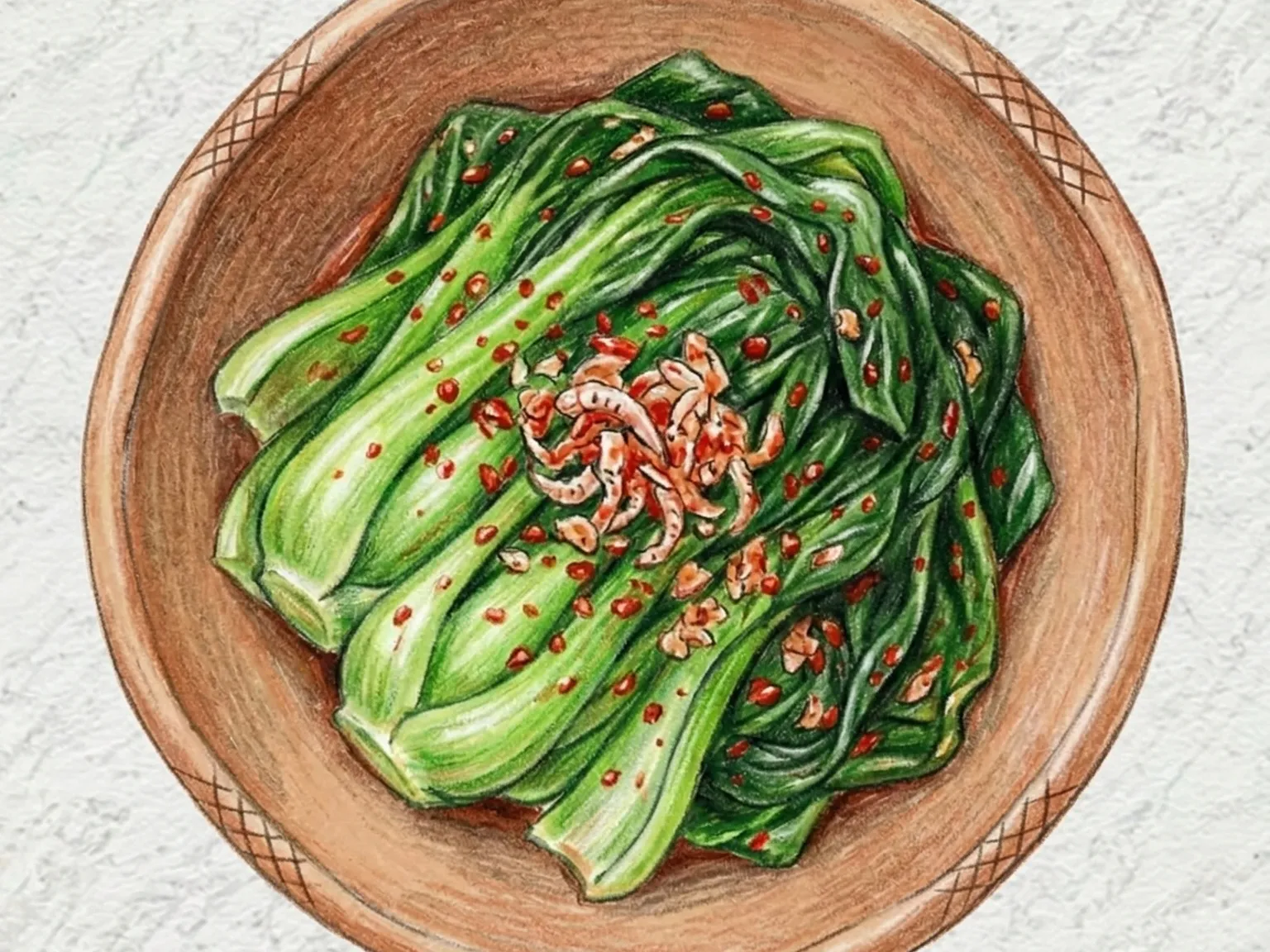
Korean Stir-Fried Bok Choy with Oyster Sauce
A Chinese-Korean crossover banchan that became a weeknight staple in the 1990s. The technique demands a scorching-hot pan: oil and garlic sizzle first, then halved bok choy hits the wok for barely a minute. Oyster sauce and a splash of water create a quick glaze clinging to the stems. Leaf edges char slightly while white stalks stay juicy and snapping-crisp. A finishing drizzle of sesame oil adds a toasted note. The entire cook takes under five minutes.