Korean Chicken Mayo Rice Bowl
Rice Easy

Korean Chicken Mayo Rice Bowl

Quick answer

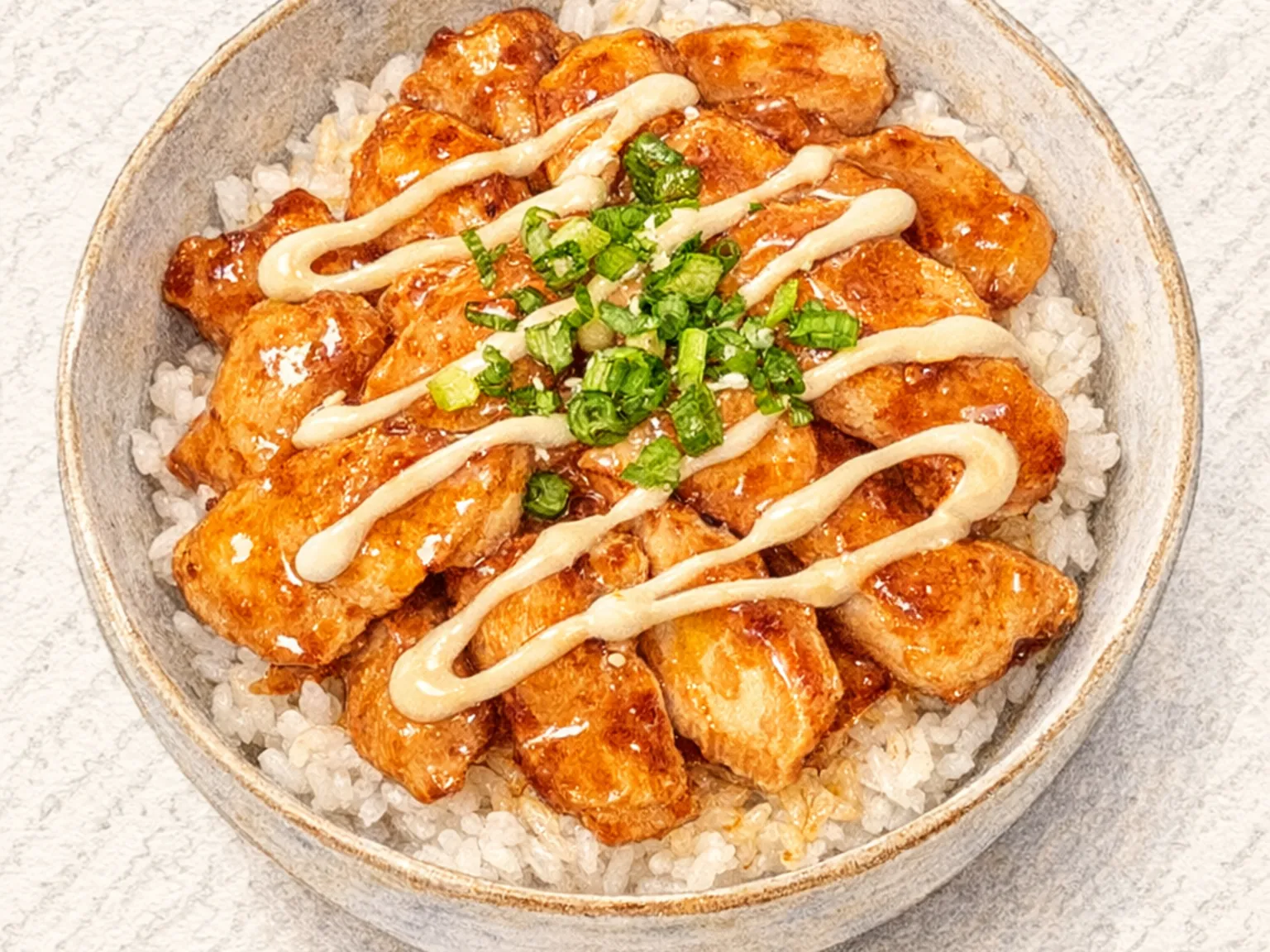
Chikin mayo deopbap is a Korean rice bowl topped with pan-fried chicken breast glazed in a sweet-salty soy sauce and finished with a generous drizzle of mayonnaise.

What makes this special

  • Steamed rice topped with pan-seared chicken and a sweet soy glaze defines Chikin Mayo Deopbap.
  • Pan-seared chicken breast glazed with soy-sugar sauce
  • Zigzag mayo drizzle adds creaminess without greasiness
Total time
27 min
Level
Easy
Servings
2 servings
Ingredients
8
Calories
690 kcal
Protein
38 g

Key ingredients

cooked ricechicken breastmayonnaisesoy saucesugar

Core cooking flow

  1. 1 Cut 250g chicken breast into 2-3cm pieces, then season with 1/4 tsp salt and a pinch of pepper.
  2. 2 Heat 1.5 tbsp cooking oil in a pan over medium heat, then spread the chicken in one layer.
  3. 3 Move the chicken out briefly and add 100g sliced onion to the same pan.

Chikin mayo deopbap is a Korean rice bowl topped with pan-fried chicken breast glazed in a sweet-salty soy sauce and finished with a generous drizzle of mayonnaise. The chicken is cooked over medium-high heat until the exterior turns golden and slightly crisp while the inside stays moist. A soy sauce and sugar glaze added near the end caramelizes around each piece, creating a sticky coating that clings well. The mayonnaise adds creaminess and a mild tang that balance the saltiness of the glaze; when it hits the warm chicken and rice, it loosens slightly into a sauce that seeps down through the bowl. With only a handful of everyday ingredients and around fifteen minutes of cooking time, it matches the convenience of a packaged lunch box while delivering noticeably better flavor and texture.

Prep 12min Cook 15min 2 servings

Instructions

Read the steps as a cooking flow: prep, heat, seasoning, doneness control, and finish.

6 steps
  1. 1
    Season

    Cut 250g chicken breast into 2-3cm pieces, then season with 1/4 tsp salt and a pinch of pepper.

    Rest for 5 minutes, and keep the pieces similar in thickness so they cook evenly without drying out.

  2. 2
    Control

    Heat 1.5 tbsp cooking oil in a pan over medium heat, then spread the chicken in one layer.

    Cook for 5-6 minutes, turning once, until both sides are golden and the thickest pieces feel springy when pressed.

  3. 3
    Season

    Move the chicken out briefly and add 100g sliced onion to the same pan.

    Saute for 2 minutes until the edges look translucent, then add 2 tbsp soy sauce and 1.5 tbsp sugar to start the glaze.

  4. 4
    Control

    Reduce the sauce over medium heat for 2-3 minutes, until the large bubbles become smaller and the onion softens.

    Return the chicken and toss for 1 minute so the glaze turns glossy and coats each piece.

  5. 5
    Control

    Beat 2 eggs with a pinch of salt, then scramble them over medium-low heat with a little oil if needed.

    Turn off the heat before they fully set, so the eggs stay soft and moist on the rice.

  6. 6
    Season

    Divide 2 cups cooked rice between bowls, then top with the glazed chicken, onion sauce, and soft eggs.

    Drizzle 4 tbsp mayonnaise in thin zigzags just before serving, so it stays creamy without making the rice heavy or soggy.

After the steps

Pick a recipe that fits this dish.

Continue with shared ingredients, meal pairings, or a similar method.

Recipes That Go Well With This

More Rice →

Based on shared ingredients and meal pairing

Korean Cream Chicken Rice Bowl
Shared ingredient: cooked short-grain rice Rice

Korean Cream Chicken Rice Bowl

Cream chicken deopbap is a Korean fusion rice bowl where bite-sized chicken breast pieces are seared in butter to develop color and a light crust, then simmered in heavy cream and garlic until the sauce reduces into a glossy, velvety coating. Searing the chicken in butter first builds a Maillard layer that gives the final dish more depth than if the cream were added at the start. As the garlic cooks down in the cream, it loses its raw sharpness and releases a mild sweetness that permeates the entire sauce. A straightforward seasoning of salt and pepper is all the dish needs to come together. The concept takes the richness of a Western cream pasta sauce and serves it over steamed rice instead of noodles, letting the grains absorb the sauce and carry the flavor all the way through. A sprinkle of flat-leaf parsley or coarsely cracked black pepper over the top sharpens the finish.

Tuna Mayo Rice Bowl (Chamchi Mayo Cupbap)  -  Easy Korean Bunsik Recipe
Shared ingredient: cooked short-grain rice Street food

Tuna Mayo Rice Bowl (Chamchi Mayo Cupbap) - Easy Korean Bunsik Recipe

Chamchi mayo cupbap is Korea's well-loved quick meal of seasoned tuna and mayo spooned over steaming hot rice, assembled in about eighteen minutes. The canned tuna must be drained and pressed dry through a strainer before anything else: residual liquid from the can dilutes the soy and sugar seasoning and turns the rice soggy within minutes. Onion and scallion are stir-fried first to draw out their natural sweetness, and the tuna is folded in afterward so the fish picks up the developed flavor of the aromatics rather than sitting raw-tasting on top. Mayonnaise goes in only after the heat is turned off; adding it while the pan is still hot breaks the emulsion and produces a greasy finish. A generous scatter of crushed dried seaweed over the finished bowl adds a roasted oceanic note and textural contrast. Mixing everything together before eating is the correct approach: the tuna-mayo sauce coats every grain of rice evenly, so each spoonful carries the full range of flavors rather than alternating between plain rice and heavily sauced bites.

Korean Seasoned Wild Chive
Serve together Side dishes

Korean Seasoned Wild Chive

Dallae-muchim is a raw spring side dish made from Korean wild chives dressed in soy sauce, gochugaru, vinegar, sugar, and sesame oil -- one of the clearest markers that spring has arrived. Dallae emerges from hillsides in March, finer in stem than cultivated chives and carrying an intensely sharp, garlic-like aroma that vanishes almost immediately when cooked, which is why the herb is always used raw. The small bulbs and slender leaves are washed root-and-all, cut to three or four centimeters, and tossed in the seasoning just before serving. The result is a pungent, nose-clearing mouthful that contrasts directly with the deep, fermented warmth of doenjang-jjigae when the two are eaten together. The season for dallae is brief -- a few weeks in early spring -- making this banchan one of the more fleeting pleasures of the Korean table.

Korean Spicy Dakgalbi Rice Bowl
Similar recipe Rice

Korean Spicy Dakgalbi Rice Bowl

Dakgalbi deopbap serves the core flavors of Chuncheon's famous spicy chicken in a single rice bowl. Boneless chicken thigh is stir-fried alongside cabbage, onion, and green onion in a gochujang-based marinade balanced with sugar and a splash of soy sauce. The chicken is cooked over high heat throughout -- this creates a caramelized crust on the meat's surface and keeps the vegetables at a slight crunch rather than softening them completely. Sesame oil is added off the heat as a final step, contributing a toasty fragrance that rounds out the bold seasoning without overpowering it. At traditional dakgalbi restaurants in Chuncheon, the meal ends with fried rice made by mixing cooked rice directly into the residual sauce left on the hot iron plate -- this bowl captures that same moment in a format that can be made at home without a cast-iron griddle. The dish requires no banchan; the seasoned protein and vegetables together with the rice form a self-contained meal.

Serve with this

Korean Bok Choy Kimchi (Gochugaru Fermented Quick)
Kimchi Medium

Korean Bok Choy Kimchi (Gochugaru Fermented Quick)

Cheonggyeongchae kimchi is a bok choy kimchi prepared by halving the heads lengthwise, salting them for twenty minutes, and coating each leaf layer with a paste of gochugaru, salted shrimp, anchovy fish sauce, and sweet rice paste. Keeping the salting time short preserves the crisp snap of the stems, while the leaves soften just enough to hold the seasoning. Julienned scallions and carrot add color and textural variety, and adjusting the fish sauce quantity based on the salted shrimp salinity keeps the overall salt level balanced. After four hours of room-temperature fermentation followed by refrigeration, this kimchi is ready within a day and offers a lighter, crunchier character than traditional napa cabbage kimchi.

🍱 Lunchbox ⚡ Quick
Prep 35min 4 servings
Kongnamul-guk (Bean Sprout Anchovy Soup)
Soups Easy

Kongnamul-guk (Bean Sprout Anchovy Soup)

Kongnamul-guk is a clear Korean soup built on bean sprouts, water, soup soy sauce, and garlic, and its central technique is boiling the sprouts with the lid firmly closed for seven minutes. The reason behind the closed lid is a long-standing Korean kitchen belief: the compounds responsible for the raw, beany smell in soybean sprouts are volatile, and if the lid is left open, they do not escape with the steam but instead condense back into the pot. Whether the chemistry fully supports this, keeping the lid closed has been the standard method for generations and consistently produces a clean-tasting broth. Green onion goes in at the very end to keep its bright, mild bite without overcooking. Trimming the fine root tails from each sprout improves the texture and presentation, though it does not change the flavor and is often skipped on weekdays. Adding chili flakes and a cracked egg transforms the soup into a spicy, restorative hangover version, and a handful of clams deepens the broth with extra umami. From start to finish the soup takes about fifteen minutes, which makes it one of the fastest soups in the Korean repertoire, and the directness of its flavor -- clean, cool, and vegetal -- is exactly what makes it worth returning to.

🏠 Everyday ⚡ Quick
Prep 5min Cook 15min 2 servings
Korean Whelk Stew (Spicy Canned Whelk & Cabbage Pot)
Stews Easy

Korean Whelk Stew (Spicy Canned Whelk & Cabbage Pot)

Golbaengi-jjigae is a spicy Korean stew made with canned whelk as the centerpiece. Because the whelk is already fully cooked inside the can, it goes in near the end of cooking rather than at the start, allowing the broth and vegetables to reach their full flavor first. Extended heat makes whelk rubbery, so a brief simmer of two to three minutes is enough to warm the pieces through while preserving their distinctive chewy texture. Anchovy stock forms the savory foundation of the broth, delivering a clean seafood depth that amplifies the whelk's flavor without masking it. Gochujang and gochugaru combine to give the stew its fiery, full-bodied heat, while cabbage and onion absorb the broth over time and release a gentle sweetness that balances the spice. A single cheongyang chili added whole sharpens the heat at the finish, pulling the entire broth taut with a bright, clean burn. A handful of sliced green onion stirred in at the end brings a fresh aroma that lifts the richness of the stew. It works equally well as a rice-side dish or as an accompaniment to soju.

🏠 Everyday ⚡ Quick
Prep 12min Cook 18min 2 servings

Similar recipes

Korean Cheesy Dakgalbi Rice Bowl
Rice Easy

Korean Cheesy Dakgalbi Rice Bowl

Cheese dakgalbi deopbap is a rice bowl built on the flavors of Chuncheon-style spicy chicken stir-fry, finished with a blanket of melted mozzarella. Chicken thighs are marinated in gochujang, gochugaru, soy sauce, and sugar for at least thirty minutes, then stir-fried in a ripping-hot pan with rough-cut cabbage and onion until the sauce reduces and coats every surface. The heat must be high enough to evaporate moisture quickly; if the pan is too cool, the ingredients steam and the sauce turns thin. Thigh meat stays moist throughout cooking because of its higher fat content, making it far more forgiving than breast meat in a fast stir-fry. Cabbage cooked at high heat for a short time keeps enough crunch to stand against the richness of the cheese and sauce. Mozzarella laid over the top melts in the residual heat into long, stretchy strands that soften the chili sharpness with every bite. The whole dish comes together in under fifteen minutes with pantry staples, which makes it a natural choice for a quick solo dinner or late-night meal.

🏠 Everyday 🍱 Lunchbox
Prep 15min Cook 18min 2 servings
Korean Eggplant Rice Bowl
Rice Easy

Korean Eggplant Rice Bowl

Gaji deopbap is a Korean eggplant rice bowl where sliced eggplant is pan-fried quickly in generous oil and then braised briefly with ground pork in a soy-based sauce. Soaking the eggplant in salted water for five minutes before cooking draws out bitterness and moisture. High heat is essential - eggplant absorbs oil rapidly, and fast searing creates a lightly crisp exterior while the inside collapses into a silky, almost creamy texture. The soy, sugar, and garlic sauce reduces in two minutes into a dark glaze that coats each piece, while the ground pork adds a savory depth that makes the dish feel more substantial. The sauce pools around the base of the rice and soaks into the grains, ensuring consistent flavor throughout the bowl. Green onion and sesame oil finish the dish. Summer eggplant, when the flesh is at its softest and most yielding, produces the best results. Kept cold, the eggplant holds its texture well enough to pack as a side dish for lunch.

🏠 Everyday ⚡ Quick
Prep 10min Cook 10min 2 servings
Korean Bunsik Kimchi Bokkeumbap (Kimchi Fried Rice)
Street food Easy

Korean Bunsik Kimchi Bokkeumbap (Kimchi Fried Rice)

Bunsik-style kimchi fried rice starts by making scallion oil from green onions, then stir-frying well-fermented kimchi to drive off moisture before seasoning with gochujang and soy sauce and tossing in day-old rice. The scallion oil lays a nutty base across the rice, and the aged kimchi's sharp acidity layers with the gochujang's heat to build depth. Cold leftover rice fries without turning mushy, keeping individual grains distinct, and the dish is topped with seaweed flakes and a runny fried egg. A small amount of sugar can be added if the kimchi's sourness is overpowering.

🧒 Kid-Friendly 🌙 Late Night
Prep 10min Cook 15min 2 servings

Tips

Drizzle mayo in thin zigzags to keep richness balanced.
Properly reducing onion deepens sweetness and flavor.

Nutrition (per serving)

Calories
690
kcal
Protein
38
g
Carbs
70
g
Fat
29
g