Korean Ponytail Radish Kimchi
Kimchi Medium

Korean Ponytail Radish Kimchi

Quick answer

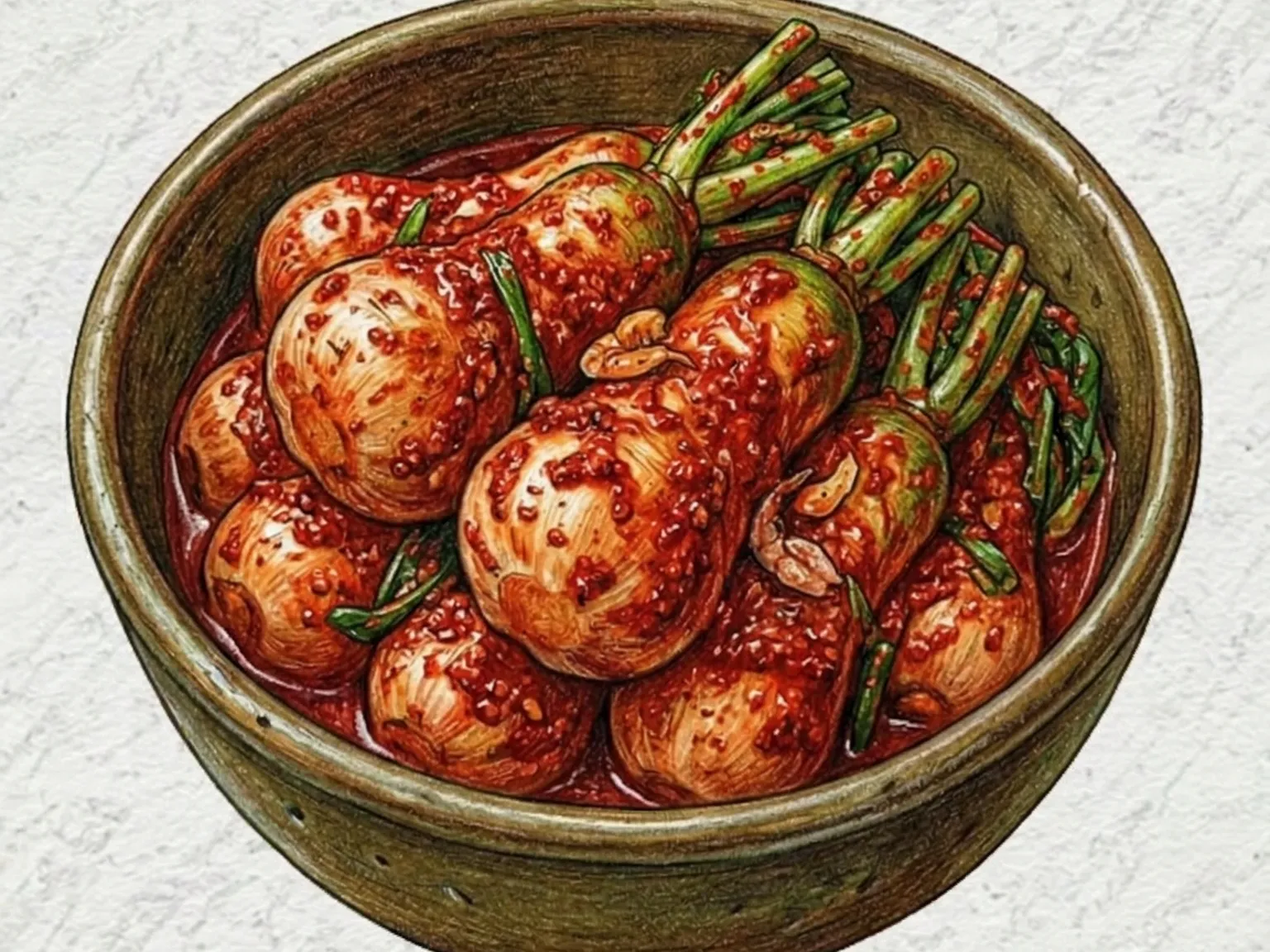
Chonggak kimchi is a traditional Korean kimchi made with whole young ponytail radishes salted for two hours, then coated in a paste of gochugaru, anchovy fish sauce, garl...

What makes this special

  • Whole young ponytail radishes in chonggak kimchi are soaked for two hours to lock in their crunch.
  • Whole ponytail radish soaked 2 hours keeps crunch intact
  • Blooming gochugaru in fish sauce first gives vivid red color
Total time
60 min
Level
Medium
Servings
4 servings
Ingredients
7
Calories
64 kcal
Protein
2 g

Key ingredients

young radishcoarse saltKorean chili flakesanchovy fish sauceminced garlic

Core cooking flow

  1. 1 Wash 1500 g young radishes well to remove soil, then trim the leafy tops sho...
  2. 2 When the radishes bend gently and the surface looks slightly translucent, ri...
  3. 3 Mix 5 tbsp Korean chili flakes with 4 tbsp anchovy fish sauce and let them stand for 10 minutes.

Chonggak kimchi is a traditional Korean kimchi made with whole young ponytail radishes salted for two hours, then coated in a paste of gochugaru, anchovy fish sauce, garlic, ginger, and scallions before fermenting. Blooming the chili flakes in fish sauce first softens their texture and intensifies the red color, and garlic and ginger are added afterward to build aromatic depth into the heat. Radish tops that are left too long turn fibrous, so trimming them short before seasoning keeps the kimchi crisp from root to leaf. One day at room temperature produces light carbonation and a cool, refreshing tang that signals the fermentation is alive. Refrigerating after that preserves the radish crunch and spicy umami for weeks. A year-round staple, this kimchi appears at Korean tables across every season.

Prep 45min Cook 15min 4 servings

Instructions

Read the steps as a cooking flow: prep, heat, seasoning, doneness control, and finish.

6 steps
  1. 1
    Season

    Wash 1500 g young radishes well to remove soil, then trim the leafy tops short so they do not turn fibrous.

    Sprinkle 90 g coarse salt between the roots and leaves, brine for 2 hours, and turn once halfway through.

  2. 2
    Season

    When the radishes bend gently and the surface looks slightly translucent, rinse them 3 times in cold water.

    Drain in a colander for 30 minutes so excess water does not thin the seasoning paste later.

  3. 3
    Season

    Mix 5 tbsp Korean chili flakes with 4 tbsp anchovy fish sauce and let them stand for 10 minutes.

    Wait until the flakes look moist, the paste thickens, and the red color deepens before adding aromatics.

  4. 4
    Season

    Add 2 tbsp minced garlic and 1 tsp minced ginger to the bloomed chili paste, then stir until evenly loosened.

    Scrape the bottom of the bowl so no clumps remain, because concentrated paste can make some radishes too salty.

  5. 5
    Season

    Cut 80 g scallions into 4 cm pieces and fold them into the seasoning first.

    Add the drained radishes and toss gently, coating both roots and leaves without bruising the softened greens.

  6. 6
    Control

    Pack the kimchi tightly into a container and level the surface to reduce trapped air.

    Leave it at room temperature for one day; when small bubbles appear and the aroma turns clean and tangy, refrigerate it.

After the steps

Pick a recipe that fits this dish.

Continue with shared ingredients, meal pairings, or a similar method.

Recipes That Go Well With This

More Kimchi →

Based on shared ingredients and meal pairing

Korean Scallion Kimchi (Whole Stalk Anchovy Shrimp Paste)
Shared ingredient: coarse salt Kimchi

Korean Scallion Kimchi (Whole Stalk Anchovy Shrimp Paste)

Jjokpa kimchi is a traditional Korean scallion kimchi made by briefly brining whole scallions in coarse salt, then coating them from root to tip with a seasoning paste of anchovy fish sauce, fermented shrimp, gochugaru, and sweet rice flour paste. Using both anchovy fish sauce and salted shrimp together is intentional: the two condiments each carry a different profile of seafood umami, and combining them produces a more complex, layered depth than either alone could achieve. The sweet rice flour paste acts as a binder, adhering the seasoning evenly to the surface of each scallion and keeping it in place as moisture releases during fermentation. Without this paste, the pickling liquid would dilute the coating and the flavor would fade over time. The white bulb sections of the scallion hold their crunch through the brining and fermentation process while absorbing the spice of the gochugaru, and the green tops wilt to a silky texture that releases the scallion's characteristic sweet, pungent aroma. After six hours at room temperature followed by a day of refrigeration, the seasoning has fully penetrated the scallion and the kimchi is ready to eat alongside grilled pork belly or bossam. After three or more days of fermentation, a gentle lactic acidity develops that makes the kimchi equally useful as an ingredient in stews or stir-fries.

Korean Seokbakji Radish Kimchi
Shared ingredient: coarse salt Kimchi

Korean Seokbakji Radish Kimchi

Seokbakji is a traditional Korean radish kimchi in which large-cut radish cubes are salted for one hour, drained, and tossed with a seasoning of gochugaru, salted shrimp, minced garlic, ginger, and scallion pieces before being set aside to ferment. The size of the radish pieces is the most important factor in this kimchi - smaller cuts turn mushy during fermentation as salt and acid break down the cell structure, while large cubes maintain their firm, satisfying crunch throughout the entire maturation period. Salted shrimp here does far more than add salt: its fermented depth provides an umami backbone that gochugaru alone cannot deliver. After one day of fermentation at room temperature, two more days in the refrigerator allow lactic acid bacteria to develop a clean, refreshing sourness. The liquid that the radish releases during this process becomes a flavorful brine - this brine is one of seokbakji's most prized characteristics. Placed alongside a bowl of seolleongtang or gukbap, the cold, crunchy kimchi and its tangy liquid cut directly through the richness of the bone broth, refreshing the palate between spoonfuls. Compared to kkakdugi, seokbakji pieces are larger and more liquid-forward.

Korean Cabbage Tuna Jeon (Crispy Shredded Cabbage Tuna Pancake)
Serve together Grilled

Korean Cabbage Tuna Jeon (Crispy Shredded Cabbage Tuna Pancake)

Finely shredded cabbage, drained canned tuna, and thinly sliced onion are folded into a light batter of Korean pancake mix, egg, and salt, then spread thin in an oiled pan. As the cabbage cooks, it releases moisture and develops a natural sweetness that balances the tuna's salty, savory character. Spreading the batter thin ensures crisp edges throughout, and making smaller pancakes simplifies flipping. High in protein and relatively low in calories, this jeon doubles as a quick standalone meal or a diet-friendly option, finished with a scattering of chopped green onion on top.

Korean Cubed Radish Kimchi
Similar recipe Kimchi

Korean Cubed Radish Kimchi

Kkakdugi is a staple Korean kimchi made from radish cut into 2 cm cubes, brined in coarse salt, then seasoned with gochugaru, salted shrimp, garlic, and ginger before fermentation. Salting draws out moisture from the cubes, creating a contrast between the damp interior and the snappy outer surface. Salted shrimp layers its briny seafood depth beneath the chili heat, and as fermentation progresses, the radish's natural sugars emerge to balance the spice with a clean sweetness. Brining time should be kept to thirty minutes to one hour since over-salting softens the radish and robs it of its characteristic crunch. Adding a small drizzle of perilla oil during the seasoning step deepens the nutty undertone of the finished kimchi, and substituting grated pear or apple for sugar provides a gentler, fruit-derived sweetness that integrates more seamlessly into the overall flavor. The accumulated brine at the bottom of the jar develops a refreshing tang that makes kkakdugi the essential companion to rich, milky soups like seolleongtang and gomtang.

Serve with this

Korean Braised Tofu and King Oyster Mushrooms
Steamed Easy

Korean Braised Tofu and King Oyster Mushrooms

Saesongi dubu yangnyeom jorim is a braised side dish of firm tofu and king oyster mushrooms cooked down in a sauce of soy sauce, gochujang, and Korean chili flakes until the liquid is nearly gone and every surface is glazed. Pan-searing the tofu first over low heat until golden builds a crust that keeps it intact through braising and gives the seasoning somewhere to grip. Thick-cut king oyster mushrooms stay springy even after the long braise, while onion woven through the pot contributes a sweetness that softens the heat of the gochujang. Sesame oil stirred in at the end draws all the aromatics together into a cohesive finish. The result is a banchan with layers, gochujang spice, deep soy saltiness, and a savory earthiness from the mushrooms, that holds its flavor cold, making it a natural fit for packed lunches.

🍱 Lunchbox 🏠 Everyday
Prep 12min Cook 18min 2 servings
Korean Seasoned Tofu Pouch Sushi (Yubu Chobap)
Rice Easy

Korean Seasoned Tofu Pouch Sushi (Yubu Chobap)

Yubu chobap consists of seasoned tofu pouches filled with sushi rice. The preparation begins by mixing rice vinegar, sugar, and salt into hot rice, using a cutting motion to preserve the grains. Sesame oil and toasted sesame seeds are added for aroma, along with finely diced carrot and cucumber to bring color and a crisp texture. The tofu pouches are lightly pressed and filled to about 80 percent of their capacity, preventing the skin from tearing during shaping. With each bite, the pouch releases a sweet and savory sauce absorbed by the tofu, which goes well with the seasoned rice. Since they are convenient to carry and eat by hand, they are popular for lunchboxes, quick snacks, and picnics.

🍱 Lunchbox 🏠 Everyday
Prep 20min Cook 15min 4 servings
Korean Tofu Hot Pot (Tofu & Beef Kelp Broth Pot)
Stews Medium

Korean Tofu Hot Pot (Tofu & Beef Kelp Broth Pot)

Dubu jeongol is a Korean hot pot centered on tofu and beef simmered in kelp broth at the table. Shiitake mushrooms contribute a deep savory note, while napa cabbage and green onion add freshness and textural variety. The broth is seasoned with soup soy sauce, keeping it light and clear enough to let each ingredient's flavor come through without becoming heavy. Thin-sliced or ground beef works equally well; marinating it briefly in soy sauce and minced garlic before adding it to the pot layers the broth with additional depth. Pan-frying the tofu slices lightly in oil before placing them in the jeongol prevents them from breaking apart during the long simmer and gives each piece a slightly firmer exterior. Traditionally served bubbling directly on the table, this is a communal dish meant to be eaten at a relaxed pace, with diners adding broth and pieces to their own bowls throughout the meal.

🎉 Special Occasion 🥗 Light & Healthy
Prep 25min Cook 20min 4 servings

Similar recipes

Korean Spicy Ponytail Radish Salad
Side dishes Medium

Korean Spicy Ponytail Radish Salad

Chonggak - small ponytail radishes sold with their green tops still attached - appear at Korean markets through the autumn season. Unlike chonggak kimchi, which ferments for weeks, this fresh muchim salts sliced radishes for just 15 minutes to draw out water and concentrate their crunch before seasoning. Gochugaru, fish sauce, garlic, sugar, and vinegar coat the slices in a spicy-sour glaze that clings tightly to each piece. Young Korean radishes have a sharp, peppery bite that is more assertive than that of larger, older radishes, and that edge comes through clearly in the finished dish. Including the radish greens adds a softer texture that varies the mouthfeel. Best eaten on the day it is made, before the salt continues to draw moisture and soften the flesh.

🏠 Everyday 🍱 Lunchbox
Prep 20min 4 servings
Korean Restaurant-Style Kkakdugi
Side dishes Medium

Korean Restaurant-Style Kkakdugi

Sikdang-style kkakdugi is the cubed radish kimchi served as a complimentary banchan at virtually every Korean restaurant, standing alongside baechu-kimchi as a permanent fixture on the Korean table. Cutting Korean radish into chunky 2 cm cubes preserves crunch deep into the flesh even after salting and fermentation. Twenty minutes in coarse salt draws out excess moisture, and the cubes are then coated in a seasoning mixture of gochugaru, anchovy fish sauce, garlic, ginger, and sugar. The fish sauce lays the umami foundation that develops further during fermentation, while ginger suppresses the raw edge of the radish and leaves a clean finish. One day at room temperature initiates lactic acid fermentation, producing the characteristic tingle of an active kimchi, after which refrigeration allows the flavor to mature steadily over two to three weeks. Winter radish carries more natural sugar, so the added sugar can be reduced without sacrificing sweetness. In summer, shortening the room-temperature rest to half a day before refrigerating prevents the kimchi from becoming overly sour. It pairs particularly well alongside grilled pork belly, rice noodle soup, and earthenware pot rice soup, where its acidity cuts through the richness of the main dish.

🏠 Everyday 🍱 Lunchbox
Prep 25min Cook 5min 4 servings
Korean Radish Greens Kimchi
Kimchi Easy

Korean Radish Greens Kimchi

Mucheong kimchi is made from the leafy greens and stems of Korean radish, cut into 5 cm lengths, salted in coarse brine, then coated in a paste of sweet rice flour, gochugaru, anchovy fish sauce, minced garlic, ginger, and onion. The thick, fibrous stems grip the seasoning and hold up through fermentation without turning mushy, keeping a firm chew even after weeks in the refrigerator. Sweet rice flour acts as a glue that prevents the coating from sliding off the stems as the kimchi ages. Anchovy fish sauce lays down a deep seafood umami as the base layer, while onion moderates the chili heat with natural sweetness. The greens are a practical use of the entire radish rather than just the root, and the finished kimchi works beyond the banchan role: torn into pieces and added to siraegi soup, it enriches the broth; stirred into doenjang jjigae, it deepens the fermented soybean flavor with another layer of fermented complexity.

🍱 Lunchbox 🏠 Everyday
Prep 35min Cook 5min 4 servings

Tips

Trim overly long tops to prevent fibrous texture.
Initial room-temp fermentation creates lively carbonation.

Nutrition (per serving)

Calories
64
kcal
Protein
2
g
Carbs
12
g
Fat
1
g