Chwinamul Apple Doenjang Salad
Quick answer
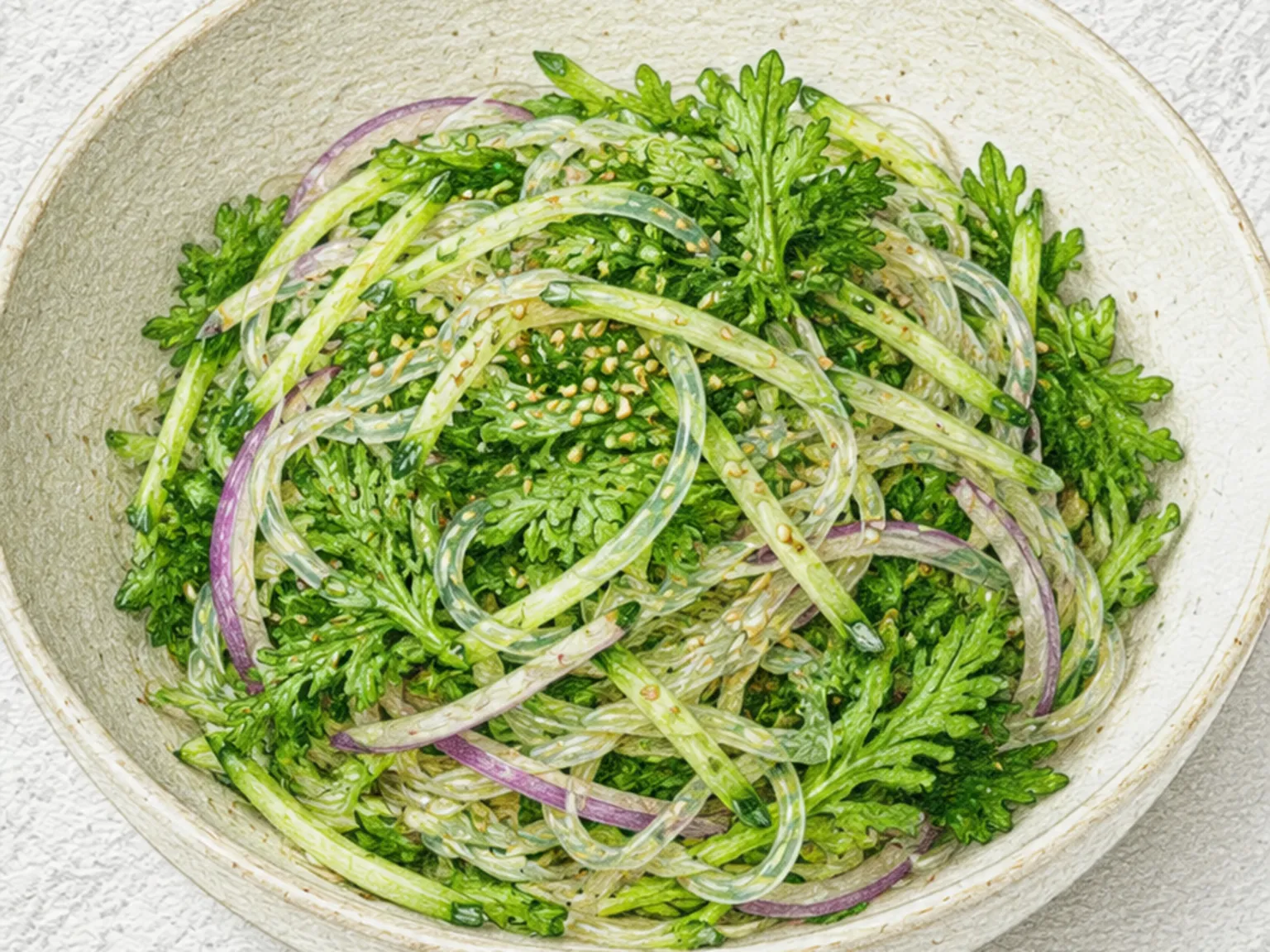
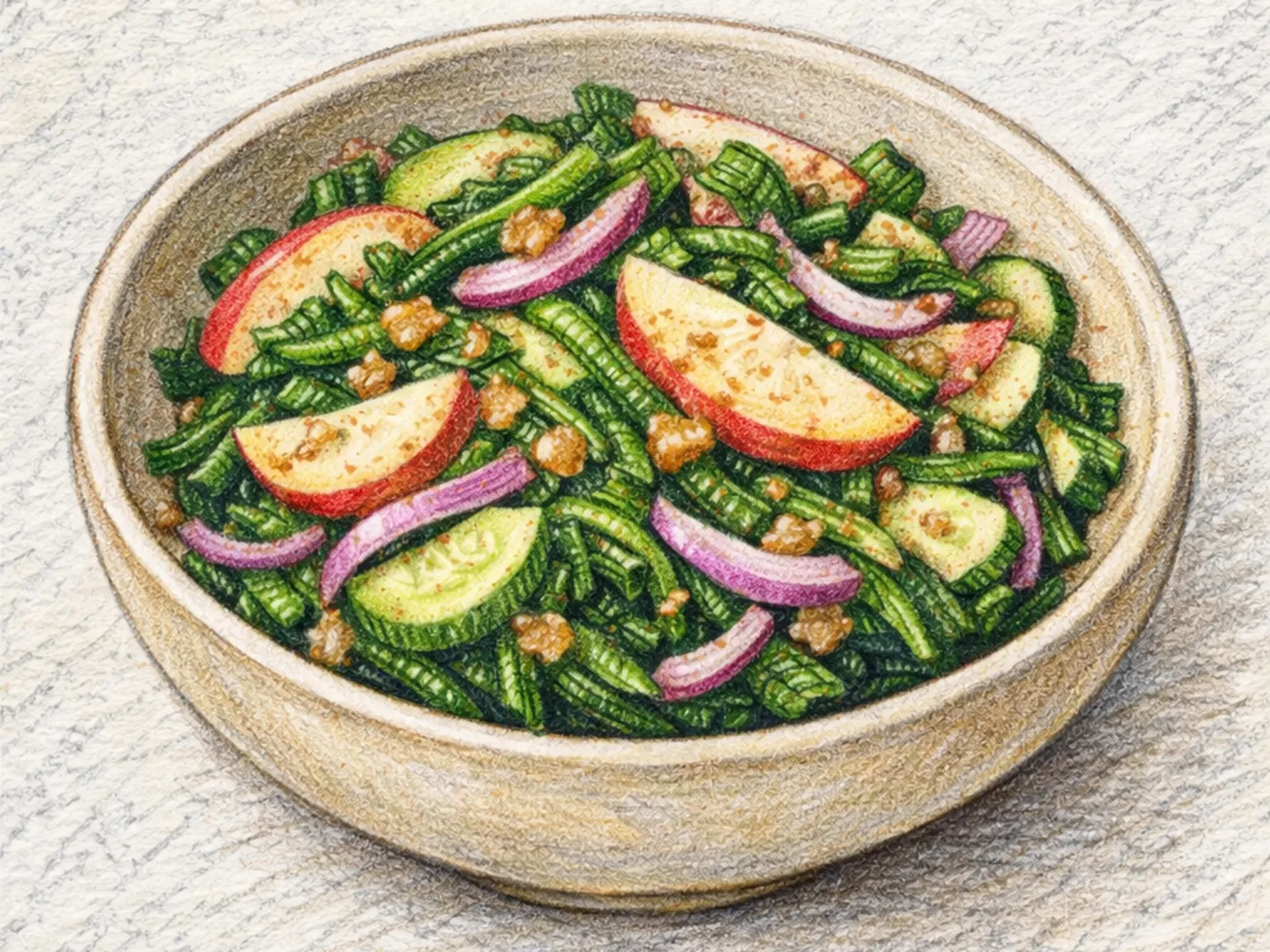
Chwinamul (aster scaber) is blanched briefly to preserve its herbal, slightly bitter character, then combined with thin-sliced apple and cucumber for crisp sweetness.
What makes this special
- Chwinamul blanched briefly retains its sharp, herbal fragrance and bitter edge.
- Blanching chwinamul under 30 seconds keeps its sharp herbal aroma
- Doenjang dressing adds umami depth finished with perilla oil nuttiness
Key ingredients
Core cooking flow
- 1 Trim tough stem ends and any yellow leaves from 120 g chwinamul.
- 2 Bring a pot of water to a strong boil and blanch the chwinamul for only 20 seconds.
- 3 When the greens are cold, squeeze them firmly by hand without crushing the leaves.
Chwinamul (aster scaber) is blanched briefly to preserve its herbal, slightly bitter character, then combined with thin-sliced apple and cucumber for crisp sweetness. The dressing is built on doenjang -- Korean fermented soybean paste -- which contributes a depth of savory umami uncommon in typical salad dressings, and a few drops of perilla oil add a nutty, lingering aftertaste. Red onion provides a sharp, pungent edge that keeps the salad from feeling heavy. Blanching time is critical: more than thirty seconds in boiling water strips both the fragrance and the green color, so the chwinamul should be transferred immediately to ice water to stop cooking. When made with freshly harvested spring chwinamul, the herbal aroma comes through at full intensity, and the doenjang dressing makes it a natural fit alongside other dishes on a Korean table.
Instructions
Read the steps as a cooking flow: prep, heat, seasoning, doneness control, and finish.
- 1Step
Trim tough stem ends and any yellow leaves from 120 g chwinamul.
Swish the greens in cold water until no grit remains, then drain in a sieve so excess water does not dilute the dressing.
- 2Heat
Bring a pot of water to a strong boil and blanch the chwinamul for only 20 seconds.
As soon as the color turns vivid green, move it to ice water to stop cooking.
- 3Prep
When the greens are cold, squeeze them firmly by hand without crushing the leaves.
Loosen the bundle and cut or separate it into bite-size lengths so the dressing can coat evenly.
- 4Prep
Julienne 120 g apple and 80 g cucumber into 0.3 cm strips for matching crunch.
Slice 30 g red onion very thin, soak it in cold water for 5 minutes, then drain well.
- 5Step
Put 1 tbsp doenjang in a bowl and loosen it first with 1.5 tbsp lemon juice, added little by little.
Stir in 1 tbsp perilla oil until the dressing looks smooth and lightly thickened.
- 6Finish
Combine the chwinamul, apple, cucumber, and drained onion in a large bowl, then toss gently with the dressing so the greens do not clump. Rest 2 minutes, scatter 1 tsp toasted sesame seeds, and serve cool.
After the steps
Pick a recipe that fits this dish.
Continue with shared ingredients, meal pairings, or a similar method.
Recipes That Go Well With This
More Salads →Based on shared ingredients and meal pairing
Bomdong Strawberry Doenjang Salad
Bomdong strawberry doenjang salad combines the crisp leaves of early spring bomdong cabbage with the fruity sweetness of strawberries and the fermented depth of Korean soybean paste. The dressing, built by whisking doenjang with olive oil and vinegar, adds savory richness to the mild bomdong leaves, while the natural acidity of the strawberries neutralizes the saltiness of the paste and brings brightness to every bite. Walnuts introduce crunch and nuttiness, creating textural contrast among the softer components, and cucumber adds moisture that keeps the salad refreshing throughout. Dressing the salad too early draws water from the strawberries, so adding the dressing immediately before serving is essential for maintaining the right texture. Tearing the bomdong by hand rather than cutting it preserves its natural shape without bruising the leaves. The saltiness of doenjang varies between brands, so adding the dressing gradually and tasting as you go prevents overseasoning. Swapping strawberries for blueberries or mandarin segments adapts the salad to other seasons while keeping the doenjang dressing intact. Toasted almond slices or sunflower seeds make a good substitute for walnuts when a lighter crunch is preferred.
Naengi Beef Salad (Shepherd's purse)
Fresh naengi - shepherd's purse - is blanched to mellow its earthy bite while keeping the fragrance intact. Beef sirloin is sliced thin and seared quickly so the surface chars lightly and the center stays moist. Julienned Korean pear bridges the beef's richness and the naengi's mild bitterness with clean sweetness. A dressing of soy sauce, vinegar, sesame oil, and plum extract balances salty, sour, and subtly sweet, while red onion and toasted sesame seeds finish with sharpness and nutty crunch.
Kongguksu-Style Cold Linguine
Kongguksu-style cold linguine reinterprets Korea's chilled soy noodle soup using Italian linguine in place of traditional wheat noodles. Unsweetened soy milk is blended with toasted sesame seeds and peanut butter into a thick, nutty cold broth poured directly over the pasta at serving. The linguine is cooked al dente and immediately shocked in ice water to firm up the texture and chill it completely before the broth goes on. Julienned cucumber and halved cherry tomatoes scatter on top for fresh crunch and color. Salt and sugar are adjusted at the end to balance the broth's natural bean flavor against the richness from the peanut butter. The full preparation takes about ten minutes, with stovetop time limited strictly to boiling the pasta, which makes it one of the more practical cold dishes to assemble in summer heat. Adding more peanut butter thickens the broth further, while extra sesame seeds push the nuttiness higher.
Naengi Doenjang Mushroom Salad
Naengi is blanched for about thirty seconds in boiling water to remove its raw grassy edge while keeping the earthy, faintly sweet spring aroma that makes it distinctive. Oyster mushrooms go onto a dry, well-heated pan with no oil, pressed gently as they cook, so the moisture evaporates and the surfaces caramelize to a light golden color, concentrating their savory depth. The dressing is made by dissolving doenjang in yuja marmalade, rice vinegar, and sesame oil, producing a layered flavor that is nutty and fermented at the base with a bright citrus lift. Baby greens spread across the plate as a soft, neutral bed, and halved cherry tomatoes add bursts of juice that cut through the weight of the fermented paste. A few drops of sesame oil and toasted sesame seeds add a roasted, nutty finish, and minced garlic folded into the dressing contributes a quiet warmth that ties the individual flavors together without dominating. Using freshly foraged naengi in early spring gives the salad a vivid seasonal character that dried or stored greens cannot replicate.
Serve with this
Salt-Grilled Pork Dwitgogi
This dish features pork dwitgogi, a selection of assorted pork cuts valued for a springy and chewy texture compared to standard pork belly. The meat is prepared by applying soju to eliminate gamey odors and patting it dry to ensure a clean sear. The cooking process starts by searing the pork in a preheated heavy pan on high heat to seal in the juices. Once the meat is partially cooked, sea salt and crushed black pepper are added to distribute the seasoning evenly. Garlic cloves and green onions are then cooked directly in the rendered pork fat, infusing the meat with their aromas. Grilling continues until the pork is golden brown and springy. The completed dish is traditionally served hot alongside boiled meljeot, a salted anchovy sauce that provides a deep, savory element to the roasted pork.
Soybean Paste Stew with Clams
Doenjang jjigae with clams is one of the most frequently made stews in Korean households, built on the combination of fermented soybean paste's deep, earthy flavor and the clean briny umami of manila clams. The clams are purged of sand before being added to a pot of doenjang-laced broth, where they open and release their salty, seawater-flavored liquor directly into the soup. The result transforms the base from something merely savory into something distinctly oceanic and complex. Zucchini softens in the bubbling broth and contributes a natural sweetness as it breaks down, while blocks of soft tofu act as sponges, soaking up the seasoned liquid and releasing it in a burst of hot, flavorful broth when bitten into. Sliced cheongyang chili peppers are added to interrupt the heaviness of the fermented paste and sharpen the overall flavor. The stew is typically served in an earthenware pot while still bubbling, alongside rice. Many Koreans ladle the broth directly over their bowl of rice. The recipe adapts to any season: assembled with leftover summer vegetables from the refrigerator for a lighter version, or cooked piping hot in a stone pot through winter.
Waldorf Salad
The Waldorf Salad is a classic dish combining apples, celery, walnuts, and grapes coated in a mayonnaise-based dressing. To prepare it, fresh apple cubes are immediately tossed with lemon juice to prevent browning and maintain their color. The dressing is made by whisking mayonnaise with a small amount of sugar until smooth. Celery stalks are thinly sliced, and grapes are halved and seeded to provide a refreshing texture. The walnuts are toasted in a dry pan over low heat for two minutes to enhance their earthy flavor, which balances the sweetness of the mayonnaise. All the ingredients are gently folded together to prevent the fruit from releasing excess juices, which would make the salad watery. Chilling the salad in the refrigerator for thirty minutes allows the flavors to integrate while keeping the ingredients crisp.
Similar recipes
Korean Chwinamul Pot Rice
Chwinamul sotbap is a Korean pot rice made by layering lightly seasoned wild chwinamul greens over soaked rice and cooking everything together in kelp stock until done. The greens release their distinctively herbal, faintly bitter fragrance directly into the rice as it steams, filling the room with an earthy mountain scent when the lid is lifted. Mixed at the table with a soy-sesame sauce, the initial bitterness softens into a pleasant background that makes each spoonful layered and grounding. It is best prepared in spring when chwinamul is freshly picked, offering the sharpest aroma and the most tender stems. Dried chwinamul, soaked and squeezed before use, extends the recipe across all four seasons, though the fresh version carries a vitality and brightness that dried leaves cannot fully replicate.
Charred Broccolini Doenjang Lentil Salad
Charred broccolini doenjang lentil salad halves broccolini lengthwise, coats it in olive oil, and chars it in a very hot pan for 4 to 5 minutes until the cut edges darken and take on a bitter, smoky note. Cooked lentils add a starchy, filling body to the bowl. A dressing of doenjang, Dijon mustard, apple cider vinegar, and minced garlic layers fermented depth against sharp acidity. Roughly chopped walnuts break open with each bite and release a fatty, toasted richness. The apple cider vinegar cuts through the salt of the doenjang, keeping the dressing balanced. Draining the lentils thoroughly is necessary to prevent the dressing from diluting, and letting the assembled bowl rest five minutes before serving allows the grains to draw in the seasoning.
Korean Chwinamul with Doenjang
This banchan brings together chwinamul, a foraged spring green with a pronounced bitter edge, and doenjang, Korea's pungent fermented soybean paste, producing a side dish where two assertive flavors push against each other and settle into something deeper than either alone. The greens are blanched for two minutes, squeezed firmly to remove excess water, and cut to an even length before seasoning. Doenjang, soup soy sauce, minced garlic, sesame oil, and perilla powder are added and worked in by hand, pressing the thick paste into the porous leaf tissue so that the salty, fermented depth clings to every strand and the seasoning does not slide off during plating. The natural bitterness of the chwinamul does not disappear under the doenjang but transforms instead, losing its sharpness and becoming layered and rounded. Letting the dressed greens rest for five minutes before serving allows the seasoning to penetrate fully, which sharpens and deepens the overall flavor in a way that is noticeable even from the first resting period. In winter months, dried chwinamul soaked overnight in cold water is used instead of fresh; the texture is softer and less fibrous but the compatibility with doenjang holds completely.