Korean Curry Fried Rice (Golden Spiced Chicken Fried Rice)
Quick answer
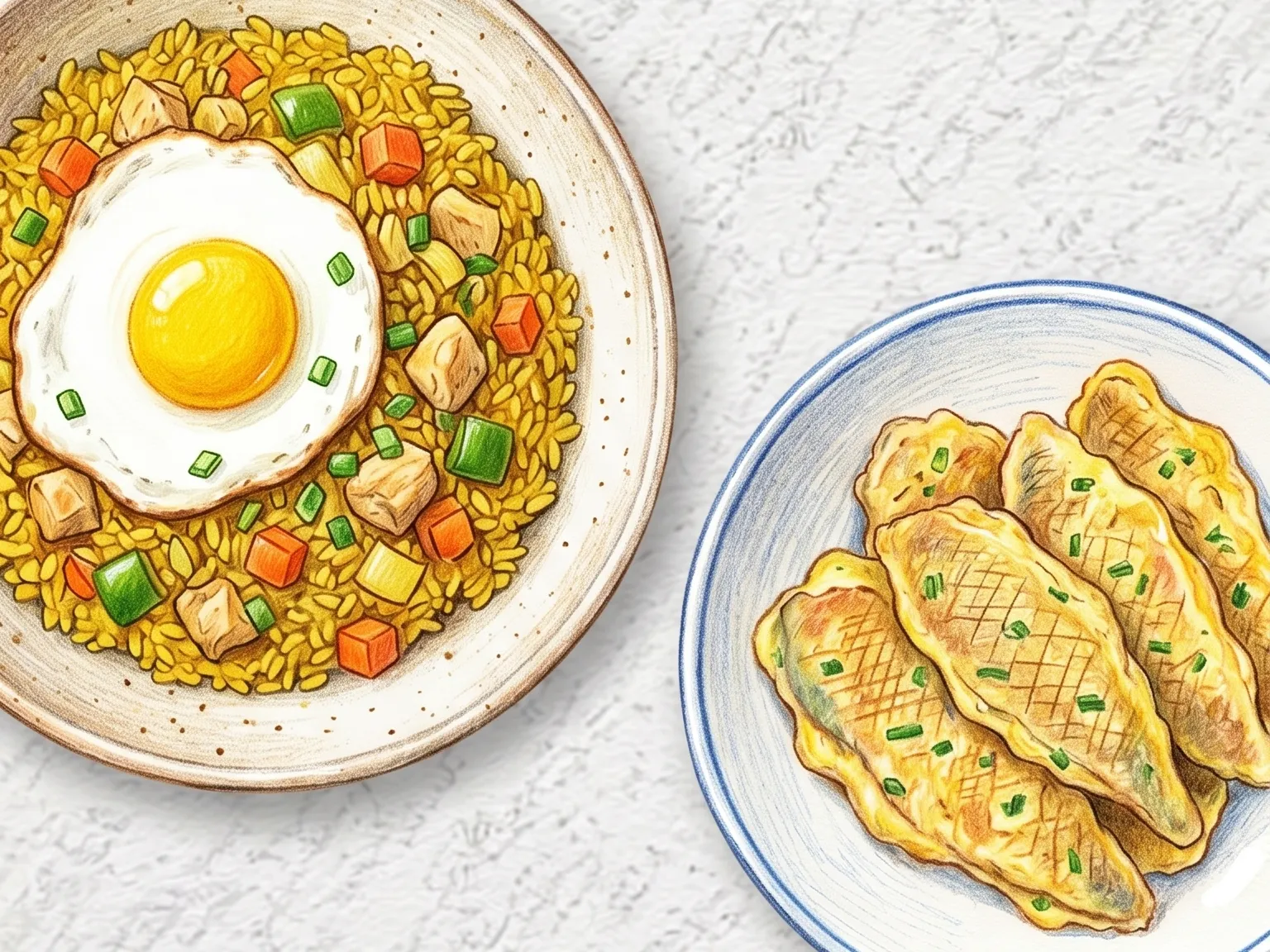
Curry bokkeumbap is a Korean fried rice where curry powder coats each grain with warm spice and gives the rice a vivid golden color.
What makes this special
- Curry powder bloomed in hot oil provides a warm spice and golden color to this savory fried rice.
- Curry powder bloomed in oil 30 seconds before rice goes in
- Finishing butter gives the golden spice coating extra sheen
Key ingredients
Core cooking flow
- 1 Dice 120g chicken breast, 80g onion, 40g carrot, and 50g bell pepper into 0.5-1cm pieces.
- 2 Heat 1 tbsp oil in a pan over medium heat and cook the chicken for 4 minutes until lightly browned.
- 3 Add onion, carrot, and bell pepper and saute over medium heat for 2 minutes to draw out their sweetness.
Curry bokkeumbap is a Korean fried rice where curry powder coats each grain with warm spice and gives the rice a vivid golden color. Chicken breast, onion, carrot, and bell pepper are stir-fried together before the rice goes in, distributing protein and vegetables evenly through every serving. The curry fragrance develops gradually with each bite - more present than plain fried rice but lighter than a curry sauce, landing at a satisfying middle point between the two. Bell pepper adds sweetness and a visual contrast of color against the golden rice. Topping with a fried egg raises the dish further: when the yolk breaks and mixes into the rice, a layer of creaminess runs through each bite. The recipe works well with day-old rice and requires few ingredients, making it a practical weeknight meal.
Instructions
Read the steps as a cooking flow: prep, heat, seasoning, doneness control, and finish.
- 1Heat
Dice 120g chicken breast, 80g onion, 40g carrot, and 50g bell pepper into 0.5-1cm pieces.
Uniform sizing makes cooking times match and ensures every spoonful has a balanced mix of ingredients.
- 2Control
Heat 1 tbsp oil in a pan over medium heat and cook the chicken for 4 minutes until lightly browned.
Fully cooking the chicken before adding the spice means the curry aroma can permeate the meat.
- 3Control
Add onion, carrot, and bell pepper and saute over medium heat for 2 minutes to draw out their sweetness.
When the vegetables have softened slightly and edges turn translucent, the pan is ready for the spice.
- 4Finish
Sprinkle 1.5 tbsp curry powder evenly over everything and stir-fry for 30 seconds.
This 30-second bloom in hot oil is when the turmeric and spices release their color and aroma - this step determines the finished dish's golden hue.
- 5Control
Add 2 cups rice and 1 tbsp soy sauce, increase to high heat, and stir-fry for 3 minutes.
Keep pressing and spreading until every grain is coated in golden curry.
- 6Finish
Add 15g butter and stir quickly for 30 seconds until melted and glossy.
Butter adds sheen and a creamy note to the curry fried rice. Serve immediately while the pan is still hot.
After the steps
Pick a recipe that fits this dish.
Continue with shared ingredients, meal pairings, or a similar method.
Recipes That Go Well With This
More Rice →Based on shared ingredients and meal pairing
Korean Fire Chicken Fried Rice
Buldak bokkeumbap is a Korean fried rice built around the fiery buldak sauce - a thick chili-based condiment with concentrated heat that became widely known through the instant noodle brand of the same name. Chicken breast cut into bite-sized pieces is marinated in the sauce, then stir-fried with cooked rice over high heat until the sauce caramelizes slightly and coats every grain. The spice hits immediately on the first bite and accumulates with each spoonful, producing the kind of sustained burn that spicy food enthusiasts seek. Laying mozzarella cheese across the top and covering the pan to melt it creates a layer of stretchy, creamy dairy that wraps around the rice and provides brief relief between bites without neutralizing the heat completely. The contrast between the fire of the sauce and the cooling effect of the cheese makes the dish more compelling than either element alone. Easy to assemble with a short ingredient list, it has become a go-to option for late-night cooking and solo meals.
Korean Spam Fried Rice (Crispy Spam Cubes with Egg and Rice)
Spam bokkeumbap is a Korean fried rice built around crispy cubes of pan-seared Spam, whose salty, caramelized edges give the dish an addictive quality. The Spam is diced small and dry-fried without added oil - its own rendered fat crisps the outside while keeping the inside moist and savory. Onion and scallion go in next for aromatic depth, followed by cold leftover rice that is tossed over high heat until every grain picks up the salty pork flavor left in the pan. Beaten egg is scrambled into the rice, coating the grains in a thin, soft layer. A splash of soy sauce and a drizzle of sesame oil finish the dish with umami and nuttiness. The whole thing comes together in under ten minutes, making it one of the fastest comfort meals in the Korean home-cooking repertoire.
Korean Seasoned Perilla Leaf Banchan
Kkaennip-muchim uses the same core ingredient as kkaennip jorim but skips the heat - raw perilla leaves are dressed directly with a soy-chili seasoning. While the braised version offers soft, fully wilted leaves, this muchim preserves the leaf's rough surface texture and its sharp, almost peppery raw aroma. The dressing - soy sauce, gochugaru, garlic, and chopped scallion - is spread thinly between stacks of five leaves; over-applying makes the dish too salty. A ten-minute rest lets the seasoning absorb into the leaf fibers. Perilla leaves are rich in rosmarinic acid, an antioxidant that has contributed to their reputation as a health food in Korea. Served alongside samgyeopsal or ssambap, the leaves' strong herbal scent cuts through the richness of fatty pork.
Korean Dakgalbi Fried Rice
Dakgalbi bokkeumbap is a fried rice made by stir-frying gochujang-marinated boneless chicken thigh with cabbage and onion over high heat, then adding day-old rice to the pan and frying until every grain absorbs the sweet-spicy marinade. The dish originated from the Chuncheon tradition of finishing a dakgalbi meal by stir-frying the leftover sauce and scraps with rice, effectively turning what remains in the pan into a second course. Day-old rice is essential: fresh rice holds too much moisture and clumps together, while refrigerated rice separates cleanly on the hot surface and makes sufficient contact with the pan to develop slightly charred bits at the bottom. These caramelized patches add a smoky crunch that contrasts with the sauced grains above and elevate the dish beyond a simple fried rice. Cabbage and perilla leaves added at the very end of cooking retain a faint crunch that cuts through the richness of the gochujang marinade. Plating the rice with a few perilla leaves laid on top and a scatter of sesame seeds over the surface finishes the dish without requiring anything further.
Serve with this
Korean Lettuce Kimchi (Quick Leaf Gochugaru Dressed)
Sangchu kimchi is a quick Korean lettuce kimchi that starts with leaf lettuce torn into bite-sized pieces, salted lightly for ten minutes to relax the leaves without fully collapsing them, then tossed in a seasoning of gochugaru, sand lance fish sauce, minced garlic, vinegar, and sugar. As the lettuce absorbs the dressing it softens, but eating it before it fully wilts keeps a faint crispness at the leaf edges along with the lettuce's characteristic mild bitterness. The fermented depth of the fish sauce adds weight to the lettuce's grassy, clean flavor, while vinegar contributes a bright, tangy finish that cuts through the richness. Sesame seeds scattered through the mix give a faintly toasted crunch with each bite. Drying the leaves thoroughly after salting is the step that most directly controls flavor: any residual water dilutes the seasoning rapidly and turns the kimchi watery and dull within an hour or two. This kimchi is best made moments before serving and eaten immediately while the textures are still distinct. A small amount of ssamjang folded in adds a deeper, earthy fermented note for variation.
Korean Soft Tofu Soup (Mild Clear Broth with Silken Tofu)
Sundubu-guk is the gentler sibling of the more widely known sundubu-jjigae, trading the latter's fiery red broth for a clear, mild soup that puts silken tofu front and center. The base is a simple anchovy and kelp stock, seasoned with soup soy sauce and nothing more assertive, so the broth stays transparent and clean on the palate. Blocks of unpressed soft tofu are slipped into the simmering liquid and heated just until they are warmed through - overcooked sundubu loses the trembling, custard-like texture that defines the dish. Each spoonful collapses gently on the tongue, releasing a faint, sweet soybean flavor that pairs effortlessly with the umami-rich stock. A small addition of salted shrimp paste can be stirred in at the table to introduce a subtle marine depth without disrupting the soup's calm character. This is the soup Koreans turn to when appetite is low, digestion needs rest, or the body simply craves something warm and uncomplicated. It is equally suitable for young children and elderly diners, and its quiet simplicity is precisely its strength.
Korean White Kimchi Tofu Stew
Baek kimchi dubu jjigae is a mild Korean stew where the gentle tang of white kimchi takes the place of regular red kimchi as the flavor anchor. Anchovy-kelp stock forms the umami foundation, and finely chopped white kimchi is added so its lactic fermentation acidity gradually dissolves into the broth, creating a refreshingly clean and clear flavor that diverges sharply from the bold heat of standard kimchi jjigae or the earthy weight of doenjang jjigae. Thick tofu slabs are added after the broth comes to a full boil so the blocks hold together rather than crumbling, and enoki mushrooms go in during the final two minutes to preserve their delicate texture. Guk-ganjang adjusts the salinity carefully, since the white kimchi itself already carries a noticeable saltiness from the brining process. Adding a sliced cheongyang chili introduces a measured spicy note into the otherwise gentle broth without overwhelming its clean character. Unlike the intense, opaque red broth of standard kimchi jjigae, this version stays transparent, lightly tart, and nearly fat-free, making it noticeably easy on the stomach. White kimchi is fermented without gochugaru, preserving all the lactic sourness while eliminating the heat and pigment, which makes it particularly well suited as a braising base for delicate ingredients like tofu and enoki.
Similar recipes
Korean Bacon Kimchi Fried Rice
Bacon kimchi fried rice takes the most common Korean leftover combination - cold rice and aging kimchi - and substitutes rendered bacon fat for the traditional sesame oil base. The bacon goes into a cold pan and cooks slowly so the fat renders completely before the meat crisps, creating a pool of smoky drippings that replace cooking oil entirely. Well-fermented kimchi, squeezed of excess juice and chopped roughly, goes into the hot fat and sizzles until its edges caramelize and the sharp lactic tartness mellows into a deeper, roasted sourness. Day-old rice is pressed flat against the pan to develop a crust reminiscent of nurungji - the scorched rice layer that fried rice enthusiasts seek. Soy sauce and a pinch of sugar season the dish, though both should be used in small amounts to avoid masking the interplay between the bacon's smokiness and the kimchi's fermented character. A fried egg on top, with a yolk still runny, becomes a sauce when broken and stirred through the rice. Bacon became a standard Korean grocery item in the 2000s, and this dish has since become a common home-cooking variation, with many cooks preferring its deeper, smokier flavor profile over the sesame oil original.
Korean Popcorn Chicken
Popcorn chicken is a Korean fried snack made by cutting chicken breast into 2cm cubes, coating them in egg wash and cornstarch, then double-frying at 170 degrees Celsius. The first fry sets the crust; the second fry drives out residual moisture, producing an exceptionally crunchy shell. Because the pieces are small, the crust-to-meat ratio is high, so every bite delivers maximum crunch. A glaze reduced from soy sauce, sugar, and oligosaccharide syrup coats each piece in a sweet-salty finish. Garlic powder mixed into the initial seasoning carries a mild garlic note through the oil.
Korean Curry Flavored Tempura
Curry twigim mixes curry powder directly into the frying batter, giving it a vivid golden color and distributing spice throughout the coating before any frying begins. Sweet potato, carrot, and onion slices are dipped in this batter and deep-fried at 170 degrees Celsius. The key technical requirement is ice-cold water in the batter: cold temperature inhibits gluten development, which keeps the coating thin and produces a shattering, light crunch when bitten. Using warm or room-temperature water causes the gluten strands to develop fully, resulting in a thick, chewy crust that absorbs oil rather than repelling it. Because the curry powder is built into the batter itself, every piece carries turmeric, cumin, and coriander flavor in each bite without needing a dipping sauce. Compared to standard Korean vegetable tempura, the curry spices add an aromatic warmth and complexity to the sweet vegetables that distinguishes it clearly. The texture is best immediately out of the oil while the coating is still rigid.