Charim

2686 Korean & World Recipes

2686+ Korean recipes, clean and organized. Ingredients to instructions, all at a glance.

Korean Pickled Green Onion

Korean Pickled Green Onion

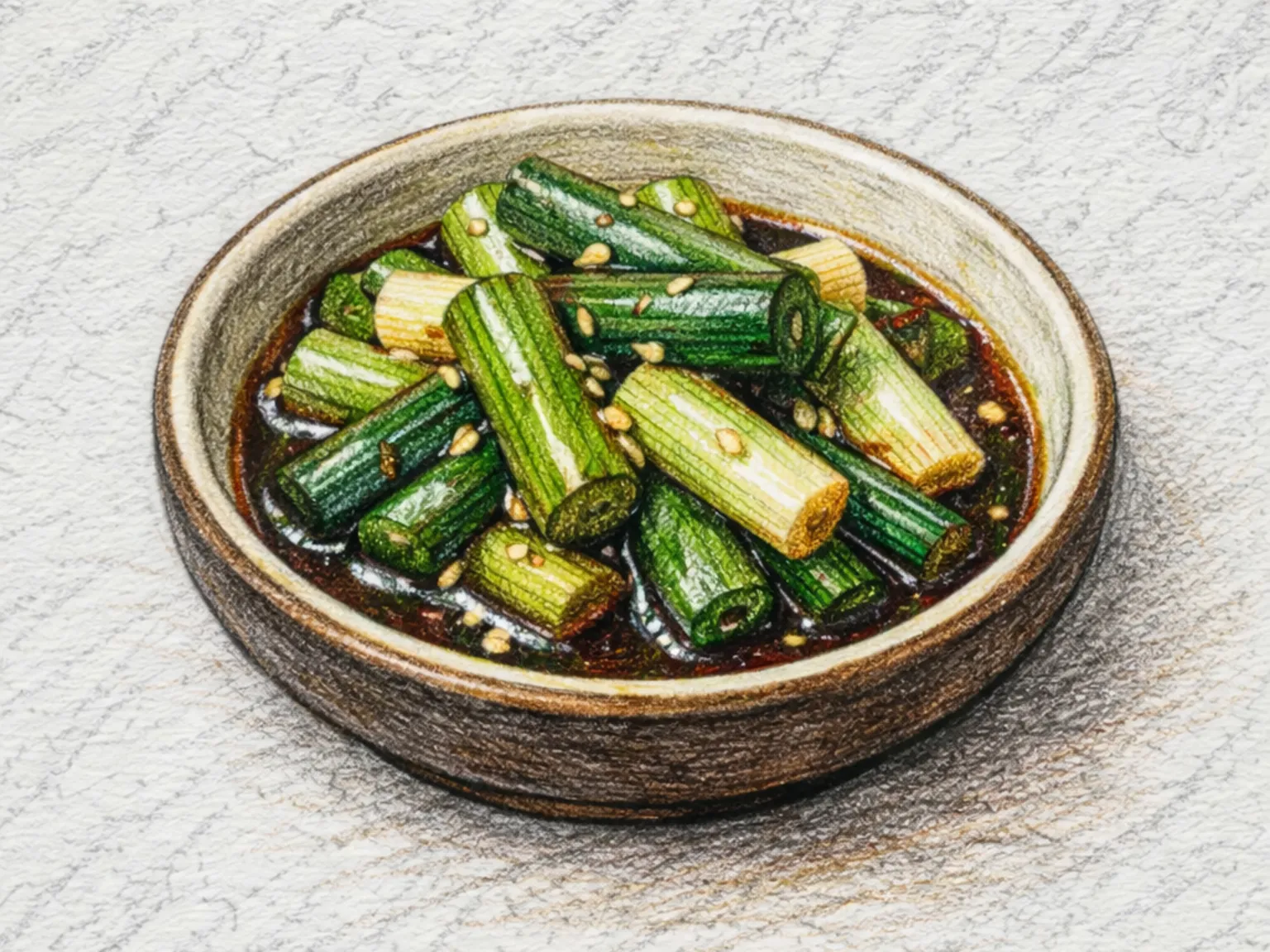
Daepa jangajji is a quick Korean pickle made by cutting large green onions into five-centimeter lengths and submerging them in a boiled-and-cooled brine of soy sauce, vinegar, and sugar with garlic and dried chili. Using primarily the white portions yields a crisper texture, and cooling the brine thoroughly before pouring prevents the onions from softening. The soy-vinegar combination tames the raw pungency of the green onion while preserving its aromatic depth. After two days of refrigeration the seasoning penetrates evenly, producing a sharp, savory condiment that cuts through the richness of grilled pork belly and other fatty meats.

Prep 15min Cook 8min 4 servings

Adjust Servings

2servings
servings

Instructions

  1. 1

    Cut green onions into 5 cm pieces, wash, and dry.

  2. 2

    Place green onions, garlic, and dried chili into a jar.

  3. 3

    Boil soy sauce, water, vinegar, and sugar for brine.

  4. 4

    Cool brine and pour to fully cover ingredients.

  5. 5

    Refrigerate for 2 days before eating.

🛒Shop Ingredients on Amazon

As an Amazon Associate, we may earn from qualifying purchases.

Tips

Using more white parts gives better crunch.
If reusing brine, always reboil it first.

Nutrition (per serving)

Calories
58
kcal
Protein
2
g
Carbs
12
g
Fat
0
g

More Recipes

Korean Soy Pickled Onions
KimchiEasy

Korean Soy Pickled Onions

Yangpa jangajji is a soy-pickled onion made by immersing large-cut onion chunks in a boiled brine of soy sauce, vinegar, and sugar. The hot brine tempers the raw onion's sharp bite, and as the pickle matures the sweet-salty seasoning penetrates evenly through each piece. Sliced cheongyang chili peppers added to the jar lend a gentle lingering heat that balances the sweetness. Ready to eat after one day of refrigeration, it is a staple accompaniment to grilled meats like samgyeopsal, where its acidity and crunch cut through richness effectively.

🏠 Everyday🍱 Lunchbox
Prep 15minCook 12min4 servings
Korean Cauliflower Jangajji (Pickled Cauliflower)
KimchiEasy

Korean Cauliflower Jangajji (Pickled Cauliflower)

Crunchy, tangy, and addictively snackable - Korean pickled cauliflower in a sweet-sour soy brine that stays crisp for days. Florets are broken into bite-sized pieces and soaked in a boiled-and-cooled brine of soy sauce, vinegar, and sugar. The dense structure absorbs the pickling liquid gradually while keeping its firm crunch intact. A perfect palate cleanser alongside fried chicken, BBQ, or any rich dish on the Korean table.

🍱 Lunchbox
Prep 25minCook 10min4 servings
Korean Soy-Pickled Eggplant
KimchiEasy

Korean Soy-Pickled Eggplant

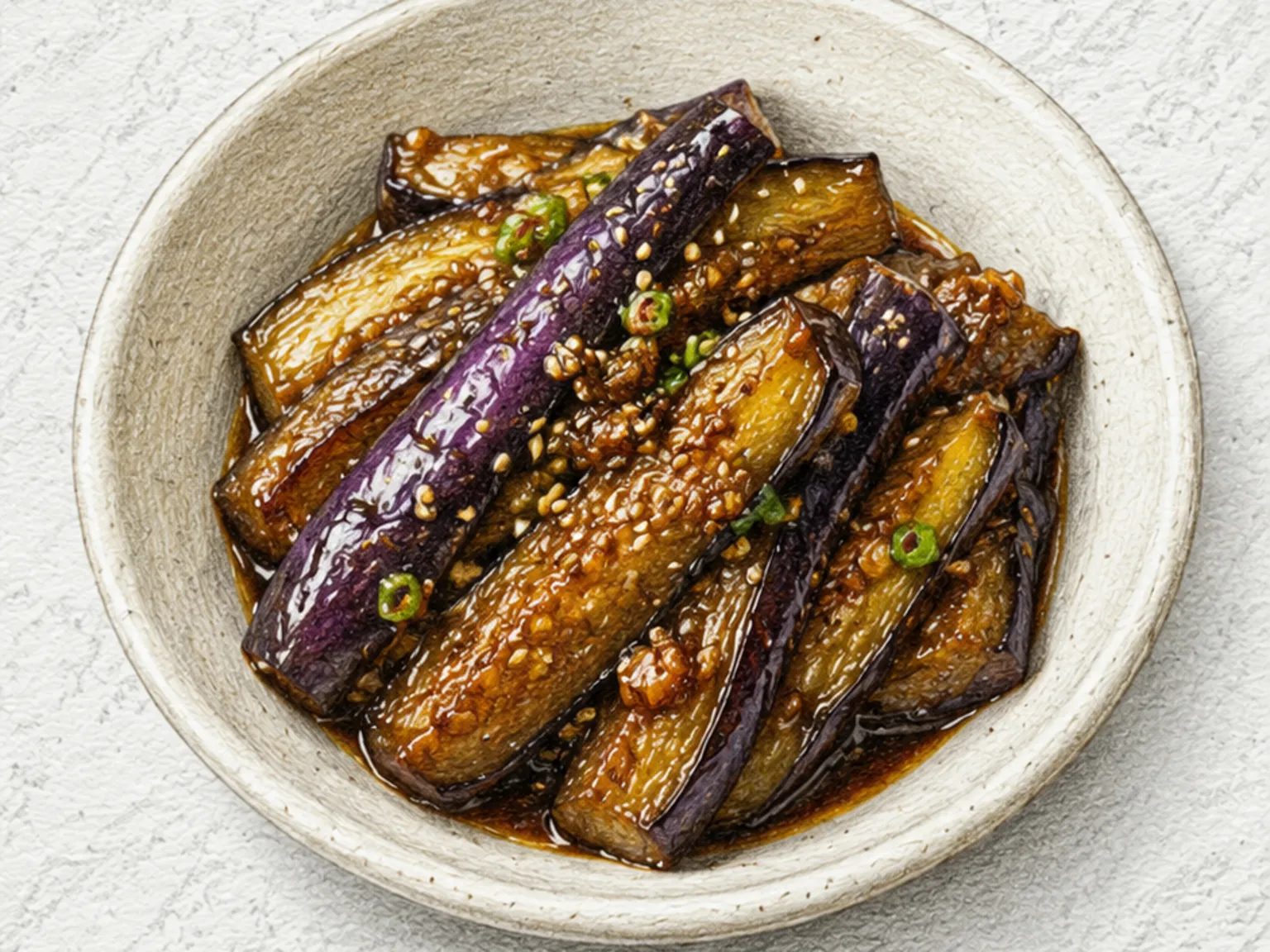
Gaji jangajji is a Korean pickled eggplant made by blanching eggplant for just over a minute to soften only the surface, then submerging it in a boiled brine of soy sauce, vinegar, and sugar. The blanched eggplant absorbs the pickling liquid rapidly like a sponge while keeping a yielding, silky texture inside. Vinegar gives direction to the eggplant's otherwise neutral flavor, and garlic and cheongyang chili layered into the brine build a quiet complexity beyond simple preservation. Ready to eat after one day, this jangajji holds its texture for over ten days refrigerated, making it a practical banchan to prepare in advance.

🏠 Everyday🍱 Lunchbox
Prep 20minCook 8min4 servings
Korean Soy-Pickled Green Chili Peppers
KimchiEasy

Korean Soy-Pickled Green Chili Peppers

Gochu soy jangajji is a classic Korean pickle made by packing whole green chili peppers into a glass jar and pouring over a boiling brine of soy sauce, vinegar, sugar, and water. The hot brine partially cooks the pepper surface, taming the raw heat by a degree while the interior stays crisp, so each bite delivers soy saltiness and chili spiciness simultaneously. Onion adds natural sweetness to the brine, and garlic contributes an additional aromatic layer. Reboiling and repouring the brine after two days extends the shelf life, allowing this jangajji to keep refrigerated for up to a month as a pantry-staple banchan.

🍱 Lunchbox
Prep 15minCook 8min4 servings
Korean Salt-Grilled Green Onion
GrilledEasy

Korean Salt-Grilled Green Onion

Daepa-sogeum-gui is a minimalist Korean dish of green onion whites cut into 7-8 cm lengths, brushed with olive oil, sprinkled with coarse salt, and grilled over high heat. The outer layers char slightly, developing a light smokiness, while the inner core softens and turns remarkably sweet as starch converts to sugar under intense heat. Only the white parts are used because the green tops burn too quickly, and pressing each piece flat against the grill for two to three minutes per side ensures the center cooks through. A drizzle of sesame oil, a scattering of toasted sesame seeds, and a pinch of lemon zest layer nuttiness and citrus brightness over the onion's caramelized sweetness.

🍺 Bar Snacks🍱 Lunchbox
Prep 10minCook 8min2 servings
Korean Pickled Garlic Scapes
Side dishesEasy

Korean Pickled Garlic Scapes

Maneuljjong-jangajji pickles garlic scapes in a boiled soy-vinegar-sugar brine, sharing the same preservation principle as garlic clove jangajji but using the stalks instead of the bulbs. The scapes are cut to 4 cm lengths, packed tightly in a jar, and doused with the brine while still hot - the heat partially cooks the outer surface, giving each piece a clean snap when bitten, unlike the cold-pour method used for whole garlic jangajji. Whole black peppercorns added to the jar release their spicy aroma into the liquid during aging, adding depth beyond the basic salt-acid profile. Though edible after one day, day three is the sweet spot where the seasoning has penetrated enough while the scapes still retain crunch. Reboiling and repouring the brine once extends the preservation window significantly. These pickled scapes serve as a sharp, vinegary counterpoint to rich meat dishes on the Korean table.

🏠 Everyday🍱 Lunchbox
Prep 15minCook 8min4 servings
More Kimchi →