Korean Green Onion Kimchi
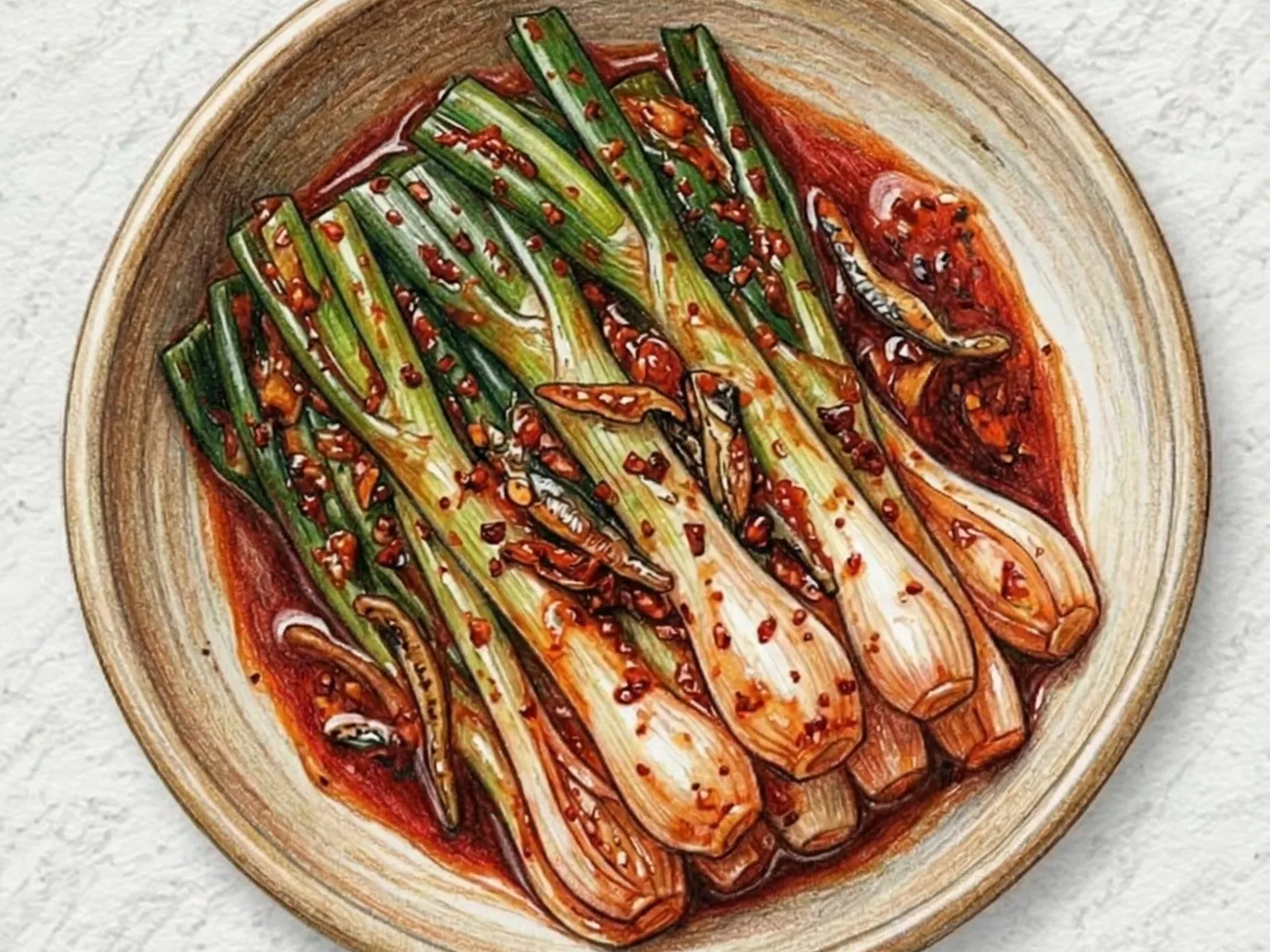
Daepa kimchi is made by cutting large green onions into six- to seven-centimeter lengths and gently coating them in a paste of gochugaru, anchovy fish sauce, soy sauce, plum extract, and glutinous rice paste. The rice paste acts as a binder that keeps the seasoning clinging to the onion surfaces throughout fermentation instead of sliding off. Handling the stalks carefully so they stay intact is important for presentation, and splitting thicker white portions lengthwise gives the paste more surface area to penetrate. Eight hours of room-temperature fermentation followed by two days of refrigeration brings the kimchi to its peak, where the sharp allium bite of the green onion meets the deep fermented umami of the fish sauce.
Adjust Servings
Instructions
- 1
Cut green onions into 6-7 cm lengths, soak in cold water for 5 minutes, then drain well.
- 2
Warm glutinous rice paste over low heat for 2-3 minutes until thickened, then cool.
- 3
Combine chili flakes, fish sauce, soy sauce, garlic, ginger, plum syrup, and rice paste for the seasoning.
- 4
Add green onions and coat gently so the stalks stay intact.
- 5
Layer into an airtight container and spread remaining paste evenly on top.
- 6
Ferment 8 hours at room temperature, then refrigerate for 2 days for full umami.
As an Amazon Associate, we may earn from qualifying purchases.
Tips
Nutrition (per serving)
More Recipes

Korean Cabbage Kimchi (Crunchy Green Cabbage Kimchi)
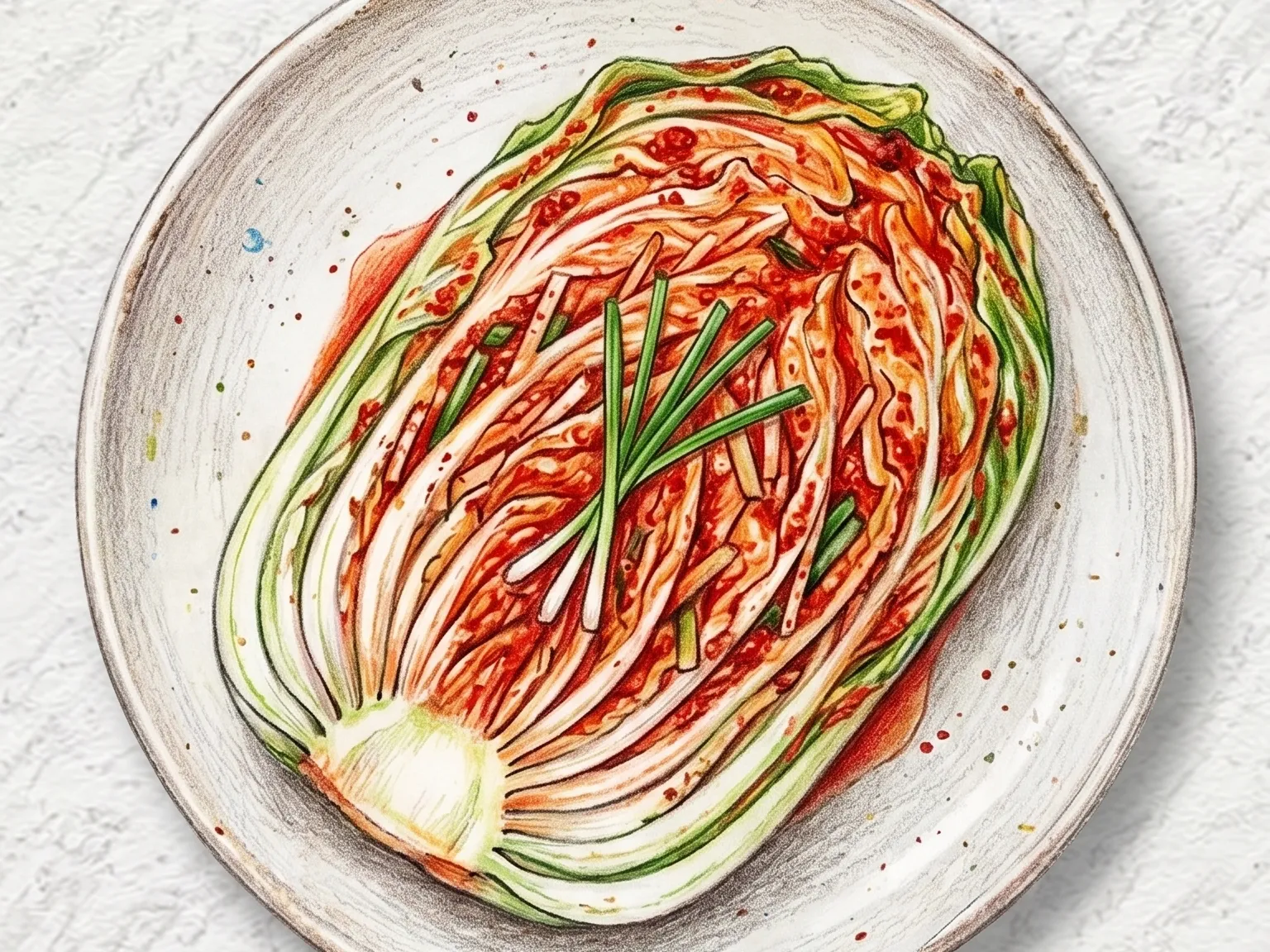
Yangbaechu kimchi is a Korean cabbage kimchi made by salting green cabbage and tossing it with chili flakes, fish sauce, and minced garlic. The thicker leaves and lower moisture content of green cabbage compared to napa cabbage result in a noticeably crunchier texture that persists through fermentation. The natural sweetness of cabbage softens the heat from the chili seasoning, while carrot and scallion pieces add color and freshness. Six hours of fermentation at room temperature followed by refrigeration lets the tanginess develop gradually. It serves as a lighter alternative when traditional napa kimchi feels too heavy.

Korean Mustard Leaf Kimchi
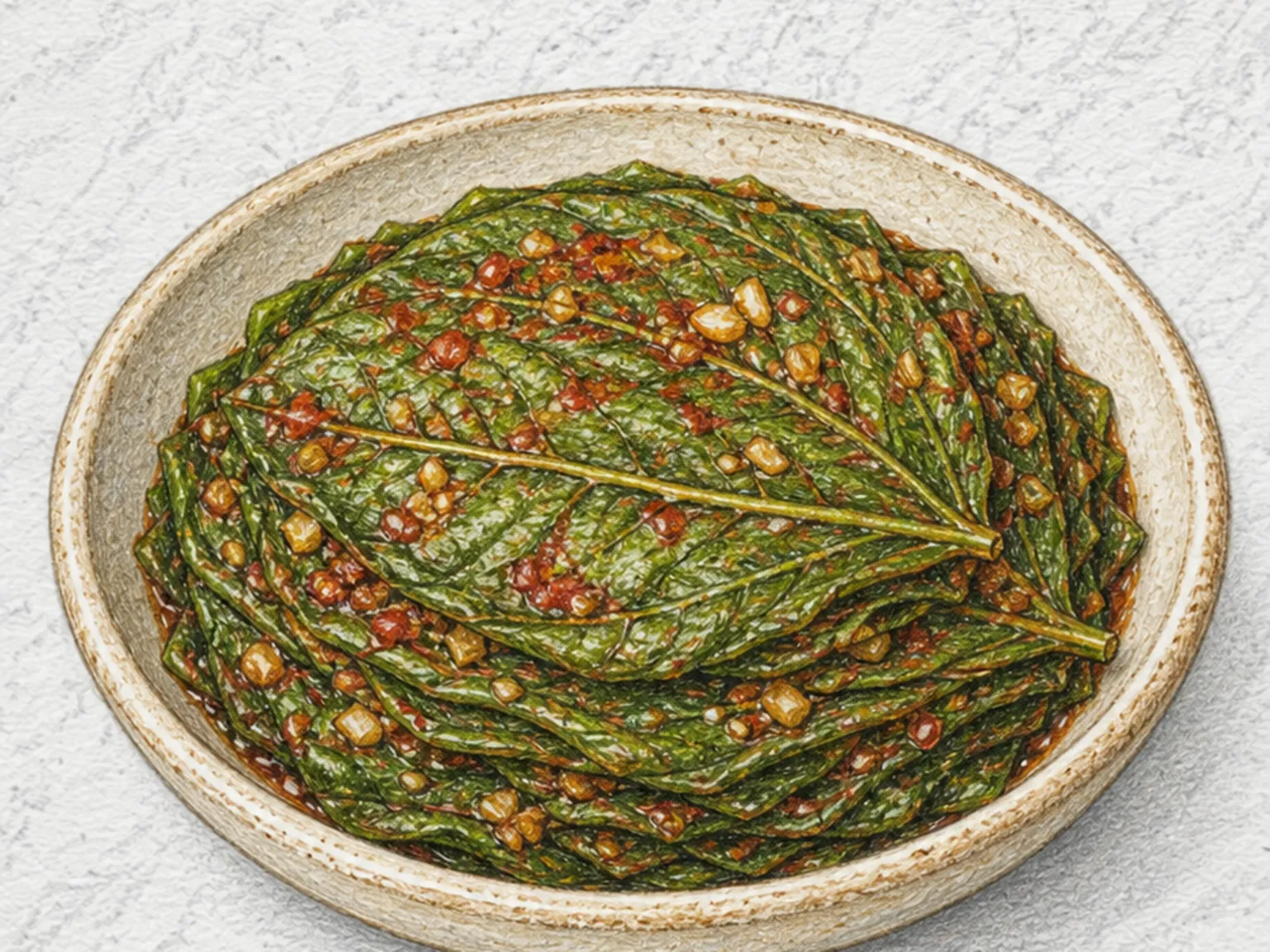
A fiery, wasabi-like kimchi with a punch far bolder than regular napa cabbage kimchi - mustard greens fermented with gochugaru and anchovy fish sauce. The brassica oils in the leaves transform during fermentation into a sharp pungency that cuts through rich pork and soup-rice bowls. Plum extract tempers the acidity, balancing the aggressive aroma and deep saltiness. A signature preparation of Korea's Jeolla province, gat kimchi is for anyone who finds standard kimchi too mild.

Korean Cheonggak Kimchi (Seaweed Kimchi)
Cheonggak kimchi is made with cheonggak, a type of green seaweed, mixed with julienned radish and scallions in a seasoning of gochugaru, anchovy fish sauce, and sweet rice paste. The seaweed contributes a distinctive chewy, almost crunchy texture and a concentrated ocean aroma that sets this kimchi apart from plant-based varieties. Seasoning the radish first and then tossing the seaweed in quickly is important because overworking toughens the seaweed's delicate structure. After one day of refrigeration the brine from the seaweed mingles with the fermented seasoning, producing a kimchi with pronounced marine depth that pairs naturally with seafood dishes and mild rice soups.

Korean Garlic Scape Kimchi
Maneul jong kimchi is a Korean garlic scape kimchi made by lightly brining the scapes, then dressing them in a paste of gochugaru, fish sauce, and plum syrup blended with pureed onion and pear. The scapes' sharp, peppery garlic aroma survives fermentation while the stems maintain their crisp snap, delivering alternating waves of heat and umami with each bite. Pear lays a fruit sweetness into the base that buffers the chili intensity, and fish sauce adds the fermented depth expected in Korean kimchi. Trimming the woody bottoms before seasoning improves the texture, and the flavor settles into balance after about two days of fermentation.

Korean Scallion Salad (Spicy Green Onion Grilled Meat Side)
Pa-muchim is a julienned green onion salad that serves as a classic accompaniment to Korean grilled meat. The onions are soaked in cold water for 10 minutes to draw out harsh sulfur compounds, leaving only a clean crispness behind. A dressing of soy sauce, red pepper flakes, sugar, vinegar, and sesame oil coats the thin strands, delivering a balance of salty, sweet, sour, and spicy notes in each bite. Toasted sesame seeds scattered on top contribute a lingering nuttiness. The salad should be eaten promptly after tossing, as the onions begin to wilt within minutes; placed on top of grilled pork belly or bulgogi, the sharp freshness cuts through the richness of the meat.

Korean Salt-Grilled Green Onion
Daepa-sogeum-gui is a minimalist Korean dish of green onion whites cut into 7-8 cm lengths, brushed with olive oil, sprinkled with coarse salt, and grilled over high heat. The outer layers char slightly, developing a light smokiness, while the inner core softens and turns remarkably sweet as starch converts to sugar under intense heat. Only the white parts are used because the green tops burn too quickly, and pressing each piece flat against the grill for two to three minutes per side ensures the center cooks through. A drizzle of sesame oil, a scattering of toasted sesame seeds, and a pinch of lemon zest layer nuttiness and citrus brightness over the onion's caramelized sweetness.