Korean Chicken Breast Perilla Porridge
Quick answer
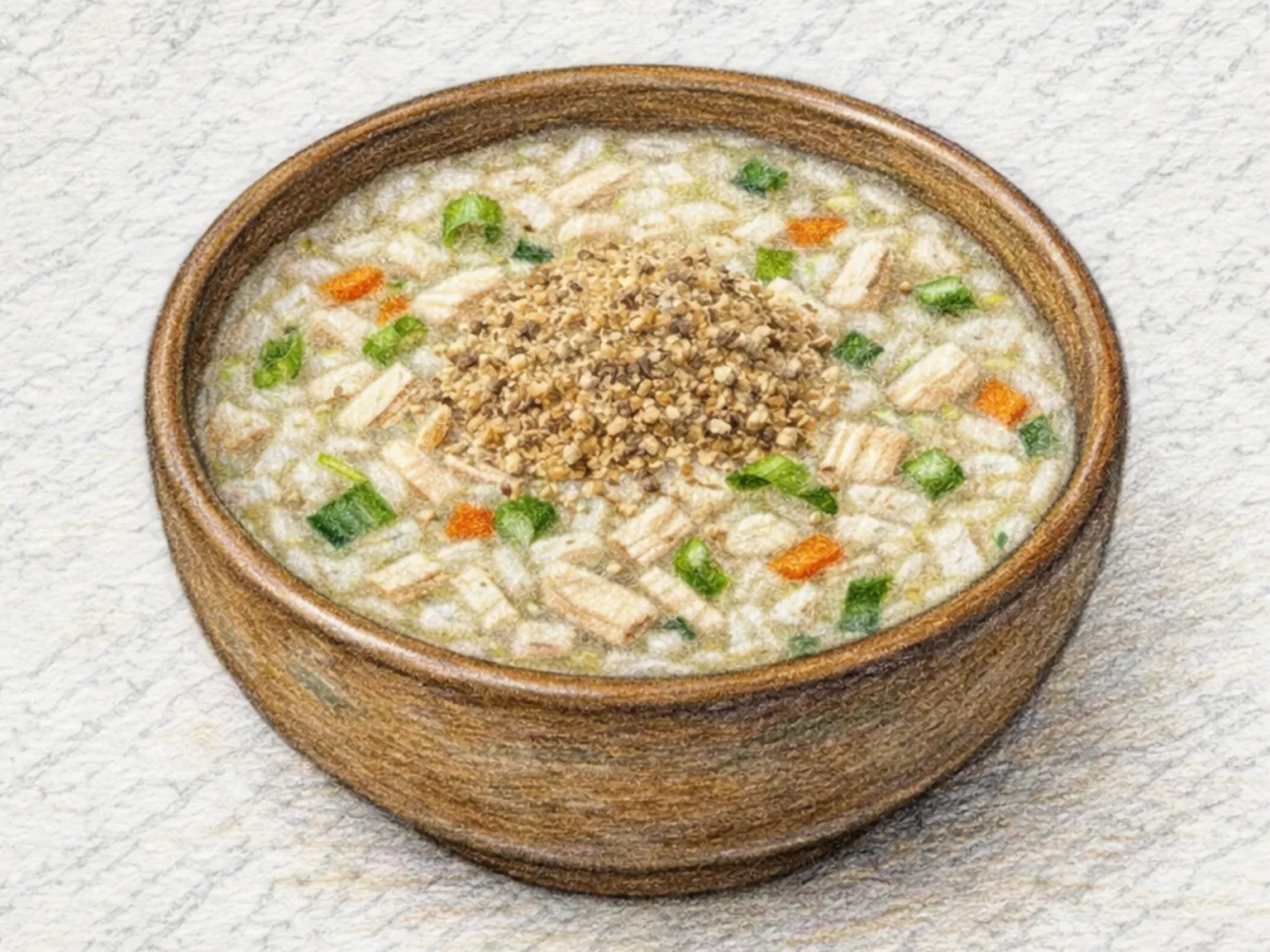
Dakgaesal deulkkae juk is a traditional style of Korean porridge that utilizes shredded chicken breast alongside finely chopped onions and carrots as its primary components.
What makes this special
- Perilla powder added at the end preserves the round, herbal nuttiness of Dakgaesal Deulkkae Juk.
- 3 tbsp perilla powder added last preserves the round, herbal nuttiness
- Shredded chicken breast gives protein without weighing down the porridge
Key ingredients
Core cooking flow
- 1 Boil 180 g chicken breast in gently bubbling water for about 10 minutes, the...
- 2 Finely dice 60 g onion and 40 g carrot.
- 3 Add 0.8 cup soaked rice and stir for 1 minute so the grains are coated with...
Dakgaesal deulkkae juk is a traditional style of Korean porridge that utilizes shredded chicken breast alongside finely chopped onions and carrots as its primary components. The preparation begins by stir-frying these ingredients together, after which they are simmered slowly with a combination of soaked rice and chicken stock. As the cooking process nears its conclusion, perilla seed powder is incorporated into the pot. This specific ingredient dissolves thoroughly into the liquid to produce a final texture that is notably thick and creamy. The aroma produced by the perilla seeds is deeply nutty and serves as the most prominent characteristic of the dish. While sesame seeds are known for a sharp and roasted quality, perilla seeds offer a flavor that is more round and carries an herbaceous nuttiness. This gives the porridge a unique profile that is common in Korean cuisine. The inclusion of shredded chicken breast provides a source of lean protein that does not feel heavy, ensuring the meal remains nourishing and simple for the body to digest. Because of these qualities, this porridge is often used as a recovery meal for individuals after they have finished exercising or for anyone whose energy levels feel low. It also serves as a functional choice when a gentle meal is required for a sensitive stomach. Adjusting the final result is possible by increasing the quantity of perilla powder, which results in a more intense fragrance and an even thicker consistency for people seeking a richer bowl.
Instructions
Read the steps as a cooking flow: prep, heat, seasoning, doneness control, and finish.
- 1Heat
Boil 180 g chicken breast in gently bubbling water for about 10 minutes, then lift it out and cool briefly.
Shred it along the grain into small strands so no dry, bulky pieces remain in the porridge.
- 2Control
Finely dice 60 g onion and 40 g carrot.
Heat 1 tsp sesame oil in the pot over medium heat, then cook the vegetables for about 2 minutes until the onion turns translucent and the carrot starts to soften.
- 3Control
Add 0.8 cup soaked rice and stir for 1 minute so the grains are coated with the sesame oil and vegetable flavor.
Pour in 950 ml chicken stock, raise to medium-high heat, and bring it just to a boil around the edges.
- 4Control
When it starts boiling, reduce the heat to low and leave the pot uncovered.
Simmer for about 15 minutes, stirring often from the bottom, until the rice grains swell and start to break without sticking.
- 5Control
Once at least 80 percent of the rice grains have opened, add the shredded chicken.
Simmer for 2 more minutes, stirring gently, just until the meat is heated through and evenly distributed through the porridge.
- 6Season
Stir in 3 tbsp perilla seed powder and keep the heat low for about 3 minutes, stirring until the porridge turns thick and creamy.
Season at the end with 1 tbsp soup soy sauce, 1/4 tsp salt, and black pepper.
After the steps
Pick a recipe that fits this dish.
Continue with shared ingredients, meal pairings, or a similar method.
Recipes That Go Well With This
More Rice →Based on shared ingredients and meal pairing
Korean Ueong Dak Juk (Burdock Chicken Porridge)
Shredded chicken tenderloin and julienned burdock root are simmered together in a long, slow cook until the porridge turns thick and smooth. The chicken releases a clean, mild broth that forms the base flavor, while the burdock contributes a subtle earthy aroma and slight crunch that adds dimension. Toasting the rice in perilla oil before adding liquid deepens the nuttiness and gives the porridge a silkier body. The result is a gentle, nourishing bowl that sits easy on the stomach.
Korean Soy Pulp Porridge (High-Protein Okara Anchovy Stock Porridge)
Soy pulp (okara) and soaked rice simmer together in anchovy stock, creating a thick, protein-rich porridge with a hearty body. Onion and garlic are first sauteed in sesame oil to build an aromatic base, then the rice goes in for a brief toast before the stock is added. Once the rice is half-cooked, soy pulp and diced zucchini join the pot, and constant stirring over low heat is essential since okara scorches quickly if left unattended. Seasoned with just salt and black pepper, this juk has a nutty, beany depth from the soy pulp paired with the clean umami of anchovy stock, making it filling yet light on the palate. Making the okara at home by blending soaked soybeans in a blender yields a noticeably fresher, more pronounced soy aroma than the packaged version and elevates the overall flavor of the finished porridge.
Korean Gangwon-Style Dried Pollock Hangover Soup
This Gangwon-province version of dried pollock hangover soup starts by stir-frying shredded dried pollock in sesame oil until it turns deeply fragrant and golden. That step is what sets it apart from other regions' pollock soups. The toasted sesame aroma permeates the entire broth and adds a richness that plain boiling cannot achieve. Radish simmers alongside, contributing a clean sweetness that tempers any fishiness. Garlic and soup soy sauce provide the savory foundation. Near the end, a beaten egg is swirled into the pot, forming soft, silky ribbons that give the clear broth a comforting body. The soup is intentionally mild and free of chili heat, designed to be gentle on an empty or troubled stomach. Koreans have relied on this kind of bugeo-guk for morning-after recovery for generations, and the Gangwon-style sesame preparation is considered one of the most satisfying versions. If the stir-frying step is rushed, the sesame oil does not coat the fish thoroughly, so cooking the pollock strands over medium heat until they are evenly golden is what draws out the full depth of flavor into the broth.
Korean Sesame Oil Abalone Porridge
Both abalone flesh and innards are used together with a generous two tablespoons of sesame oil to maximize nuttiness in this porridge. The innards carry a concentrated brininess unique to abalone, and sauteing them with minced garlic in sesame oil infuses the fat with both marine and roasted flavors simultaneously, forming the aromatic foundation for the entire pot. Soaked rice is stirred into that same seasoned oil and cooked until each grain turns translucent, a step that coats the starch in fat and gives the porridge a fuller, rounder flavor. Water is then added and the mixture simmers for 25 minutes while the grains slowly dissolve their starch into a naturally thick consistency. Stirring regularly throughout this stage prevents the rice from settling and scorching on the pot floor. Soup soy sauce and salt are added at the finish, their saltiness anchoring the nuttiness of the sesame oil rather than competing with it. Chopped chives provide both color and a light onion fragrance. An extra drizzle of sesame oil just before serving deepens the aroma and gives the surface a subtle sheen.
Serve with this
Korean Silken Tofu Seafood Stew
Sundubu haemul jjigae is a seafood soft tofu stew that combines silken tofu with shrimp and Manila clams in an anchovy stock seasoned with gochujang and Korean chili flakes. The aromatics are stir-fried in sesame oil first to build a deeper base before the stock is added. As the shrimp and clams cook through, they release their own briny juices into the spicy broth and push the umami noticeably higher. An egg cracked in at the end binds gently with the silken tofu, adding richness and a slight body to the broth. Deveining the shrimp and removing the back intestine keeps the flavor clean, and soaking the clams in lightly salted water beforehand purges any sand that would otherwise cloud the stock.
Korean Konjac Noodle Salad
Silgonyak-chae-muchim tosses 250 grams of blanched konjac noodles with julienned cucumber, carrot, and onion in a gochujang-based dressing spiked with vinegar, sugar, soy sauce, and garlic. Blanching the noodles for two minutes removes their faint alkaline smell and softens their rubbery chew to a pleasant springiness. The vegetables provide crisp contrast - cucumber adds a cool snap, carrot a mild sweetness, and onion a sharp bite. The dressing clings to the translucent noodles, turning them a vivid reddish hue. At only 95 calories per serving, this banchan relies on texture and bold seasoning rather than fat for its appeal. Chilling for 10 minutes before serving firms up the noodles and intensifies the tangy-spicy flavor profile.
Korean Chamnamul Kimchi (Pimpinella Kimchi)
Chamnamul kimchi is a spring kimchi made by salting chamnamul greens for just ten minutes to wilt them slightly, then dressing with gochugaru, anchovy fish sauce, and salted shrimp without rinsing. Skipping the rinse allows the residual salt to convert into umami during fermentation rather than being washed away, deepening the overall flavor. Pureed Korean pear and onion blended with sweet rice paste form the seasoning base, contributing a natural sweetness that rounds off the sharp edges of the chili heat. After three hours of initial fermentation at room temperature followed by refrigeration, the kimchi reaches its best balance within one to two days, when the grassy herbal aroma of chamnamul aligns with the fermented depth of the fish sauce. Because chamnamul has a high moisture content, fermentation moves quickly, and the kimchi softens past its peak if left too long. Best consumed within three to four days for optimal texture and fragrance.
Similar recipes
Korean Geomeun Kong Juk (Black Bean Porridge)
Black beans are soaked for at least four hours, then boiled until the skins wrinkle and the flesh softens through to the center. They are blended with their cooking liquid into a thick, smooth slurry that forms the base of the porridge. This bean puree is combined with separately soaked rice and the mixture is simmered over low heat, stirred regularly to prevent the starch from catching on the bottom of the pot. As the rice breaks down and the starch gelatinizes, the porridge thickens gradually into a smooth, velvety consistency. The anthocyanins in the black bean skins stain the porridge a deep purple-gray, and the flavor is earthy and distinctly nutty, unlike the lighter taste of plain rice porridge. Passing the finished porridge through a sieve removes the bean skins for a cleaner texture. Seasoned with salt alone, it reads as a savory meal; a tablespoon of sugar shifts it toward something gently sweet. Pine nuts and sesame scattered on top layer in additional nuttiness, and the porridge is frequently made as restorative food given the beans nutritional density.
Korean Ginger Chicken Breast Stir-fry
Saenggang dakgaseumsal-bokkeum stir-fries marinated chicken breast with julienned fresh ginger, cabbage, bell pepper, and green onion over high heat. The chicken is briefly seasoned with soy sauce, garlic, and black pepper, then seared in a pan where ginger and scallion have already bloomed their aroma. Vegetables go in last to keep their crunch, and a touch of honey rounds out the seasoning. The result is a lean, aromatic stir-fry where ginger's sharp warmth permeates every piece of chicken without heaviness.
Korean Warm Perilla Mushroom Rice Noodles
Deulkkae beoseot on ssalguksu is a warm Korean noodle soup built on kelp stock simmered with oyster and shiitake mushrooms, then enriched with ground perilla seeds into a creamy, opaque broth. Rice noodles are smoother and more slippery than wheat varieties, sliding through the rich liquid with ease, while the mushrooms provide a firm, chewy counterpoint. Adding the perilla powder at the very end preserves its roasted, nutty fragrance on the surface of each spoonful rather than cooking it off. Soup soy sauce seasons the broth cleanly without the heaviness of fermented soybean paste. Using dried shiitake mushrooms instead of fresh ones and soaking them in cold water first draws out a concentrated mushroom stock that deepens the base significantly. Substituting king oyster mushrooms cut into thick rounds for oyster mushrooms adds more substantial chew. The dish contains no wheat and suits gluten-free diets. It is particularly fitting on cold days as a light but warming meal.